Pigment treatment process
Hello, this is Raon Dermatology at Wangsimni Station!
A bright, clear skin tone is one of the important factors that determine a healthy and vibrant impression. However, as time goes by and outdoor activities increase, spots and blemishes that appear one by one are often difficult to recover naturally. Simply covering them with cosmetics has its limits when it comes to resolving pigment problems that lie deep within the skin! Even if they look similar to the naked eye, the type and depth of pigment are actually different, so a systematic treatment plan tailored to you is necessary :)
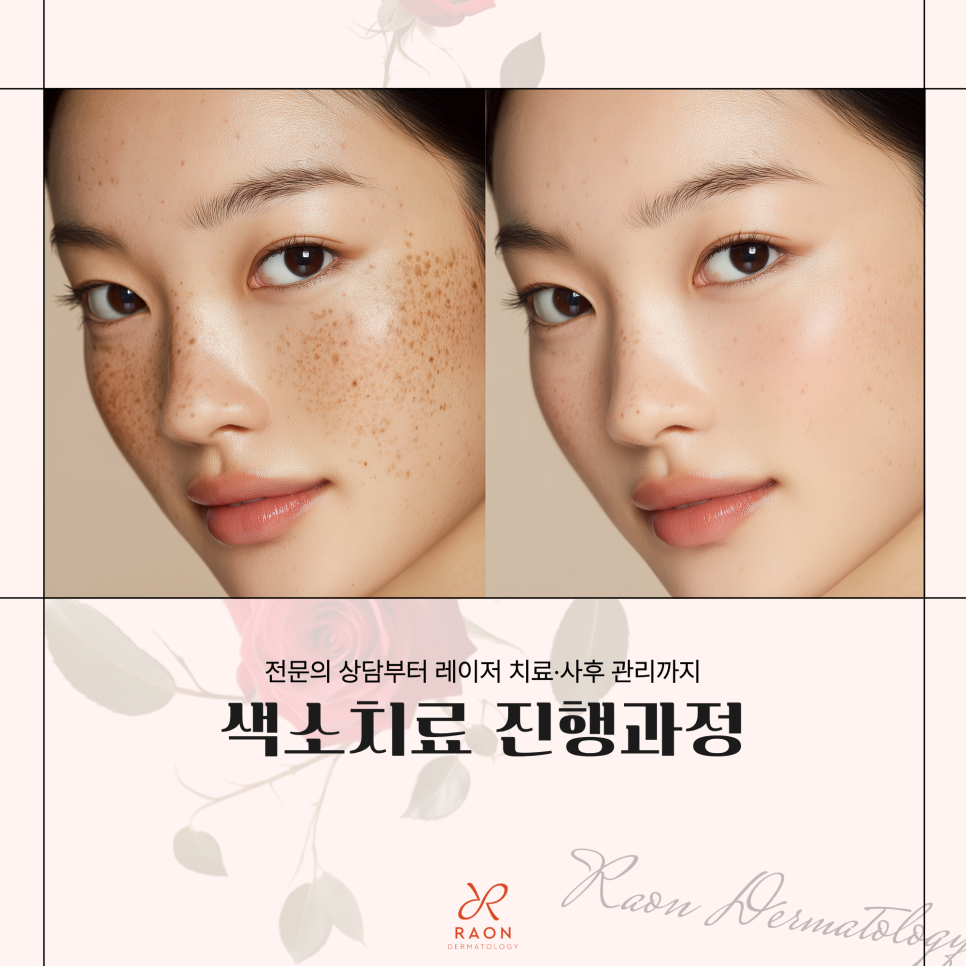
Pigment treatment process
Preview of the process
To achieve satisfying changes in the skin, you first need to understand the overall flow, from consultation to aftercare. After completing the reservation and reception process, a MarkView scan is performed to precisely check the current condition of the skin in data form. Based on the scan results, a dermatology specialist personally conducts a one-on-one consultation, analyzes the type and depth of the pigment, and establishes an individualized treatment plan. To improve treatment efficiency, lasers with different characteristics may be combined, or skin booster treatment may be performed together depending on the skin condition.
Based on the plan determined in the consultation room, full-scale laser treatment is carried out, and for stable results, periodic treatment of usually more than 10 sessions is recommended. In addition, after laser irradiation is completed, regenerative care that soothes the irritated skin and supports recovery must follow as an essential step! Finally, the process is completed by understanding the guidelines for precautions in daily life and regularly monitoring progress to prevent the possibility of side effects.
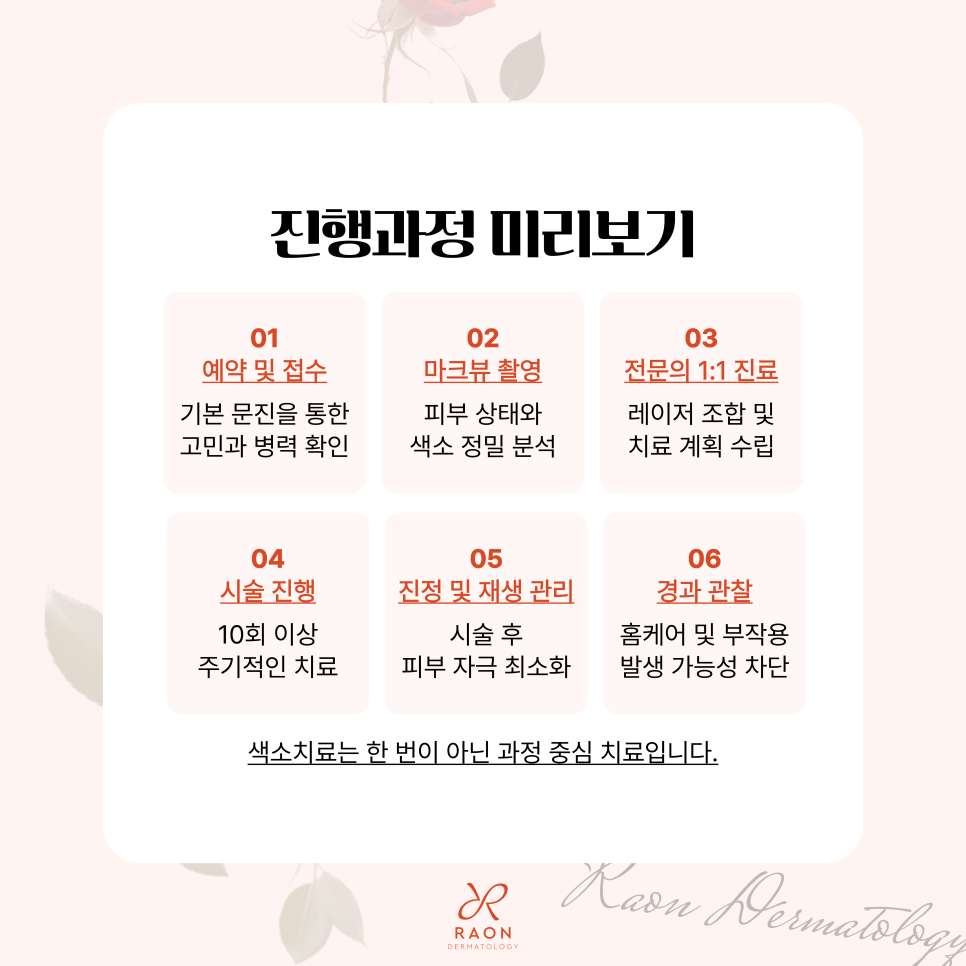
Preview of the process
What is MarkView scanning?
Deciding on a treatment direction by looking only at pigment visible on the skin surface may lead to insufficient results. That is why MarkView scanning, which identifies hidden skin concerns that are difficult to distinguish with the naked eye, is a very important preliminary step! MarkView is a precise diagnostic device that analyzes the skin from multiple angles using four light sources, including normal light, polarized light, and ultraviolet light. Through this, it is possible to check not only visible spots but also latent pigment that may appear later, as well as redness and pore condition, in quantified data.
Once the data is secured, it becomes possible to grasp the skin’s moisture level, sebum amount, and even wrinkle depth at a glance. Beyond the subjective impression that there is simply “a lot of pigment,” the actual type of pigment, which layer it is in, and how densely it is distributed can be confirmed in a practical way. These objective indicators become the basis for determining the intensity and number of treatments in the specialist consultation that follows. Knowing the current condition of your skin accurately is the first step toward efficient treatment.
<MarkView scanning>
-
A precise diagnostic device that analyzes the skin from multiple angles
-
Pigment location and density / Presence of latent pigment
-
Redness and vascular lesions / Pores, skin texture, oil and moisture balance, etc.
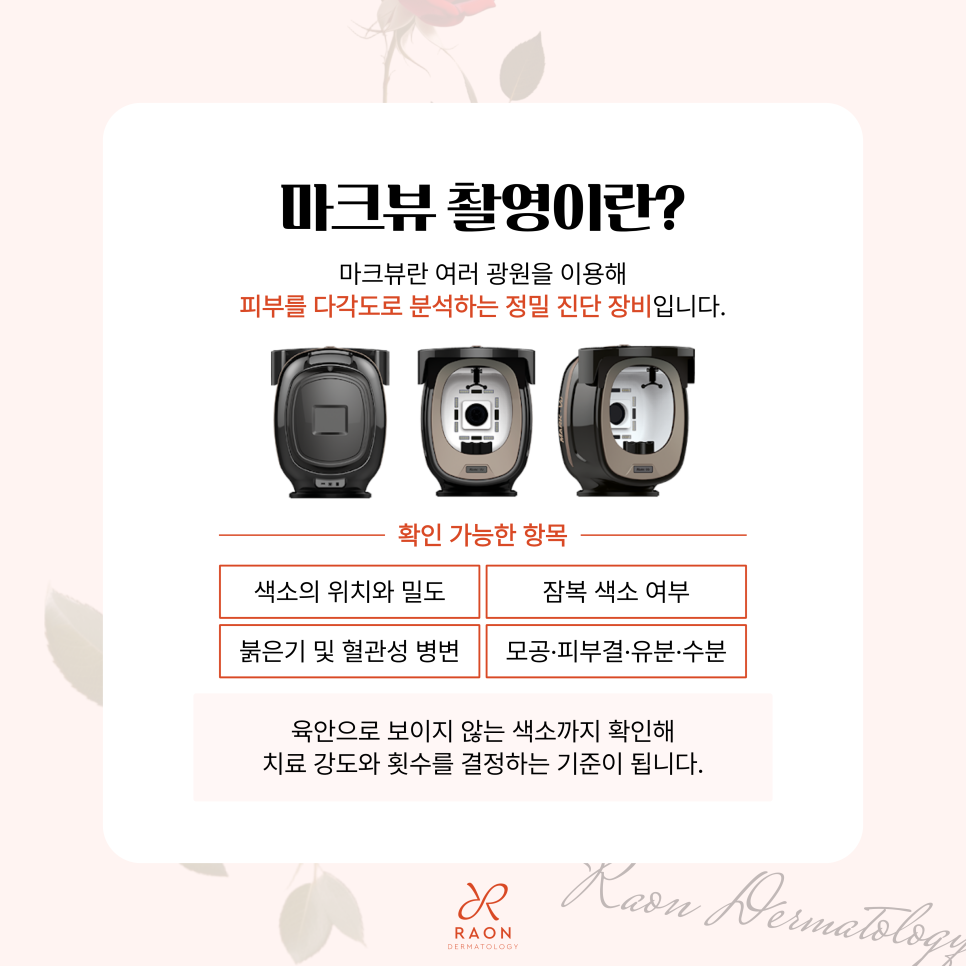
What is MarkView scanning?
Dermatology specialist consultation
After the scan is complete, a detailed analysis and consultation by a dermatology specialist begins based on it. Since each person has a different natural skin tone and skin barrier thickness, it is difficult to achieve the desired results with a one-size-fits-all approach. Therefore, during the consultation process, the strength of the laser must be finely adjusted while considering how strong the skin barrier is and how sensitive the skin currently is. A diagnostic process is also included to distinguish whether the pigment is in the epidermal layer, such as spots or freckles, or located deep in the dermis, such as melasma or Ota nevus.
Depending on the diagnostic results, a decision is made on how to combine various devices such as Q-switched Nd:YAG or pico lasers. Many people wonder why only one laser is not used. The reason is that each laser has a different wavelength range, so a combined approach is necessary to effectively destroy pigment located at different depths. If needed, skin boosters that improve the skin environment itself may also be used together to enhance treatment effects and help prevent pigment from darkening again.
<Dermatology specialist consultation>
-
Skin type analysis / Pigment identification / Determining the treatment combination
-
Because each laser has a different wavelength range, multiple devices are used
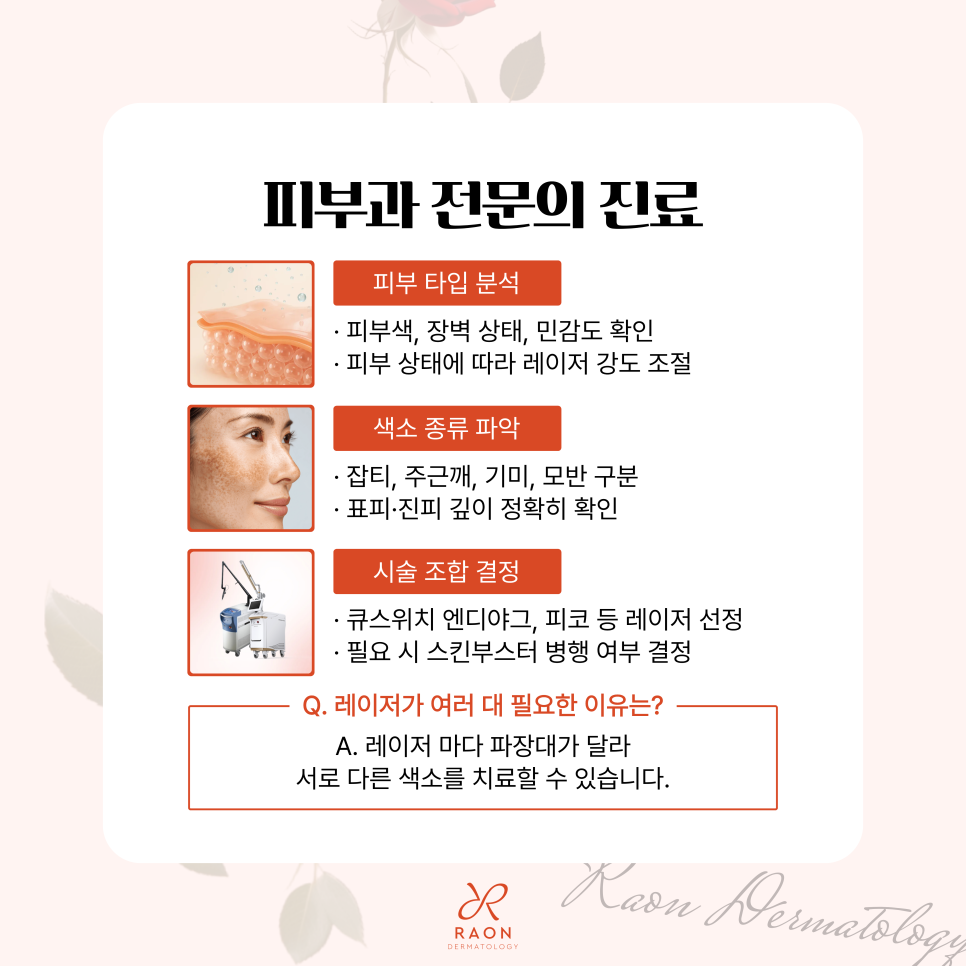
Dermatology specialist consultation
Introduction to laser treatment devices
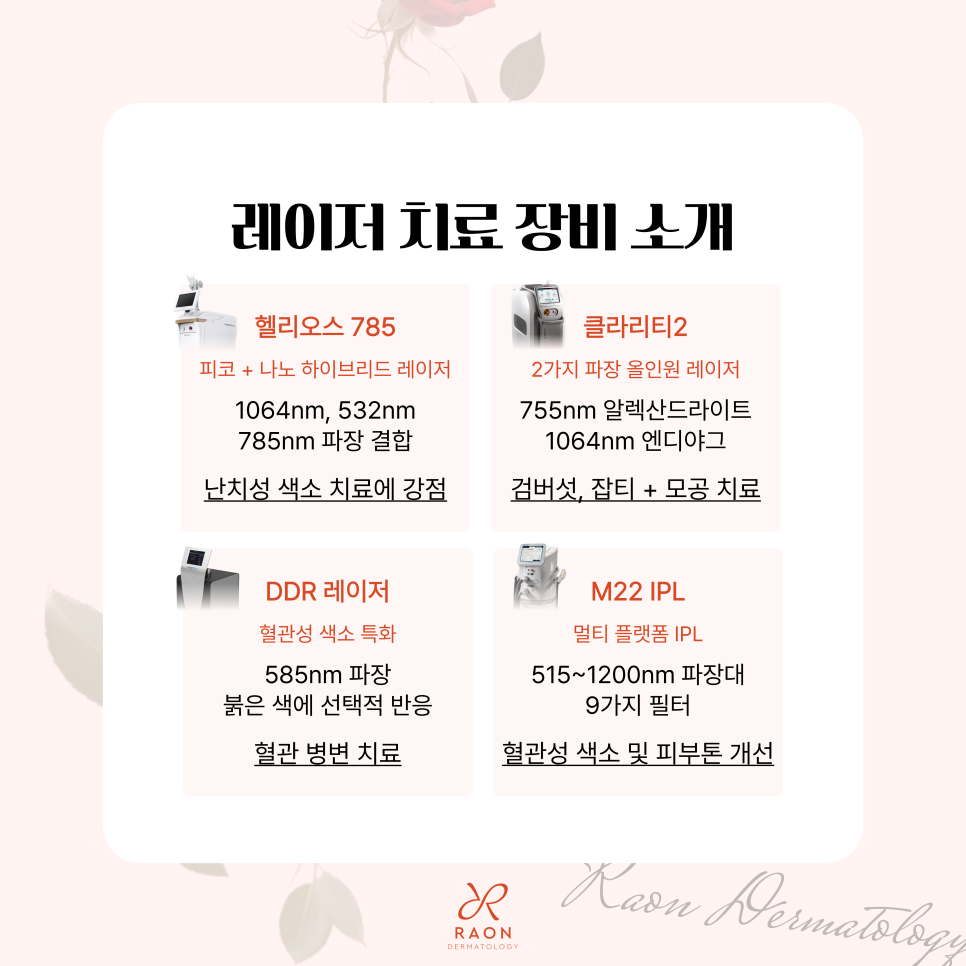
In the full treatment stage, lasers with different strengths each perform their role. First, Helios 785 is a hybrid laser that combines both pico and nano modes, and it shows excellent performance in breaking down and removing stubborn pigment that was difficult to treat with conventional devices. Clarity II is also an all-in-one device equipped with two wavelengths, 755 nm and 1064 nm, and can be widely used not only for pigment conditions such as age spots and blemishes, but also for improving pores and elasticity!
If red marks or vascular dilation are present, DDR laser can be a great alternative. Using a 585 nm wavelength with high absorption in blood vessels, it helps selectively treat inflammatory redness and vascular lesions. In addition, M22 IPL uses nine detailed filters to brighten the overall skin tone and address multiple surface blemishes at the same time. In this way, by placing devices with different wavelengths in the right places, it is possible to reduce skin damage while still achieving satisfying changes :)
Introduction to laser treatment devices
Precautions during pigment treatment
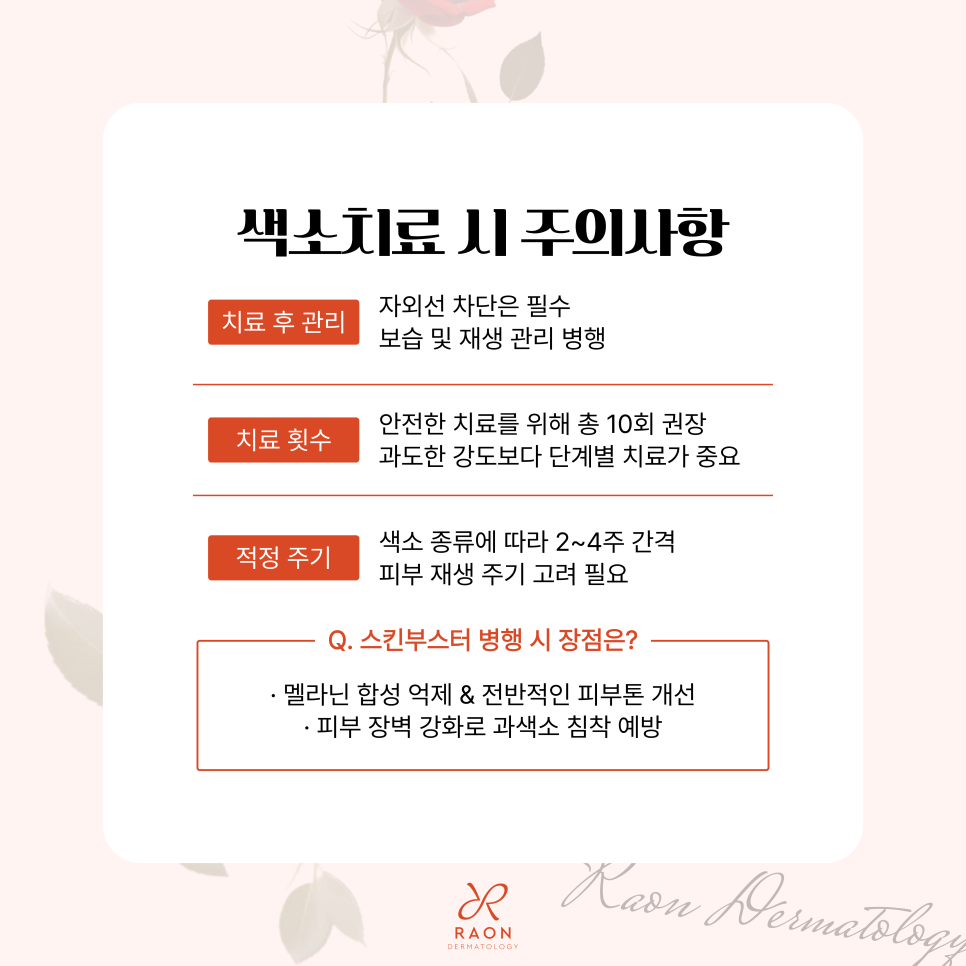
For successful pigment treatment, adherence to precautions in daily life is just as important as care at the clinic. If the treatment area is directly exposed to ultraviolet rays, the pigment may become darker, so applying sunscreen carefully before going outside is essential. Also, because the skin may temporarily become dry due to laser stimulation, enough moisturizer and regenerative cream should be used to create an environment in which the skin can recover on its own. When washing your face, be careful not to rub the skin strongly.
For safe and meaningful improvement, treatment is recommended about 10 times at 2- to 4-week intervals, taking the skin’s regeneration cycle into account. Rather than treating with excessive intensity all at once, step-by-step treatment at an appropriate intensity is the way to minimize strain on the skin. If skin boosters are used together, their active ingredients may help inhibit melanin synthesis and strengthen the barrier, creating a positive synergy that helps prevent post-inflammatory hyperpigmentation. When a systematic plan and steady care come together, the process of regaining clear and transparent skin will not be that difficult.
<Precautions during treatment>
-
UV protection, moisturizing, and regenerative care
-
A total of 10 treatments is recommended, and step-by-step treatment is important
-
Depending on the type of pigment, an interval of 2 to 4 weeks is recommended
Precautions during pigment treatment
Pigment treatment process at Wangsimni Dermatology