Lifting Treatment Selection Guide
Hello, this is Raon Dermatology at Wangsimni Station!
As we age, gradually sagging facial contours and reduced elasticity become concerns for many people. However, rather than starting treatment indiscriminately, it is important to take the time to precisely assess your current skin structure and condition. A systematic lifting roadmap tailored to you, followed by step-by-step treatment, is necessary:)
Lifting Treatment Selection Guide
STEP 01. Facial Analysis
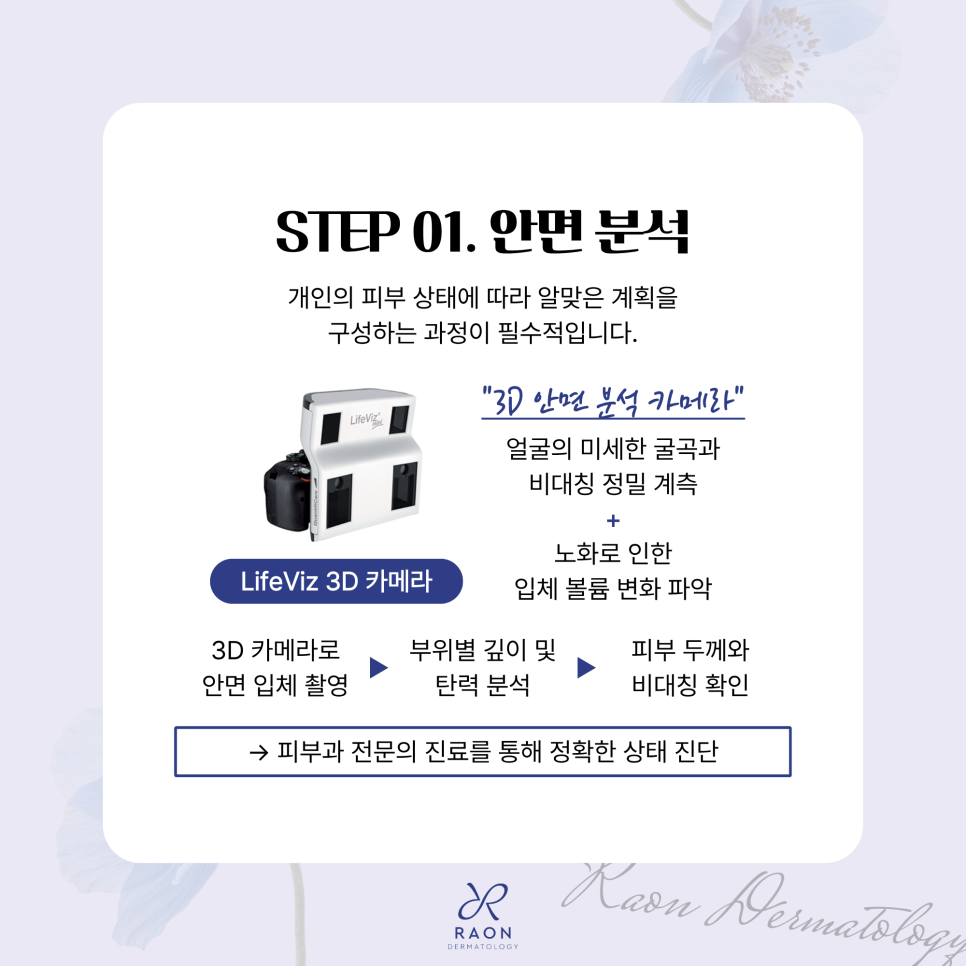
The starting point for successful lifting treatment is accurately measuring the current condition of the face. The LifeViz 3D camera is a diagnostic device that precisely analyzes, from multiple angles, the three-dimensional contours and degree of volume asymmetry beneath the skin that cannot be seen with the naked eye. By assessing the entire face three-dimensionally, it can accurately identify and quantify areas where volume has decreased or sagging has occurred due to aging.
A consultation with a dermatologist based on the diagnostic data is a key step in establishing an individualized treatment direction. Everyone has different skin thickness, rates of aging, and degrees of tissue adhesion. Therefore, an experienced dermatologist must carefully examine the condition while directly comparing the measured three-dimensional data. After a precise diagnosis, a customized treatment suited to the skin depth and degree of loss of elasticity should be selected.
<LifeViz 3D Camera>
-
Three-dimensional facial imaging with a 3D camera
-
Analysis of depth and elasticity by area
-
Assessment of skin thickness and asymmetry
STEP 01. Facial Analysis
STEP 02. Selecting the Lifting Device
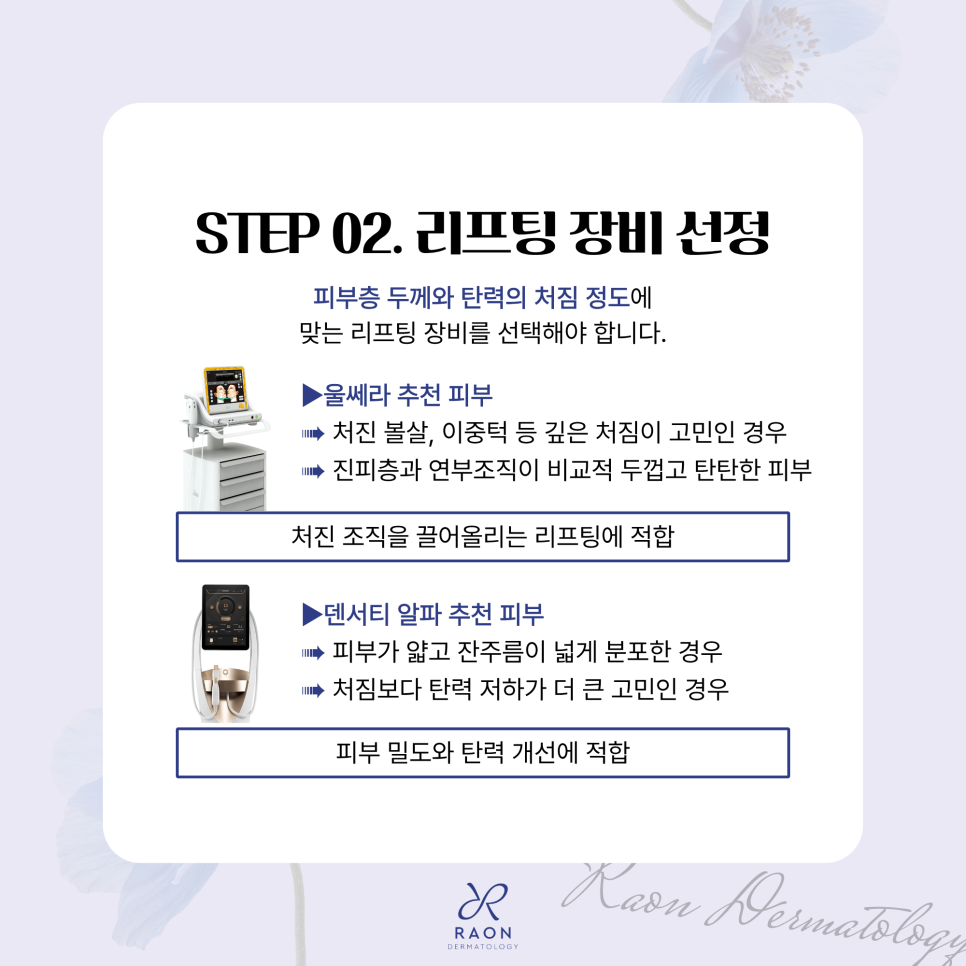
Once the precise diagnosis is complete, the next step is to select the lifting device that is appropriate for the skin’s condition. Even a widely known method may not produce the desired changes if it does not match the thickness and elasticity of your skin layers. For example, if sagging in the direction of gravity is pronounced, such as sagging cheeks or a double chin, and the skin tissue is relatively thick, Ulthera treatment may be suitable for creating smoother facial contours.
On the other hand, if fine lines are widely distributed, overall loss of elasticity is a concern, and the skin is thin and sensitive, Density Alpha may be worth considering. Density Alpha, which uses an Alpha tip, is equipped with a cooling device that protects the epidermal layer, allowing energy to be delivered with relatively little burden even to sensitive skin. In this way, matching the device to each person’s skin characteristics forms the foundation for stable changes.
STEP 02. Selecting the Lifting Device
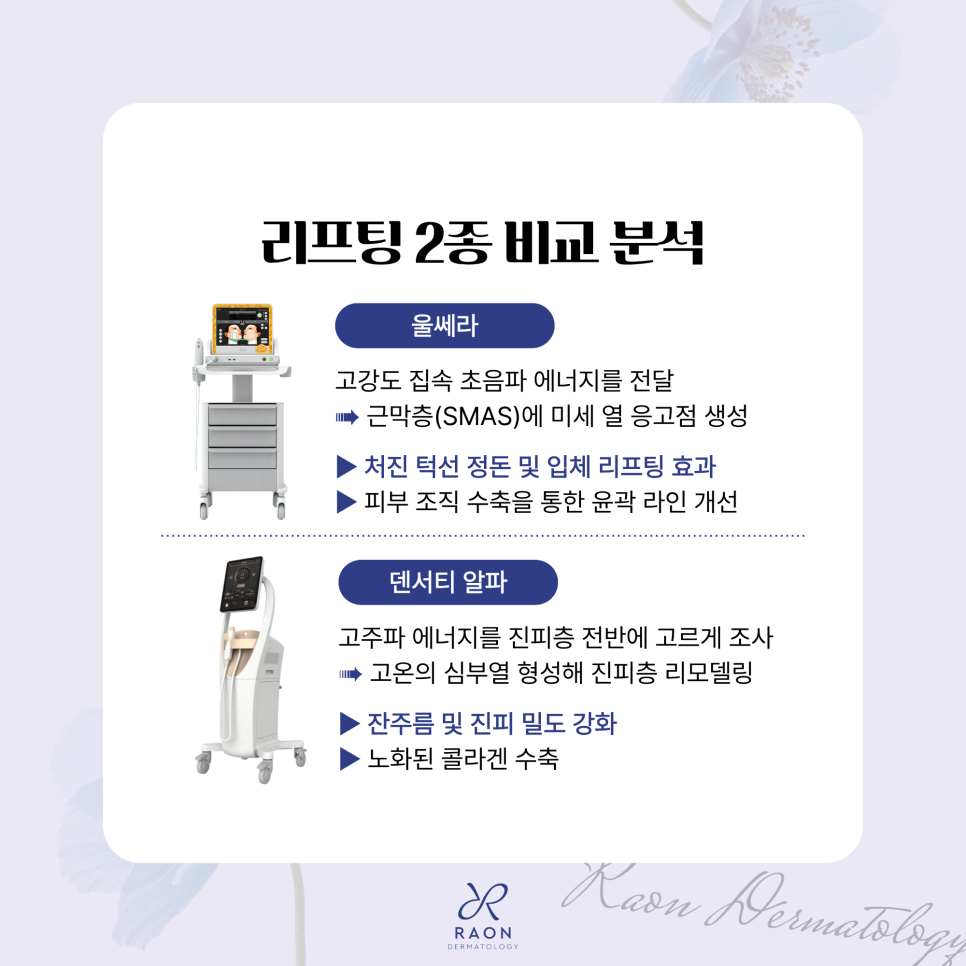
Comparative Analysis of Two Lifting Treatments
To achieve more satisfactory results, it is useful to understand the clear differences between Ulthera and Density Alpha. First, Ulthera works by using high-intensity focused ultrasound to create microscopic thermal coagulation points in the fascial layer located deep within the skin. As these thermal coagulation points contract, they pull up loose tissue, helping to improve tissue firmness over the long term.
In contrast, Density Alpha uses a mechanism that simultaneously delivers radiofrequency energy through two methods: monopolar and bipolar. It applies three-dimensional thermal stimulation throughout the dermis, contracts aged fibers, and gradually induces the formation of new collagen and elastin. It is highly effective for improving surface elasticity and filling in areas that lack density. The key is to match the energy you need—Ulthera, which firmly pulls from deep within, or Density Alpha, which densely fills the surface:)
<Comparative Analysis of Two Lifting Treatments>
-
Ulthera: Refinement of sagging jawlines / three-dimensional lifting effect
-
Improvement of contour lines through contraction of skin tissue
-
Density Alpha: Improvement of fine lines and dermal density / contraction of aged collagen
Comparative Analysis of Two Lifting Treatments
STEP 03. Adding Booster Treatment
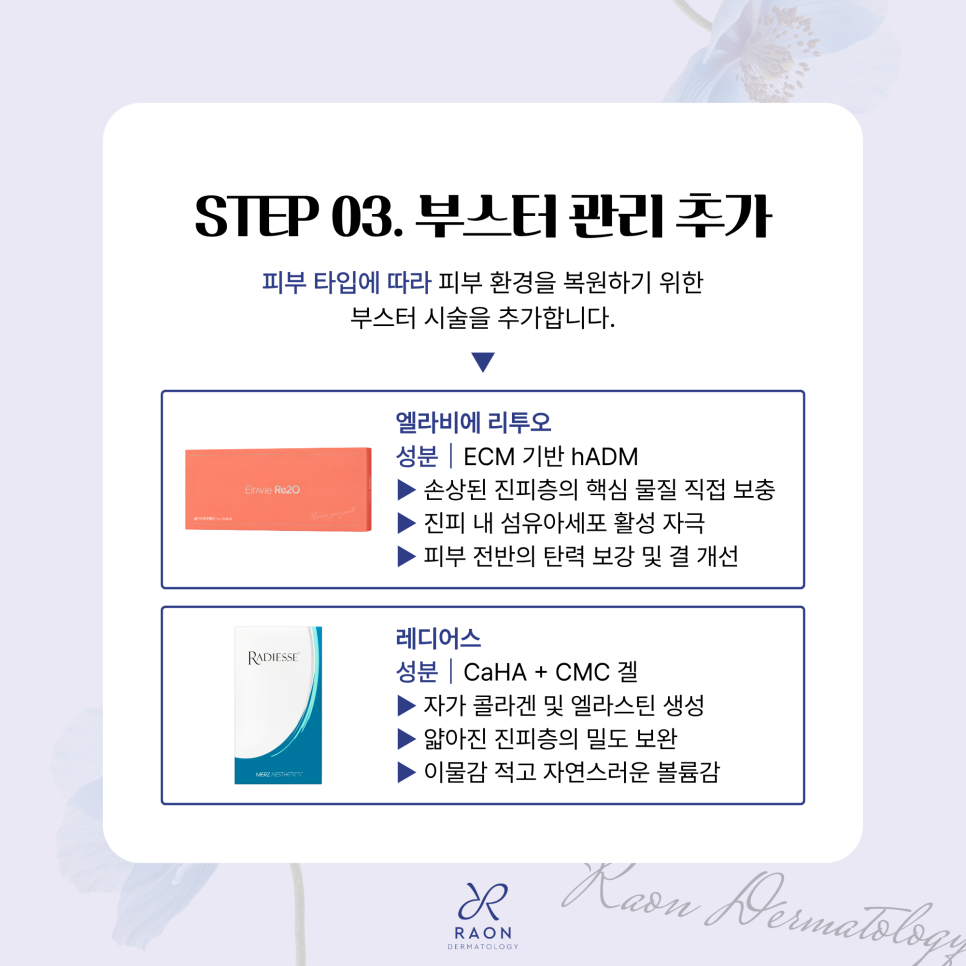
Adding a booster treatment that supports the skin’s natural regenerative capacity in the dermis alongside lifting device treatment can help maintain overall changes more firmly. When skin cell activity has decreased, combining treatment with a skin booster to replenish deficient components may be a good alternative. In particular, Ellavie Re2 is based on ECM-derived hADM ingredients and helps organize the dermal environment, directly encouraging the regeneration of the body’s own tissue.
Another product, Radiesse, contains CaHA and has properties that strongly promote the formation of the body’s own collagen and elastin. It fills in the density of thinned skin, refines fine lines, and supports the overall skin texture. In this way, combining a skin booster according to the health of the current skin barrier and the need to supplement active ingredients may help maintain elasticity over the long term.
STEP 03. Adding Booster Treatment
STEP 04. Soothing Treatment
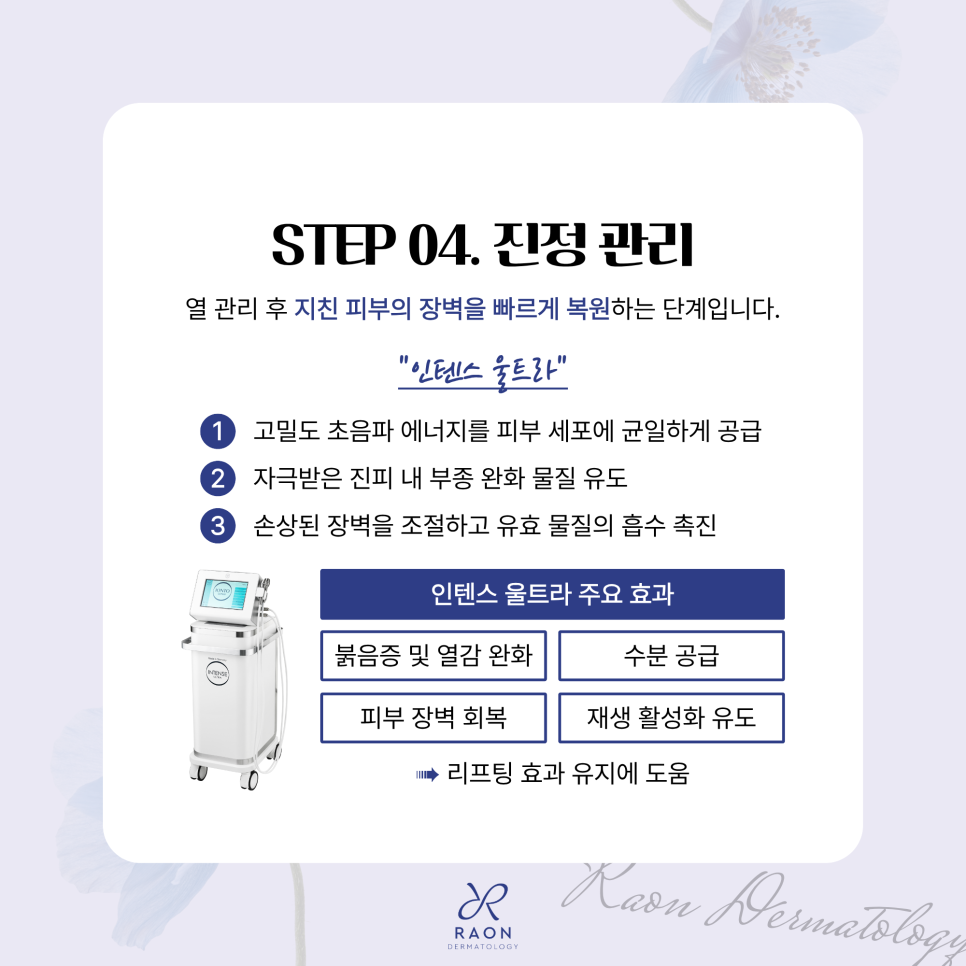
After all heat-based treatments are complete, a soothing and recovery stage is essential to quickly stabilize irritated skin. Intense Ultra treatment delivers high-density ultrasound energy directly to cell membranes, helping to quickly manage heat and redness on the skin’s surface. It helps prevent temporary swelling or dryness that may occur after treatment and supports a prompt return to daily activities.
Carefully combining soothing treatment not only aims to reduce downtime but also contributes to maintaining the effectiveness of the lifting treatment performed earlier. It reinforces the skin barrier, which may be temporarily weakened by irritation, and provides sufficient moisture, creating an environment favorable for collagen production. From proper diagnosis to precise device selection, booster supplementation, and post-treatment soothing, consider this entire roadmap before beginning treatment in earnest.
<Main Effects of Intense Ultra>
-
Relief of redness and heat sensation
-
Moisture replenishment / recovery of the skin barrier
-
Encouragement of regenerative activity
STEP 04. Soothing Treatment
Lifting Treatment Selection Guide