The Basics of Acne Care
Hello, this is Raon Dermatology in Gwangjin-gu!
It is easy to dismiss a small whitehead as no big deal. However, acne is more likely to develop into inflammation when left untreated than to disappear on its own, and once the inflammation deepens, it can leave behind scars and marks. That is why the basics are more important than sophisticated equipment when it comes to acne care. Following the basics properly can greatly reduce concerns about scarring. Today, we will introduce the three basics of acne care in order: extraction, Black Peel, and anti-inflammatory injections.
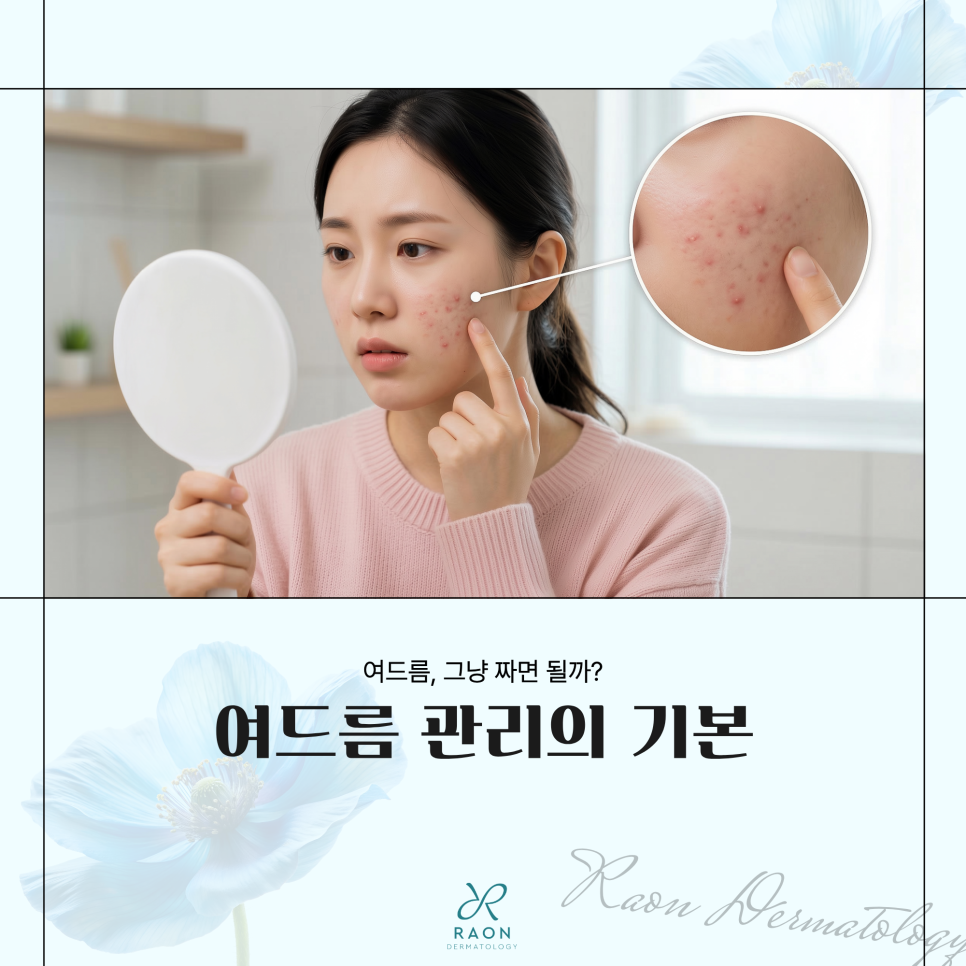
The Basics of Acne Care
What Happens When Acne Is Left Untreated?
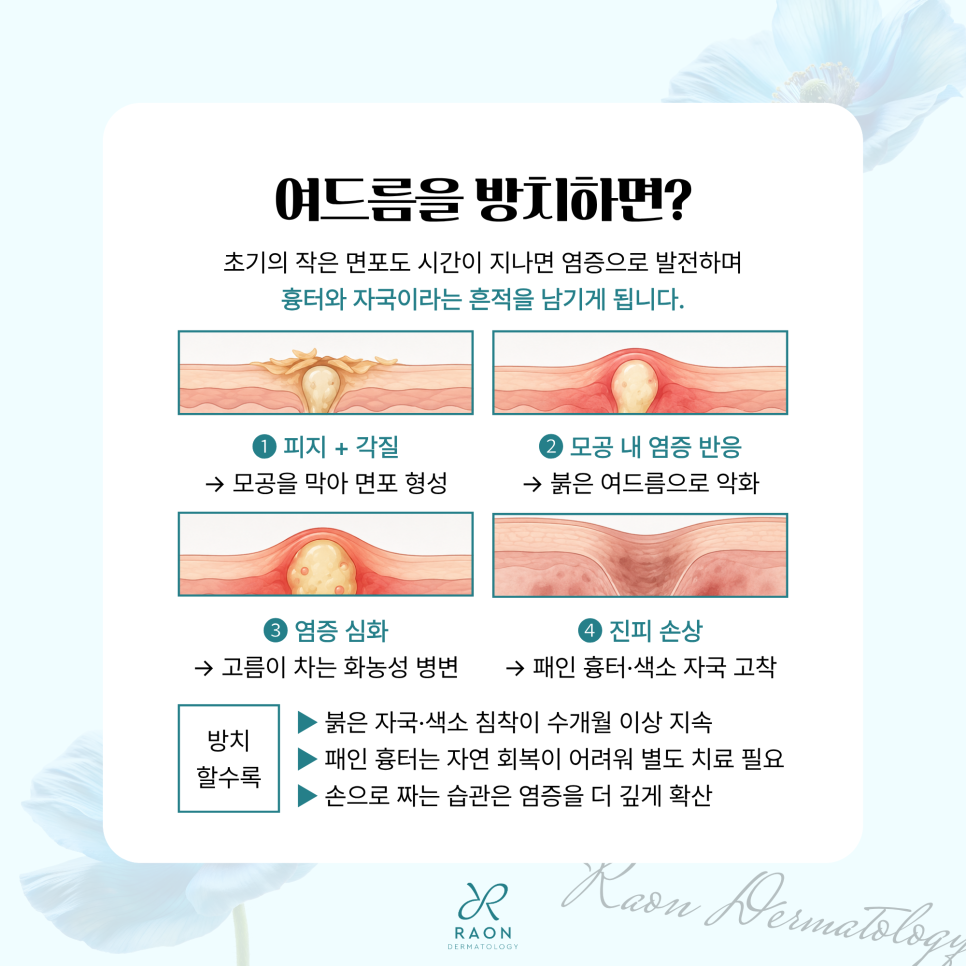
First, it is important to understand what can happen when acne is left untreated. When sebum and dead skin cells clog the pores, small comedones resembling whiteheads develop. Acne-causing bacteria then multiply inside them, worsening the condition into red inflammation. As the inflammation deepens, it can develop into pus-filled lesions, and if the dermis is damaged during this process, depressed scars and pigmentation marks can become permanent.
Red marks and hyperpigmentation can persist for several months or longer, while depressed scars are difficult to recover from naturally and may require separate treatment. The habit of squeezing acne with your hands out of frustration is a shortcut to spreading the inflammation deeper. In particular, acne that repeatedly appears in the same areas, such as the chin and cheeks, can be a sign that it is becoming chronic, so caution is needed. Ultimately, the true goal of acne treatment is to control the current inflammation while preventing scars from forming.
What Happens When Acne Is Left Untreated?
Acne Extraction
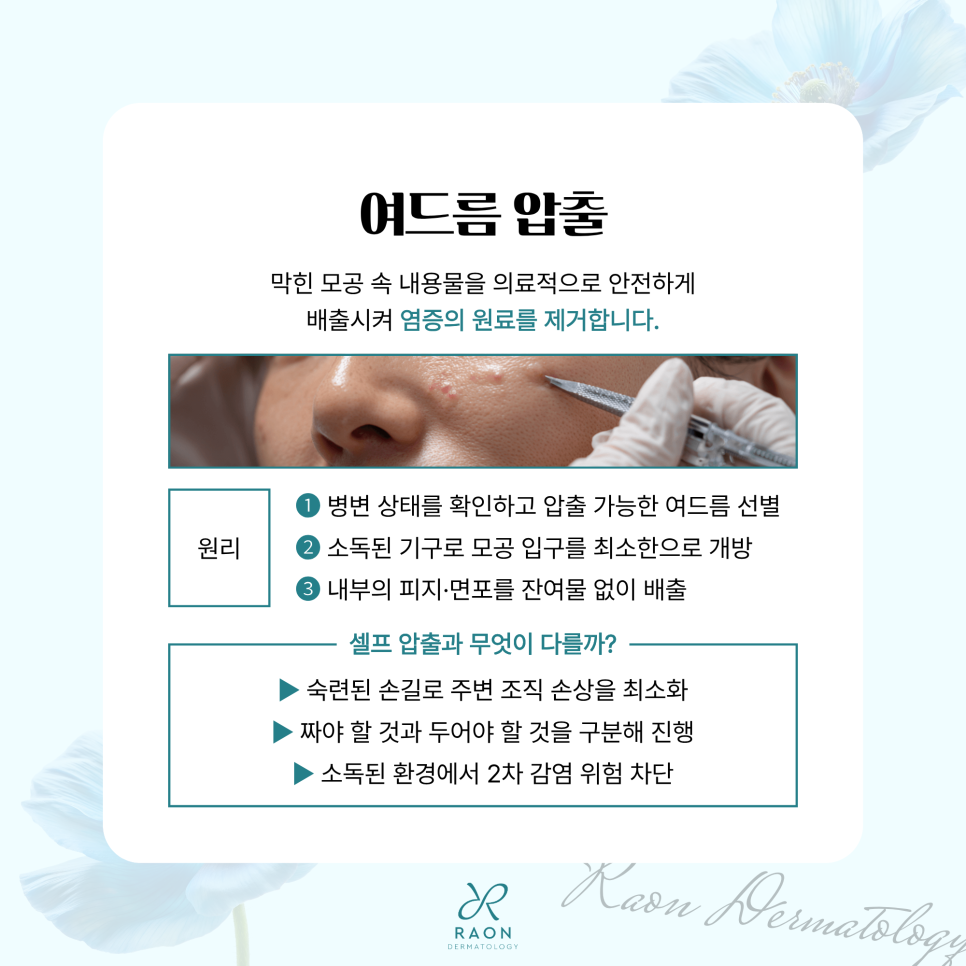
The first basic treatment is acne extraction. Many people ask how it differs from squeezing acne themselves, and the difference is clear. Medical extraction begins by examining the condition of each lesion and distinguishing what should be extracted from what should be left alone. The pore opening is then minimally opened with sterilized instruments, and the sebum and comedonal contents inside are removed without leaving residue.
The key point is that skilled technique minimizes damage to the surrounding tissue and reduces the risk of secondary infection. When the contents that contribute to inflammation are cleared in time, the progression to red inflammation can be interrupted in advance, and the effects of subsequent medication or care can also be enhanced. After extraction, soothing care is provided to quickly calm the redness. The extraction interval is adjusted according to the amount of sebum produced and the number of comedones.
<Differences from Self-Extraction>
-
Minimizes damage to the surrounding tissue through skilled technique
-
Distinguishes what should be extracted from what should be left alone
-
Reduces the risk of secondary infection in a sterilized environment
Acne Extraction
Black Peel
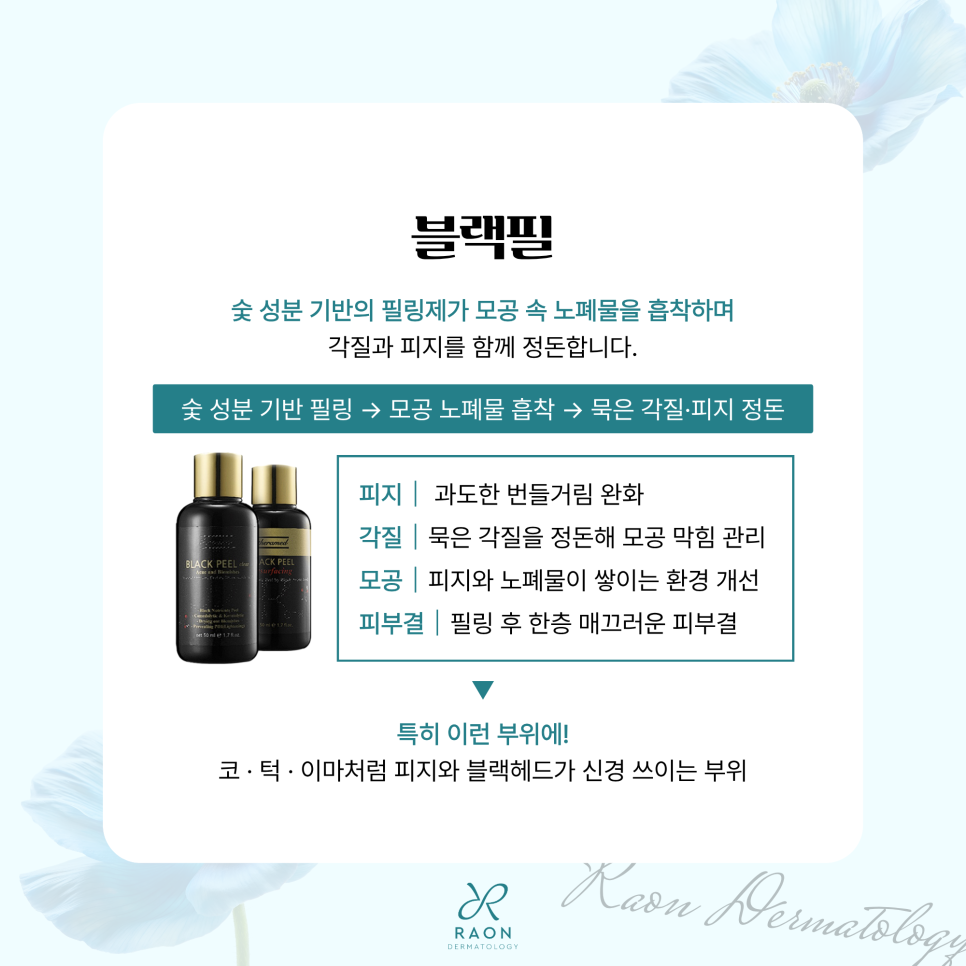
The second is Black Peel. When a peeling agent containing charcoal is applied to the skin, fine particles enter deep into the pores and adsorb impurities, while the peeling ingredients dissolve built-up dead skin cells and excess sebum together. As the blocked pathways for sebum drainage open, the conditions that can worsen acne are reduced. Regular care is recommended based on the rate at which dead skin cells accumulate. It is also suitable for targeted care of areas such as the nose and chin, where blackheads tend to cluster.
When performed regularly, the causes of clogged pores are continually cleared, allowing the acne-prevention effect to build over time. Reduced oiliness and smoother skin texture after peeling can also be expected. This treatment can be applied relatively comfortably even to sensitive, acne-prone skin for which strongly irritating peels may have been burdensome. Extra attention should be paid to sun protection immediately after peeling.
<Black Peel>
Black Peel
Anti-Inflammatory Injections
The third basic treatment is anti-inflammatory injections. Deep inflammation that is already red, swollen, and painful can be difficult to address with extraction or peeling. In such cases, a small amount of a diluted anti-inflammatory ingredient can be injected into the lesion to directly calm the inflammatory response. The lesion usually begins to visibly subside within one or two days after the injection.
The shorter the period during which the inflammation remains, the lower the risk of scars and marks being left behind. This treatment can also be used as emergency care for a pus-filled pimple that suddenly appears before an important event. However, because careful adjustment of the dosage and injection depth is important, it must be performed under the guidance and judgment of a medical professional.
<Anti-Inflammatory Injections>
-
Selection of deep inflammatory lesions
-
Injection of a small amount of an anti-inflammatory ingredient
-
Relief of the inflammatory response
-
Reduction in the swelling and size of the lesion
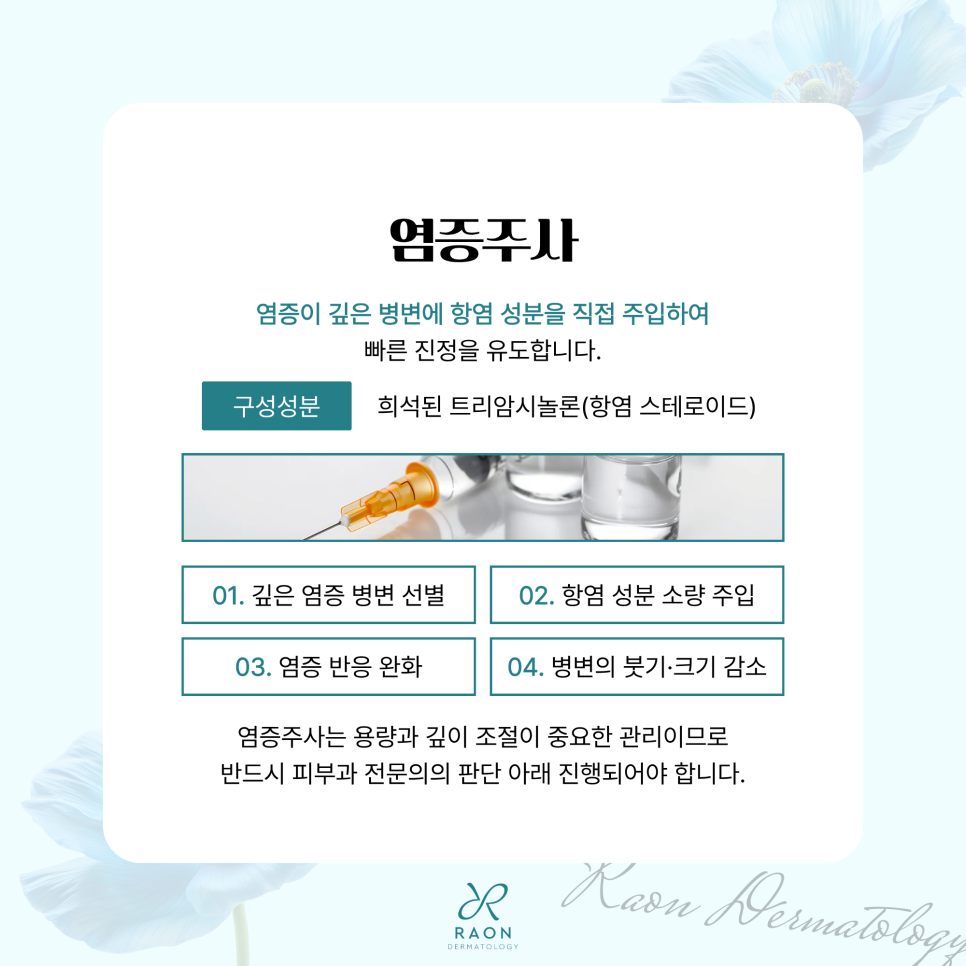
Anti-Inflammatory Injections
What Happens When the Three Treatments Are Combined?
Each of the three treatments has a different role. Extraction removes the materials causing the blockage inside the pores, Black Peel organizes the dead skin cell and sebum environment to address the conditions that contribute to recurrence, and anti-inflammatory injections quickly calm inflammation that has already deepened. When removal, regulation, and calming work together, they cover everything from current inflammation and developing comedones to the environment that contributes to recurrence, eliminating gaps in care.
With acne, results come from consistently breaking the cycle rather than relying on one dramatic treatment. Depending on the condition of the skin, all three treatments may sometimes be performed on the same day. The proportion and frequency of each treatment may vary from person to person, so consult with a board-certified dermatologist to create a care plan suited to you.
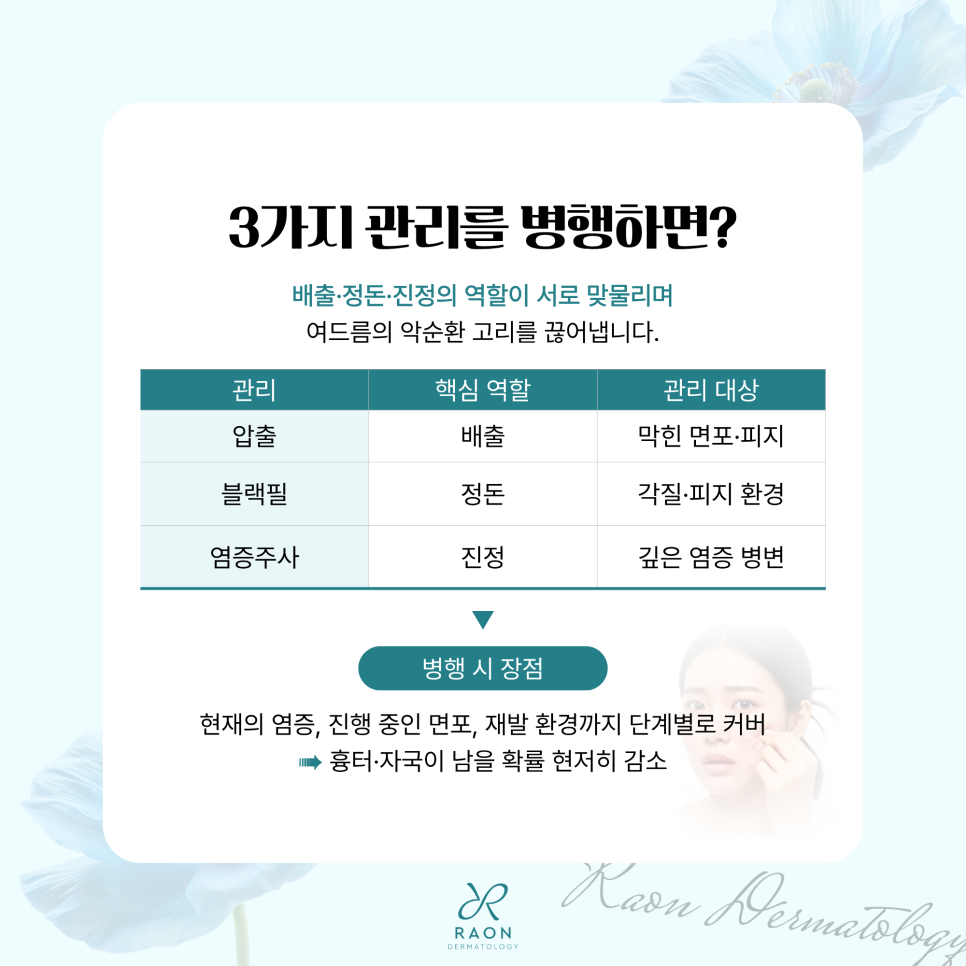
What Happens When the Three Treatments Are Combined?
The Basics of Acne Care