“If I’m getting a crown,
are you saying I absolutely have to get root canal treatment?”
Among dental treatments, the one patients worry about the most is ‘root canal treatment.’

“First you say I have a cavity,
then suddenly I need root canal treatment.”
“I heard that if I’m getting a crown, I have to get root canal treatment first...
Do I really have to do that?”
Hello.
I’m Lim Jong-woo, Chief Director of Gwanghwamun The Square Dental Clinic.
Today, I’ll explain a treatment that many people are curious about
and also misunderstand a lot:
‘When root canal treatment is really necessary,
and when it is not.’
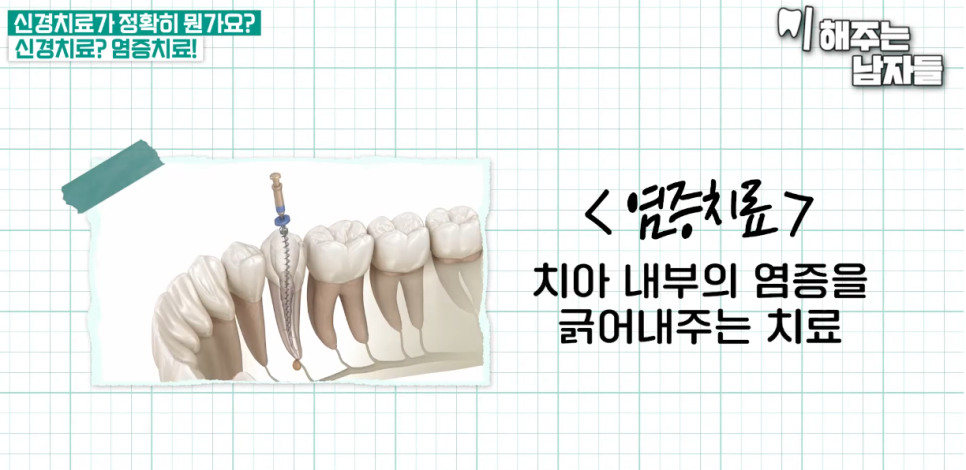
Root canal treatment is an ‘inflammation treatment.’
Because of the name root canal treatment,
many people think that all of the tooth’s nerve is removed,
or that the tooth ‘dies,’ but
strictly speaking, it is treatment for inflammation inside the tooth.
Understanding tooth structure first
A tooth is made up of a hard outer enamel layer
and a soft pulp tissue inside (nerves, blood vessels, etc.).
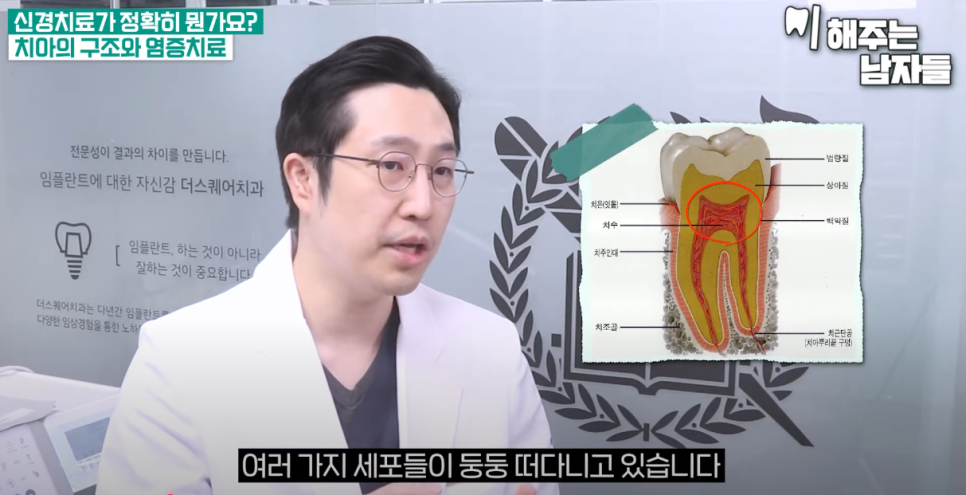
When bacteria invade this pulp,
or inflammation develops due to trauma, excessive force, or cavities,
the tooth becomes sensitive and painful,
and later the inflammation can spread to the bone at the root tip.
At that point, the treatment that removes the inflamed tissue,
disinfects the inside of the tooth,
and seals it is root canal treatment.
Not every cavity requires root canal treatment.
Root canal treatment is something that must be done when needed,
but it is absolutely not something that must be done for every cavity or crown treatment.

🔍 Treatment direction by cavity stage
| Cavity stage | Condition description | Need for root canal treatment |
|---|
| Stage 1 | Only the surface enamel is damaged (white or brown changes) | Not needed (fluoride application, observation) |
| Stage 2 | Has progressed to dentin (becoming deeper) | Depends on symptoms or exposure |
| Stage 3 | Pulpitis occurs (sensitive to hot or cold刺激) | Root canal treatment needed |
| Stage 4 | Nerve necrosis + inflammation at the root tip | Root canal treatment or extraction |
Crown = root canal treatment?
→ That is a false belief.
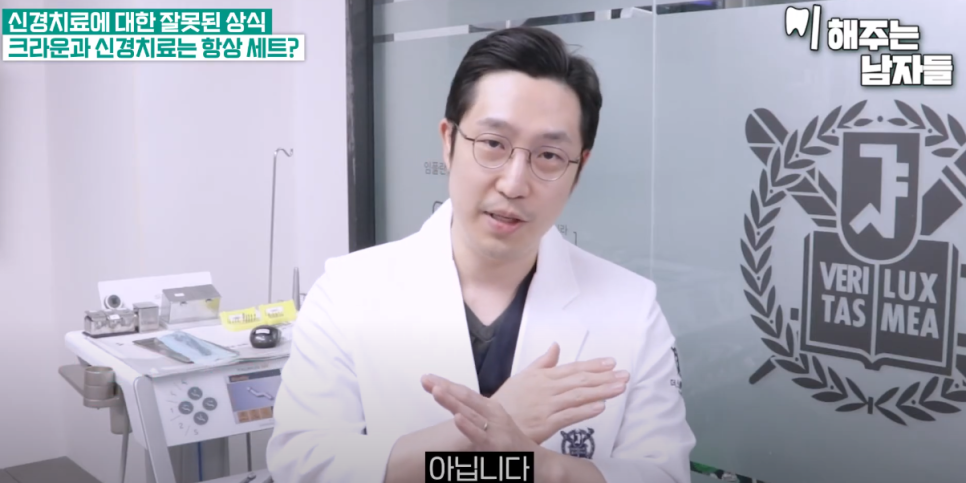
Many people ask,
“Isn’t root canal treatment required if I’m getting a crown?”
The answer is “No.”
Crown treatment does remove a lot of tooth structure,
but if the pulp (nerve tissue) can be protected without damage,
it is possible without root canal treatment.
In fact, preserving as much healthy tooth structure as possible
that can still be used is more important.
✅ To summarize
“Teeth that have had root canal treatment should receive a crown”
→ Mostly true
“You must get root canal treatment if you’re getting a crown”
→ ❌ Incorrect belief
Is there any way to avoid root canal treatment completely?
Of course there is.
If root canal treatment can be avoided,
it is better for the tooth’s lifespan as well,
so when possible, we try pulp-preserving treatment.
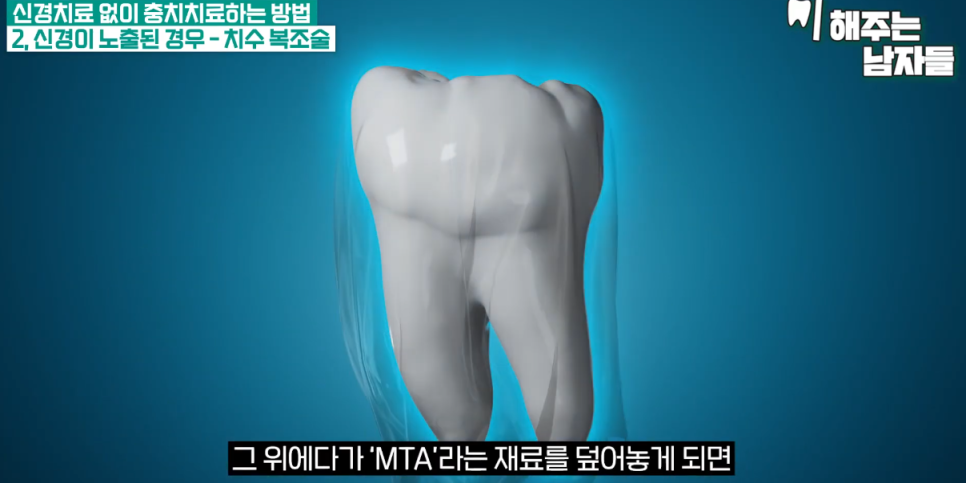
✔️ Representative pulp-preserving treatment
Pulp capping (Vital Pulp Therapy)
-
When the nerve has been exposed
but the inflammation is extremely mild or in the early stage
-
The nerve area is covered with a biocompatible material (such as MTA),
and managed so the inflammation does not spread further
-
A treatment that is especially valuable for younger patients or very early inflammation
However, the treatment is technically demanding,
and thorough cooperation from the patient is necessary.
Root canal treatment should be performed only when it is truly necessary.
Once again, let me emphasize this.
Root canal treatment should not become overtreatment,
but on the other hand, if it is necessary, it should not be forcibly avoided.
If the condition has already progressed to irreversible pulpitis,
if there is a severe reaction to cold water or hot food,
or pain continues even without any stimulation,
and inflammation is confirmed at the root tip on X-ray,
then root canal treatment is the last resort to save the tooth.
"Saving the tooth comes first.
Root canal treatment is only the ‘last option.’"

The question I hear most often during treatment is
“Do I really have to get root canal treatment?”
Every time, I answer like this.
"If this were my tooth,
I would have tried to avoid root canal treatment as much as possible.
But if this is a situation where it must be done to save the tooth,
you need to make that decision decisively."
Root canal treatment is a burden for both the patient
and the doctor.
So we always consider the degree of inflammation,
the patient’s age and condition,
and the function and structure of the tooth as a whole,
and recommend root canal treatment only when it is truly necessary.
The answer is a ‘balanced diagnosis.’
Root canal treatment is not something that must always be done,
and it is not something that should never be done.
Through an accurate diagnosis and sufficient communication with the patient,
it is important to find the direction that will allow the tooth to stay healthy for as long as possible.
If you are still hesitating about whether you need root canal treatment,
don’t decide on your own—make sure to get a diagnosis.
There is never only one way to save a tooth.
I hope this helps protect your dental health.
Thank you.
–
From Lim Jong-woo, Chief Director of Gwanghwamun The Square Dental Clinic