“My implant feels loose.
Is something serious wrong?”
After finishing treatment,
patients who visit the clinic again after a long time
often say this.
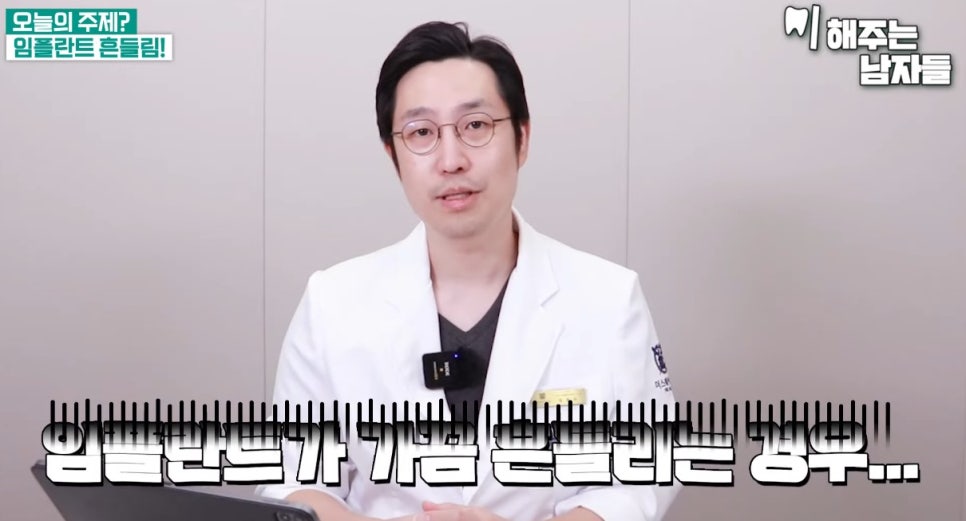
“Doctor, my implant feels like it’s a bit loose.
Do I need to do it again?”
This is a concern we often hear in the dental clinic.
Patients may feel a great deal of anxiety,
worried that something may have gone wrong with the implant.
In reality, the causes vary widely,
from simple issues to serious conditions that require prompt treatment.
Hello.
I’m Lim Jong-woo,
Chief Director of Gwanghwamun The Square Dental Clinic.
Today, I’ll explain step by step why
many patients worry about “implant looseness,”
and how to judge what it means.
The reason an implant feels loose
starts with understanding its structure.
The structure of an implant
An implant is largely made up of three parts.
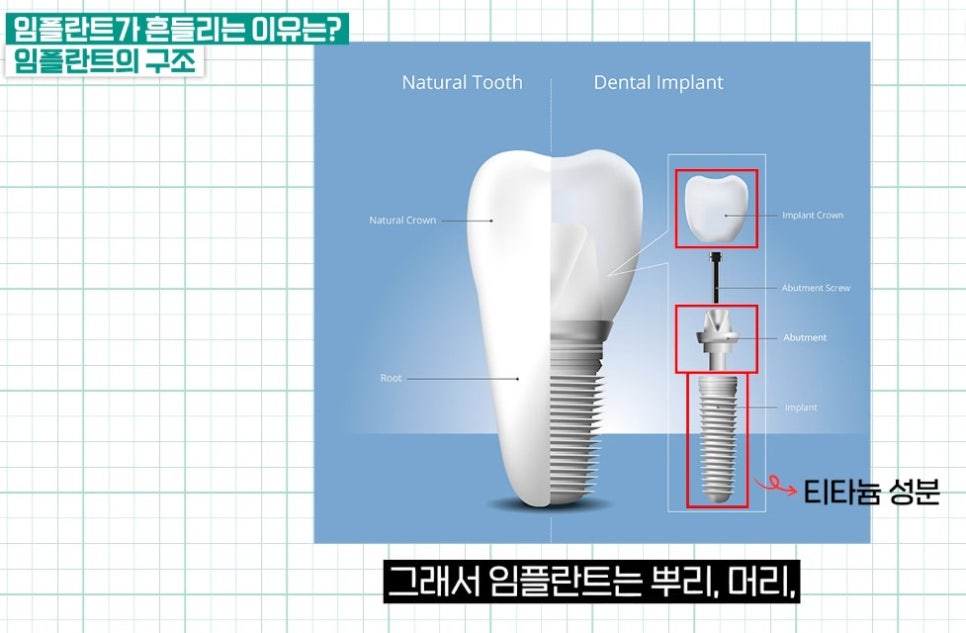
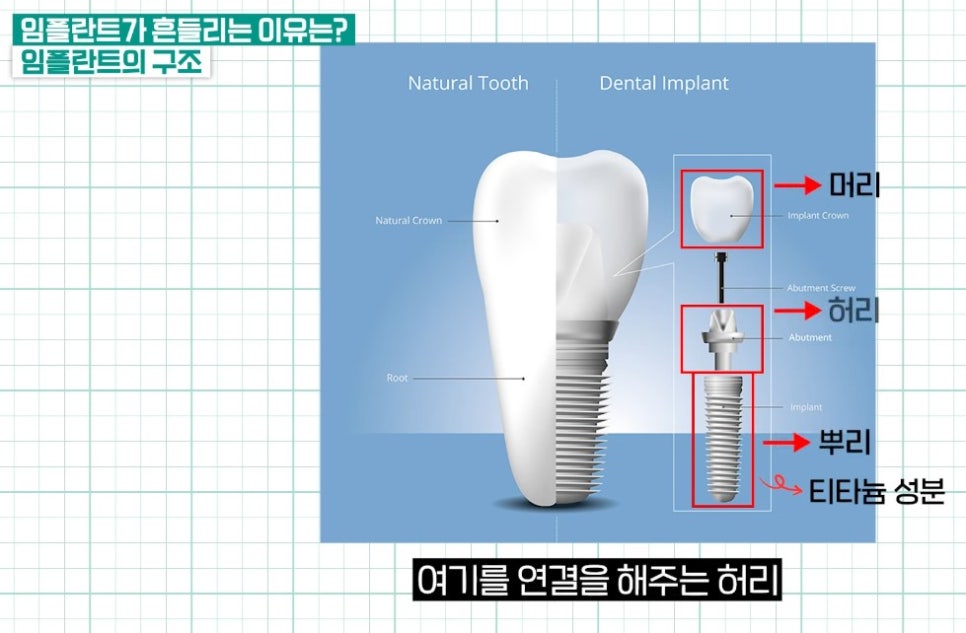
- Implant fixture
The part that is placed in the bone and acts as the “root”
- Abutment
The “waist” that connects the root and the prosthesis
- Crown
The visible “head,” the part used for chewing
Depending on where the looseness occurs,
the cause and solution are different.
Causes of looseness
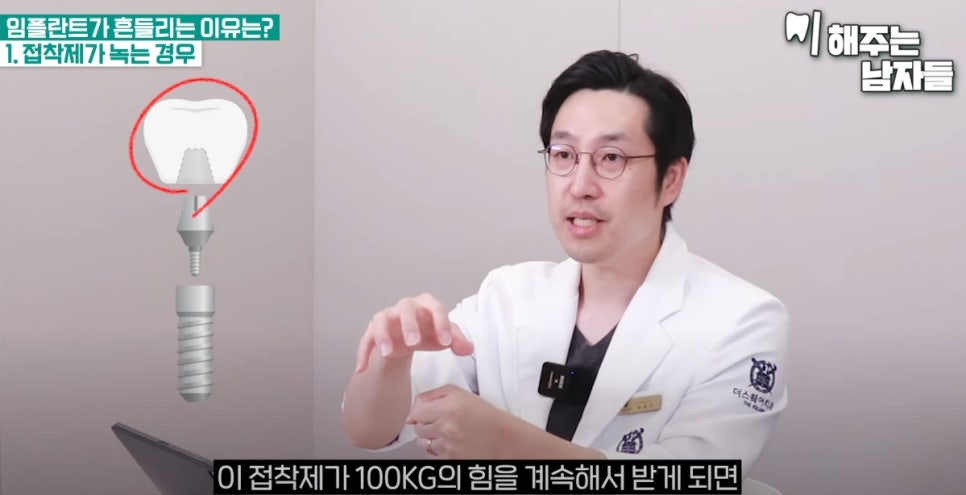
- Crown bonding problem
The most common case is when the crown
(the upper part) feels loose because the bonding has weakened.
As strong chewing force continues to be applied,
the adhesive can gradually dissolve and become loose.
In this case, it can be easily resolved by rebonding it
or replacing it after cleaning the inside.
Although it is uncomfortable for the patient,
the level of treatment difficulty is relatively low.
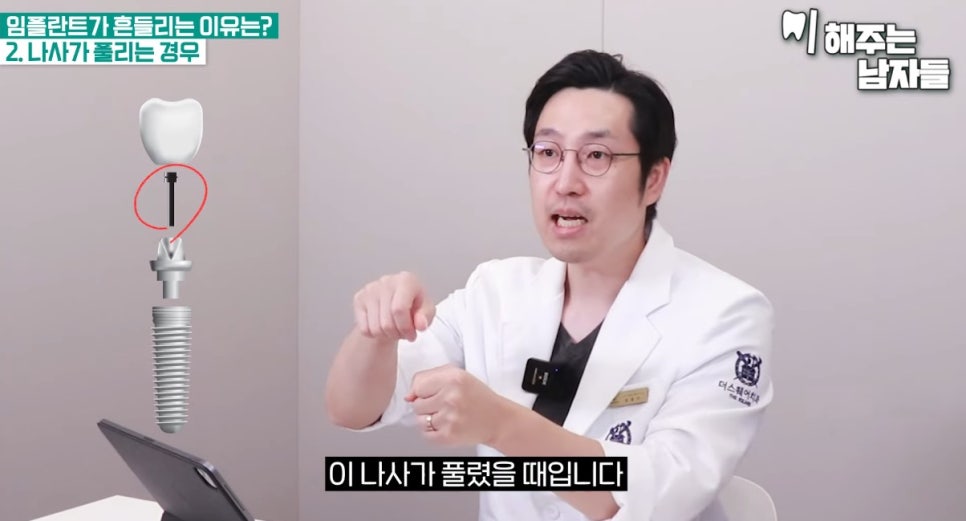
- Abutment screw loosening
The screw that supports the implant
can also become loose.
This can happen especially in areas with strong chewing force,
such as the molars,
or in cases of a single implant.
When the screw loosens, the abutment and crown
may feel like they are loosening together.
If this condition is left untreated, the screw can become even looser
and may damage the root as well, so you should visit the clinic
as soon as possible to have it tightened.
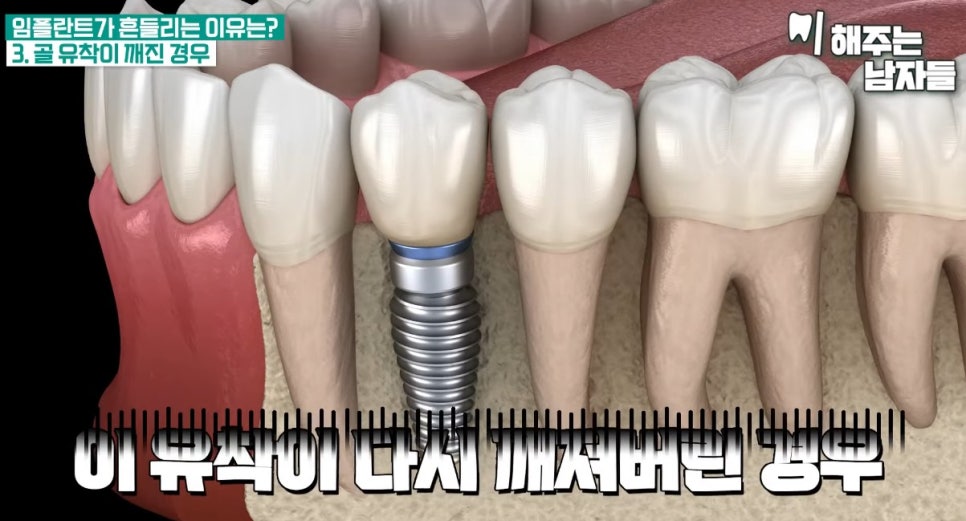
- Failure or loss of osseointegration
The most serious case is when
the implant root (fixture) itself is loose.
This means that the process of bonding with the bone after implant placement,
called “osseointegration,” either did not go well from the start
or was lost over time.
In this case, implant reinstallation,
that is, surgery again, is usually necessary.
In particular, if you feel pain when chewing,
you must visit the clinic quickly.
If treatment is delayed, bone loss can also occur,
which may lead to a more complicated surgery.
A loose implant
can lead to bigger problems if left alone.
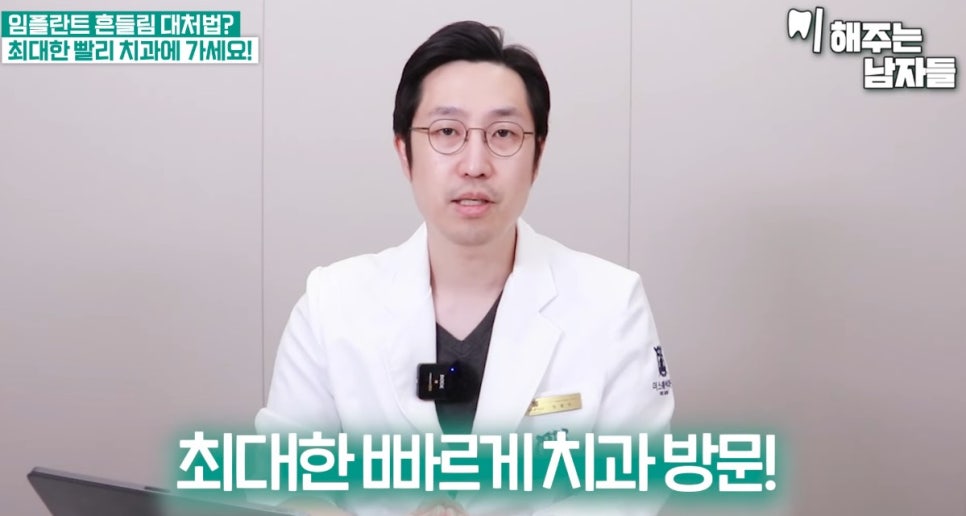
If you think, “It’ll probably be fine if I just leave it alone,”
looseness can lead to the crown cracking,
the abutment developing cracks,
and even the entire implant coming out.
In actual cases as well, there have been instances where,
after ignoring screw loosening,
the root was eventually damaged,
leading to implant removal and reoperation.
If you feel even a small abnormality, it is most important not to delay
and to visit the dental clinic.
Frequently asked questions from patients,
answered here.
“If an implant feels loose,
do I always have to get it placed again?”
→ No.
Most cases can be resolved with a simple bonding issue
or by tightening the screw.
“Why do the screws keep coming loose?”

→ Surgical angle,
the direction of chewing force,
and teeth grinding habits can all have an effect.
If needed, occlusal adjustment or wearing a mouthpiece can help.
“Can I receive treatment if the implant was placed at another clinic?”

→ Yes.
Through a precise diagnosis,
we check whether maintenance is possible.
An implant should be addressed before it becomes loose.
There are many reasons an implant can feel loose,
but in any case, prompt diagnosis and treatment determine the outcome.
An implant is a structure that can fully perform its function only when the root, waist, and head
fit together precisely.
If even one part becomes loose or develops a problem,
the entire system can collapse,
so you should never be careless.
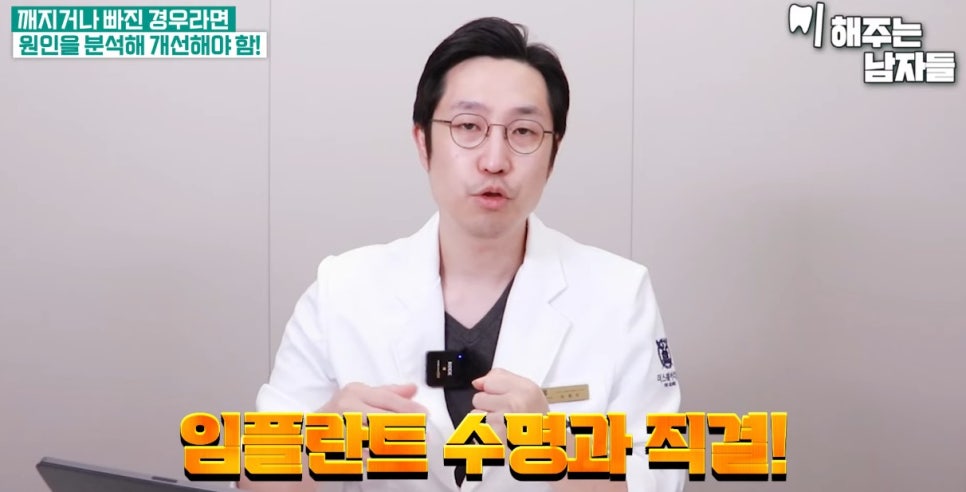
“An implant is also a consumable.
If you notice even a small sign of abnormality,
it means it may soon fail.”
If you want your implant to last a long time,
please respond sensitively even to small signs of looseness,
and protect the healthy lifespan of the prosthesis
through regular maintenance and care.
If you have recently felt a sense of discomfort
or pain when chewing in the implant area,
please do not judge it on your own and
be sure to have it checked at a dental clinic.
We support your healthy smile today as well.
Thank you.
—
Gwanghwamun The Square Dental Clinic
Chief Director Lim Jong-woo