“Doctor, I brush carefully
and even get scaling, so why do my teeth feel sensitive and crack?
Is it because of cavities?”
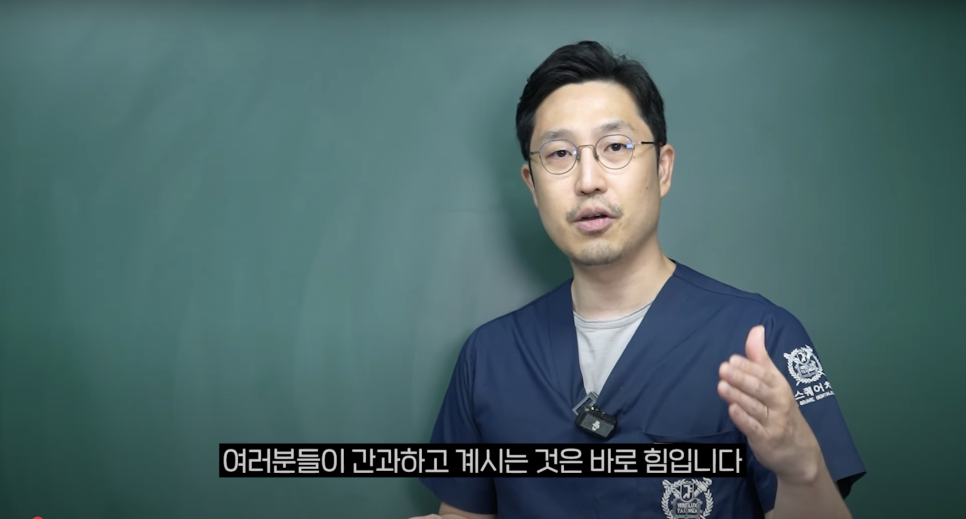
Hello.
I’m Lim Jong-woo, Chief Director of Gwanghwamun The Square Dental Clinic.
Many people immediately suspect cavities when their teeth feel sensitive or crack.
However, in actual clinical practice,
there are far more cases where teeth are damaged for reasons completely different from cavities.
Today, I’d like to talk about the real cause of tooth damage that cannot be prevented by brushing alone:
“force” (bite force and habitual pressure).

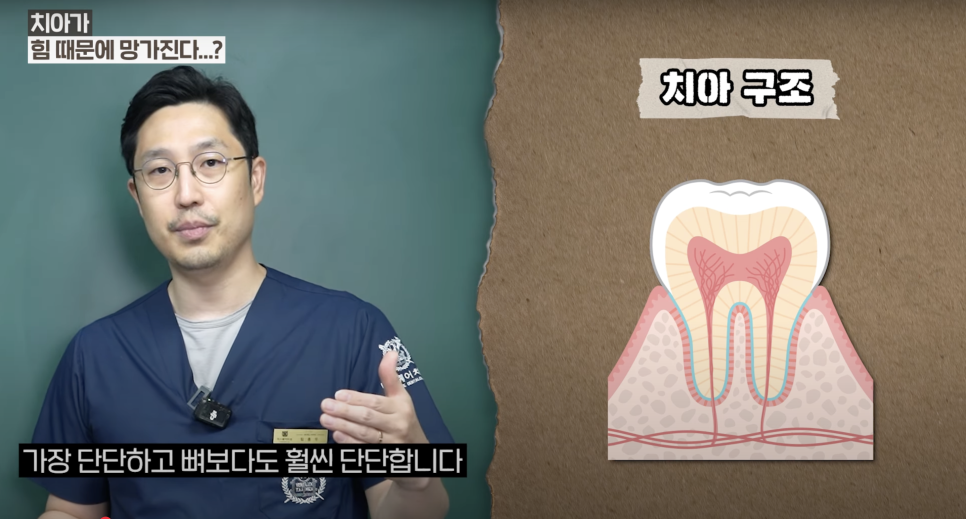
Teeth are the hardest tissue in our body.
They are stronger than bone,
and they are also what remain until the end in ancient ruins.
When teeth hit each other, a force of about 100 kg to 150 kg is applied instantly.
Because they have to endure this enormous pressure every day,
even the hardest teeth will eventually crack or break.
In other words, the root cause is not hard foods,
but the excessive force that builds up repeatedly as teeth come into contact with each other.
Patients often ask,
“So what habits should I avoid?”
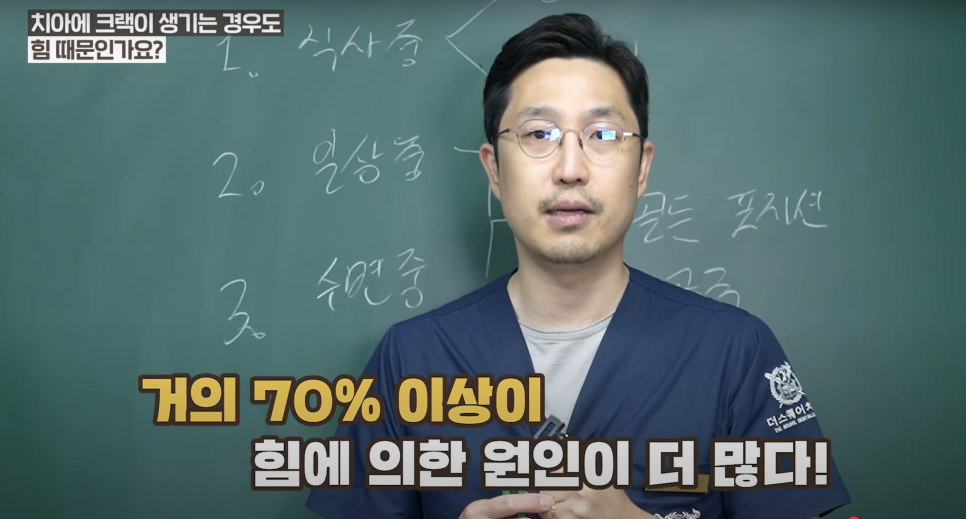
Based on clinical experience, problems mainly occur in three situations.
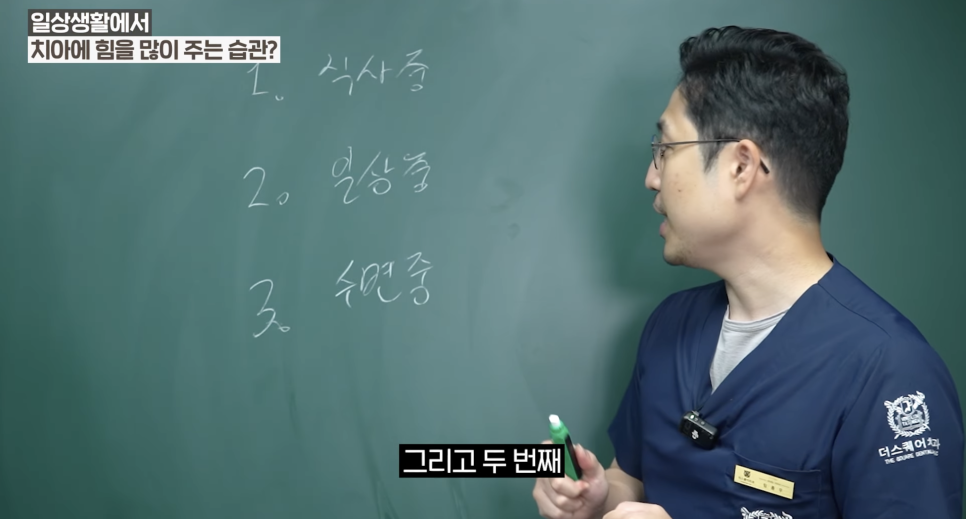
- Habits during meals
Chewing food thoroughly is not always good.
If you chew too hard and for too long beyond what is necessary,
the amount of time teeth stay in contact with each other increases,
which accelerates wear and damage.
The habit of chewing too quickly is also not good.
If the speed doubles,
the force applied to the teeth increases more than fourfold.
- Habits in daily life
When focusing or under stress,
many people unconsciously clench their teeth.
If tension in the masseter muscle continues,
small cracks can form in the teeth,
which eventually leads to sensitivity.
- Habits during sleep
During sleep, clenching or grinding teeth causes the greatest damage.
If you have a habit of clenching during the day,
it almost continues the same way at night.
That is why many people wake up with a stiff jaw
or sensitive teeth in the morning.
If damage has occurred because of habits,
appropriate treatment is needed,
and it is important to prevent it from progressing
into larger fractures or pain.
How do we treat teeth that have already been damaged?
● If it is an early microcrack or wear
In the early stage, we proceed with conservative treatment such as resin or inlay
and reinforce the weakened area.
● If there is a large fracture or nerve damage
If the crack has progressed into the inside of the tooth,
root canal treatment may be necessary,
and afterward the tooth is protected with a crown (prosthesis).
● Severe teeth grinding or bite problems
A custom night guard (splint device)
should be used to protect the teeth during sleep and stabilize the bite.
Just because teeth feel sensitive or cracked
does not mean it is always due to cavities.
In many cases, the cause is force that cannot be seen.
However, it is difficult for patients to tell on their own whether it is a cavity
or damage caused by force.
If you dismiss minor sensitivity or a small crack,
it may eventually lead to a larger fracture or root canal treatment.
Therefore, even if the symptoms are mild, please do not leave them untreated,
and I recommend getting an accurate diagnosis at the dental clinic.
Checking and responding early
is the most reliable way to use your teeth for a long time.
I sincerely hope your teeth are freed from unnecessary force
and remain healthy and functional for a long time.
Thank you.
_
Gwanghwamun The Square Dental Clinic
From Lim Jong-woo, Chief Director