“Director, do implants just get placed in,
and then bond with the bone on their own?”
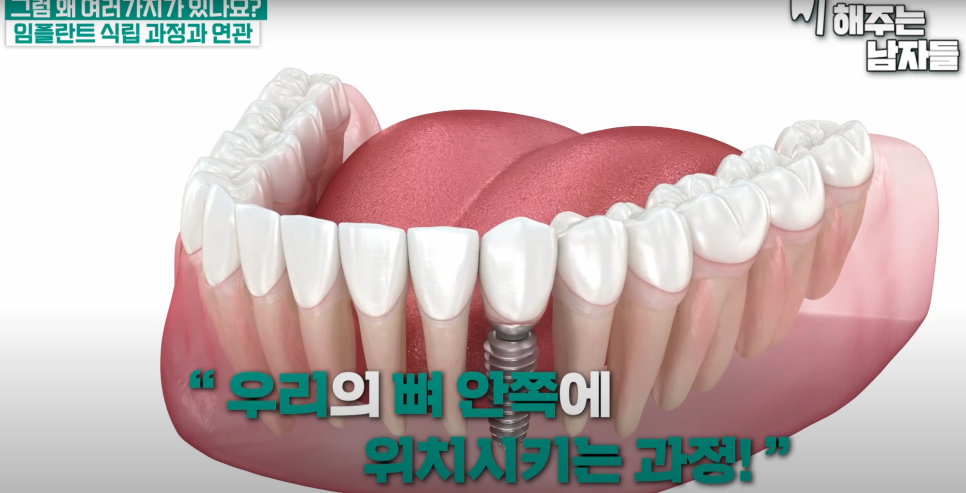
On the surface, it may seem as simple as screwing them in,
but in reality, a highly precise process is needed
to help them settle in like a tooth root.
Hello,
I am Lim Jong-woo,
Chief Director of Gwanghwamun The Square Dental Clinic.
Today, I will explain in an easy way how implants bond firmly with bone,
what role a technique called surface treatment plays,
and why that alone is not enough.
The process by which an implant connects with bone
Implants are made of a metal called titanium.
The reason this material is special is that the human body does not reject it and it bonds well with bone.
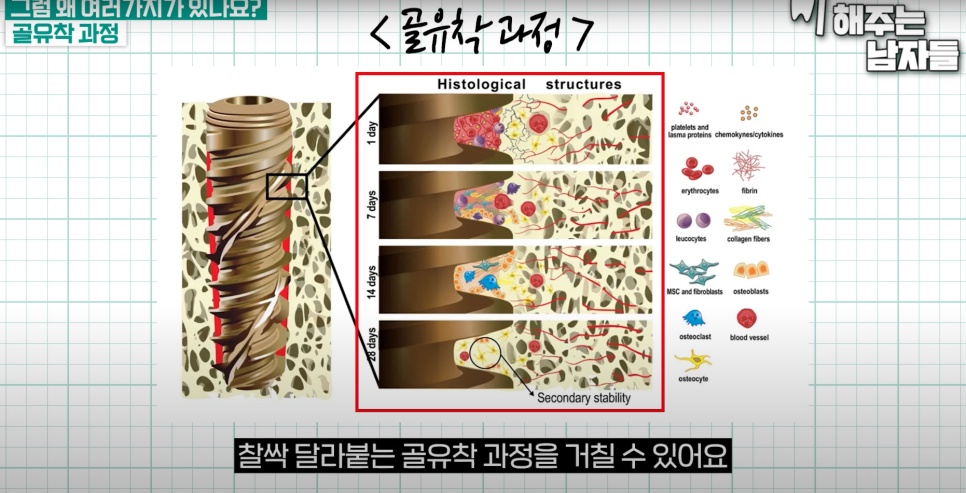
This is called osseointegration.
When an implant is first placed, it may look firmly fixed like a screw,
but in fact it is still in an unstable state.
Over time, bone gradually surrounds the implant surface,
and as chemical and mechanical bonds form, true stability is achieved.
This is exactly why this process usually takes several months.
An implant is not simply finished once it is “placed”;
it must go through a period of bonding with bone
before it can function like a real tooth.

Technology that helps bone adhere
To speed up the bonding between implants and bone,
manufacturers apply various surface treatments.
This method creates fine irregularities on the implant root portion,
increasing the footholds that bone cells can attach to.
This expands the contact area,
improves initial stability,
and can help healing progress faster.
Recently, a method called hydrophilic treatment has also been widely used.
It makes the implant surface more compatible with water,
helping tissue fluid in the body to penetrate quickly
and allowing the bond with bone to form more smoothly.
You can think of surface treatment as an auxiliary measure
that helps the implant and bone bond more quickly and more stably.
An important factor you should not forget for implant success
Surface treatment technology is an important tool that helps the implant bond with bone
more quickly and more firmly.
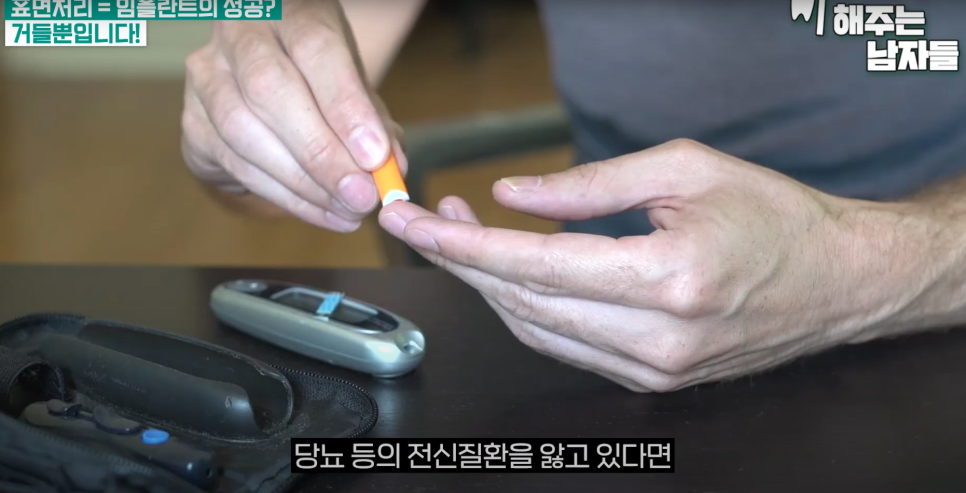
However, if the patient’s physical condition is not supportive,
the effect may be limited.
If you have diabetes or osteoporosis, recovery may be slower,
and smoking interferes with blood flow, increasing the risk of failure.
A habit of clenching your teeth can place excessive force on the implant
and compromise stability.
In the end, implant success can be maintained long term only when surface treatment technology is supported by overall health
and lifestyle habits.

Implant success is not determined by the latest surface technology alone.
Of course, surface treatment plays an important role in helping the implant adhere to bone more quickly
and more firmly.
However, even more important are the patient’s bone condition, health management,
and the doctor’s plan and experience in carrying out the surgery.
Rather than focusing only on the flashy names of technologies in advertisements,
what matters is whether a treatment plan suited to you has been established
and whether your health conditions are being properly considered.
If you are considering implants, rather than the surface treatment technology itself,
it is most important to carefully check your own physical condition,
receive sufficient consultation,
and undergo treatment in a trustworthy environment.
I hope today’s post was helpful for your healthy dental life.
_
Gwanghwamun The Square Dental Clinic
From Lim Jong-woo, Chief Director