When raising a child, I get asked this question a lot.
“People say cavities can be passed on if you kiss a baby.
Is that really true?”
In particular, opinions often differ between parents and grandparents,
and these days you sometimes see posts or videos on social media saying,
“Never kiss them.”
But in reality, it is almost impossible
to go through daily life without kissing a child at all.

Hello,
I’m Lim Jong-woo, the chief director of
Gwanghwamun The Square Dental Clinic.
Today, I’ll talk about the relationship between kisses and the transmission of cavity-causing bacteria,
and the oral care principles parents should actually follow.
What bacteria can be passed through kissing?
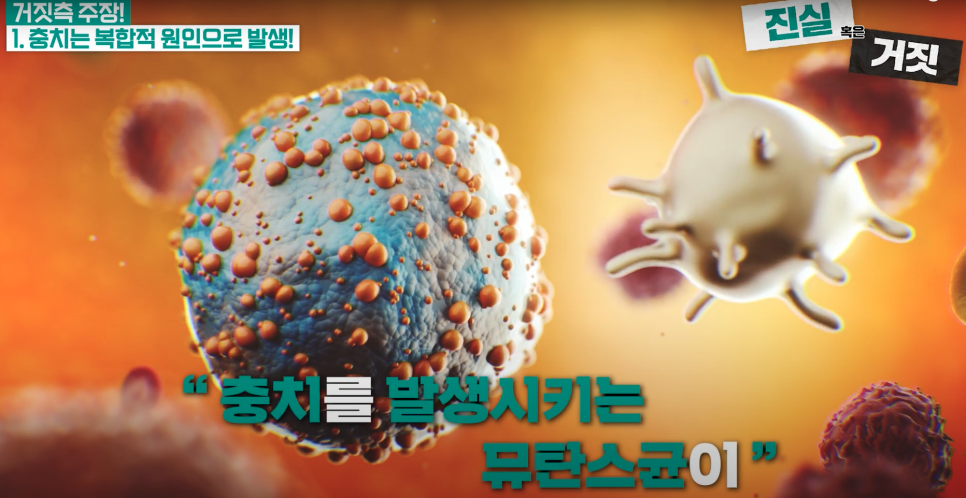
The bacteria that mainly cause cavities are
Streptococcus mutans and
Lactobacillus.
They feed on sugar, produce acid that dissolves the minerals in teeth,
and create sticky polysaccharides (glucans) that adhere to the tooth surface (plaque).
So rather than simply whether bacteria are present,
cavities progress when bacteria + how often sugar is exposed + the condition of tooth care
all work together.
How does bacterial infection happen?
When bacteria are passed from a parent to a child,
it is called vertical transmission.
Common situations include
sharing a spoon or cup,
blowing on food to cool it before feeding,
and mouth-to-mouth kissing.
On the other hand, kisses on the cheek or forehead,
where saliva hardly makes contact, are not something to worry about.
The important point is
that bacteria can only settle once the child has teeth.
Usually, the first tooth appears around 6 months of age,
and between 1 and 3 years old there is a sensitive period when bacteria can settle more easily.

Bacteria can also be passed through contact with siblings or other children of the same age,
which is called horizontal transmission.
Typical examples are in daycare centers and kindergartens,
where cups or snacks are shared.
Bacterial transmission is not determined by a single kiss,
but by the accumulation of small contacts in everyday life.

Daily habits that help prevent cavities
Even if bacteria are transmitted,
whether they progress into cavities depends on the environment afterward.
If you do not frequently eat sweets,
manage plaque well with brushing and flossing,
and strengthen teeth through fluoride toothpaste or fluoride application,
cavities may stop at an early stage.
What matters far more than transmission itself
is managing the environment after transmission.

Cavity prevention tips parents should remember
● Be sure to use dishes and spoons separately.
-> If you feed a child with a parent’s spoon, bacteria can be passed immediately.
● Show love with kisses, but avoid mouth-to-mouth contact.
● Reduce sweets by “how often,” not just “how much.”
->“How many times” you eat is more important than “how much” you eat.
After eating, make it a habit to rinse with water
or brush your teeth.
● Start brushing with fluoride toothpaste as soon as the first tooth appears.
-> If even one tooth has erupted, it needs care.
It is best to brush with a rice-grain-sized amount of fluoride toothpaste.
● Take care of the parents’ oral health first.
-> If parents have cavities or gum disease,
it can be passed to the child as is.

Kissing a child is a very natural way
to express a parent’s love.
The important thing is not to ban this behavior outright,
but to reduce situations where saliva mixes directly,
and to manage oral care thoroughly for both children and parents.
Ultimately, with cavities, the deciding factor is not whether transmission happens,
but how well the environment is managed.
If parents maintain good oral health,
and add small habits to care for the child’s teeth,
you can kiss them with complete peace of mind.
I hope today’s post helps ease your worries and allows you to
share warmer moments with your child.
_
Gwanghwamun The Square Dental Clinic
From Lim Jong-woo, Chief Director