Hello,
I’m Lim Jong-woo, the chief director of Gwanghwamun The Square Dental Clinic.
One of the questions patients ask most often when they come to the dentist is:
“Doctor, do I definitely need to have my wisdom teeth removed?”
It’s a question everyone has probably wondered about at least once.
In particular, many people feel anxious even when they are not in pain because they are afraid of wisdom tooth extraction.
Today, based on my clinical experience, I’ll explain how to tell the difference between cases where wisdom teeth must be removed and cases where they can be observed.

Why do wisdom teeth cause problems?
Wisdom teeth, like other molars, are teeth that were meant to do their job, but in modern people they often cause problems.
The reason is that there is not enough space in the jawbone.
As the jaw has become smaller than before, wisdom teeth often cannot erupt properly and may come out at an angle or remain buried in the gums.
The problems that can result are as follows:
✔️ Food gets trapped, causing cavities and gum disease
✔️ Root decay in the molars in front → tooth loss
✔️ Repeated gum inflammation, swelling, and pain
✔️ Cysts develop → bone damage
In other words, the wisdom tooth itself is not the issue;
it is what effect it has on the surrounding area
that determines whether treatment is needed.

Wisdom teeth that must be removed
- When food frequently gets trapped and the gums swell
If a wisdom tooth is coming in at an angle,
food easily gets trapped, and bad odor, inflammation, and cavities keep recurring.
In particular, if decay spreads to the back side of the molar in front,
not only the wisdom tooth but also the molar in front may need to be extracted,
which can become a serious situation.
- When a cyst or lesion is found
If an odontogenic cyst develops around a wisdom tooth,
it can dissolve bone and affect other teeth.
In this case, wisdom tooth extraction and cyst removal are both necessary.
- When swelling and pain keep coming back
If a wisdom tooth swells and hurts even once or twice a year,
the intervals will become shorter over time,
and the pain will become worse.
Tooth pain is one of the most severe pains the human body can experience,
so once it reaches this stage,
even daily life can become difficult.

Wisdom teeth that do not need to be removed
- When they have grown in normally and are well maintained
If a wisdom tooth is positioned properly
and you can brush it well with no cavities, inflammation, or bad odor,
there is no need to remove it.
- When they are buried in the bone and cause no problems at all
Wisdom teeth that are not visible on the surface
and do not affect the surrounding teeth
can be left as they are.
However, you should confirm through regular checkups
that there are no changes.

What to be careful about after extraction
Wisdom tooth extraction is not simply
“pull it out and it’s over.”
If the tooth is deeply buried,
incisions in the gums or bone removal may be necessary,
so pain and swelling can be greater.
Also, smoking or taking oral contraceptives after extraction
can interfere with healing
and cause complications such as dry socket.
Therefore, after extraction,
managing your daily habits is important.
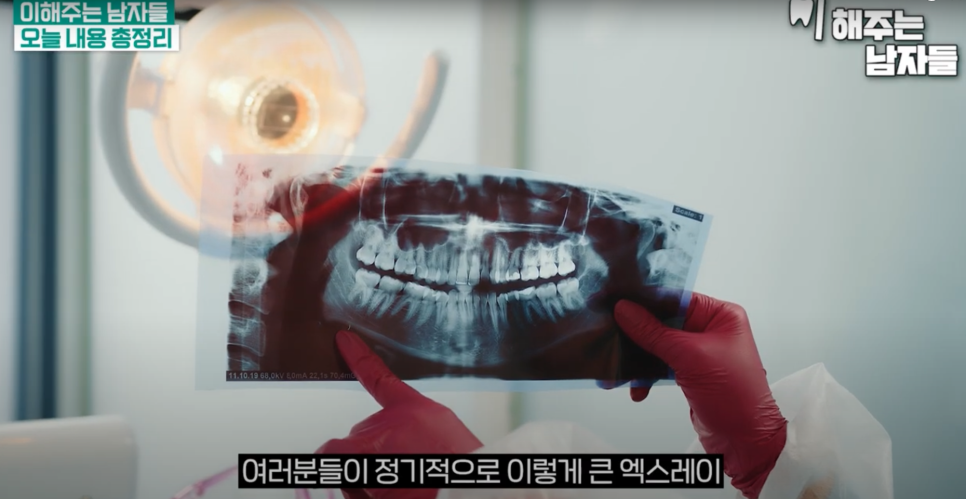
To sum up, wisdom teeth are
not teeth that must always be removed.
If they are causing problems for the surrounding teeth and gums,
immediate extraction is needed;
if they are stable and symptom-free,
they can be monitored through regular checkups.
There is no need to fear them unnecessarily,
and you should definitely avoid becoming careless and ending up losing even the molar in front.
If you are worried about your wisdom teeth,
I recommend getting a professional diagnosis.
Your teeth are more precious
than you might think.
Early detection and management are more important than anything else.
I hope today’s post was of some help
to those with the same concern.
Sincerely,
Lim Jong-woo
Chief Director, Gwanghwamun The Square Dental Clinic