Hello.
At The Square Dental Clinic,
we are committed to providing
high-quality care based on
conservative and restorative treatment,
with a harmonious balance of
aesthetics and function.

When chewing tough or hard foods, or when drinking cold water...
if you experience a sudden, sharp pain that feels like an electric shock,
it may be a crack in your tooth—a so-called dental crack.
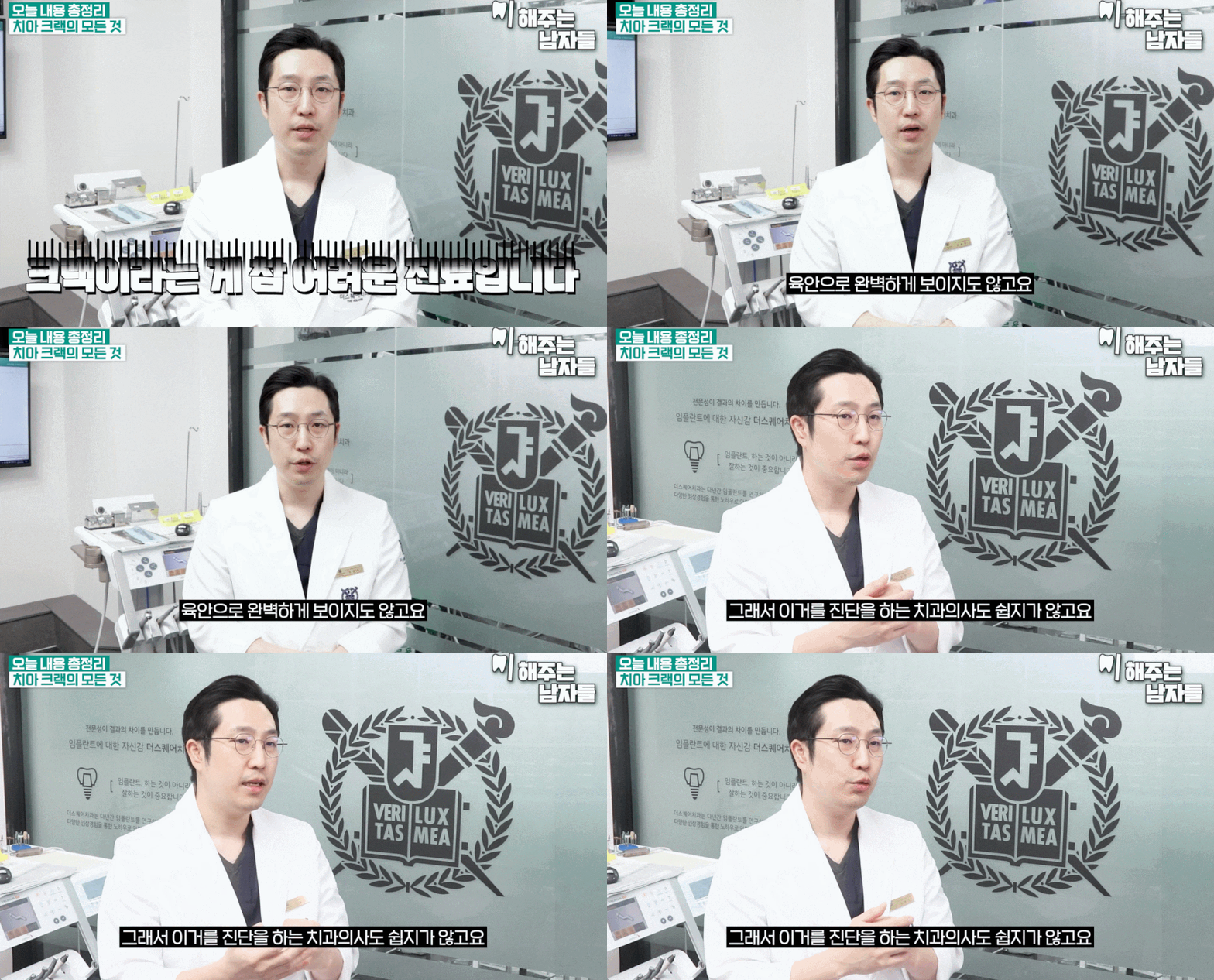
Although there may be some symptoms, cracks are not visible to the naked eye,
and many people keep postponing their dental visits, thinking that the dentist will probably recommend covering or extracting the tooth(^^;).
What I would like to say to those people is this:
having a crack in a tooth does not mean that treatment must always be performed immediately.
However, we do not recommend deciding this on your own.
Therefore, in this post, we will go through the following three topics step by step:
- Whether dental cracks require treatment
- Characteristics of dental crack resin
- Characteristics of dental crack crowns
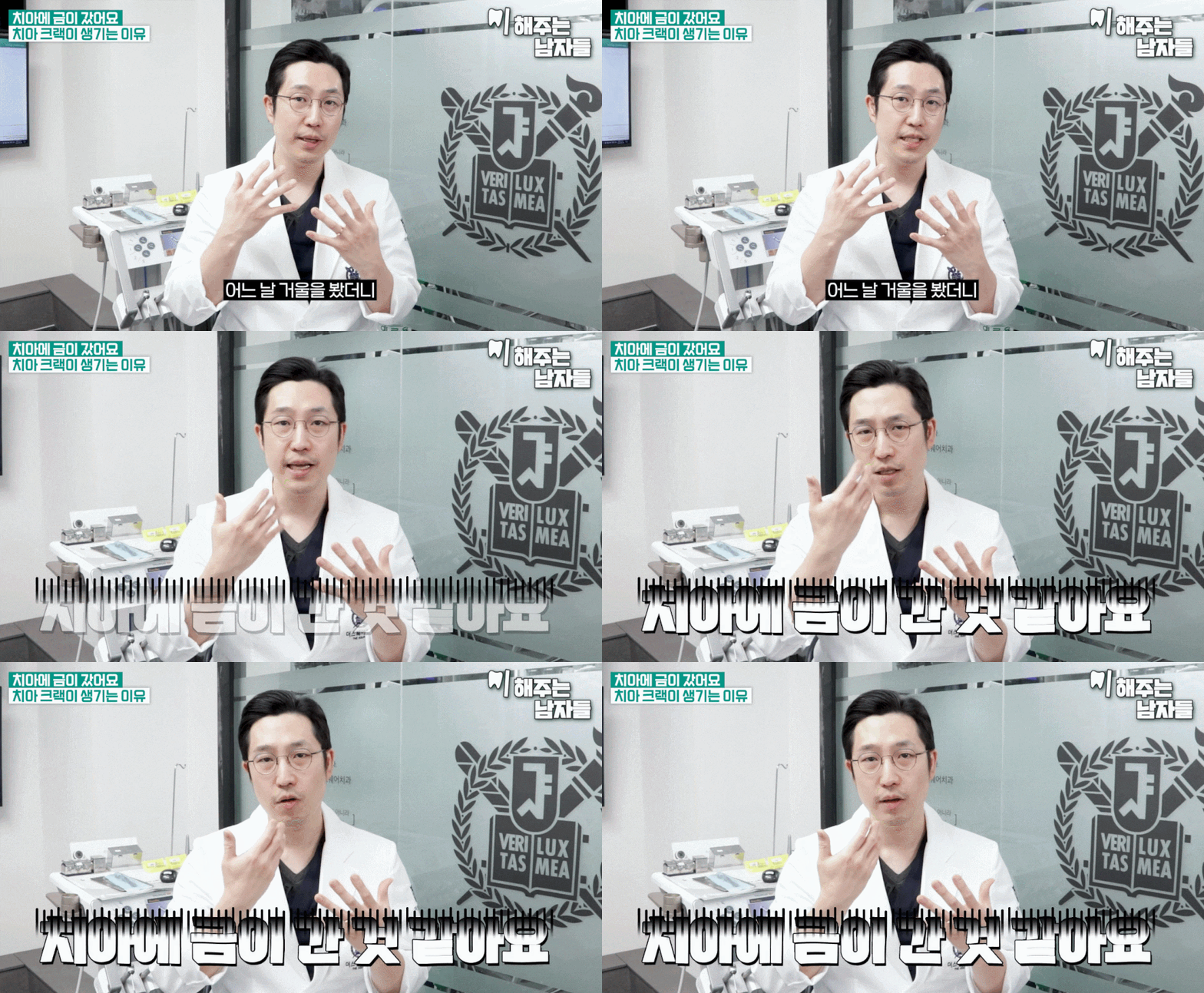
When a tooth is cracked,
is treatment necessary?
As mentioned above, a cracked tooth does not necessarily require treatment.
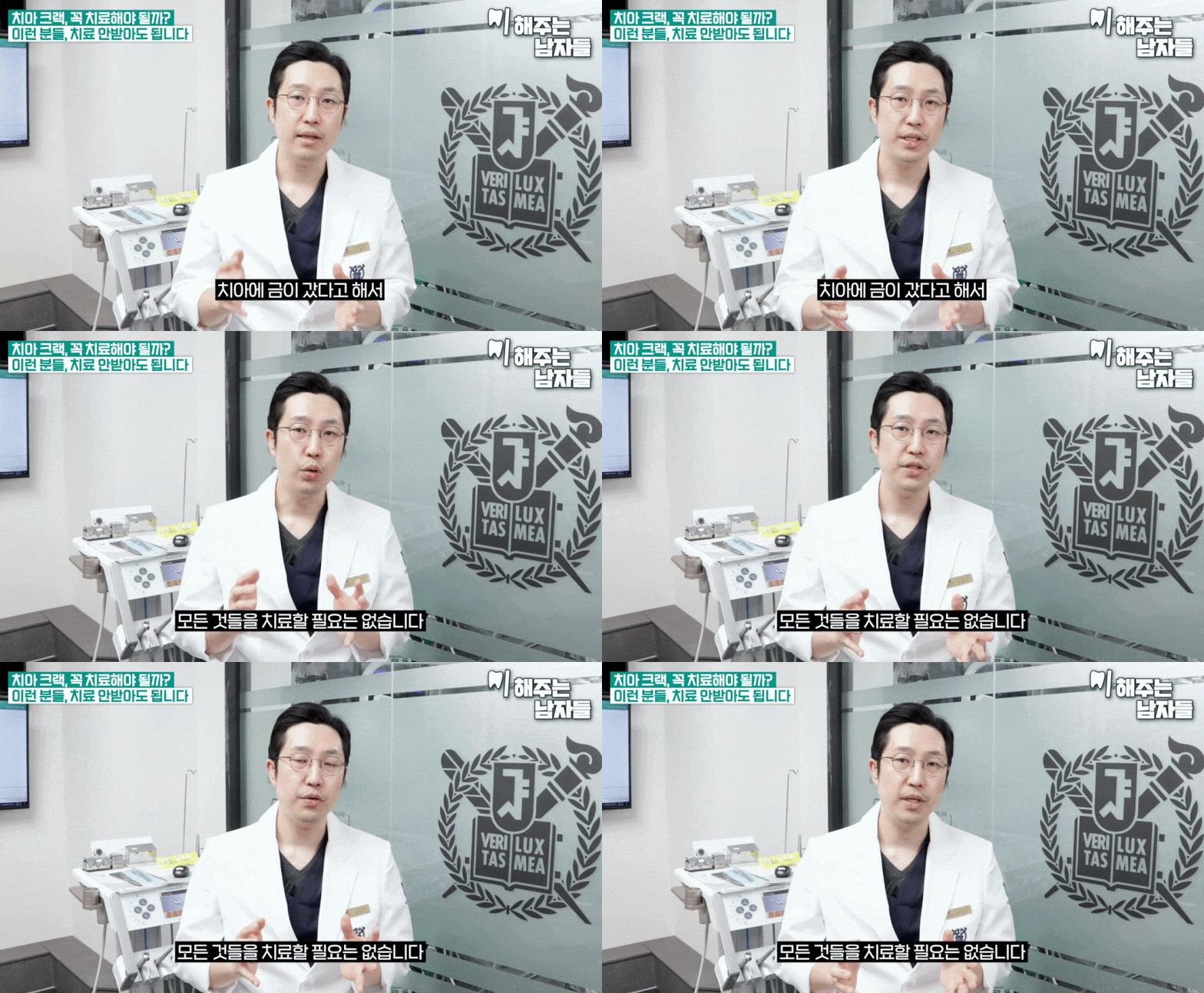
All adults have some degree of fine cracking in their teeth.
Because teeth are subject to wear, they naturally develop cracks after withstanding chewing forces over many years.
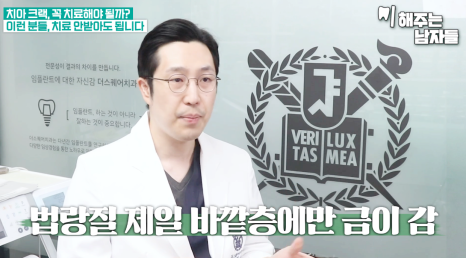
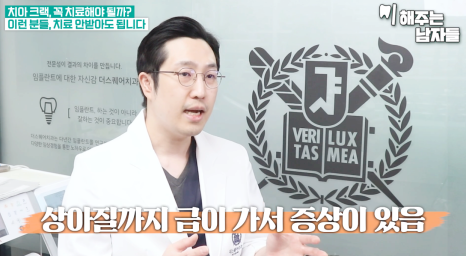
If your dental crack symptoms
-
are limited to the enamel only, or
-
have reached the dentin but are still mild,
there may be no need to undergo treatment such as filing down the tooth.
Instead, regular checkups can be used to monitor whether the crack is becoming deeper.
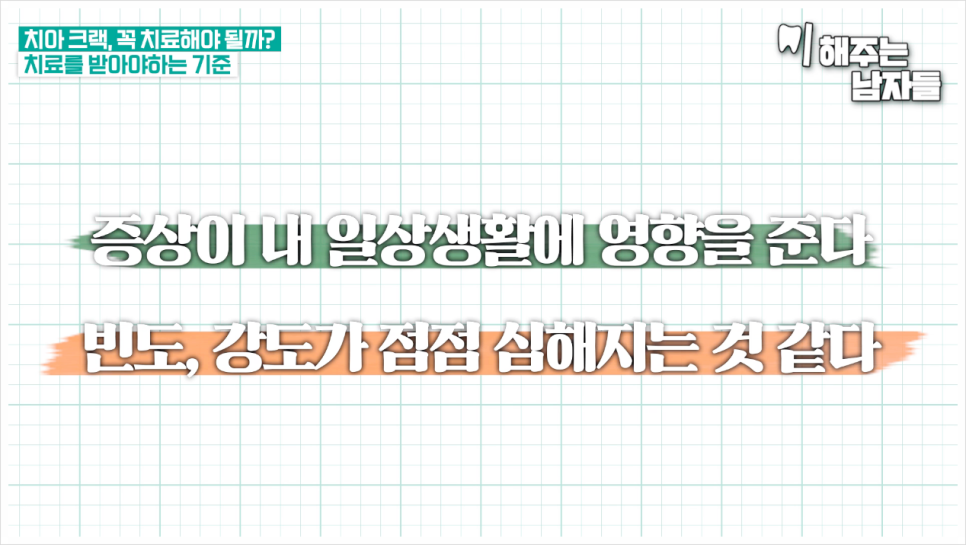
On the other hand, if the dental crack
✔️ causes pain so severe that you cannot fall asleep at night,
✔️ causes extreme sensitivity when eating or drinking something cold or hot, or
✔️ is accompanied by pain that is increasing in intensity and frequency,
immediate treatment is necessary.
This means the condition has progressed to pulpitis, which cannot heal naturally.
If these signs are ignored and the condition is left untreated,
the tooth may split completely, eventually making extraction necessary.
In other words, even if you believe that treatment is not essential and that you can simply monitor the tooth,
this is something that can only be determined after receiving a professional diagnosis.
Making the decision on your own could result in the loss of a valuable natural tooth.
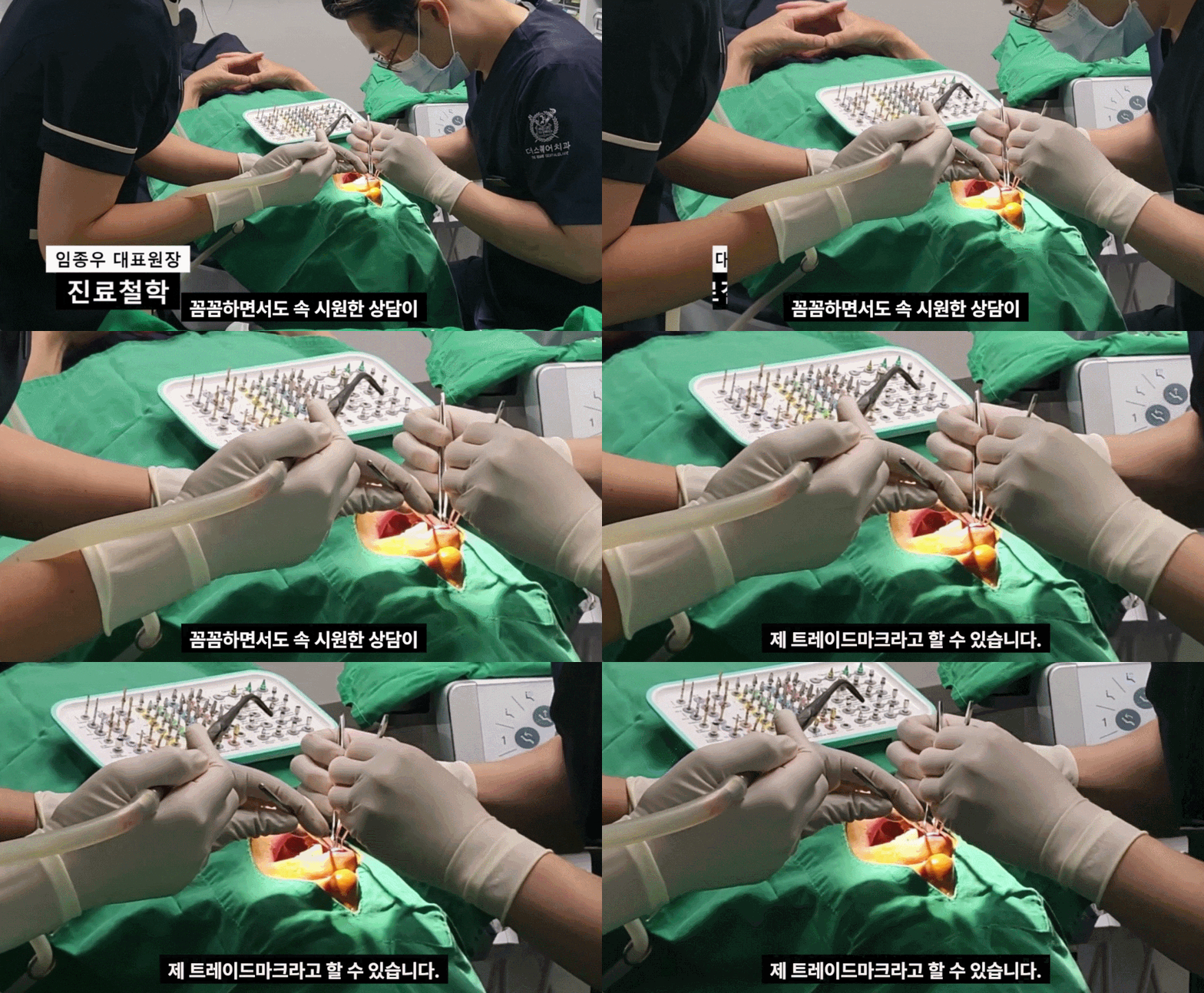
In the very early stages: ‘dental crack resin’
If treatment is necessary, you may be wondering what form it will take.
If the crack is at a very early stage or one of the following specific situations applies:
📌 the crack remains shallow and is limited to the enamel,
📌 only a small corner of the tooth has chipped due to the crack, or
📌 there is little or no sharp pain when chewing,
dental crack resin treatment may be used.
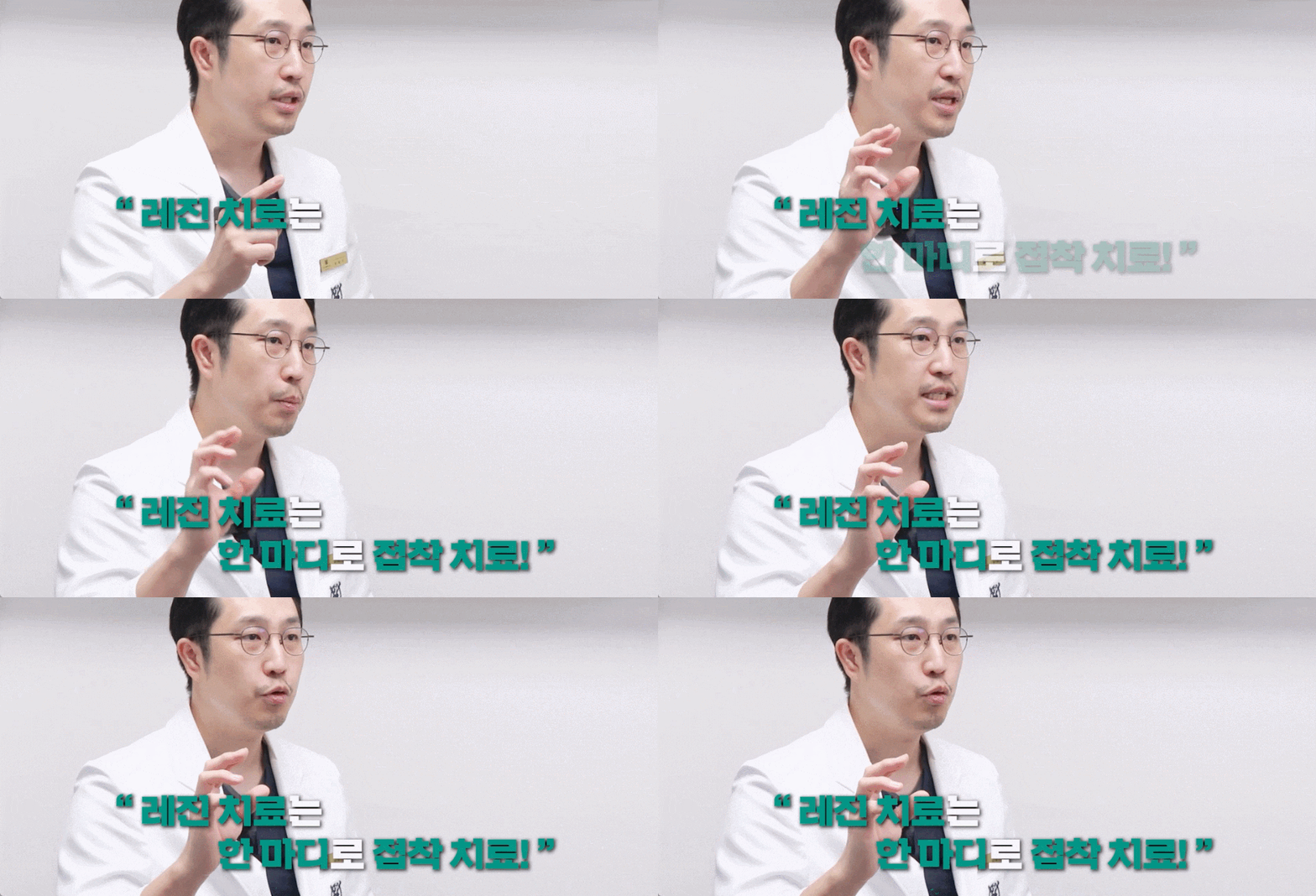
Dental crack resin treatment involves lightly trimming only the cracked area and filling and bonding the gap with tooth-colored resin.
It can preserve as much of the natural tooth as possible, can be completed in a single day, and is less financially burdensome than other dental treatments.
However, if the crack has progressed deeply into the tooth or there is pain whenever you chew,
dental crack resin alone may not resolve the problem.
This is because dental crack resin does not provide enough force to hold together a tooth that is separating.
Insisting on dental crack resin in such cases may instead cause the symptoms to worsen more quickly.
Saving the tooth with a ‘dental crack crown’
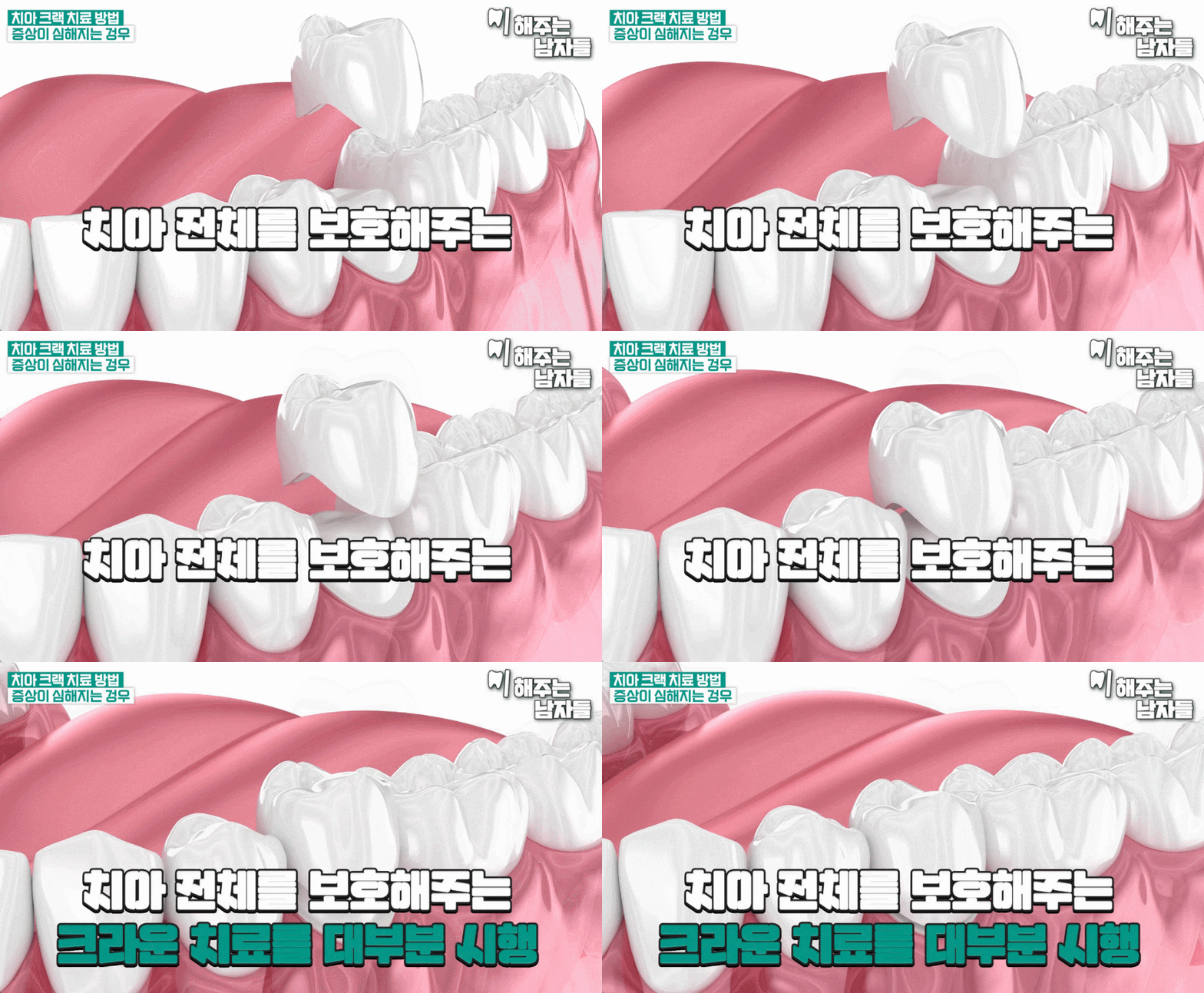
Following the discussion above,
if the cracked area is extensive or accompanied by pain,
at this point, a <dental crack crown> may be considered.
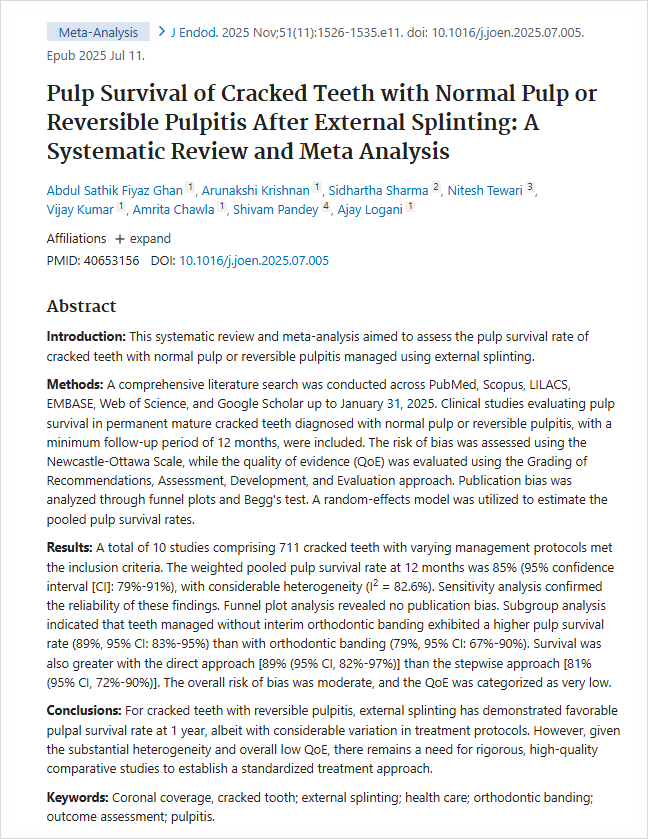
- Key point: According to the latest literature published in the world's leading academic journal in the field of endodontics,
the survival of cracked teeth depends on restorative treatment,
and when treatment such as a crown is provided before nerve damage,
the probability that the nerve will not become necrotic and will remain healthy even one year later
was found to be
more than 85%.
- Source: J Endod. 2025 Nov;51(11):1526-1535.e11. doi: 10.1016/j.joen.2025.07.005. Epub 2025 Jul 11.
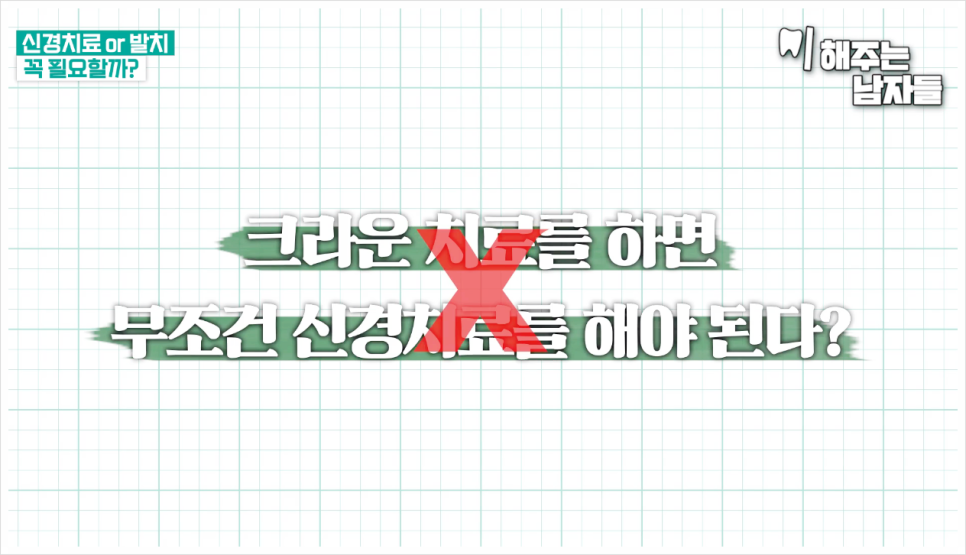
A dental crack crown
is a treatment that covers the tooth to prevent the cracked tooth from separating any further.
When people hear “dental crack crown,”
some worry that root canal treatment is always required.
However, if there is no pain and only a very fine crack,
it may be possible to treat the tooth with crown restoration alone.
If the crack has penetrated to the nerve and is causing discomfort,
root canal treatment followed by a crown will be performed.
Dental cracks often do not show clearly on X-rays, so the diagnostic ability of the dental professionals is especially important.
Therefore, when choosing a clinic,
| ✅ Check whether specialists in fields such as integrated dentistry, prosthodontics, and orthodontics are available on-site and develop diagnostic and treatment plans that consider not only the condition of the teeth but also the bite |
|---|
| ✅ Check whether the clinic has precision diagnostic equipment capable of detecting even minute cracks in the clinic |
| ✅ Check whether the clinic has a treatment philosophy focused on preserving the patient's natural teeth as much as possible |
we recommend carefully considering these factors before making your choice.
This post was written for those who may be feeling distressed after discovering a crack in a tooth.
As emphasized throughout the post,
a dental crack is a condition in which whether treatment is needed at all depends on the symptoms,
so the sensible approach is to visit a dental clinic and receive an accurate diagnosis.
For information about treatment and appointments at The Square Dental Clinic, please refer to the links below. ^^
All of our dental professionals are graduates of Seoul National University,
and are committed to providing
specialized knowledge based on the latest findings,
a comprehensive diagnosis based on scientific evidence,
and reliable treatment that follows established principles.
This has been The Square Dental Clinic.
[Want to see actual patient reviews?]
[Would you like to ask a question one-on-one?]
[Directions]
| This post was written by The Square Dental Clinic Medical Office in compliance with Article 56, Paragraph 1 of the Medical Service Act to provide medical information. The content is based on general medical information, and diagnosis and treatment methods may vary depending on an individual's oral condition; an in-person consultation is recommended. |