Hello.
We are The Square Dental Clinic, which makes decisions with a focus on natural teeth.
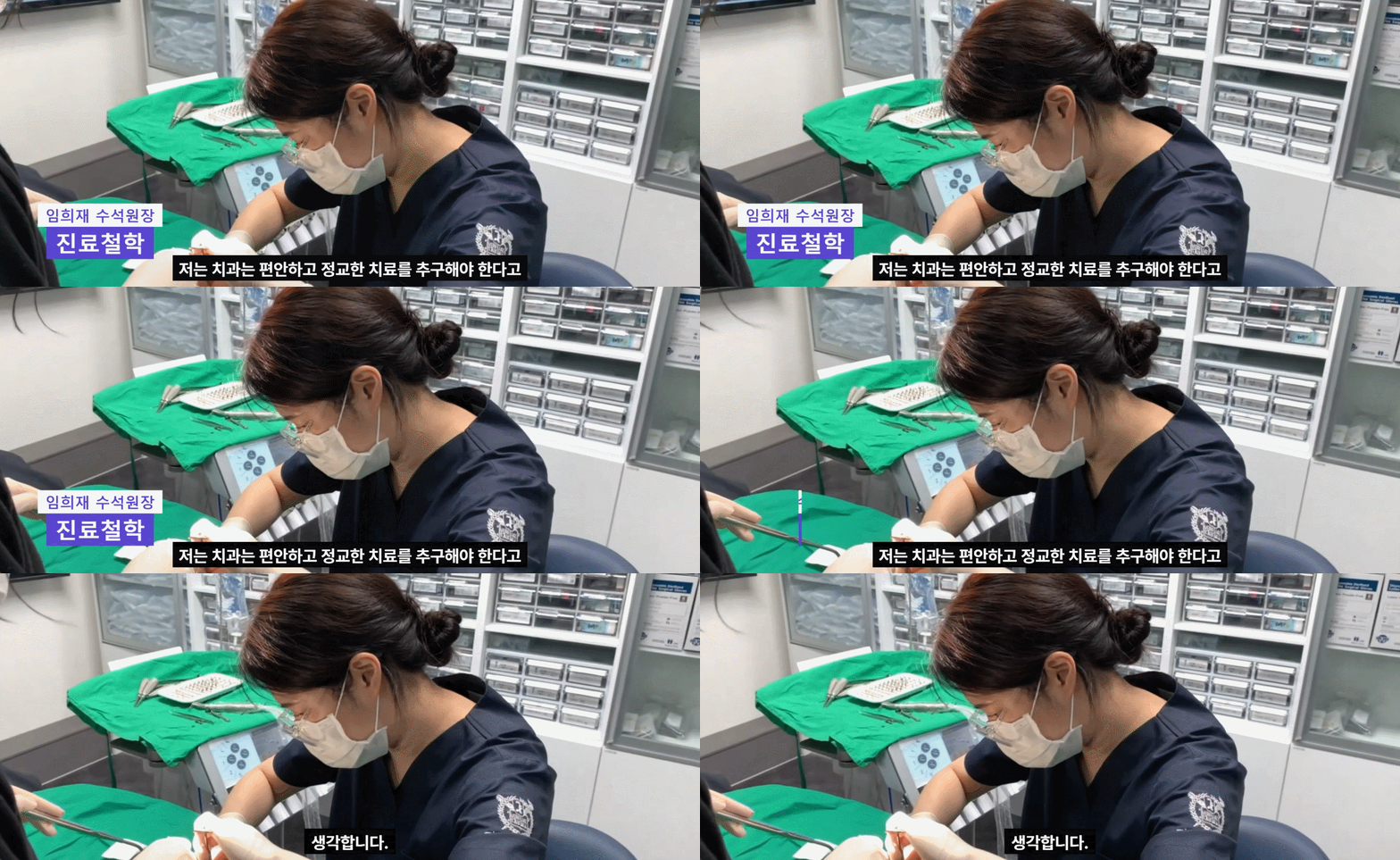
While eating a meal,
suddenly hearing a ‘click’
and freezing for a moment—
most people have probably experienced that at least once.
Or perhaps you looked in the mirror,
noticed that the edge of a tooth had chipped slightly,
and found yourself focusing on that one spot all day.
It doesn’t hurt,
so it somehow becomes even more noticeable.
First, there is one point
I want to make clear.
Just because a tooth is chipped
does not mean every case should be approached the same way.
In fact, depending on the depth and extent of the damage,
the 기준 for evaluating the condition
can differ quite a bit.
So today, I’d like to explain
in simpler terms how to look at this situation.
[When a crack in a tooth is suspected,
let’s first organize the 기준]
Visible chipping on the outside can mean something different on the inside.
Chipped tooth
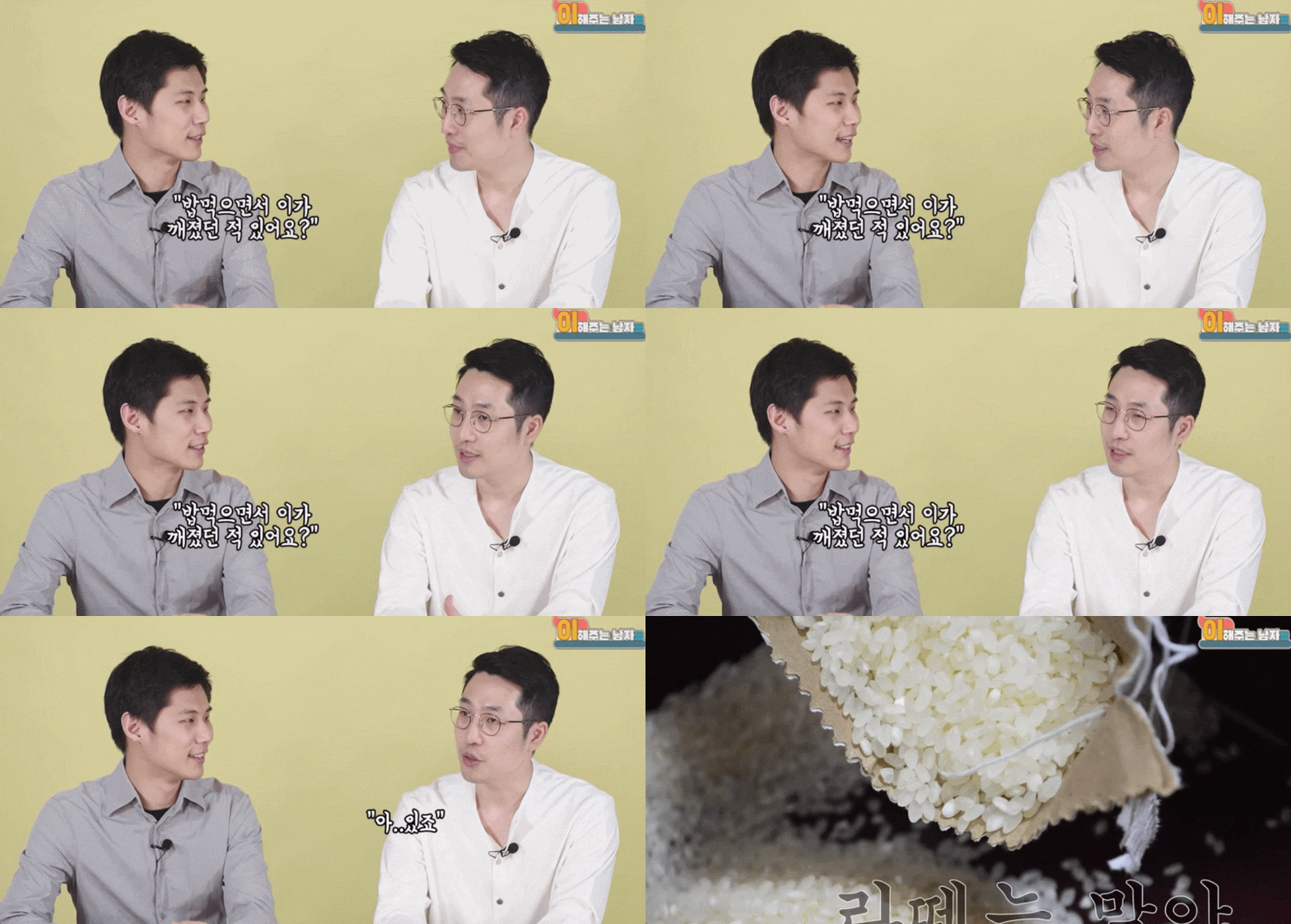
When people hear that a tooth is chipped,
it is easy to think of it as one single condition.
But when you actually look more closely,
the range is wider than you might think.
So depending on the situation,
the visible appearance can differ,
and the points that need to be examined
can also vary a little.
For example,
there are cases like these.
| A case where the tip is only slightly chipped |
|---|
| A case where only the surface is worn away |
| A case where the damage extends inward |
| A case where the area near the nerve is affected |
And here,
there is one point that should be noted.
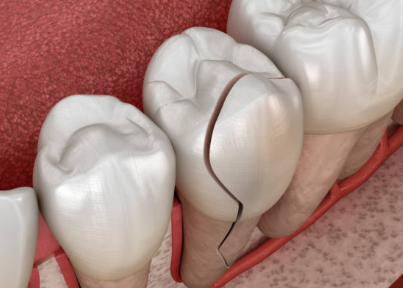
A tooth is not a structure made of just one layer.
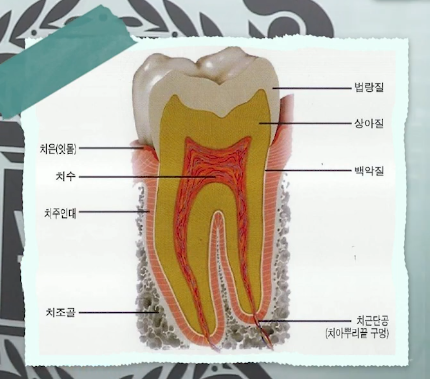
On the outside is enamel,
inside that is dentin,
and further inside is the pulp (nerve),
layered in sequence.
So a case where only the outer part is damaged
and a case where the damage reaches the inside
can be interpreted as completely different conditions,
even if both are called a chipped tooth.
It is similar to the difference between
a glass cup with a small nick on the edge
and a cup with a long crack running through it.
So it is difficult to say that all chipped teeth are the same just because they are “chipped.”
The situation should be understood differently
depending on the extent of the damage.
Even without pain,
the situation can be different.
Chipped tooth
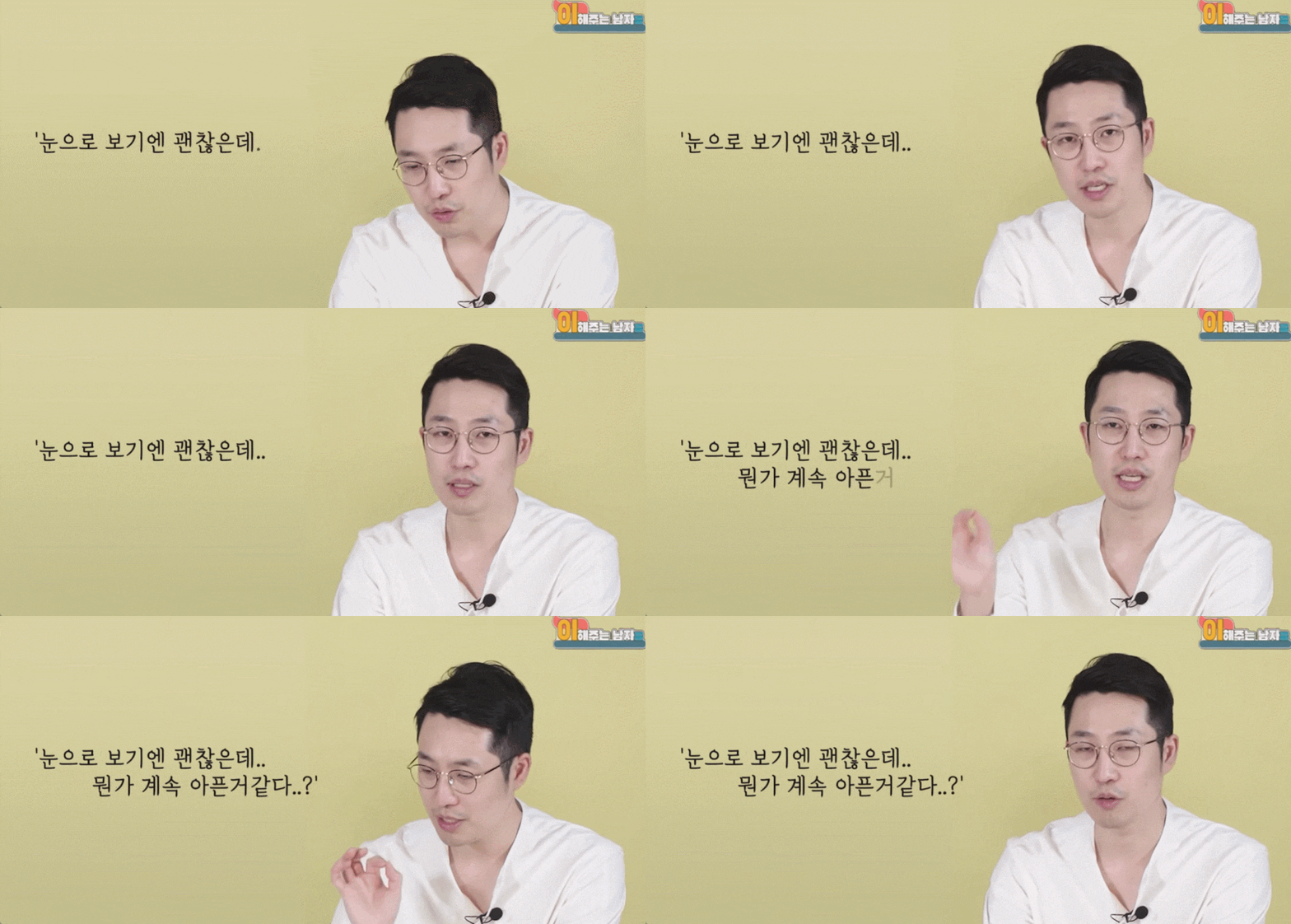
Right after a tooth chips,
many people tend to think this way.
"It doesn’t hurt yet, so it must be okay."
"I can just be careful when using it."
But if you look a little closer,
a tooth that has already been damaged
may be structurally weaker
than it appears from the outside.
In this state,
if you keep chewing on the chipped side,
or repeatedly eat hard foods,
small damage can gradually get worse.
Also, if you keep touching it with your tongue or fingers,
or repeated stimulation is applied to the chipped surface,
it is not uncommon for the damaged area to expand.
So until you visit the clinic,
reducing use of the chipped side for a while
and minimizing unnecessary stimulation
can help prevent the condition from progressing further.
Rather than resin or crown,
there is a more important question.
Chipped tooth
When a tooth is chipped,
many people first think about whether to do resin,
inlay, or a crown.
But when actually examining the tooth,
there are criteria that should be checked first
before deciding on a treatment method.
These criteria can largely be divided into three points.
| First, how much natural tooth can be preserved. |
Once a tooth is damaged,
it is difficult to return it to its previous state,
so how much of the remaining tooth can be protected
becomes the starting point for judgment.
| Second, how close the damage is to the nerve. |
The closer the damage extends inward,
the more the condition may change over time,
so the approach can also change.
| Third, whether it is necessary to check if the changes are still progressing. |
Right after the chip,
it is often necessary to observe for a while
whether the damage will get worse or stop as it is,
before the direction becomes clear.
So at this stage,
rather than rushing,
it may be necessary to take one more look at how the condition is developing.

For these reasons, resin, inlay, and crown
are less like fixed answers
and more like options chosen according to the condition.
Every person’s tooth condition is different,
and the location and depth of the chip are also different,
so the direction cannot be the same.
That is why, rather than deciding on a method first,
we first examine all possible options
and then sort out, one by one,
which direction fits the current stage.
[Criteria for distinguishing
between resin and crown]
If we summarize the main point of today’s discussion,
it is this.
Just because a tooth is chipped
does not mean every case is the same.
There are cases where only the outside is slightly damaged,
and cases where the inside is also affected.
So the important thing is not
"Is it chipped or not?"
but first looking at how far the damage has gone.
There is one thing worth remembering here.
The reason a chipped tooth gets worse
is not only because of the initial damage.
When chewing forces are repeated on an already weakened tooth,
the damage can continue more easily than you might expect.

So treatment such as resin or restoration
should be understood not simply as covering the area,
but as playing a role in preventing further breakage.
"There’s no pain, so why are you talking about this?"
"Aren’t you just approaching it too aggressively?"
If you have been wondering about these things,
I hope today’s explanation has helped organize it a little.
Thank you for reading all the way to the end.
This has been The Square Dental Clinic.
[Records of patients who visited with the same concern]
[If you have additional questions,
feel free to leave them]
[Directions]
| This article was written in compliance with the Medical Service Act (Article 56, Paragraph 1) so that you can obtain accurate information. We wanted to transparently share what actually happens in the clinic, rather than simply promoting our services. Rather than contacting us immediately after reading this article, it is enough to simply take away accurate information. |