Hello.
We are The Square Dental Clinic,
a clinic that preserves your natural teeth as much as possible.

There is a common perception that cavity resin is a relatively simple treatment.
So many people think,
"It doesn’t hurt, so do I really need to do it now?"
But what we often see in the treatment room is a little different.
"If you had come a little earlier,
this could have been finished with resin."
More people than you might think feel regret when they hear this.
So the question is this.
Why was cavity resin possible at one point,
but if it is delayed a little,
why does it move on to another stage?
Today, I’ll organize that difference not by whether it hurts or not, but by the standard of how much removal can be minimized.
[We start by looking at how much of the natural tooth can be preserved]
It may be possible to use resin now,
but not later.
Cavity resin
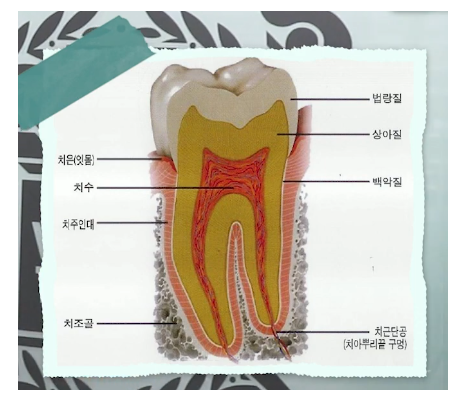
An early-stage cavity refers to a state in which decay remains in the outermost layer of the tooth, enamel,
or in a shallow area of the dentin just below it.
At this stage,
because the damaged area is not deep,
the part that needs to be removed is also relatively limited.
So in many cases, the tooth structure is still firmly maintained.
Viewed this way, the key point at this stage is not that it is chosen because it is simple,
but rather whether it can be cleaned up without greatly altering the current shape.
In other words, after tidying up only the necessary parts,
there is still enough room left to continue the shape and function with resin.
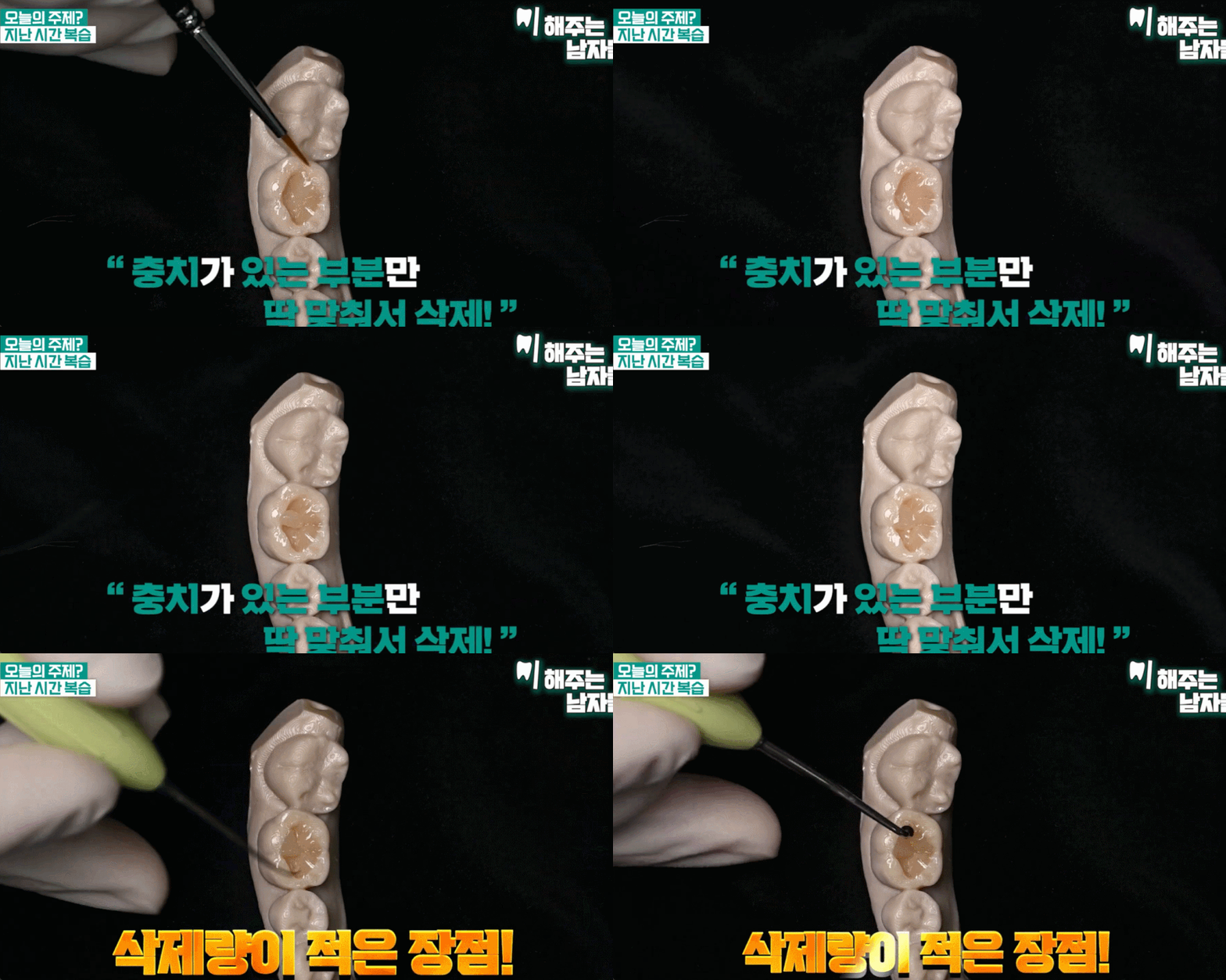
There is one thing I’d like to point out here.
If you understand this period only as an easy stage where treatment is possible,
it becomes easier to miss the timing for choosing it.
In reality, the more important standard is how much natural tooth can be preserved.
If you do not miss this timing,
you can avoid a situation where the removal range becomes larger,
and the structural burden can remain relatively smaller.
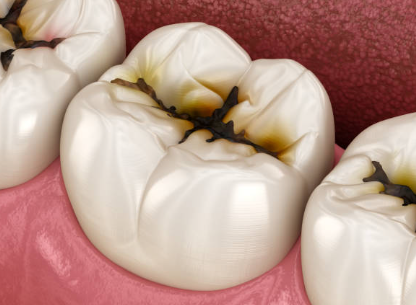
So the golden time for cavity resin is not before pain begins,
but when it is still possible to determine how much can be cleaned up.
Even if there is no obvious discomfort on the surface,
looking at it through this standard, there are many cases where you are already at a fork in the road.
This is exactly the point where several options are still open.
Rather than suddenly jumping to a major procedure,
it moves step by step.
Cavity resin
If decay is left as it is, you do not suddenly skip to a major procedure one day.
Instead, you go through a process in which your options gradually decrease.
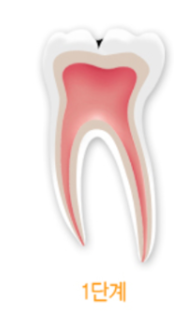 First, as time passes,
you enter a stage where the damaged area gradually expands.
At first, it may seem like only the surface-near area needs to be treated,
but as the depth increases, the tooth becomes harder to support with resin alone.
From that point on, the area that needs to be treated naturally becomes larger.
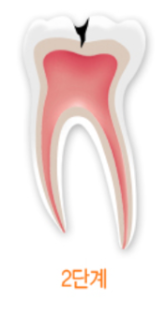 Next, you begin to consider moving on to prosthetic treatment.
For example,
if the damaged area has become wide,
a stronger structure such as an inlay becomes necessary,
and if the tooth wall itself has become weakened,
you may consider a crown that covers and protects the entire tooth.
This is closer to a choice made to protect the current structure.
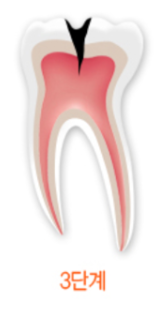 If it progresses one more step,
the inner nerve may also be affected.
In that case, the flow continues with root canal treatment followed by a crown to secure stability.
At this point, completely different criteria are applied compared to the early stage.
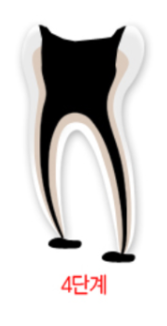
Finally, if the structure becomes too compromised to maintain,
you may reach a point where you need to consider an implant.
However, there is one important point I want to emphasize here.
There are almost no cases where people start with an implant from the beginning.
In most cases, it is closer to the result of one-by-one losing the options that were available over time.
Looking at it stage by stage like this gives you a 기준 for estimating which point your current condition is closest to.
This is the point to check once before deciding the next direction.
Cavities are often quiet until they start to hurt.
Cavity resin

Many people try to judge their current condition by whether they have pain.
But in reality,
the presence or absence of pain and the depth of the cavity do not always move together.
Especially before it reaches the nerve,
there are many cases where you hardly feel any discomfort.
So, rather, the judgment that "it doesn’t hurt, so it must be fine" can become the most common reason for passing the point where it could have been finished with resin.
Also, because cavities often progress quietly,
just because the outward signs are few does not mean the inside is mild.
If two or more of these overlap, it may become more important to check whether it can still be finished with resin,
rather than whether it is okay right now.
| ※ A feeling that food often gets stuck in a specific area ※ A section that looks unusually dark in color ※ Discomfort only when eating sweet foods ※ Old resin or the area around an inlay feels especially bothersome |
These signs may be early indications that changes are progressing inside,
even if it does not hurt much.
[Before moving to an implant,
are there no options left?]
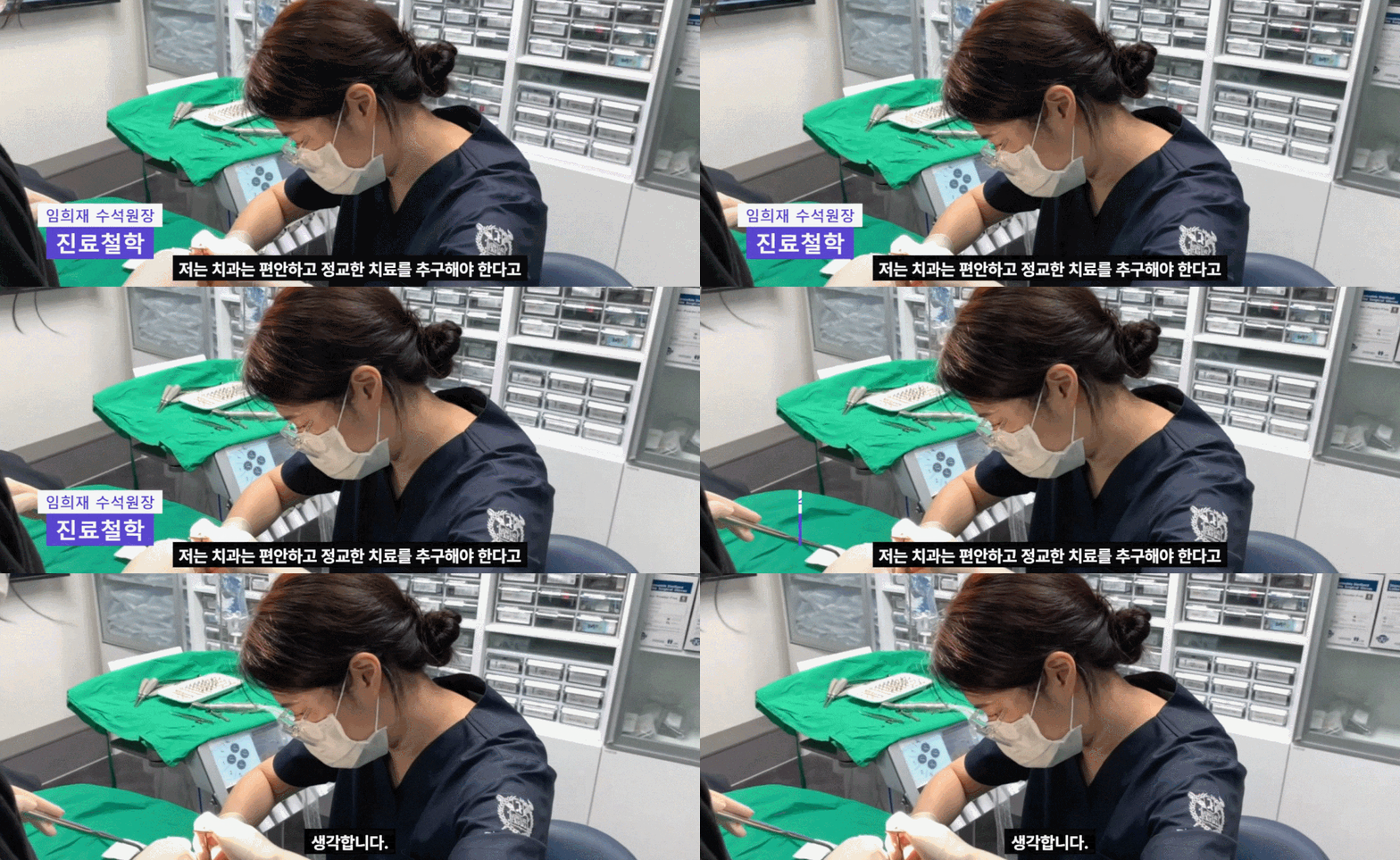
Cavity treatment is less about what to do
and more about checking what you do not yet need to do.
You do not need to make a choice right this moment.
However, whether this check happens in a few months
or right now,
the remaining options may change.
The Square Dental Clinic has chosen not to recommend something immediately,
but to first explain what options remain in the current condition.
Whether now is the time to finish with resin,
or the time to consider the next step,
also becomes clear naturally through that process.
And if the structure can still be saved at this stage,
we first consider the direction of preserving it.
That is where our treatment begins.
This has been The Square Dental Clinic.
Thank you for reading.
[You can refer to the experiences of people who visited in person]
[You may leave inquiries here]
[We have briefly organized directions to the clinic]
| This article has been written in compliance with the Medical Service Act (Article 56, Paragraph 1) so that you can obtain accurate information. Rather than simple promotion, we wanted to transparently share what actually happens in the treatment room. Rather than contacting us immediately after reading this article, simply taking in accurate information is enough. |