Hello.
We are The Square Dental Clinic, where we start by thinking about the 기준 for using your teeth for a long time.
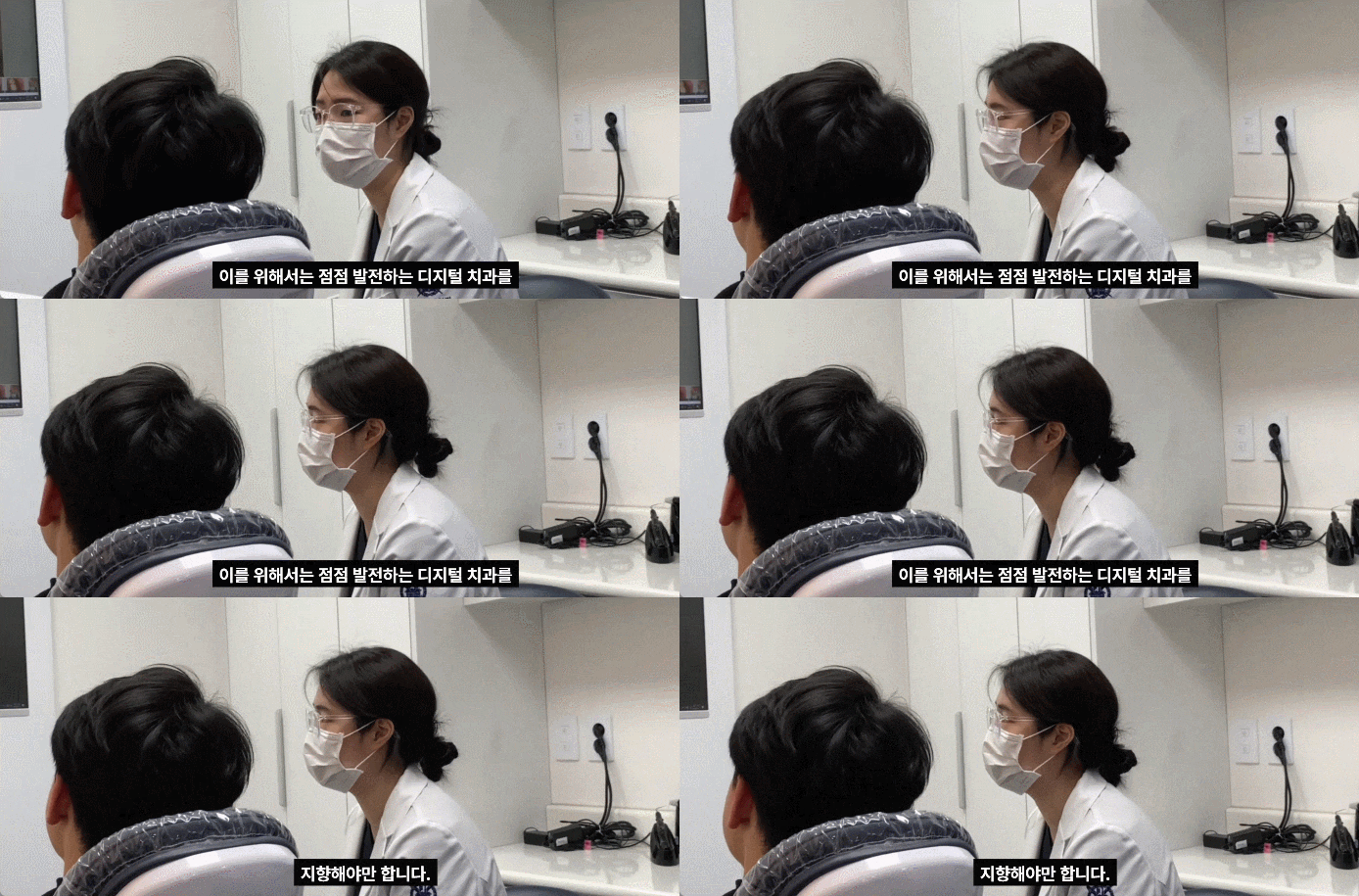
When people hear the phrase dental root canal treatment pain,
many of them feel tense even before treatment begins.
"I heard it hurts even with anesthesia."
"Isn’t root canal treatment supposed to be really painful?"
You’ve probably heard comments like these at least once.
Because of that, even when discomfort is noticeable,
there are many cases where people put it off,
thinking they should just endure a little longer.
But unlike what many people think,
pain is often more closely connected to the condition already developing inside the tooth
than to the treatment process itself.
So today, I’ll organize step by step
why pain happens
and why it feels different from person to person.
It may help you set a 기준 for where the discomfort you are feeling now began.
[It is not something to do unconditionally; there are 기준]
The changes already starting inside the tooth,
the real reason for pain
Dental root canal treatment pain
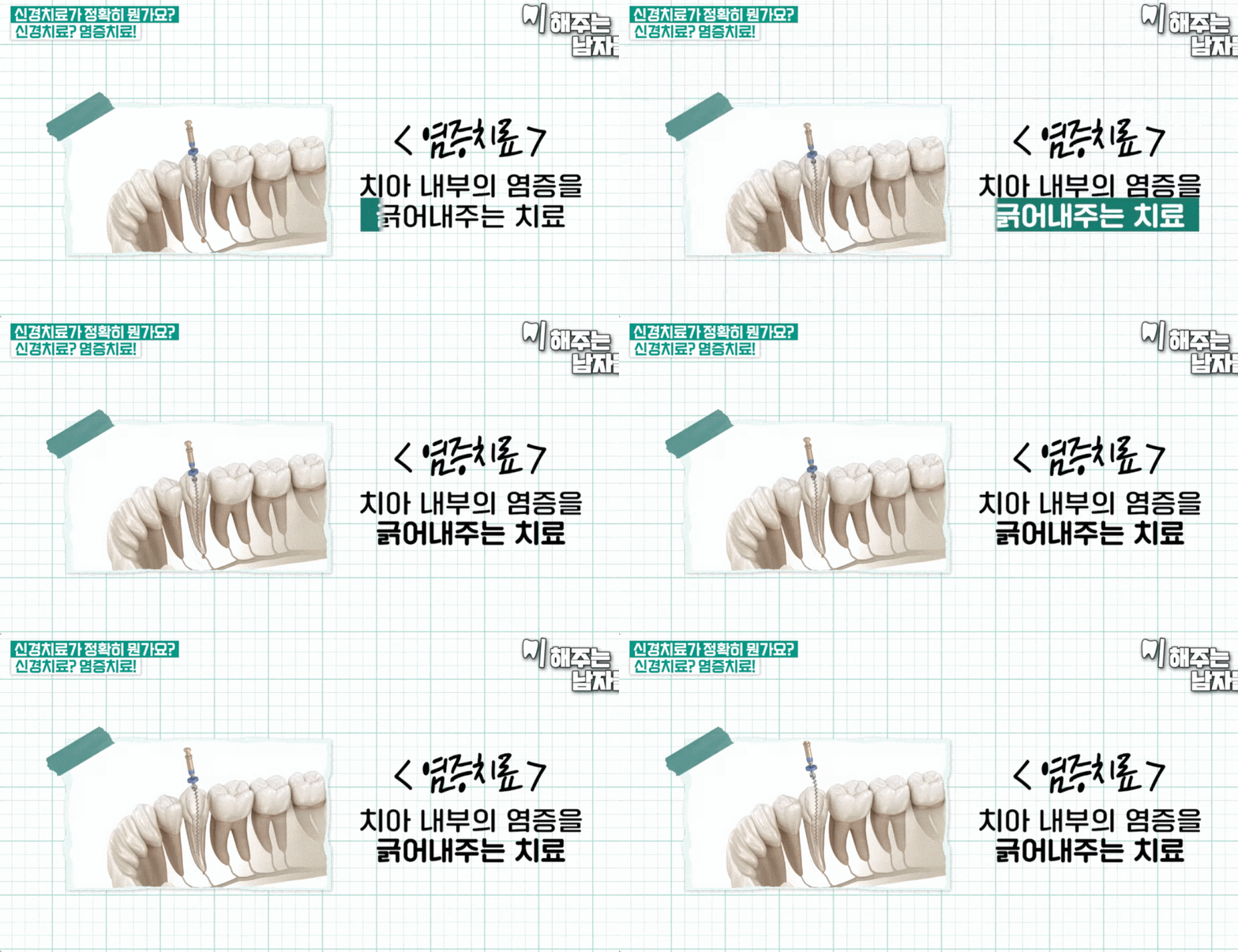
Inside the tooth is the pulp,
commonly called the nerve tissue.
Because this tissue is surrounded by the hard tooth,
there is almost no room for it to swell freely like skin can.
So when inflammation occurs,
even very small changes can make the pain feel much stronger.
To put it simply,
it is similar to a balloon trying to expand further inside a tightly packed box.
It may not be obvious from the outside,
but pressure is already building on the inside.
For this reason,
some people say,
"It felt like it still hurt even though I got anesthesia."

But in many cases, that feeling does not mean
that the anesthesia was not working properly.
Rather, it is because inflammation has worsened
and created an environment that is much more sensitive to stimulation.
In other words, the common perception that root canal treatment hurts
often starts not from the procedure itself,
but from the inflammatory condition that had already been developing inside the tooth.
And an important point is that
this inflammation does not always appear in the same way.
Depending on how far the condition has progressed,
the pattern of pain naturally changes as well.
So next, we will look more specifically at
what stage the pain appears in
and how it changes.
Even the same pain can be at different stages.
Dental root canal treatment pain
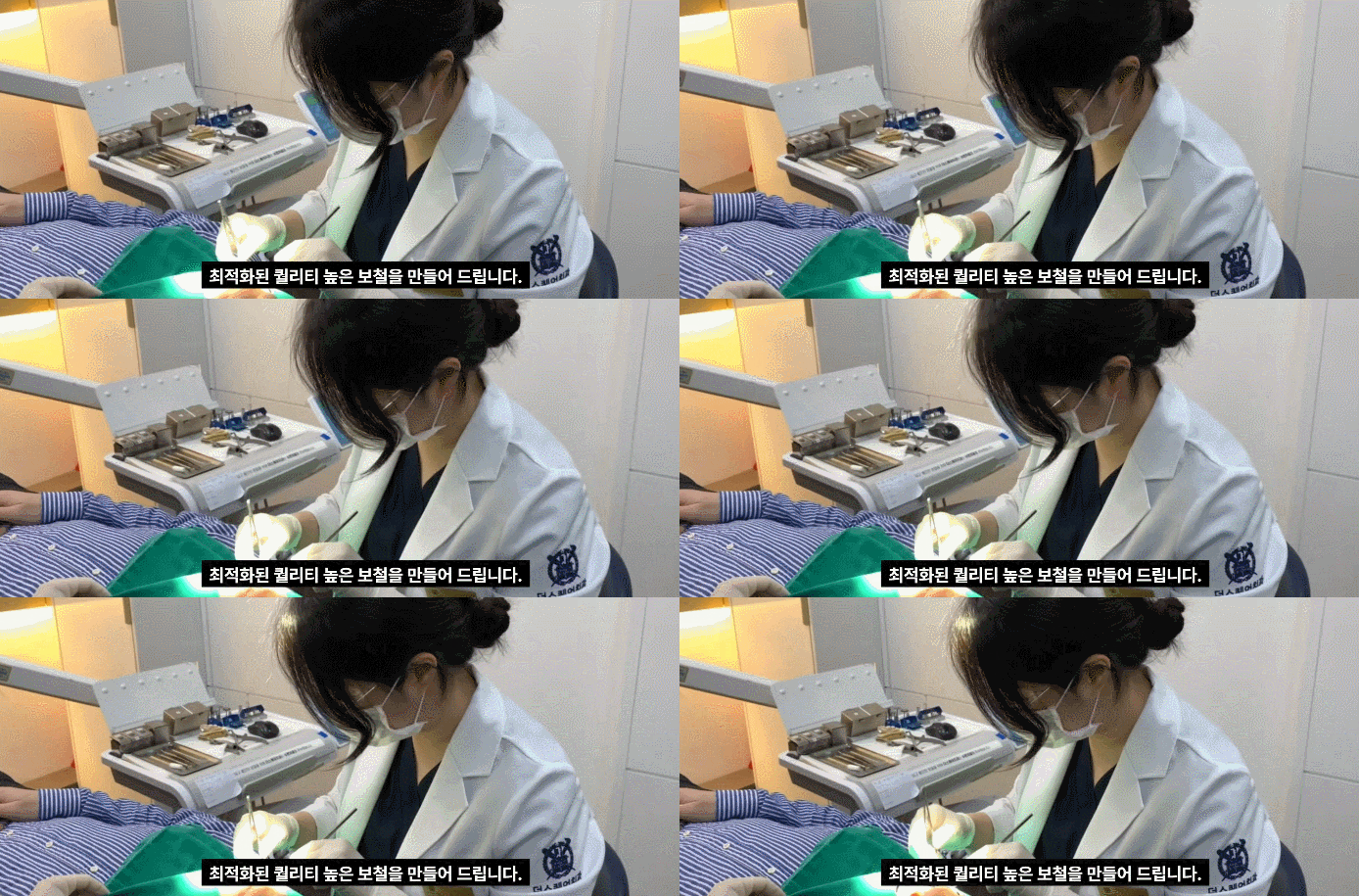
Pain related to the nerve
does not appear in just one form.
That is because the way it feels changes
depending on how far the condition inside the tooth has progressed.
So when understanding pain,
it is a more accurate approach to look at it based on which stage you are in now.
From here on, let’s look one by one at how pain changes,
based on the stages of pulpitis.

| 1. Reversible pulpitis stage |
At this stage, you may feel a brief, sensitive pain when drinking cold water or eating something sweet.
However, once the stimulus is gone,
the pain tends to subside relatively quickly.
Because of that, this is also the point when many people think,
"It stings a little, but it’s tolerable," and move on.
But this is a stage where the inflammation is not yet deep,
so if the internal environment of the tooth is stabilized,
there are quite a few cases where the pain does not get worse and settles down.
In other words, if you look closely at the current condition,
this is a stage where there is still room to choose a direction that does not create a bigger burden.

| 2. Irreversible pulpitis stage |
But as time passes
and the inflammation progresses further,
the nature of the pain begins to change.
From this stage onward,
people often feel throbbing pain even while resting,
or pain that gets worse at night.
There is also often a feeling that the pain continues
without any specific trigger.
This is because the pressure inside the tooth keeps rising,
creating an environment where the nerve responds very sensitively.
So at this point,
it often becomes increasingly difficult to simply endure the pain.
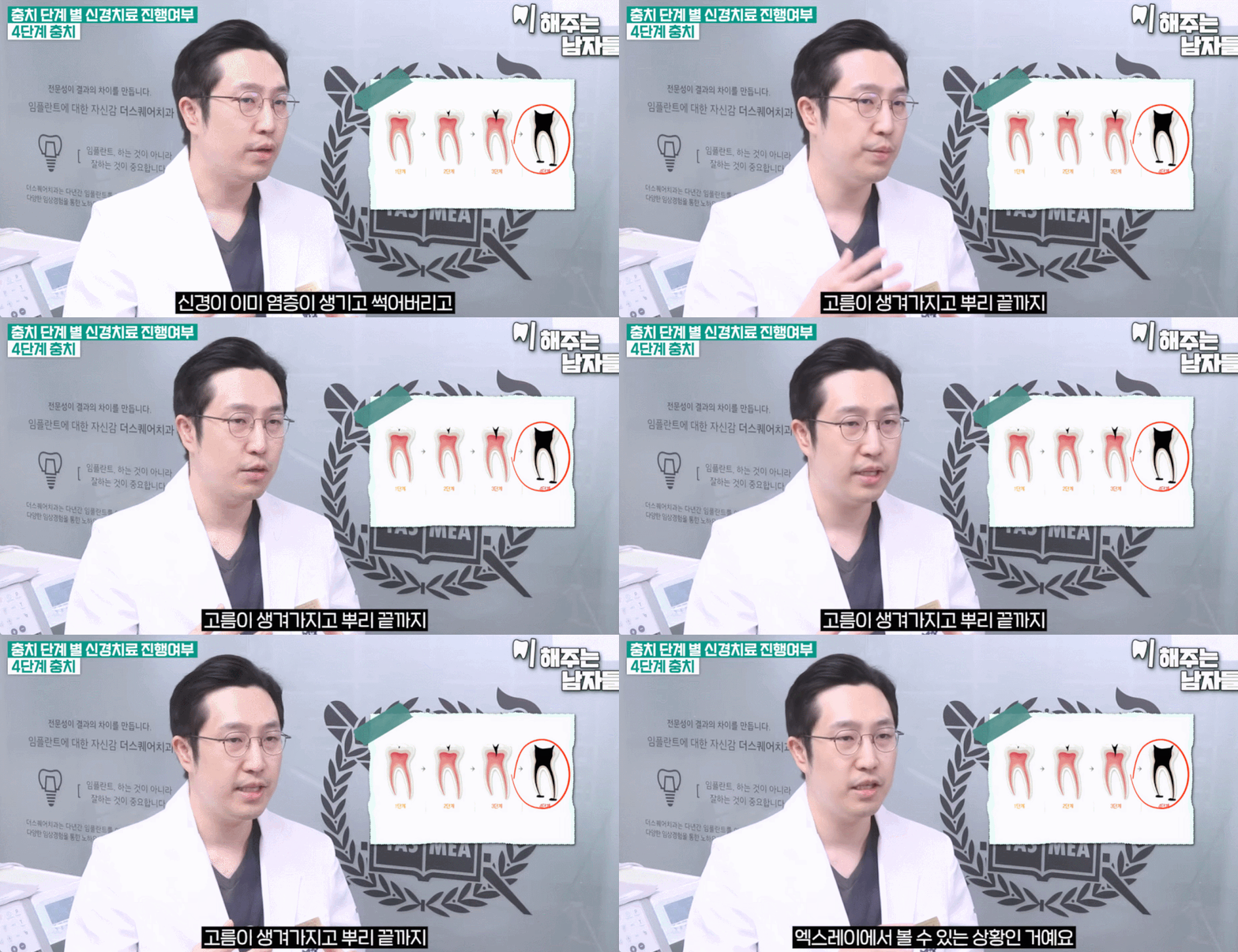
| 3. Pulp necrosis stage |
Meanwhile, when the nerve tissue is damaged
or loses its function,
there are cases where it may feel like the pain has actually decreased.
Because of this,
some people say,
"I think it’s better now."
However, rather than considering this as improvement,
it means the tissue that was feeling the pain
is no longer able to do its job.
And as time passes,
the inflammation may spread toward the root,
and pain or swelling may appear again.
So even if the pain has quieted down,
it is difficult to conclude that the condition has become mild.
In summary, nerve-related pain is not something that suddenly appears;
it is closer to a flow in which the pattern changes as it goes through stages.
There is a separate 기준 for a place that does root canal treatment well.
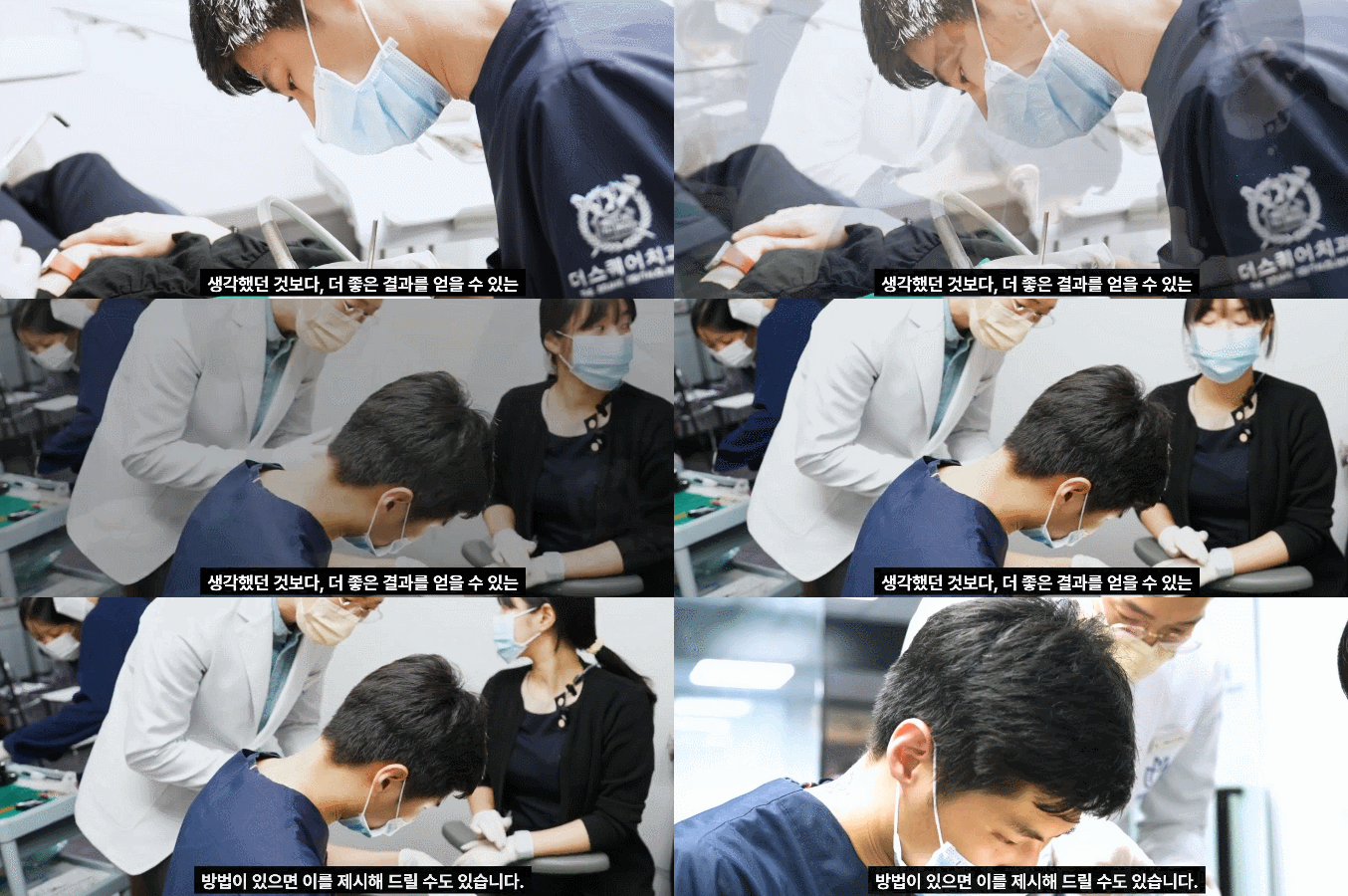
When root canal treatment is needed,
the most important thing is not whether you can endure it.
What comes first is knowing which stage your inflammation is currently at.
If you check now, you can know a few things in advance.
- How far the inflammation has spread
- Whether the nerve condition is on a path that can recover
- How much pain to expect
If you identify these things in advance,
you can prepare for the overall process much more comfortably.
But if you delay checking,
some things will change.
※ The intensity of the pain keeps increasing,
※ the stage of progression becomes more complex,
※ and the time needed for recovery often becomes longer.
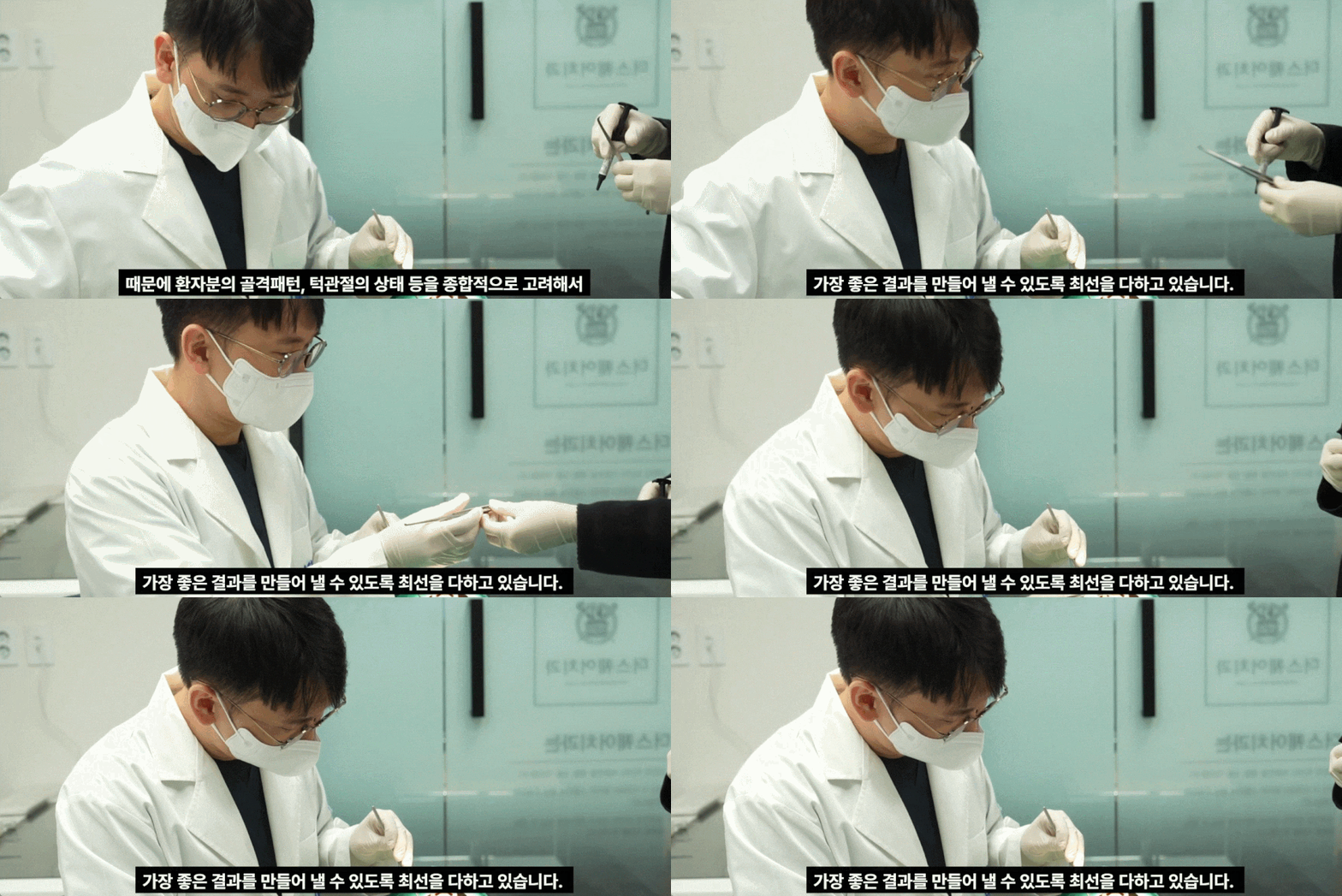
Some people say, "I’ll try to hold out a little longer,"
and end up going to the emergency room
because of pain that lasts all night.
By that point, the inflammation has already progressed quite a bit,
so the process often becomes longer
and the discomfort greater.
So the 기준 for a place that does root canal treatment well
is not about the skill to avoid pain.
It is about having a 기준 that can judge the current condition before it hurts.
Simply checking your current condition accurately
can make a big difference in the direction you take to reduce pain.
[What matters more than the duration is the starting point]

Today, I talked about, "If you’re worried about pain during dental root canal treatment, start by looking at the 기준 for a place that does root canal treatment well."
When the inflammation stage is early,
→ anesthesia works relatively well,
→ and recovery tends to be faster.
On the other hand, after the inflammation has progressed a lot,
→ pain control becomes difficult,
→ and the process often becomes more complicated.
In the end, the goal is the same.
To use your teeth as naturally and for as long as possible.
I hope today’s post was of some help
to those of you considering a place that does root canal treatment well.
If you have any questions,
you may also feel free to ask casually through Naver TalkTalk :-)
[Reasons chosen by those who visited in person]
[It is okay to leave only your questions]
[I have organized the directions in one place]
| This article was written in compliance with the Medical Service Act (Article 56, Paragraph 1) so that you can obtain accurate information. Rather than simple promotion, we wanted to transparently share what actually happens in the treatment room. Please do not contact us immediately after reading this article; it is enough if you simply take away accurate information. |