Hello.
We are The Square Dental Clinic, always thinking about a standard that does not waver over time.

If a structure in the middle of a bridge has become weak,
you would not simply add more weight on top of it.
First, you calculate the load.
You need to check whether the current structure can withstand it.
Implants are similar.
"I’m over 65.
Am I eligible for an insurance implant?"
Yes, it is possible.
But eligibility and long-term stability are different matters.
An implant is not just a process of filling an empty space.
It is closer to redesigning the balance of chewing forces.
So before looking at the coverage criteria,
we first ask this question.
If it is placed now, can it remain stable 10 years from now?
Today, I’d like to organize the criteria for that judgment a little more clearly.
If you read carefully for a moment,
it may help you gauge what stage you are at now.
[After tooth loss,
you need to set a direction before it is too late]
Why do we check the structure first?
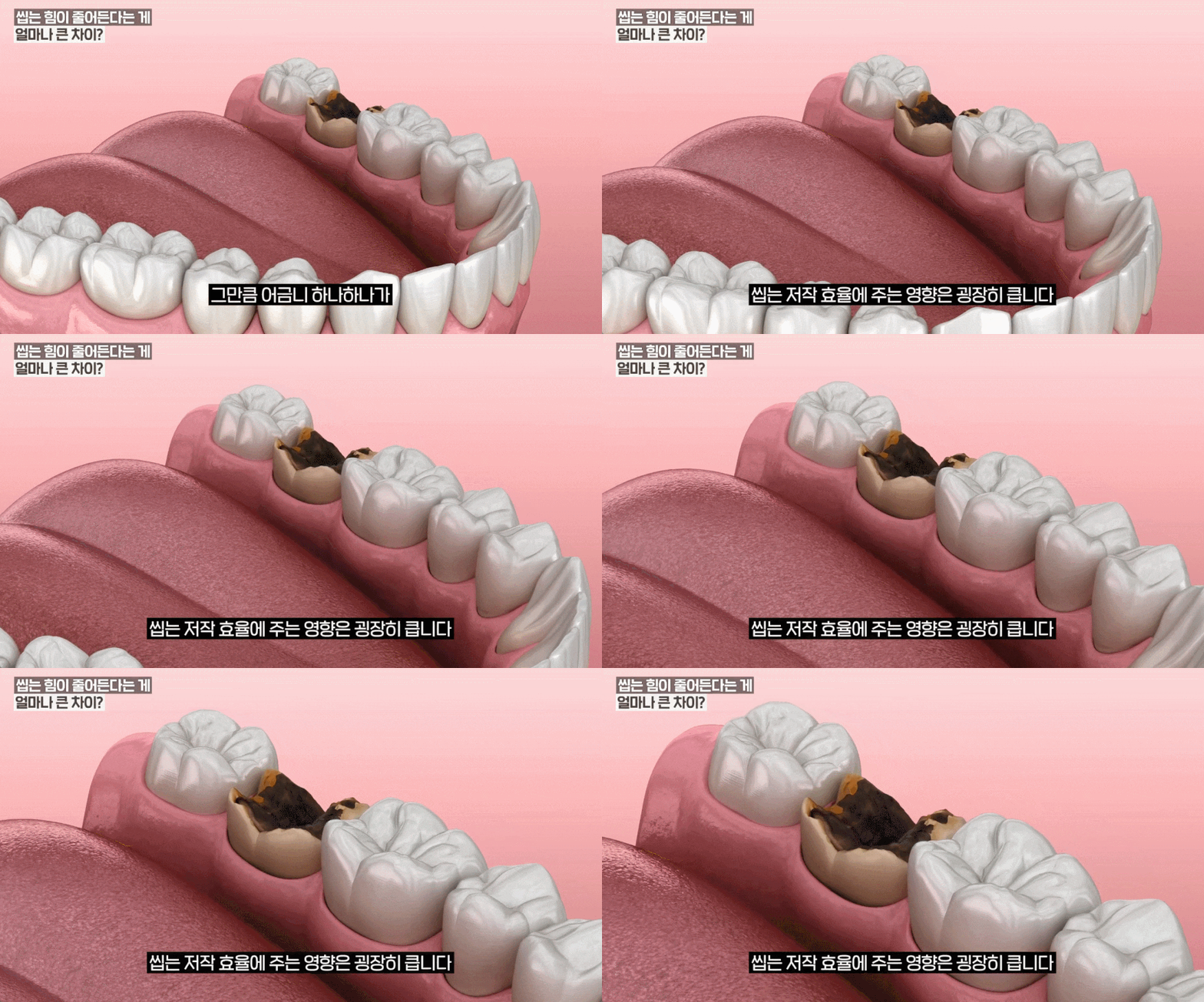
The current national health insurance criteria for insurance implants are as follows.
| Age 65 or older |
|---|
| Lifetime limit of 2 |
| Approximately 30% out-of-pocket |
| Implant placement + zirconia prosthesis covered |
These points are all the same.
However, the system only tells you the conditions under which it is possible.
It does not explain whether that area will remain stable even 10 years later.
An implant is not simply placing a structure into an empty space.
It is similar to replacing only one leg on a desk that is already tilted.
If other parts are shaking, the newly replaced part will also have a hard time lasting.
For example, cases like these:
※ When the teeth on the opposite side are badly worn
※ When the adjacent teeth are loose
※ When chewing force is concentrated on one side
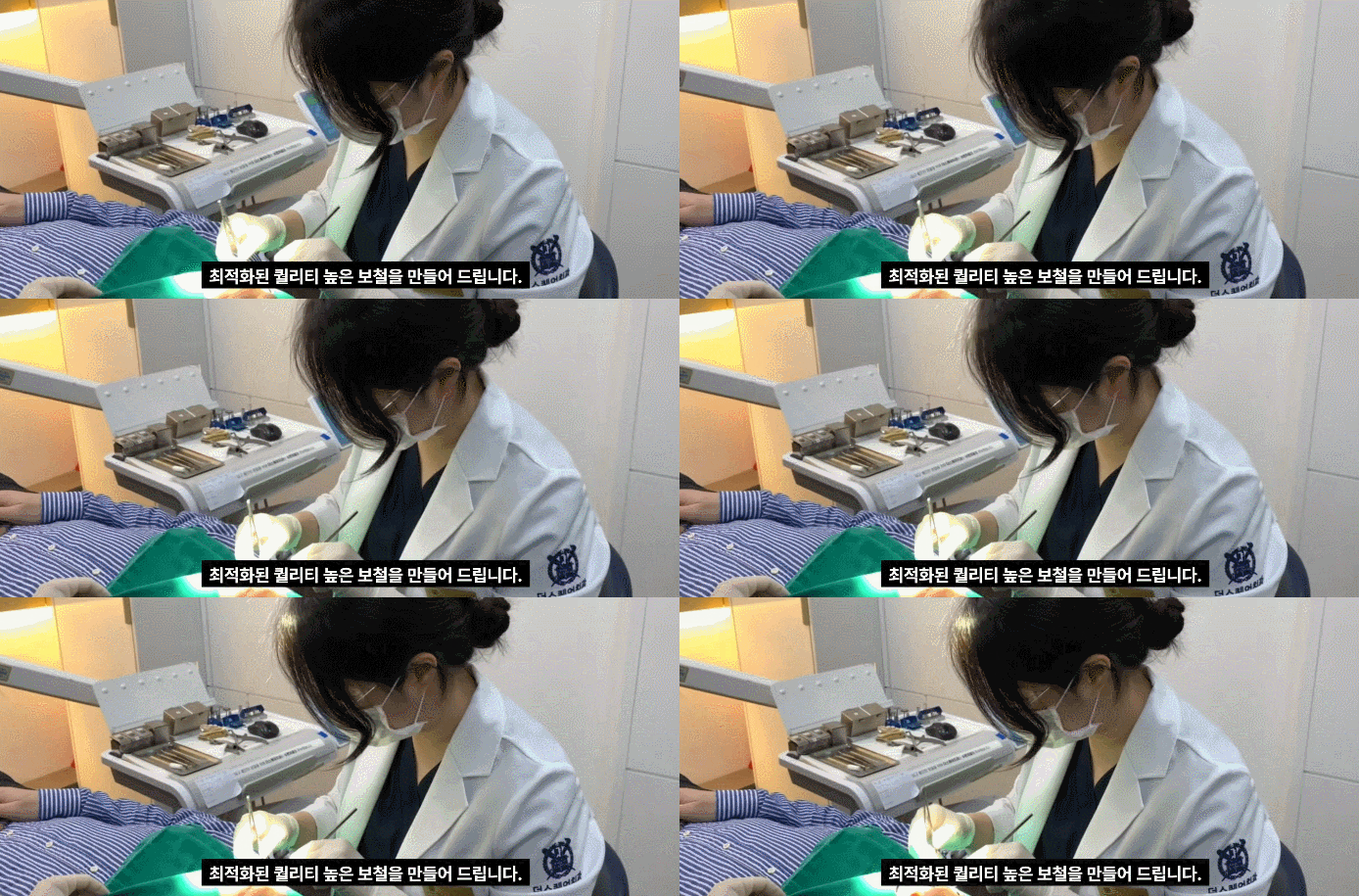
If you simply decide in this state,
"It qualifies, so let’s proceed,"
it may look fine at first,
but a few years later another tooth may fail first.
In the end, it is not just a problem of one spot,
but a problem of the balance of the entire structure.
That is why, before eligibility,
we need a process of first looking at how the current structure distributes the load.
Going through this step can reduce unnecessary repetition,
and help you prepare more stably for the years ahead.
Having bone does not mean everything is the same.
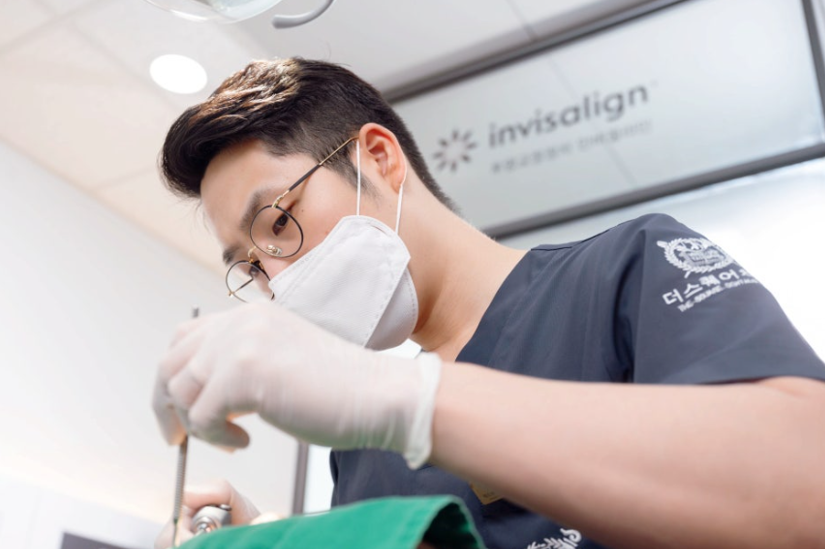
If the bone height on CT appears sufficient,
you may feel somewhat relieved.
But the actual results are not all the same.
That is because there is another, more important factor.
It is the direction of the force.
When force is transmitted vertically,
it is relatively stable.
But if sideways force is repeated,
the story changes.
In that case,
inflammation in the gums may recur,
screws may loosen,
or prosthetics may break more easily.
The key is how the structure receives and distributes force.
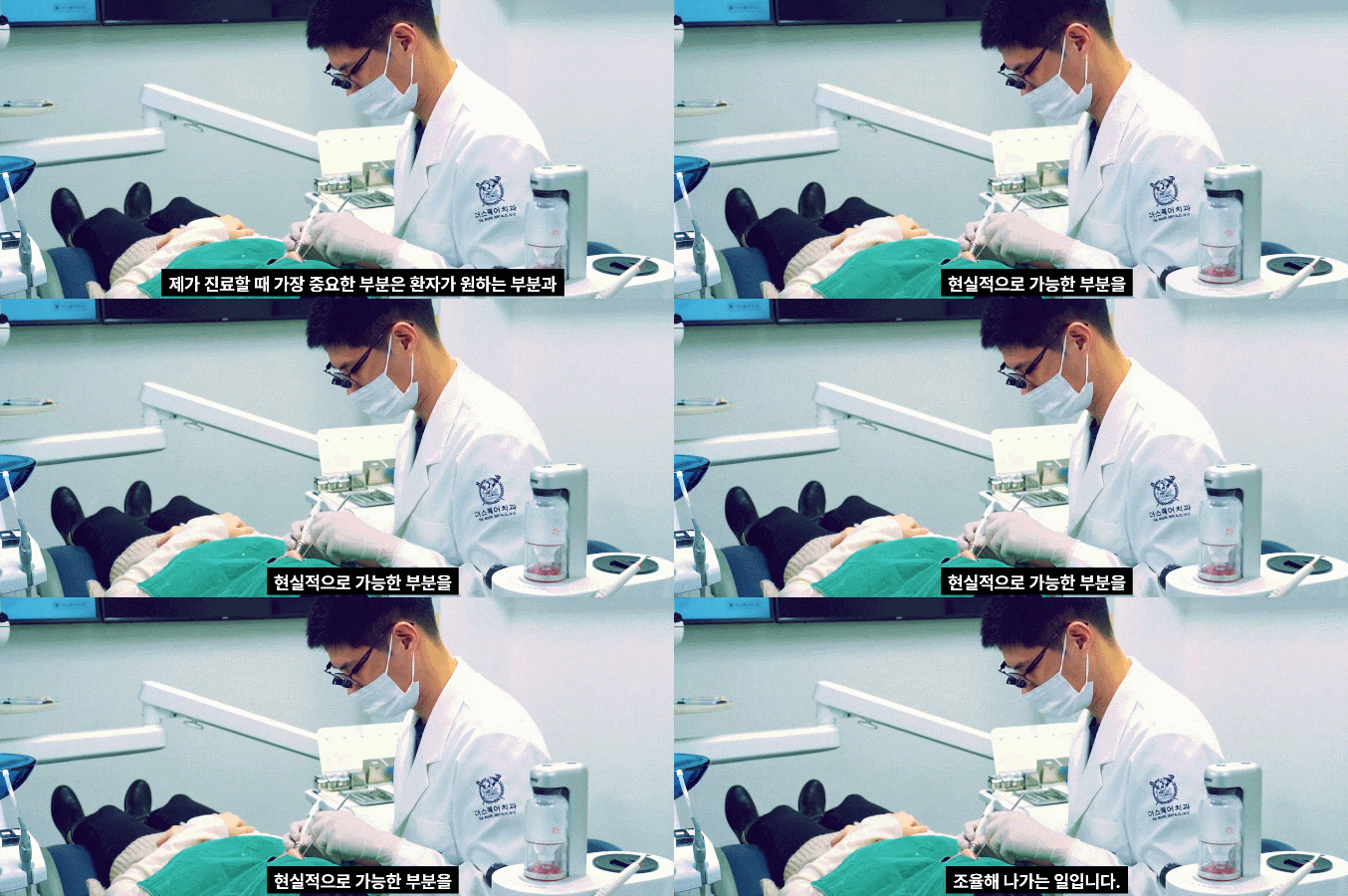
That is why at The Square Dental Clinic,
we do not judge based on just one factor.
We look at several structural elements together.
| - Bone thickness and density- Bite relationship between upper and lower jaws- Condition of the opposing teeth- Height and balance of existing prosthetics |
We check whether these factors are in harmony,
and whether force is concentrated on one side.
Even if it looks simple on the surface,
the internal structure is more complex than expected.
So we review eligibility afterward.
If you reverse the order,
it may seem fine at first,
but over time
the balance can collapse.
In the end, this difference becomes the 기준 that separates the results a few years later.
If you feel this way, an evaluation may be needed.
Insurance implant

Do any of the items below apply to you?
✔ Several teeth are already weakened
✔ Noticeable wear has progressed in the molars
✔ When eating, one side feels like it contacts first
✔ You are currently wearing dentures
✔ The gums around the planned area often swell
If even one of these applies,
there may be a need to first check the overall balance.
At this stage,
you can organize things by rechecking the structure
and adjusting the flow of force.
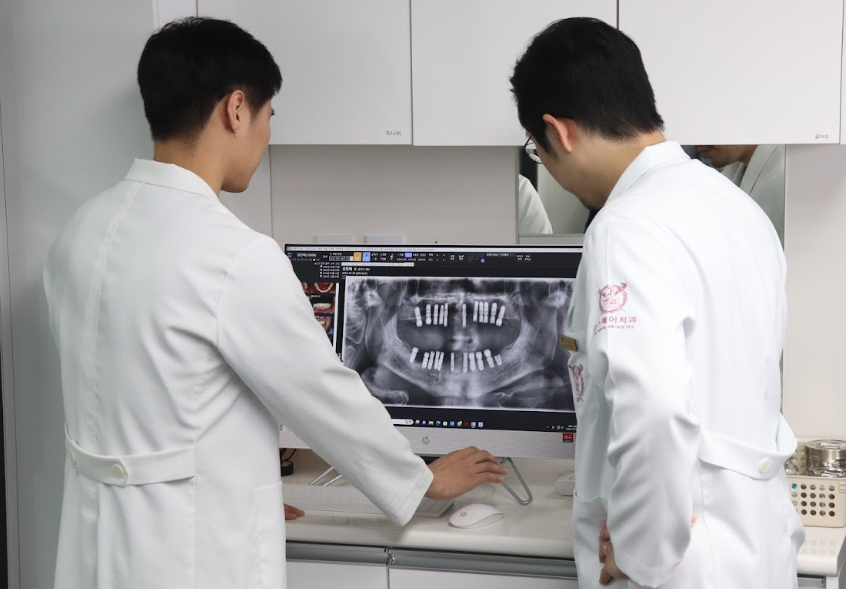
But if this period passes and the structure breaks down further, the story changes.
Bone may need reinforcement,
the bite may need to be readjusted,
or the prosthetic scope may need to be expanded.
There is also a limit to the number of times coverage can be used.
So it would be good to calmly check once whether the position you are using now is truly a strategically necessary one.
[Implants,
what happens after placement is even more important]

Insurance implants are not a choice made only for today.
They are a process of thinking together about what condition will be maintained 5 or 10 years later.
If you are at the current stage,
you can move in a direction that organizes the balance.
But if you miss the timing,
the scope may change.
That is why, rather than eligibility,
we first look at the possibility of maintaining it for 10 years.
We first check whether the current structure can withstand time.
There is no need to make a rushed decision.
However, I hope you know your current condition accurately.
I hope the 기준 is the structure, not the age.
This has been The Square Dental Clinic.
Thank you.
[See stories from people who visited us directly]
[If you are curious about your current condition,
ask via Naver TalkTalk]
[You can meet us on the L floor of Gwanghwamun D Tower]
| This post was written in compliance with the Medical Service Act (Article 56, Paragraph 1) so that you can obtain accurate information. Rather than simple promotion, we wanted to transparently share what actually happens in the treatment room. Rather than contacting us right away after reading this post, simply obtaining accurate information will be enough. |