Hello.
We are D Square Dental Clinic, studying the balance of smiles.
"Aren’t you shaving down the teeth too much?"
"Won’t the front teeth become sensitive afterward?"
If you are considering front tooth Minish,
this question
has probably crossed your mind at least once.
The front teeth are the most visible teeth.
That is why we have no choice but to be more careful.
It is natural to feel cautious about whether touching them might make them more sensitive,
or whether the sensitivity might last for a long time.
In that case, rather than vague worry,
it helps to organize the 기준 for why sensitivity can occur
and in what cases it may not be something to worry too much about.
This article is not meant to increase anxiety.
Rather, it is intended to explain the 기준
so that you can understand it a little more comfortably
and avoid putting things off because of worry.
If you read to the end,
it may help you organize your current condition a little better.
[Before choosing Minish,
criteria you must check]
Front tooth Minish,
is sensitivity caused by “shaving”?
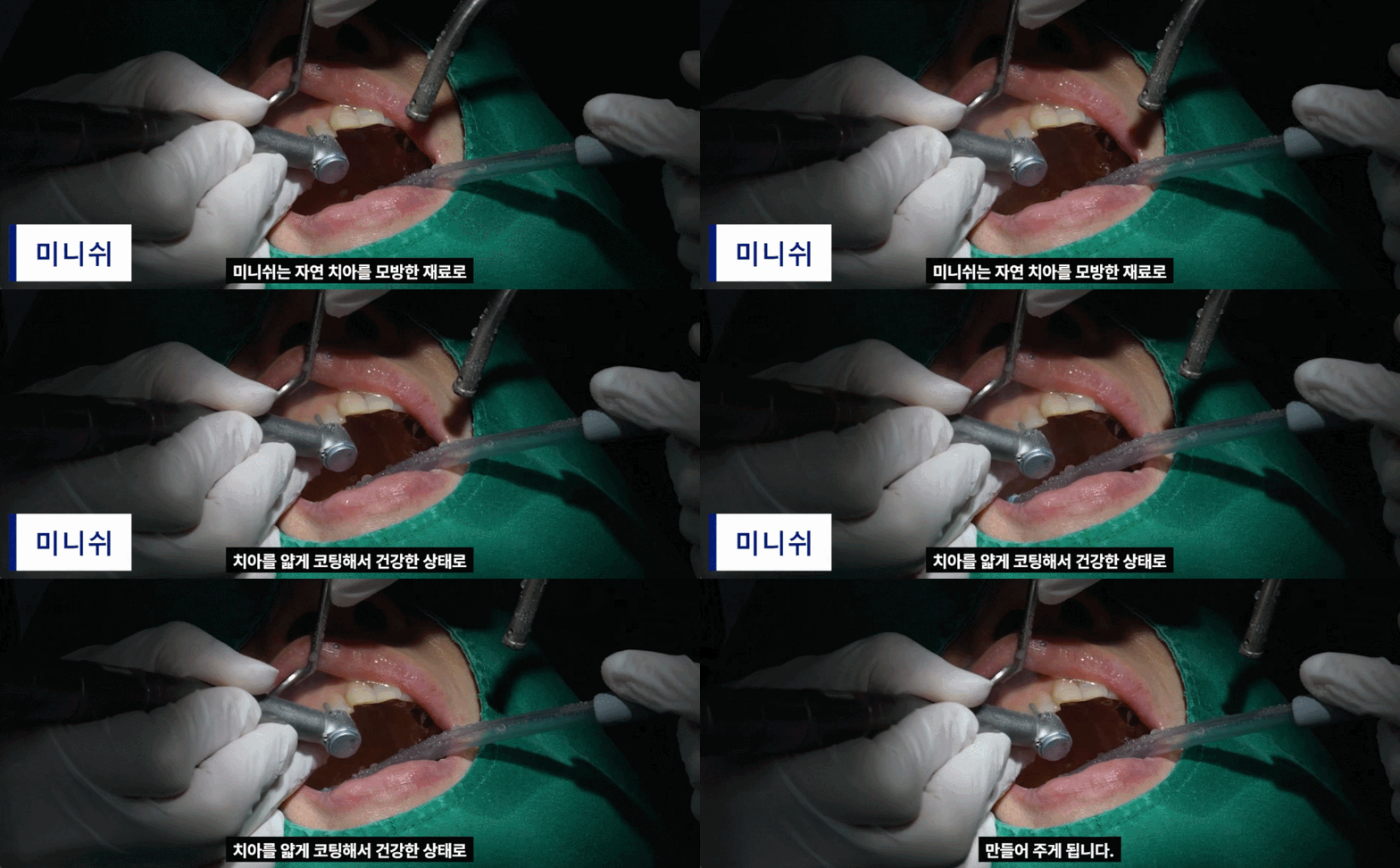
The outermost layer of the tooth
is the enamel.
This layer acts as a protective barrier
that blocks external irritation.
So how much of this layer is preserved
is very important.
Then why does sensitivity occur?
Usually, it appears when this protective barrier has been reduced significantly
and the dentin underneath begins to receive stimulation.
To put it simply:
When you are wearing a coat in winter, you feel fine,
but the moment you take off your outer layer,
the wind feels much colder.
Teeth are similar.
The deeper the reduction,
the closer it gets to the nerve,
so anesthesia may become necessary in some cases,
and sensitivity to stimulation also increases.
Then what about front tooth Minish?
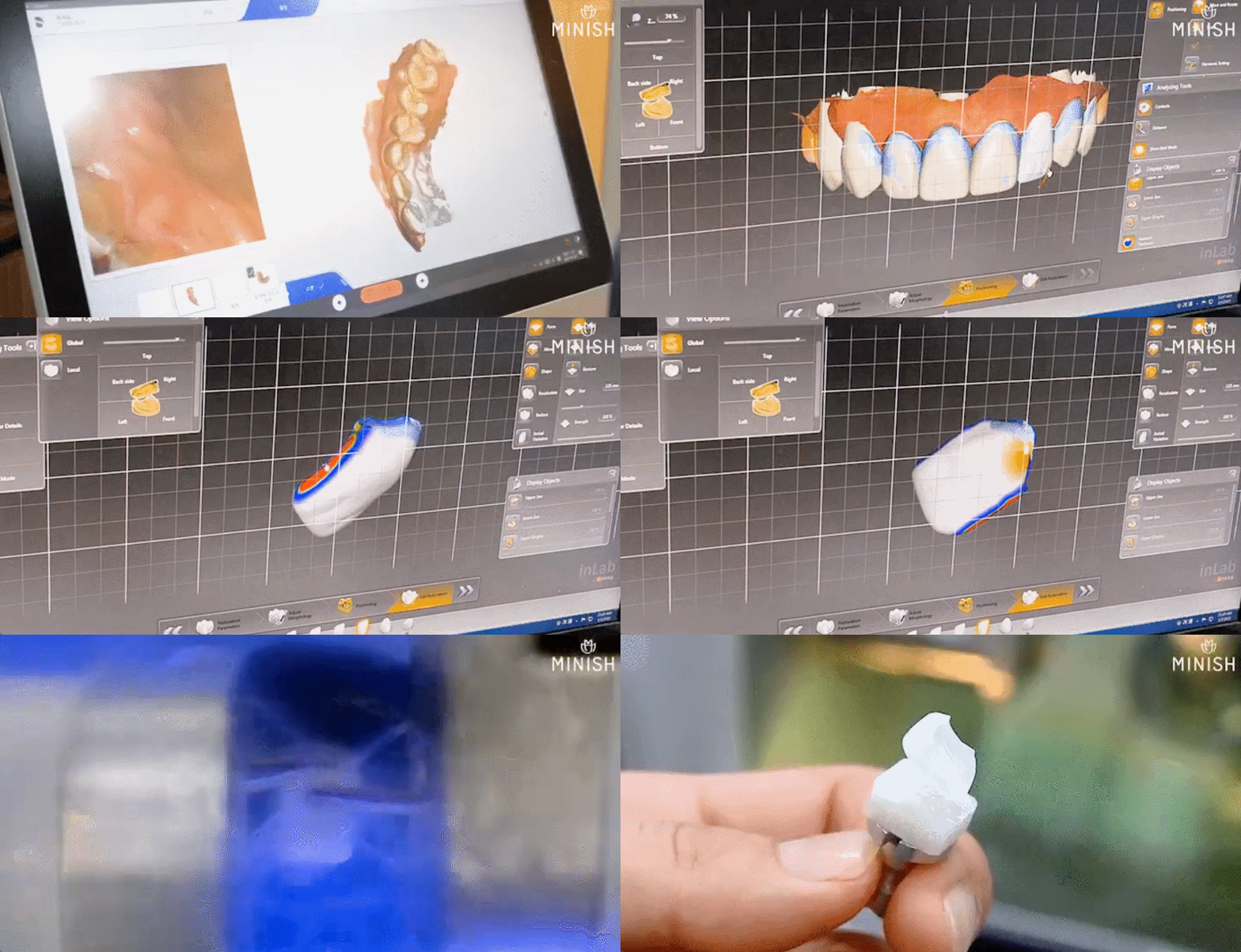
Minish is usually closer to surface preparation at the 0.1–0.2 mm level.
You can think of it as a process of smoothing the surface,
where areas that are already worn or uneven are gently refined
so that bonding can be done properly.
In other words, it is not a process that goes deep enough to reach the nerve.
That is why, in many cases, it can be done without anesthesia.
This difference is important.
If you only hear the word "shave down," you may worry,
but in reality it is not the same as a method that significantly damages the protective layer.
Also, the shallower the reduction range,
the faster the tooth tends to adapt on its own.
So even if temporary sensitivity is felt,
in most cases it settles over time.
To summarize,
sensitivity varies depending on the extent and depth of the reduction.
Then why do some people say it was sensitive?
Here is one important point.
Sensitivity is not caused only by reduction.
These situations can happen:
| Cases where front tooth wear had already progressed quite a bit |
|---|
| Cases where the bite was slightly misaligned and force was concentrated on certain front teeth |
| Cases where the biting balance was not sufficiently considered after bonding |
When several conditions overlap like this,
a temporary feeling of sensitivity can occur.
Not only when biting into food,
but even when your teeth are simply closed,
small amounts of pressure are continuously being transmitted.
Let me give you an analogy.
If you think you are closing a door gently,
but the force is concentrated on only one hinge,
at some point it will start to creak.
The bite of the teeth is similar.
Even if they look nicely arranged on the surface,
if the direction of force is leaning to one side,
that area becomes sensitive first.
That is why we do not discuss the design right away.
First, we look at how the force is being transmitted.
Front teeth are not just a visible area;
they are also a place where structural balance matters.
Once we look at this 기준 together,
you may understand a little better why some people experienced sensitivity. :)
Does covering it make it decay more easily?
It is a misconception.
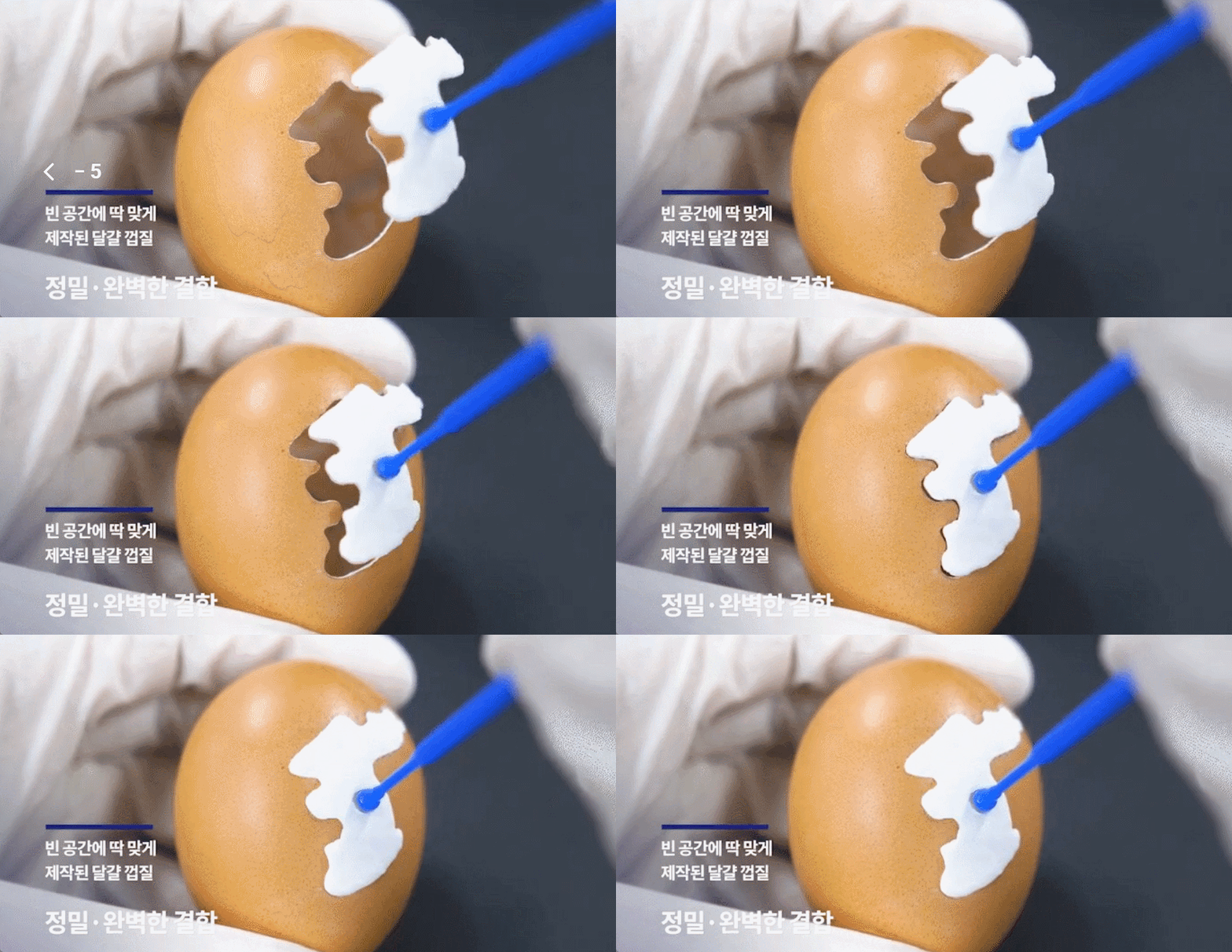
"I heard that if you cover it, it decays more easily inside."
But the truth is a little different.
The key issue is not the restoration itself,
but the presence of gaps.
Decay does not develop in the prosthesis itself.
The problem is the very tiny gap that can form between the prosthesis and the natural tooth.
If this area does not fit closely enough,
bacteria can seep in over time.
And in many cases, it is only discovered after about 1 to 2 years.
Even if it looks fine on the outside,
it may already have progressed on the inside.
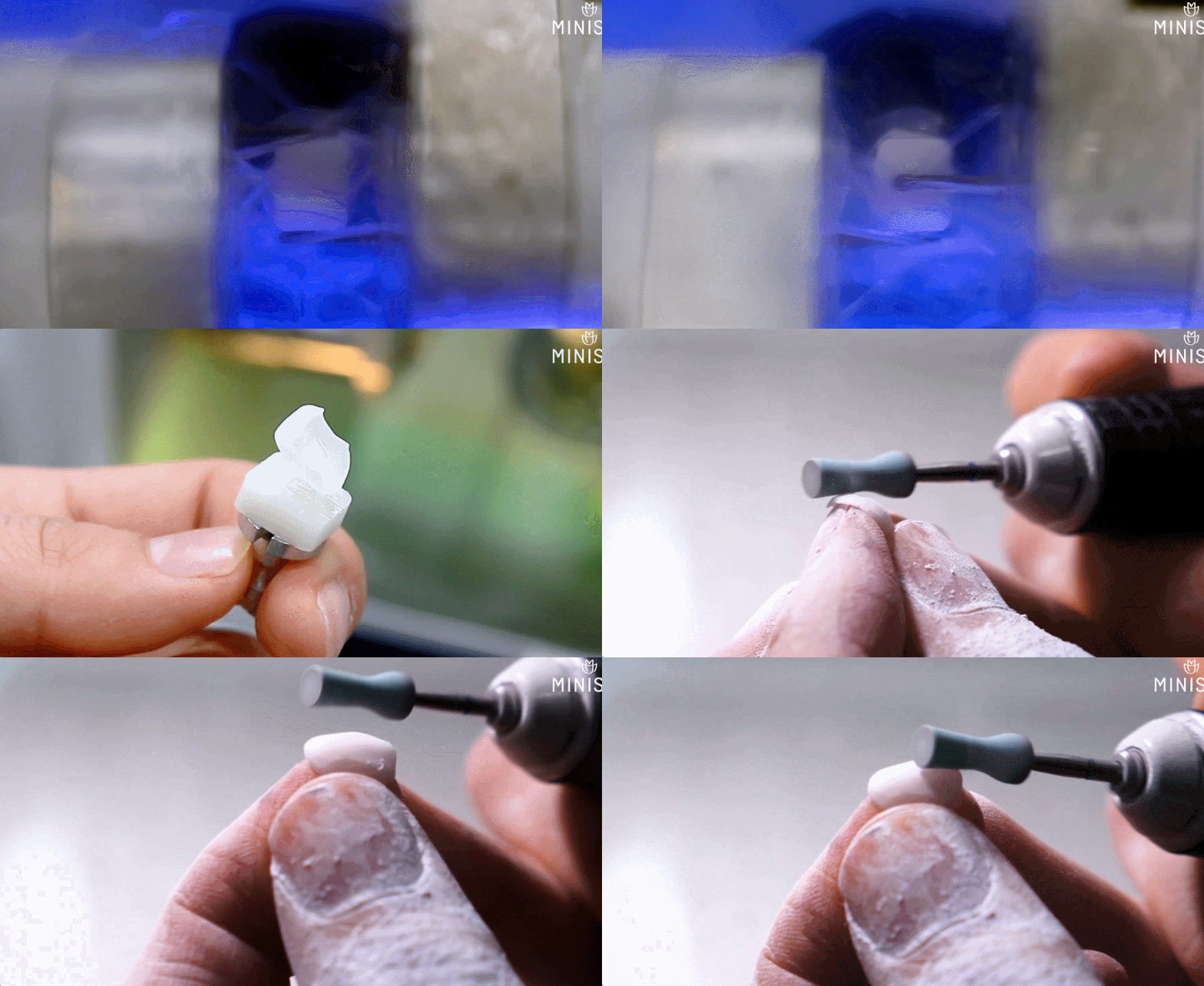
That is why we are more careful.
In particular, the front teeth are not simple to treat again.
If reduction is repeated,
the options available gradually decrease.
So whether it lasts a long time is often not a matter of the material,
but of the initial design 기준.
The replacement timing
is based on the condition, not the time.
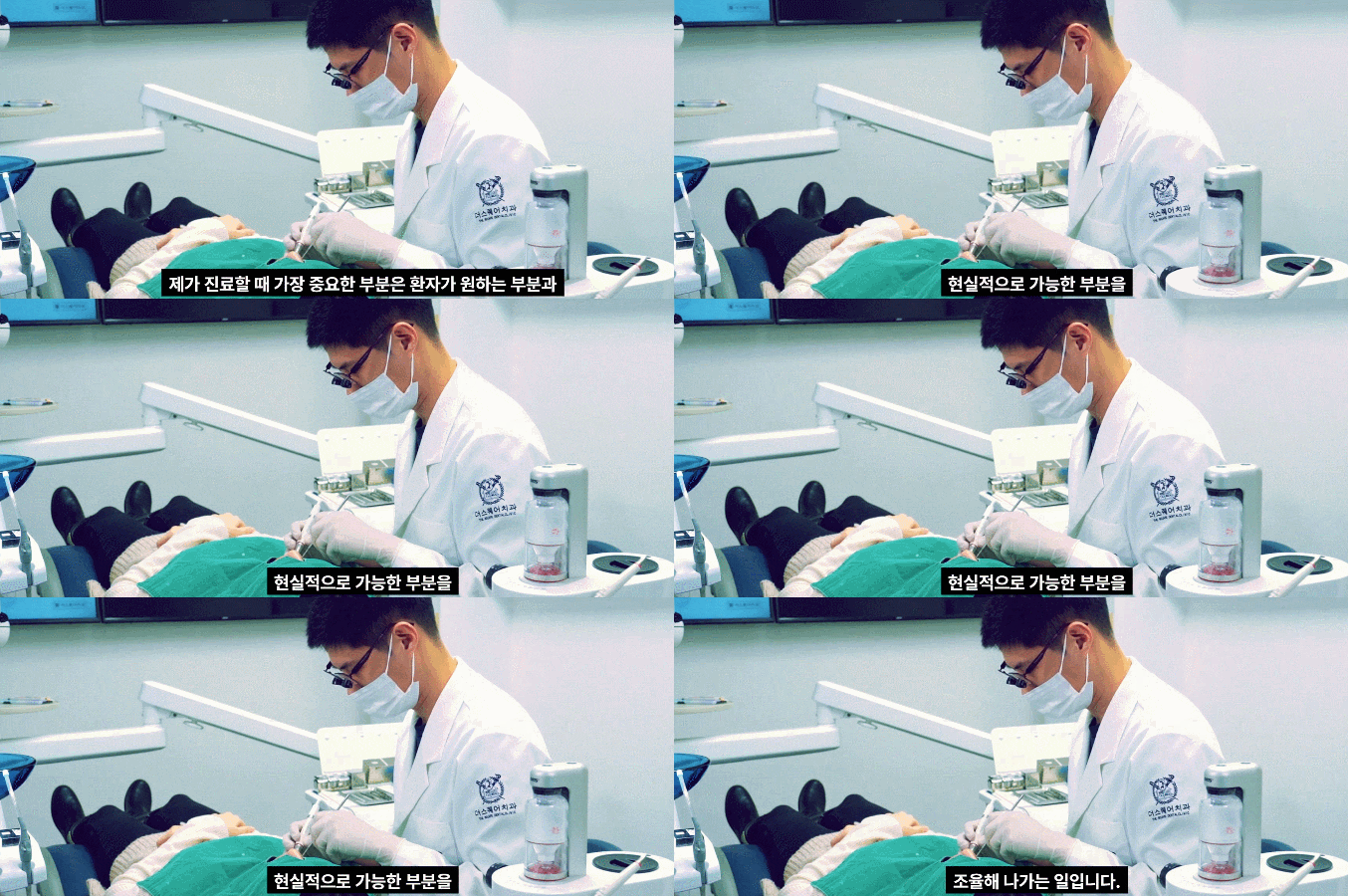
"How many years can it be used before it needs to be replaced?"
Unexpectedly, there is no fixed replacement cycle.
Because the properties of the material are relatively similar to natural teeth,
the rate at which it wears down over time often follows a similar pattern.
So if it is managed well,
it can be used for a period similar to that of natural teeth.
However, there is one premise here.
As time passes,
✔ if the gums change,
✔ if another problem appears around the tooth root,
✔ or if the biting balance changes,
then it is a good idea to check it once.
In other words, there is no formula that says,
"It must be replaced after a certain number of years,"
but if the oral environment changes,
it needs to be examined accordingly.
So rather than deciding the replacement time in advance by number,
it is more important to understand what trend my teeth are currently in.
[The initial design determines the result]

Front tooth Minish changes the appearance of your smile.
But for that smile to last a long time,
the structure must be right first.
Aesthetic work that does not consider structure
is difficult to maintain for long.
Even if it looks fine on the outside,
if the internal balance is not right,
differences will gradually appear over time.
Not being painful does not necessarily mean it is safe,
and being thin does not automatically mean it is conservative.
That is why there is something that must be checked first.
Whether it is possible without reduction in the current condition,
whether a small range is enough,
or whether structural correction is needed first.
Checking this order
is the beginning of front tooth Minish.
It is not too late to discuss the design afterward.
If you have any questions while reading,
please feel free to leave a comment or send us a message through Naver TalkTalk. :-)
For a beautiful smile,
this was D Square Dental Clinic, thinking first about the 기준.
Thank you.
[See stories from people who visited in person]
[If you are curious about your current condition,
ask us through Naver TalkTalk]
[You can find us on the L floor of D Tower in Gwanghwamun]
| This post has been written in compliance with the Medical Service Act (Article 56, Paragraph 1) so that you can receive accurate information. I wanted to transparently share what actually happens in the clinic rather than simply promote. Please do not contact us immediately after reading this post; it is enough if you can take away accurate information. |