Hello.
We are The Square Dental Clinic,
which thinks about preservation first.
"Is there another option besides a crown?"
You may have found the title a little puzzling.
And at the same time,
you may have thought that we were recommending doing less.
But that is not what it means.
Once a tooth is shaved down too much, it cannot be restored.
So it is only natural to become more cautious.
That is why, before making a choice,
it is important to know the criteria first.
So today,
before deciding on a crown right away,
I’d like to organize the criteria you should check once.
In particular, if you are considering overlay dental treatment,
let’s look together at when a tooth can still be preserved
and when the direction changes.
Before removing it,
check this first.
If you’re considering tooth preservation treatment, you should first know the overlay dental criteria.
A tooth may look like a single solid piece from the outside.
But in reality,
the hard outer layer and the inner layer are separate.
So even if a crack is visible on the surface,
it does not always mean the whole tooth needs to be covered extensively.
What should be checked first is
how far it has progressed into the inside
and whether the remaining hard portion
is sufficient.
If the remaining part is
holding up well and the area around the root is stable,
it may be possible to protect only the necessary areas and watch the structure.
In other words, this is not simply a choice to touch less,
but a process of first checking
whether the tooth can still be preserved.
For example, it may feel like this.
✔ It is chipped, but feels fine when left alone
✔ It is sensitive to cold water, but the sensation quickly fades
✔ When eating, it feels slightly uncomfortable only from a specific angle
At this stage,
the tooth may still have some ability to withstand pressure.
But there is one more important point here.
Even if the surface symptoms seem similar,
the degree of progress inside can be different.
So it is better to first distinguish whether it is still at this stage
or has already moved on to the next stage.
If the structure does not change,
the result stays the same.
If you’re considering tooth preservation treatment, you should first know the overlay dental criteria.
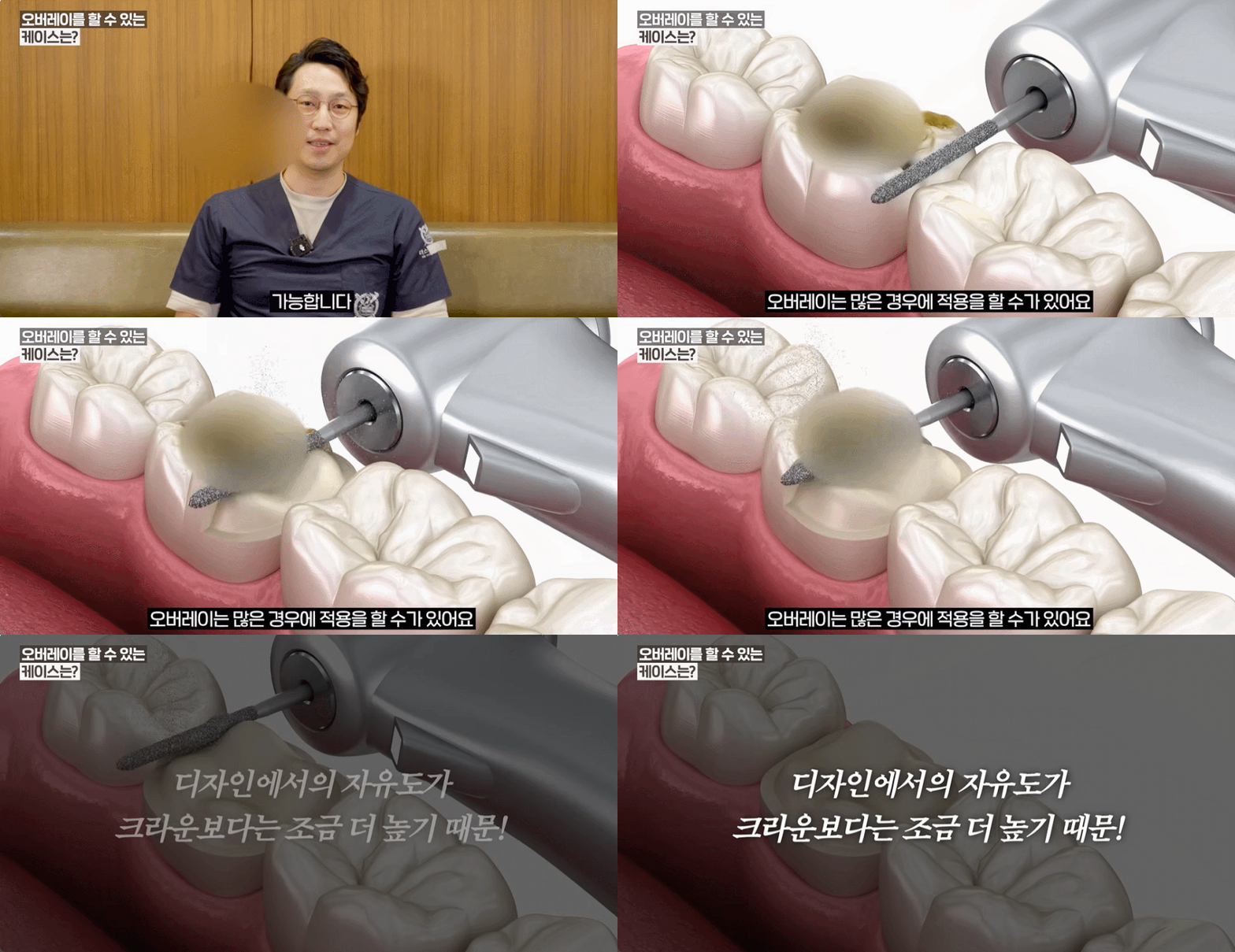
Molars are the teeth that receive a surprisingly large amount of force when we eat.
But even more important than the size of the force is where that force is concentrated.
If pressure repeatedly gathers at one end,
it may first look like a shallow crack.
But if that pressure continues,
the crack gradually spreads along the inner layer.
So simply covering it does not solve everything.
A crown is a method that surrounds the tooth all the way around,
an overlay protects only the necessary parts
while redistributing how the force flows.
In other words, it is not just about covering the outside,
but an approach that redesigns the way force is distributed.
If left as it is,
shallow crack → exposure of the inner layer → nerve irritation → inflammation
It progresses in that order.
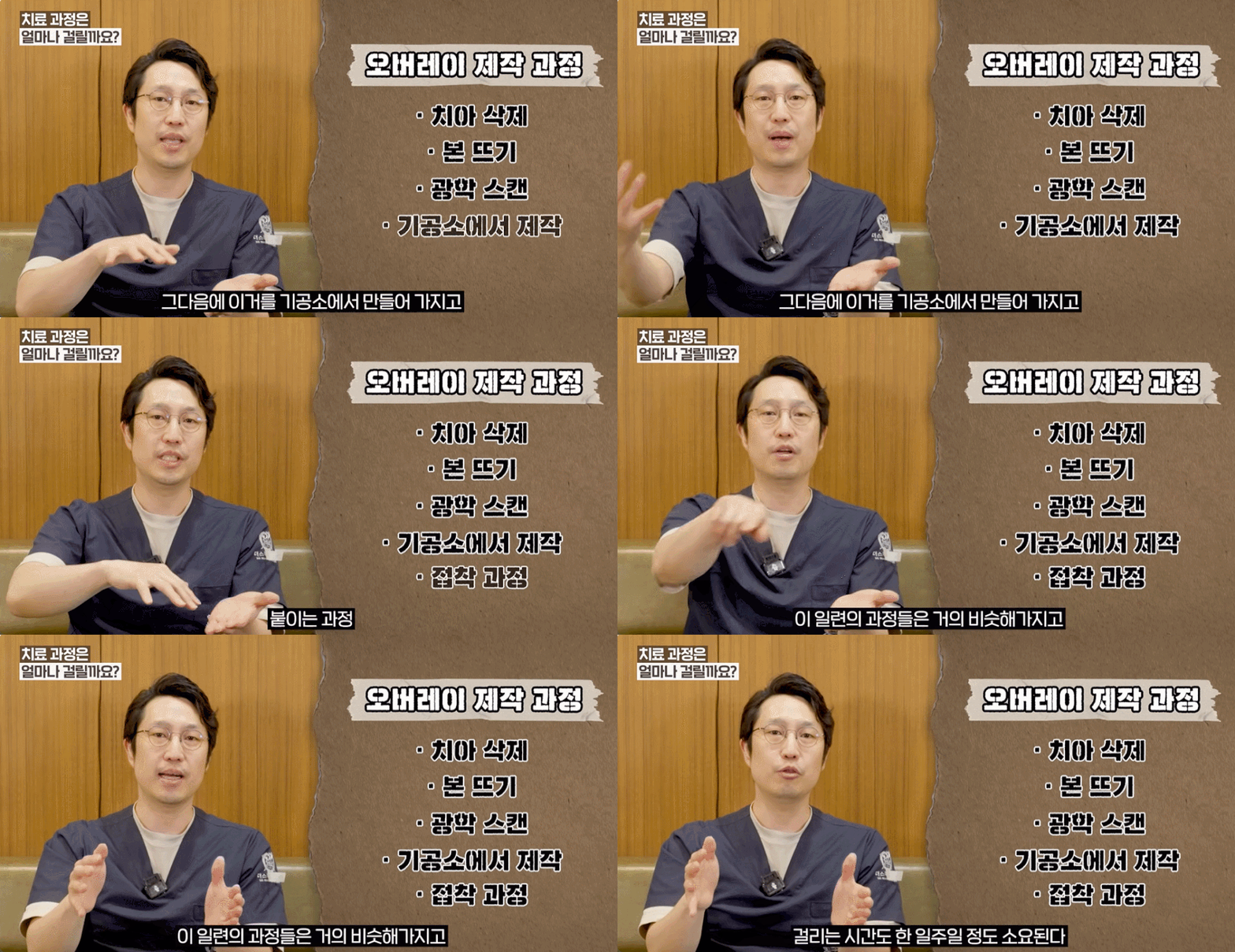
At first, it may look like a small crack.
But as the pressure repeats,
the damaged area gradually expands.
And once it moves up a level,
the available treatment options may also change.
That is why we say it is important to first check which stage it is in right now.
Checking while it still looks fine is actually a choice that is not too late.
It is important before the pain starts.
If you’re considering tooth preservation treatment, you should first know the overlay dental criteria.
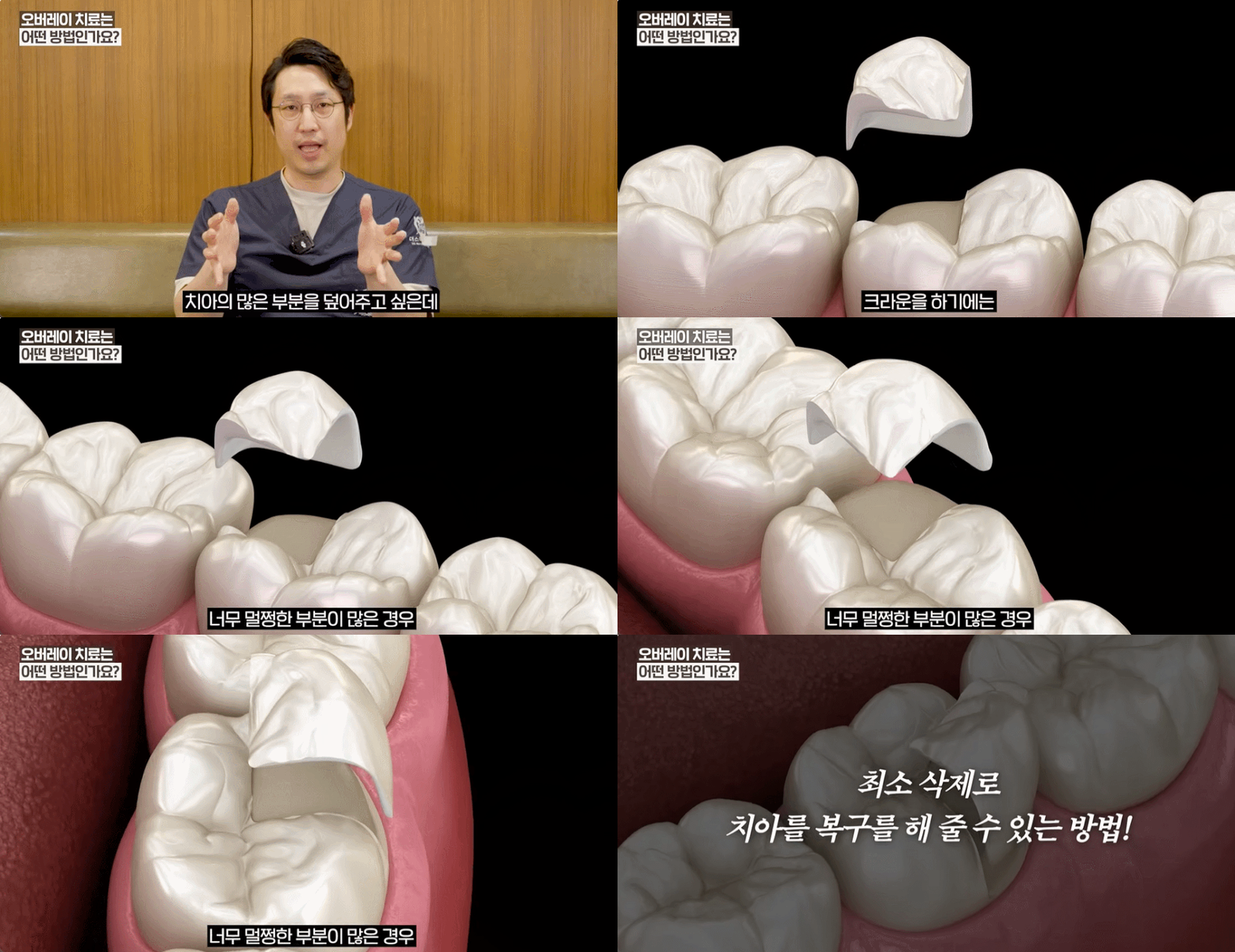
If it does not throb even when you are still, there is a high possibility that the nerve is still holding up well.
Also, even if it briefly reacts to cold water,
if it quickly feels normal again,
it may still be at a stage where it has some ability to recover on its own.
At this point, you can think about protecting only the necessary parts
and observing the structure.
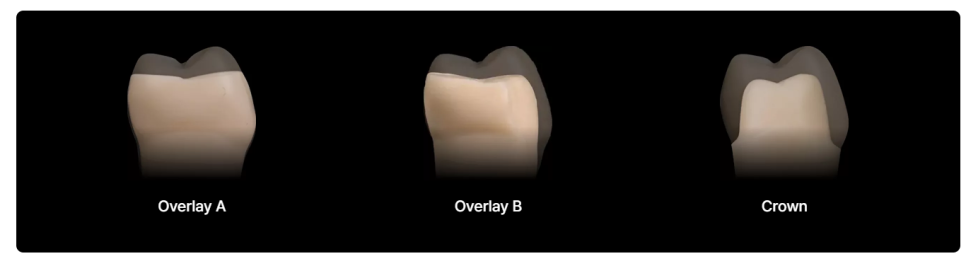
However, if the pain lingers for a long time,
and a throbbing feeling starts even when you are still,
the situation is a little different.
It is highly likely that the nerve has already moved into a stage where it is difficult to recover on its own.
After that,
a process is needed to clean up the inside as well,
and that can lead to a choice that requires covering a larger part of the structure.
This is the point where the range of choices becomes narrower.
That is why we emphasize that it is important to first check which stage it is in right now.
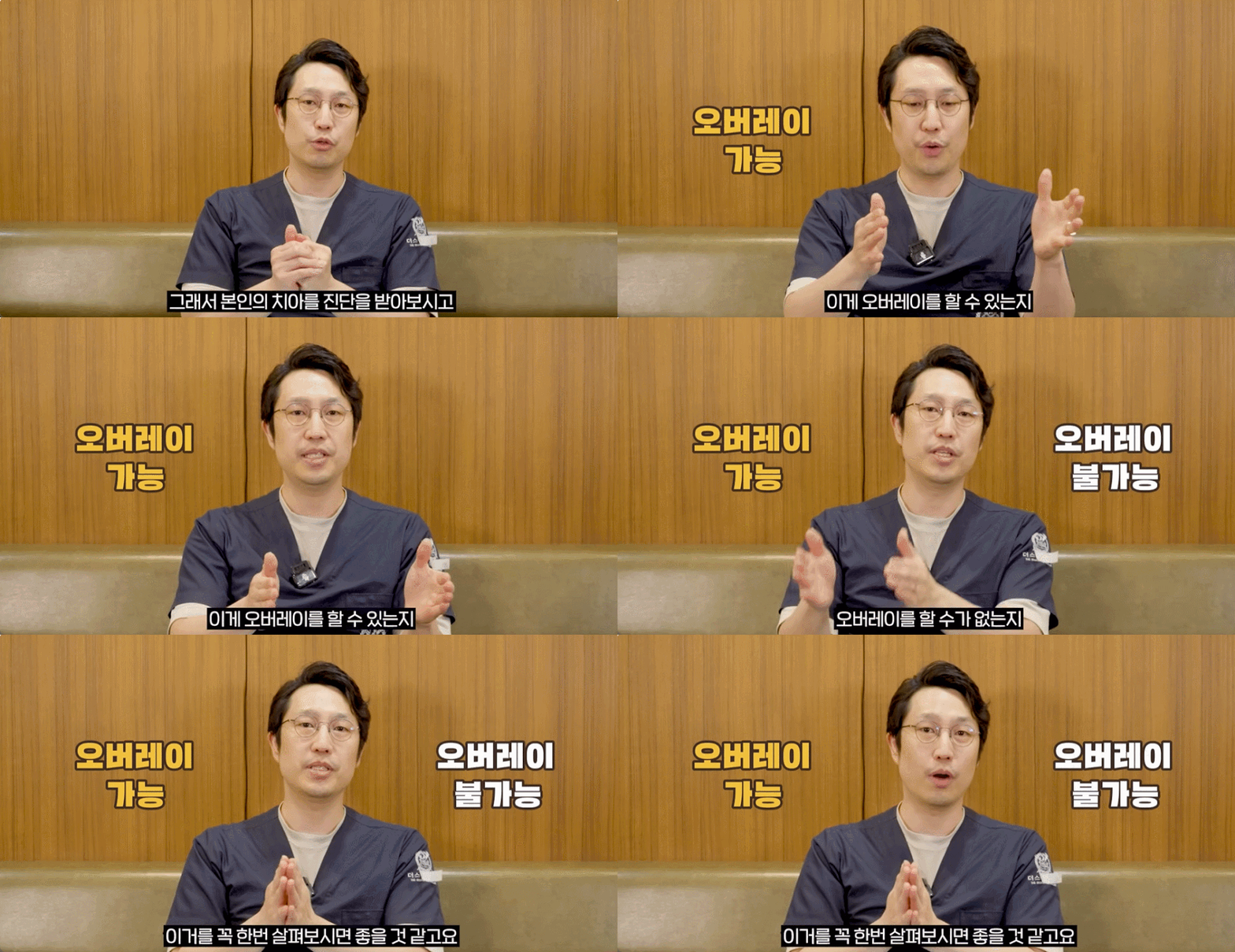 If you’re considering tooth preservation treatment, you should first know the overlay dental criteria.
We do not simply look at whether to cover it or not.
| Where the force is directed when eating |
|---|
| Whether there is enough remaining hard structure |
| Whether the gums and root are supporting that force well |
| How much longer it can be used |
We look at these criteria together.
If possible, we think about a direction that preserves the structure within the necessary range.
On the other hand, if it is difficult to preserve,
we guide you toward the appropriate option.
There is one criterion.
How long can this tooth be used together with you?
[Structural criteria to preserve when the nerve is still alive]
 If you’re considering tooth preservation treatment, you should first know the overlay dental criteria.
Just because it does not hurt
does not mean we can conclude that it is in good condition.
Still, if you check now,
it may be a stage that can still be preserved.
So if you are even slightly concerned,
we hope you will not put it off and check it once.
With the hope that this helps your decision,
we have explained the overlay dental criteria.
The goal is not to do less.
The direction is to protect only as much of the structure as needed
We would like to think that through together.
If you have any questions while reading,
please leave a comment or contact us through Naver Talk Talk :-)
This has been The Square Dental Clinic.
Thank you for reading.
[You can see many people’s honest records
at a glance]
[We have opened the Naver Talk Talk chat window
so you can contact us easily]
[We are located on the L floor of D Tower in central Gwanghwamun]
| This post was written in compliance with the Medical Service Act (Article 56, Paragraph 1) so that you can obtain accurate information. We wanted to transparently share what actually happens in the clinic, rather than simple promotion. Please do not contact us immediately after reading this post; receiving accurate information alone is enough. |