Hello.
This is The Square Dental Clinic,
which prioritizes preserving natural teeth.
"If I get a root canal treatment, can the tooth be saved?"
"Would it be better to get an implant right away?"
Behind these questions are both the hope of saving the tooth if possible
and the worry about whether problems will arise later.
So first, I’d like to say this.
If possible, it is best to first look into a way to save the natural tooth.
However, depending on the condition of the tooth,
the approach may differ.
So today, I’ll explain a little more simply
how root canal treatment and implants are decided
based on the criteria used.
If possible, we save the natural tooth first.
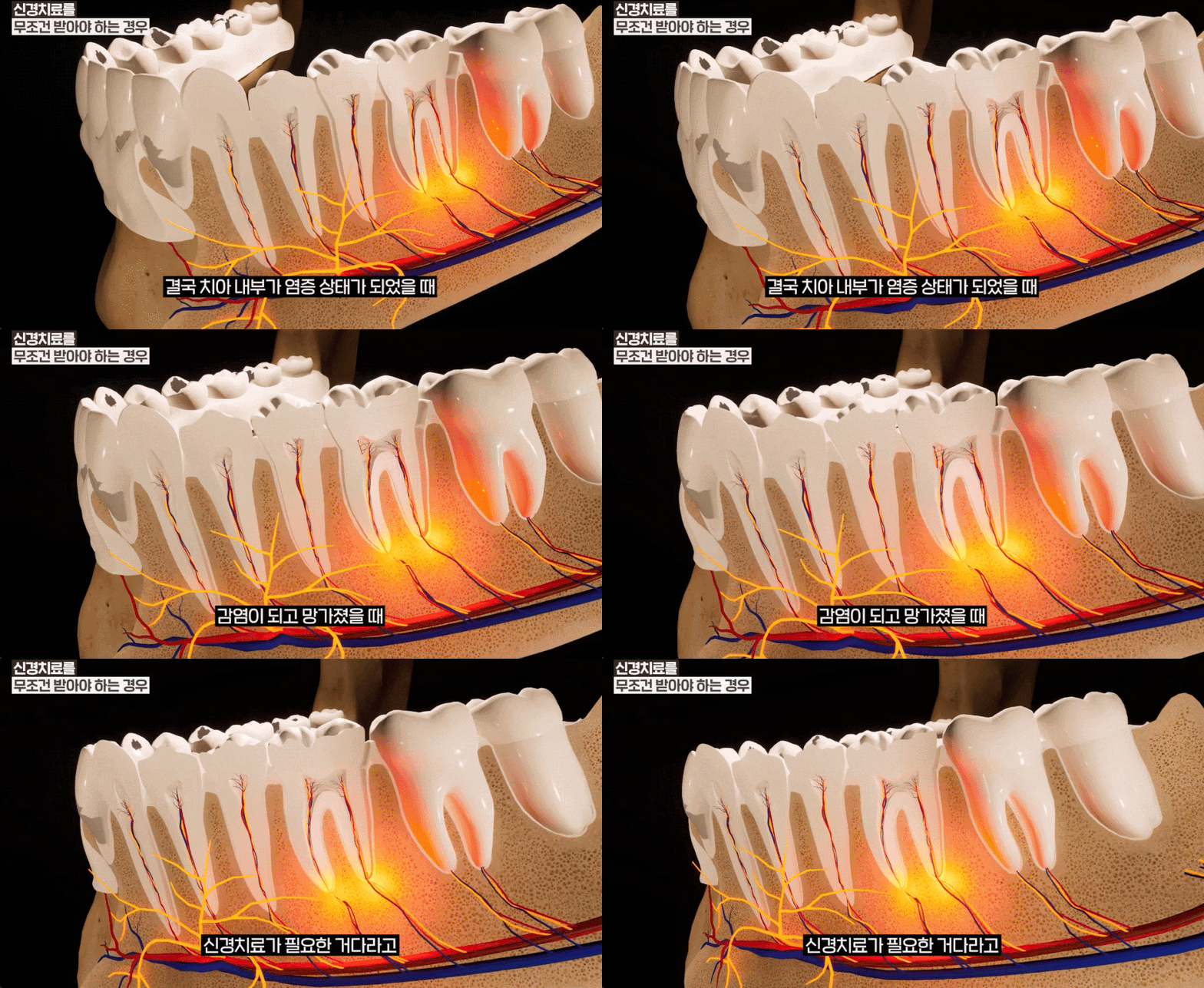
First, let’s talk about root canal treatment.
The process involves, when inflammation develops inside the tooth,
removing the infected tissue,
cleaning and managing the internal space,
and then sealing it again.
Simply put,
it is a process of cleaning the inside and reducing the cause of pain.
For example,
let’s think about a situation where there is a problem with a car engine.
Just because there is a problem with parts inside the engine,
you don’t replace the entire car.
You clean up the problematic area
and manage it so it can be used again.
Teeth are similar.
When the internal infection is cleared,
pain often decreases and chewing function can also be restored.
Therefore, if the root and structure are still sufficiently remaining,
we first consider preserving the natural tooth.
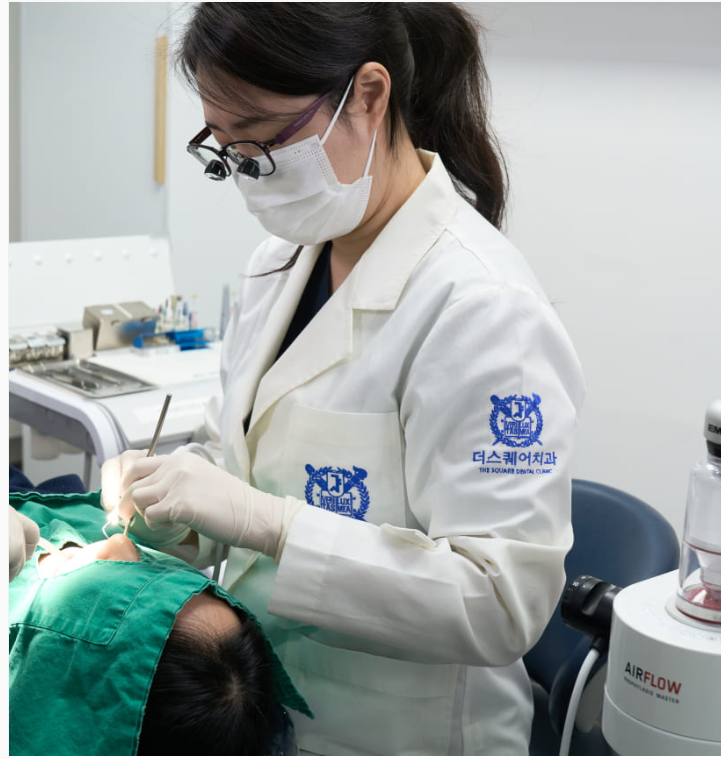
There is one important point to understand.
Root canal treatment is not the concept of creating a new tooth.
It is closer to the process of organizing and maintaining a structure
that has already become weakened.
That is why, afterward,
we also proceed with protecting the structure by covering it with a crown
so the tooth does not become weak again.
It is easier to think of it as cleaning up the internal space
and then firmly encasing the outer part again.
The direction of saving the natural tooth
can certainly be a meaningful choice.
However, since the approach can differ depending on
how much tooth structure remains,
we look at that together as well.
[Inflammation inside the tooth,
when is treatment needed?]
In these cases, an implant is considered.
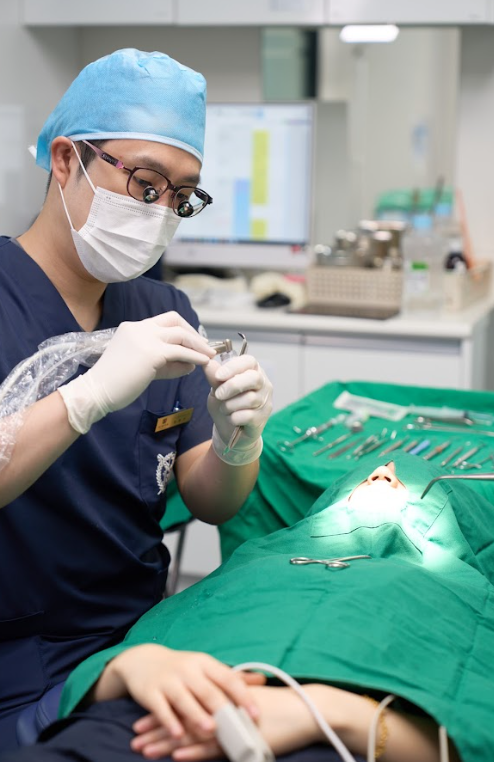
However, not every tooth remains functional for a long time
even after root canal treatment.
When examining the condition in the clinic,
there are cases where we find that the tooth has already become structurally very weak.
These are the kinds of situations we may consider.
| If very little of the wall remainsIf a deep crack has progressedIf inflammation around the root recurs repeatedlyIf a root fracture has occurred |
If the tooth structure itself has become weakened like this,
even if it looks like it may be maintainable on the outside,
it can be difficult for it to hold up over time.
So in situations like this,
instead of forcing preservation,
it may be helpful to look into another direction.
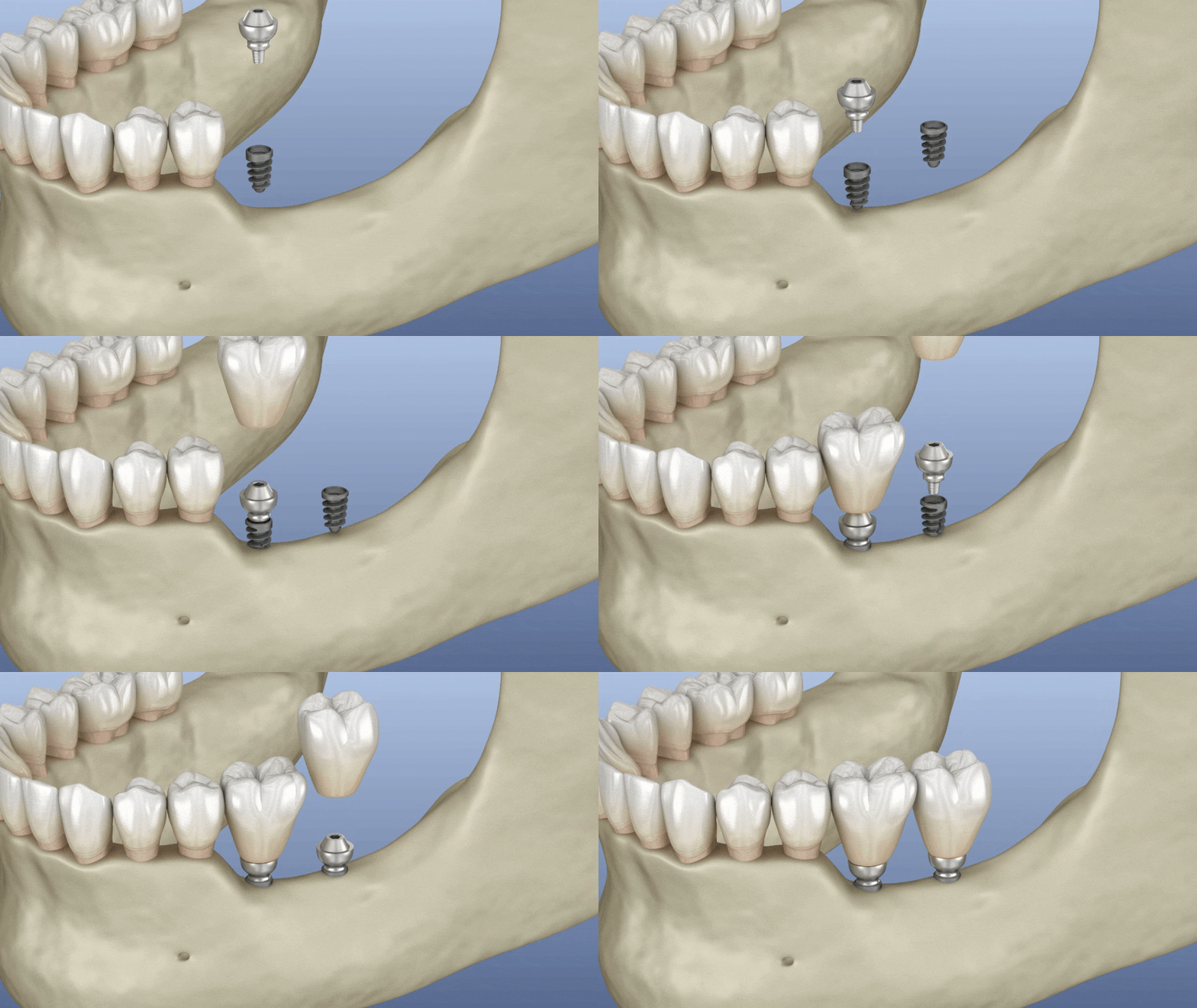
One of the options considered at this point
is an implant.
An implant is a method of fixing an artificial root
into the jawbone at the site where the tooth is missing.
The titanium artificial root gradually becomes firmly established
through the osseointegration process,
where it bonds with the bone.
So it has the characteristic of forming an independent support structure
without relying on the surrounding teeth.
To explain it a little more simply,
root canal treatment is closer to the process of organizing and maintaining
the existing pillar,
while an implant is a structure in which a new pillar is built
in the missing area.
Depending on the condition,
preserving the natural tooth may be a meaningful choice,
while in other cases,
creating a new support structure may be more stable.
In the end, what matters is
carefully examining what condition the current structure is in.
[If a tooth is missing,
how do we respond with an implant?]
This is how The Square makes the decision.
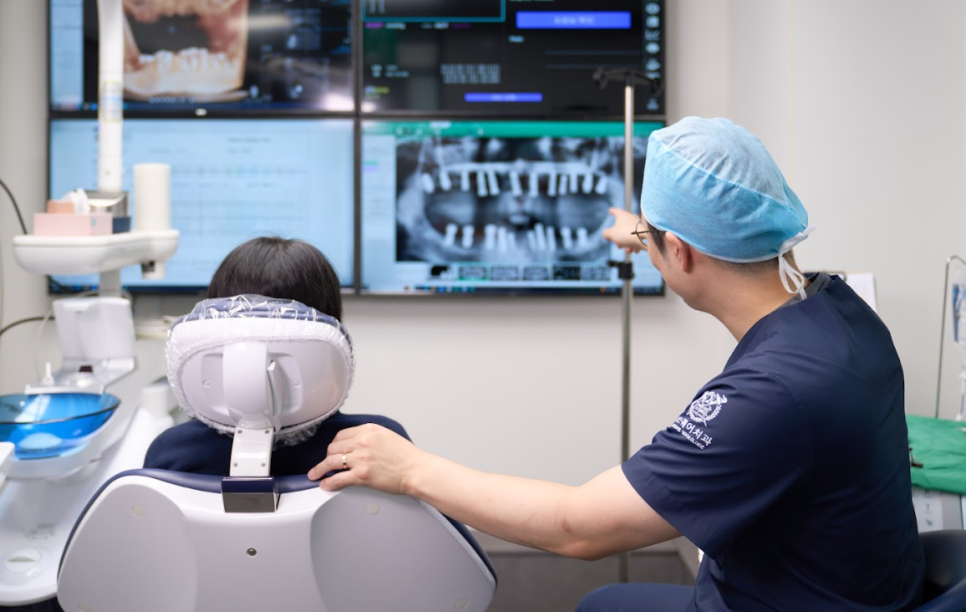
That is why we do not simply decide in advance
that "root canal treatment is better" or
"an implant is better."
There is something we look at first.
That is whether the structure that remains now
can continue to hold up in the future.
This is because a tooth is not something
that should be viewed as just one isolated part,
but rather something that requires consideration of
surrounding structures and balance of force.
So at The Square, we check the following criteria together.
How much wall remains
Whether the root length is sufficient
Whether the condition of the alveolar bone is stable
How the chewing force is distributed
Looking at these factors together,
we can determine to some extent
how stably it can be maintained at present.
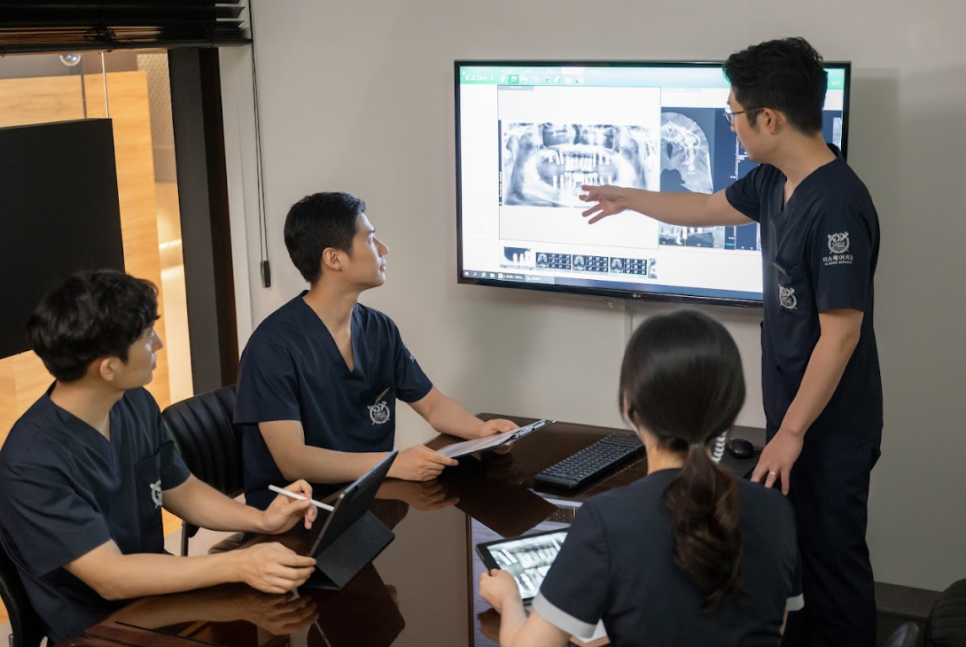
So if possible, we first consider the direction of saving the natural tooth.
If the structure is in a state where it can hold up sufficiently,
root canal treatment can be a meaningful choice.
However, if the structure is in a state where it is difficult to maintain,
an implant may be the more stable direction.
In the end, the important point is not
starting by deciding which method is better,
but first understanding the current condition.
Only through that process can we naturally judge
which direction is more stable.

So far, we have looked at "Root canal treatment? Implant? The answer appears when you look at the condition of the tooth."
At The Square, we place great importance on first
examining the current condition structurally.
We carefully explain whether the natural tooth can be preserved
or whether it would be good to consider another direction together.
Before deciding on a direction,
we also give you enough time to think it over.
However, I also want to mention that
as time passes, the condition can change.
So rather than delaying too long,
just checking the current condition once can already be helpful.
If you have any questions while reading,
please feel free to leave them in the comments or via Naver Talk Talk :)
Thank you for reading this long post today.
This has been The Square Dental Clinic.
[You can view the visit reviews left by many people]
[Please leave your questions easily via Naver Talk Talk]
[Here is the directions guide]
| This post was written in compliance with the Medical Service Act (Article 56, Paragraph 1) so that you can obtain accurate information. Rather than simple promotion, we wanted to transparently share the processes that actually take place in the clinic. Please do not contact us immediately after reading this post; simply obtaining accurate information from it is sufficient. |