Hello.
This is The Square Dental Clinic, where we first help you understand the structure and changes of teeth.

If a tooth that has undergone root canal treatment
starts to look gradually darker,
concern begins to set in.
"Is this okay?"
At first, you may not notice it,
but when you look in the mirror or take a photo,
there can be a moment when just one tooth
looks like it has a different color.
Only then do many people realize,
'Ah, something has changed.'
That is why, in situations like this,
many people also look into a method called
non-vital tooth whitening.
Today, I’ll explain step by step why a tooth’s color can change after root canal treatment,
and in what cases it may be worth considering a way to adjust the color.
Tooth color changes start from the inside.
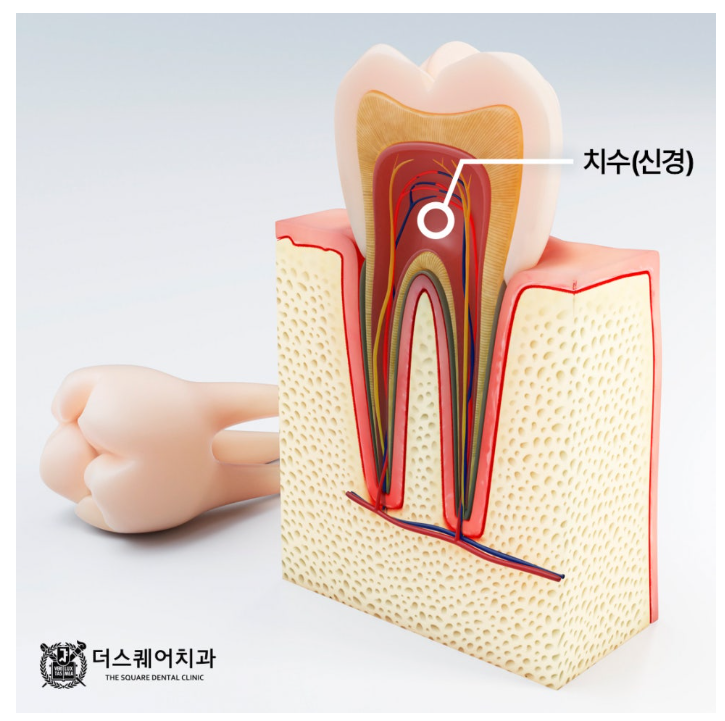
Inside the tooth, there is originally a space
that contains the nerve and blood vessels.
In simple terms,
you can think of teeth as living tissue as well.
However, when decay becomes deep
or there is external impact,
this inner tissue can become damaged.
The process performed in such cases is
root canal treatment.
After this process,
the environment inside the tooth changes
slightly from what it was before.
For example, it is similar to this situation.
If you cut an apple in half and leave it out for a long time,
it gradually turns brown.
A similar change can also happen inside a tooth.
As time passes,
a color change develops inside,
and that effect gradually becomes visible on the outside.
That is why, in some cases,
the color changes from within the tooth itself,
not on the surface.
In such cases, methods that only clean the exterior
may not significantly change the color difference.
It may look like whitening,
but the method is different.
The tooth whitening that many people know about
usually works by brightening the tooth surface.
For example,
when there are stains left on the surface from coffee or tea,
this type of method can gradually help even out the color.
So if the discoloration came from everyday life,
just managing the tooth surface can also make the brightness look different.
However, color change after root canal treatment
is a somewhat different situation.
That is because the discolored area is
not on the outer surface of the tooth,
but inside the tooth.
So with a method that only tidies the exterior,
the color difference may not change
as much as expected.
In such cases, one may consider a method
that uses the inner space of the tooth
to gradually adjust the color.
If there is a stain on the outside of a glass,
cleaning the outside will make it clean.
But if the color has changed inside the cup,
cleaning only the outside does not make the change feel very significant.
The inside has to be addressed
for the overall color to look different.

Teeth are similar to this as well.
If the discoloration is on the surface,
you can approach it with a method that brightens the exterior,
but
color changes that occur after root canal treatment
start inside the tooth,
so the approach is different.
That is why non-vital tooth whitening is easier to understand if you think of it as a way to gradually adjust the color from inside the tooth rather than from the outside.
Rather than changing dramatically all at once,
you can think of it as a process
of balancing the color over time.
If you understand the principle this way,
it becomes easier to accept why the approach differs from regular whitening.
In these cases,
it may be worth checking once.
Tooth color changes appear in situations such as the following.
| A tooth that has undergone root canal treatment |
|---|
| A tooth that has been exposed to external trauma |
| A case where there was bleeding inside the tooth |
| A case where just one tooth looks especially dark |
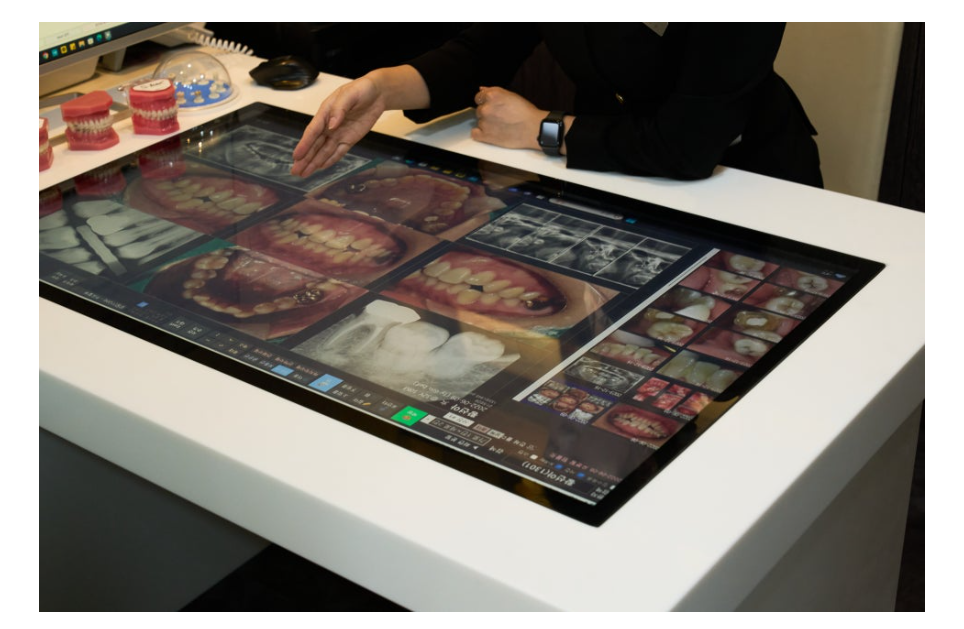
In particular, when taking photos,
if one front tooth looks a different color,
many people become concerned.
So in such cases,
it can be helpful to check the condition inside the tooth once.
However, not all tooth discoloration
is approached in the same way.
That is why a few criteria are checked first.
| Inner condition of the tooth | Health of the area around the root | Whether the tooth has cracks | Whether the tooth has a structure that can withstand stress |
After looking at these factors together,
the direction appropriate for the current condition is determined.
From the outside,
it may look like just a difference in one color,
but inside, a completely different story
may be unfolding.
[Tooth whitening,
not everyone ends up with the same brightness]
To summarize,
the phenomenon of tooth color changing after root canal treatment
is a change that can appear quite naturally.
And in such cases,
non-vital tooth whitening may be one option.
However, because not every tooth
is approached in the same way,
it is important to check the current condition together.
If your tooth has started to look different in color,
just taking a look at the current state can also help
with organizing the direction going forward.
After receiving a thorough explanation,
it is most important to choose the method that is right for you.
If you have any questions while reading,
please feel free to leave them in the comments or on Naver Talk Talk :)
This has been The Square Dental Clinic.
Thank you.
[You can view the visit reviews left by many people]
[Please leave your questions conveniently via Naver Talk Talk]
[We provide directions to the clinic]
| This post has been written in compliance with the Medical Service Act (Article 56, Paragraph 1) so that you can obtain accurate information. Rather than simple promotion, I wanted to transparently share what actually happens in the clinic. Please do not contact us immediately after reading this post; simply taking away accurate information is enough. |