Hello.
We are The Square Dental Clinic, here to look at the reasons for change together.

When you’re considering re-adjustment,
there are times when you may think like this.
"It definitely seemed fine,
so why does it feel like it has changed again?"
At first, the appearance may have been satisfying,
but as time passes,
it can start to feel a little different.
And since there is no pain,
people often end up letting it pass as is.
But these two things are different in nature.
Whether it is simply a change,
or a change that needs orthodontic treatment
the standard should be judged by structure,
not by feeling.
Teeth are not 'fixed';
they exist within balance.
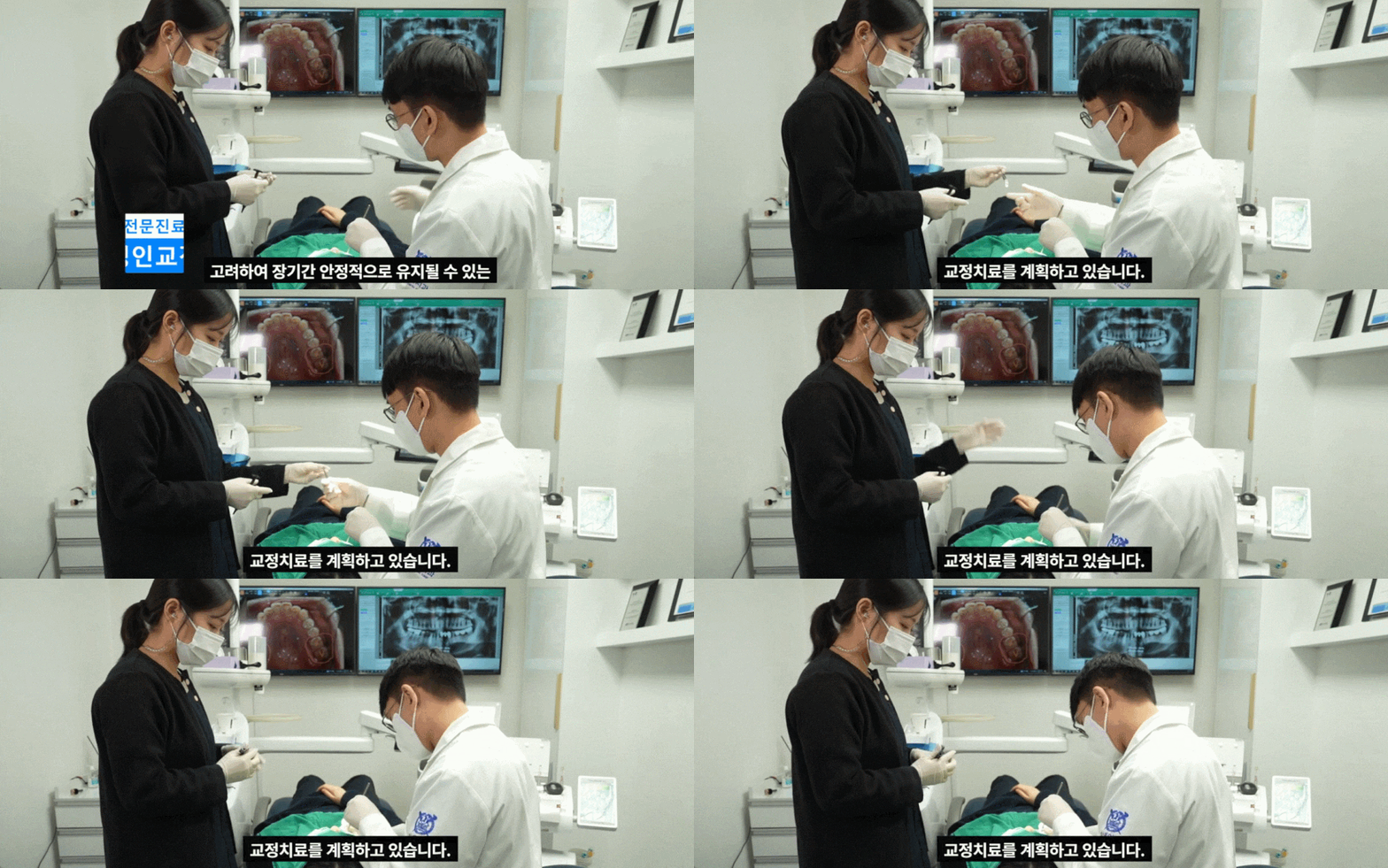
Many people think of teeth
as a firmly fixed structure.
But in reality,
it should be understood a little differently.
Teeth are connected to the bone
through a tissue called the periodontal ligament.
This tissue has the ability to subtly stretch
and contract,
and when continuous force is applied,
the teeth gradually move in that direction.
It may be easier to understand
if you think of a tree planted in soil.
Even if it looks firm on the surface,
when the wind keeps blowing,
its direction slowly changes.
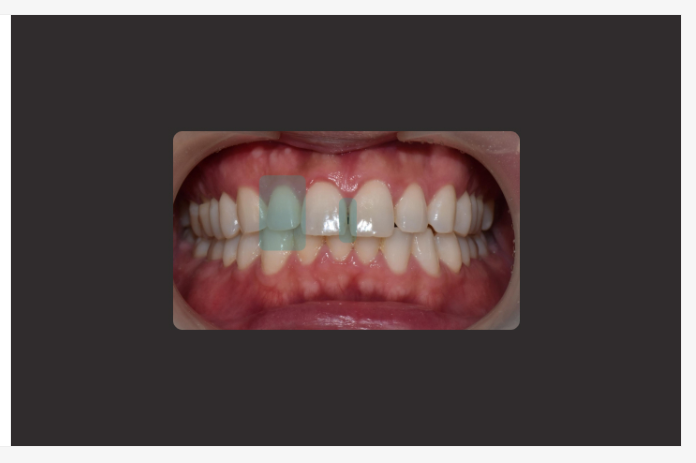
The same is true for teeth.
Even if they appear stable on the outside,
changes continue inside depending on the environment.
As time passes,
small movements also appear during the process
of the surrounding tissues settling into place.
Even if the teeth once looked aligned,
this is exactly why the result can differ
depending on later usage patterns and force flow.
Teeth are a 'moving again' structure.
You need to understand this premise first
in order to make accurate judgments afterward.
Teeth have a tendency
to return to their original position.
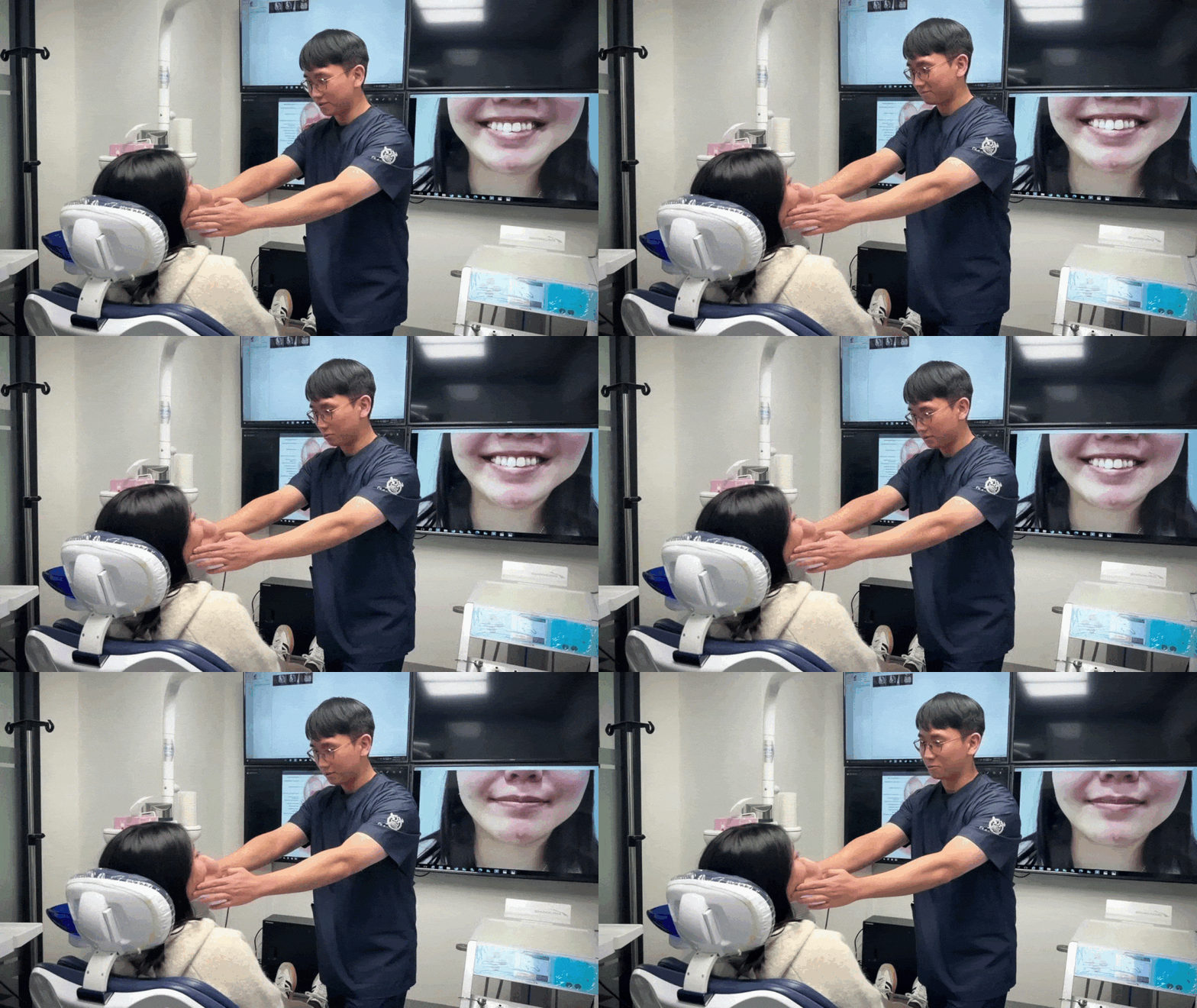
The tissues around the teeth have a tendency
to remember the existing position.
The flow that tries to return
to a once-familiar place,
simply put,
that is how you can think of it.
Not only the gingival fibers,
but even the movements of the lips and tongue
also work together to exert a force
that tries to return things to their original direction.
This flow is called 'relapse movement.'
So rather than right after alignment,
changes more often appear gradually over time.
It continues little by little without being noticeable,
and then at some point you think,
"Huh? It seems different."
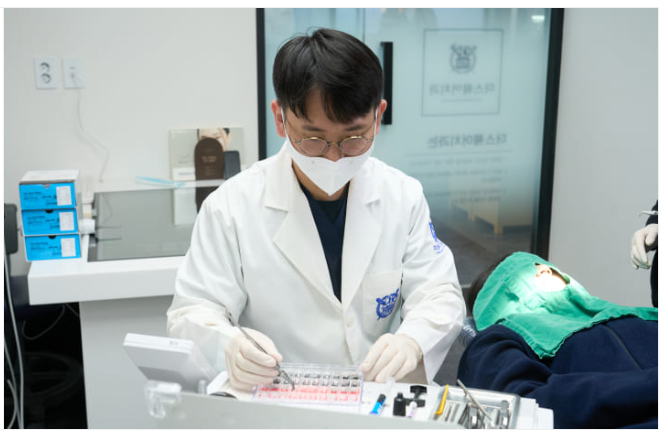
In addition, small habits in daily life
affect this flow as well.
The force present when the mouth is closed
and repeatedly repeated movements by habit
create subtle changes in the teeth.
Even if there does not seem to be a big difference on the outside,
inside, the force that tries to change the direction
continues to act.
The fact that things change over time
is not an exception, but a structural principle.
If you know this point first,
you can notice changes much earlier.
The difference in maintenance
eventually creates the difference in results.
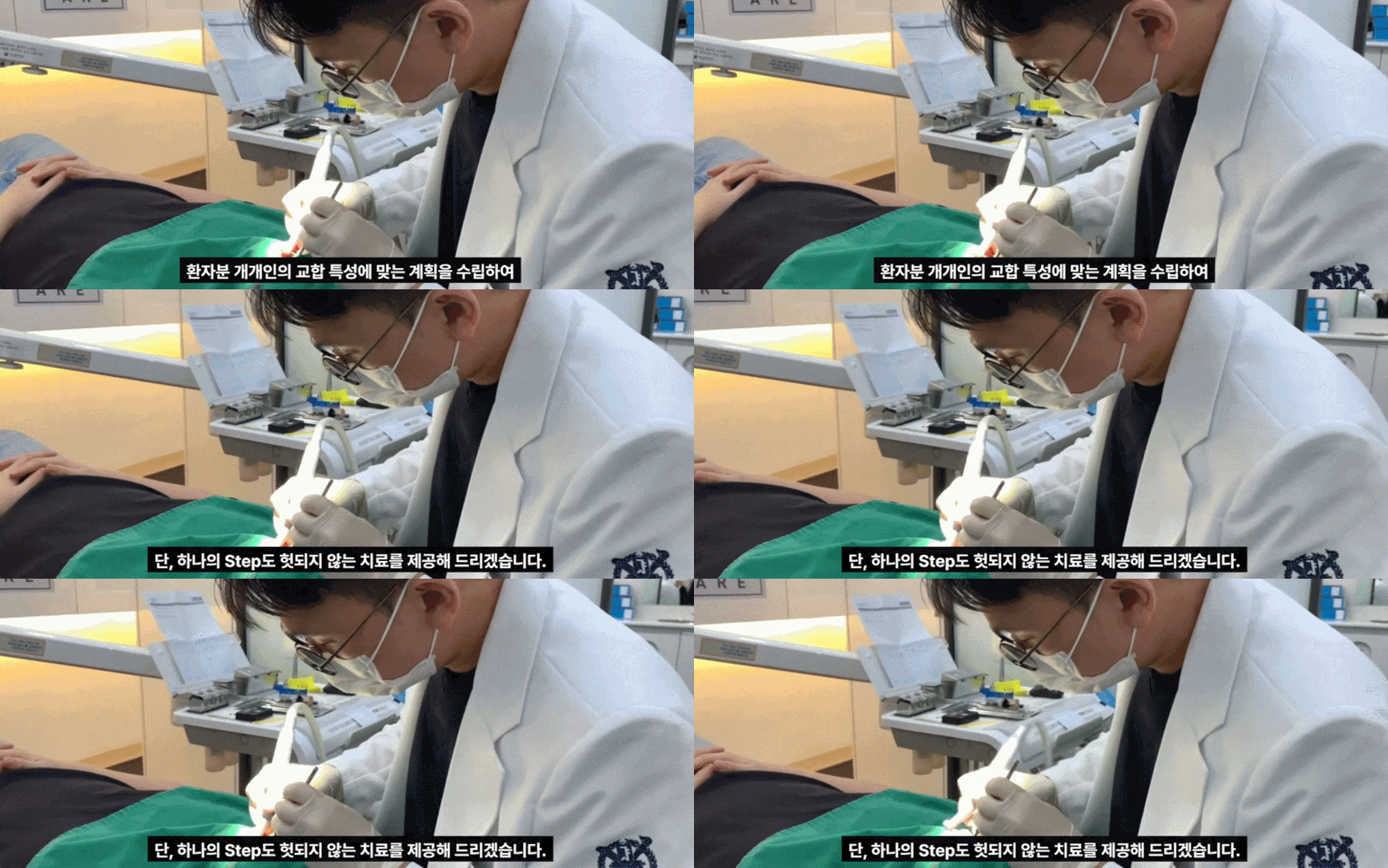
Teeth are not a structure
that is maintained simply by position.
Their condition changes depending on
which direction force is being applied.
If you have a habit of eating only on one side,
or if a habit of pushing the teeth with the tongue remains,
that repeated force gradually changes
the position of the teeth.
Even when the jaw position or movement
is not comfortable,
teeth naturally change in a direction
that tries to match that flow.
How they are actually used
has a greater impact
than the alignment that is visible on the surface.
And when these small differences accumulate one by one,
they lead to a state that is different from the original.
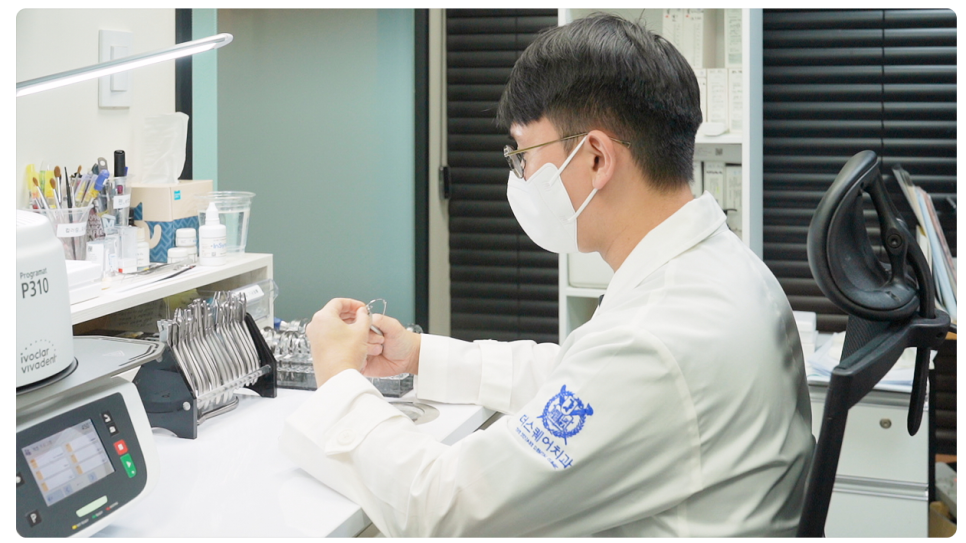
On the other hand,
habits that you do not even notice yourself
work in the same way.
Such as unconsciously putting force on one side,
or only placing pressure on a specific area
when closing the mouth,
what seems like a small repetition eventually creates change.
Even if the same process was followed,
the result differs depending on the later maintenance method
and usage habits.
That is exactly why.
Re-adjustment is not simply the process of aligning things again.
It is a process of looking at
the current structure and usage flow together.
Teeth are not a structure that simply remains
as it was once they look aligned.
Depending on the direction in which the surrounding tissues
and force act,
there is a flow that changes little by little.
So rather than looking only at
the visible alignment,
it is important to also look together at
how the force is distributed
and where the change is starting.
If you are considering re-adjustment,
rather than first thinking about whether to do it again,
it is best to first identify
'why it became misaligned.'
That is what The Square Dental Clinic does:
we help organize that flow together.
If you have any questions,
please feel free to leave a comment
or send us a message through Naver TalkTalk :)
Thank you for reading to the end.
This has been The Square Dental Clinic.
[You can see the visit reviews
left by many people]
[Please leave your questions
through Naver TalkTalk]
[Directions to our clinic
are provided]
| This post was written in compliance with the Medical Service Act (Article 56, Paragraph 1) so that you can obtain accurate information. We wanted to transparently share what actually happens in the treatment room, rather than simply promote the clinic. Rather than contacting us right away after reading this post, it is enough if you simply take away accurate information. |