Hello.
We are The Square Dental Clinic, where we first look at the current condition of your teeth.

The stronger your wish to keep your teeth for a long time,
the more concern you are likely to have about reduction.
And that concern does, in fact,
affect the outcome.
So today, rather than focusing on how much tooth reduction
laminate treatment involves,
I’ll organize things around
what criteria make it different.
[There is a more important standard
than reducing less]
Why does laminate treatment involve tooth reduction?
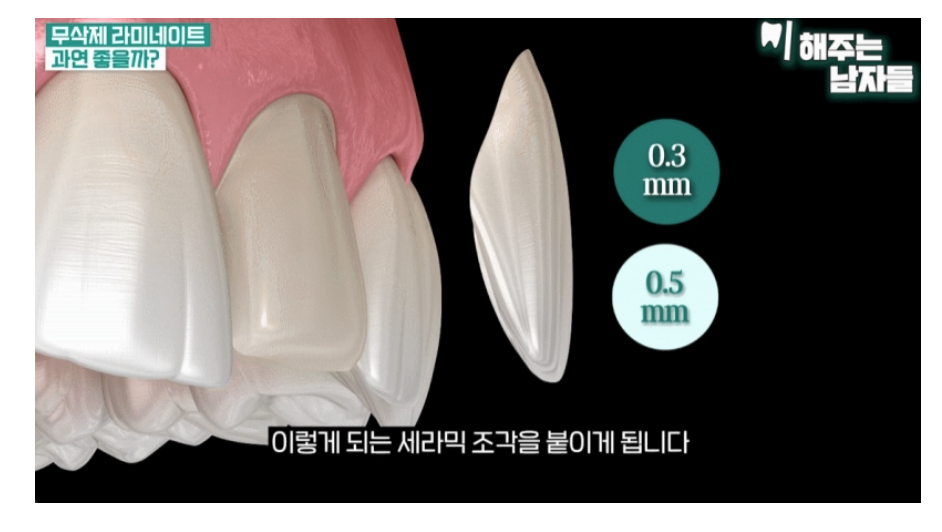
Laminate treatment is a method in which
a thin prosthetic is attached to the tooth.
So from the outside,
it can seem like almost nothing is being done.
But in reality,
there are definitely cases where reduction is necessary.
There are three main reasons.
✔️ When discoloration needs to be covered
✔️ When alignment needs to be corrected
✔️ When space is needed to secure prosthetic thickness
Reduction is not a simple choice;
it is determined by the conditions.
In other words, it is not based only on appearance,
but on an adjustment made according to the current condition of the teeth.

And if these conditions are not considered,
things end up being adjusted only on the surface.
When that happens, other problems may arise over time.
That is why, from the very beginning,
how the case is approached is more important.
One more point to mention:
This process cannot be solved simply by touching as little as possible.
The necessary range varies depending on the tooth’s position, color, and bite condition.
So even with the same laminate treatment,
the process itself often differs.
You need to understand these differences before starting,
so that the direction later does not waver.
The 기준 is enamel, not the amount of reduction.
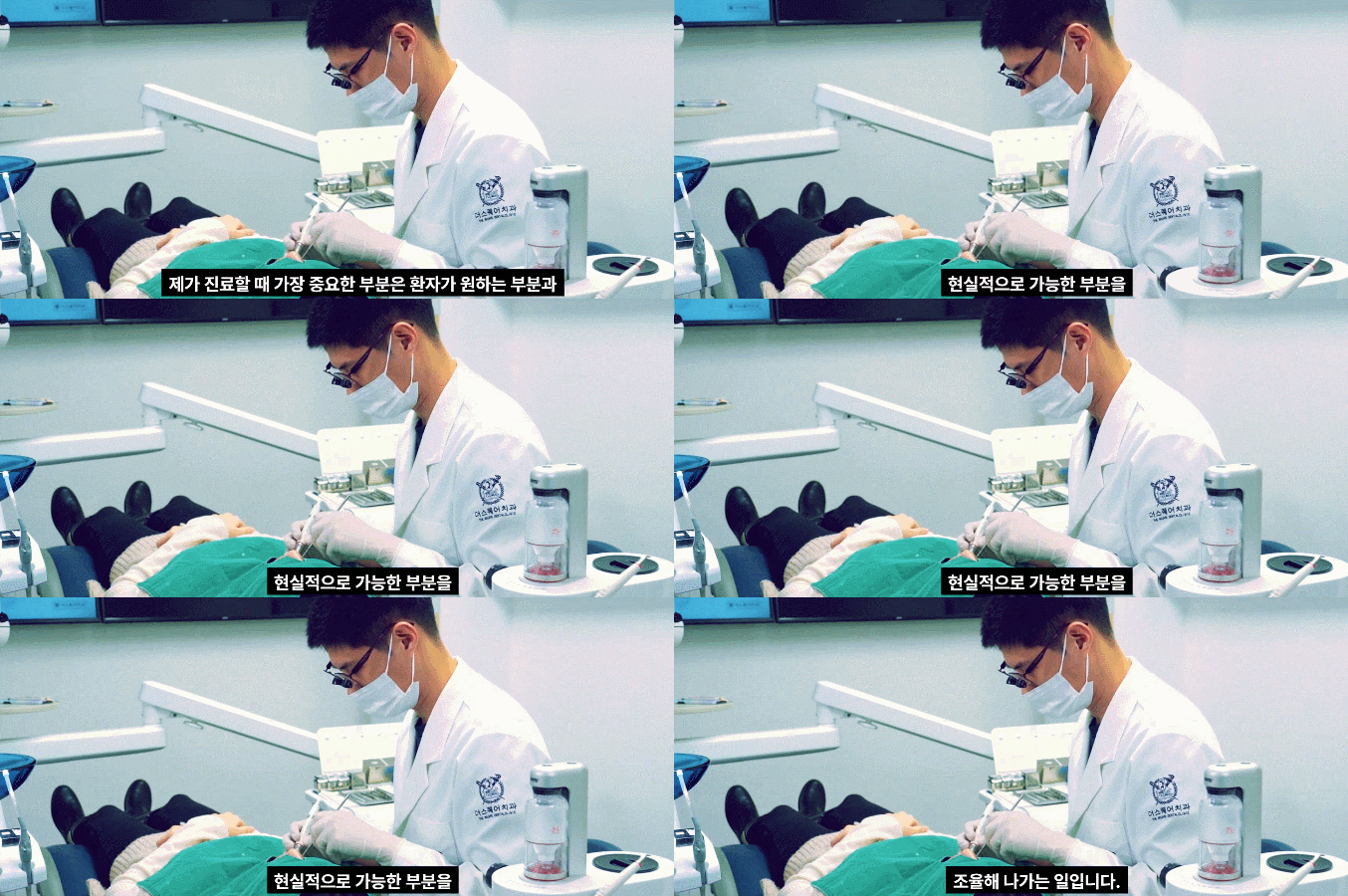
Many people ask, “How many mm do you reduce?”
That shows how often people try to judge based on numbers.
But the standard is not divided by a simple figure.
The key is how much enamel remains.
Enamel is a hard structure
that allows stable bonding to be maintained.
So prosthetics attached to it
are relatively stable.
By contrast, dentin beneath it
has more moisture and is a more sensitive structure.
These two structures have different bonding conditions to begin with.
So even with the same procedure,
the outcome changes depending on where it is bonded.
That is why, with laminate treatment,
what matters more is not how much was reduced,
but how much was left.
And this part should also be checked together.
The same 0.5 mm does not mean the same thing.
That is because the conditions differ depending on whether enamel is preserved
or dentin is exposed.
Repeated problems start here.
If the reduction standard is not appropriate,
several problems can follow unexpectedly.
For example,
※ The prosthetic comes off
※ Microcracks form in the tooth
※ Irritation is repeated
If this condition continues, the scope gradually expands.
In the end, it can lead to a larger procedure
than what was originally expected.
There are also actual cases where laminate treatment is changed to a crown.
This is not necessarily a special situation;
it happens when the criteria are not met.
That is why the criteria used at the beginning
are even more important.

At our clinic, we set the criteria this way.
We do not decide the reduction range first.
We first look at what range can be preserved.
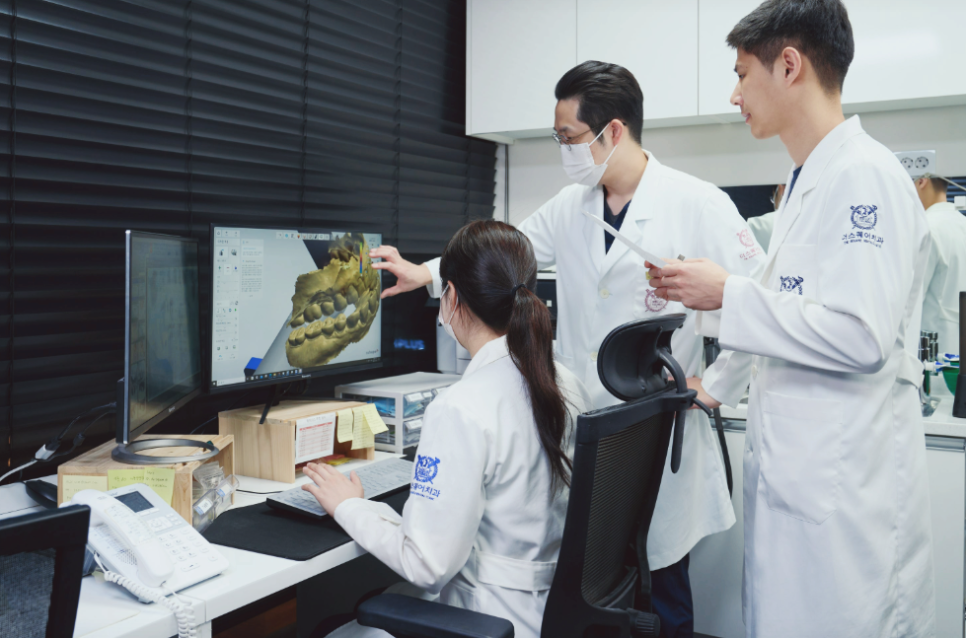
| How force is distributed | How much tooth remains | Whether the structure allows bonding | How the bite is formed |
We use this process to first organize the current condition.
And if necessary, we check the condition before reduction
and then decide the direction.
The order is not to decide reduction first,
but to confirm and then determine it.
How much of my tooth can be preserved,
and how much needs to be adjusted.
Starting with a check based on the current condition
is the first step.

However, not every case is the same.
In the following conditions,
the reduction standard changes.
· When a lot of discoloration must be covered
· When the tooth alignment is uneven
· When the front teeth protrude forward
· When the front teeth contact first during chewing
Depending on these conditions, the reduction range changes,
and even the same laminate treatment requires a different approach.
This is why not every case can be viewed by the same standard.
If the conditions differ, the approach must differ too.
[If you are concerned about tooth reduction,
please refer to this method as well]

Laminate tooth reduction is not judged by how much was reduced.
What determines the result is how much was left.
Rather than the shape seen on the surface,
the direction is decided based on how the enamel is preserved.
If you check this standard first,
it also helps with keeping your teeth for a longer time.
If you have any questions while reading,
please feel free to leave a comment or send a message via Naver TalkTalk.
Thank you for reading this long post today.
This has been The Square Dental Clinic.
[If you are curious about the process,
please refer to the reviews]
[With a simple inquiry,
check your current condition]
[For an easy visit,
here is the location guide]
| This post has been written in compliance with the Medical Service Act (Article 56, Paragraph 1) so that you can obtain accurate information. Rather than simple promotion, we wanted to transparently share the process that actually happens in the treatment room. Please do not contact us immediately after reading this post; simply obtaining accurate information is enough. |