Hello.
We are The Square Dental Clinic, which sets its direction based on the lifespan of teeth.

There is something often misunderstood about anterior prosthetics.
It is thinking of laminate and Minish as a difference in design.
If it is thin, it is Minish,
if it is a bit thicker, it is laminate
Many people summarize it this way.
But the key is not thickness;
it is the difference in planning method.
Do you first match the shape
and then decide how much tooth structure to remove,
or do you first check the remaining structure
and determine the shape within what is possible there?
The order is different.
So even for the same front tooth,
depending on how it is approached,
the range of removal changes,
and the long-term burden left on the tooth also changes.
Today, I will explain why the two are divided,
starting with the criteria for that judgment.
[If you are confused about laminate and Minish,
read this first]
The key is whether it is in a condition that can withstand pressure.

When considering anterior prosthetics, many people first think about size or color.
But before starting,
there is a separate criterion that must be checked.
That is,
how force is being applied to this tooth.
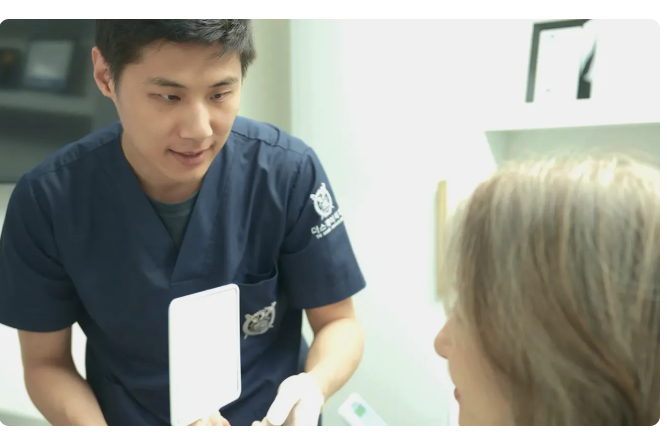
Front teeth do not only play a visible role;
they also help distribute force when eating.
If this balance is off,
force concentrates to one side,
and as that repeats,
it can lead to cracking or detachment.
And there is one more criterion
that should be considered together here.
That is how much remains.
A tooth needs to maintain a certain height
for the structure placed on top to withstand it stably.
It is similar to building a structure on top of pillars.
If the pillars are sufficient, it remains stable,
but if they are lacking, it becomes a condition that is easy to wobble.
So anterior prosthetics are
not simply about matching the shape,
but about first checking whether the tooth
can withstand the structure in its current state.
Laminate and Minish,
why does the amount of removal differ?

Laminate is one of the first methods mentioned
in anterior prosthetics.
Because it is a method of adjusting the front surface to match the shape,
it feels relatively familiar.
This method basically
approaches from the standpoint of shape.
To match the form, some thickness
needs to be created,
and accordingly, removal is involved as well.
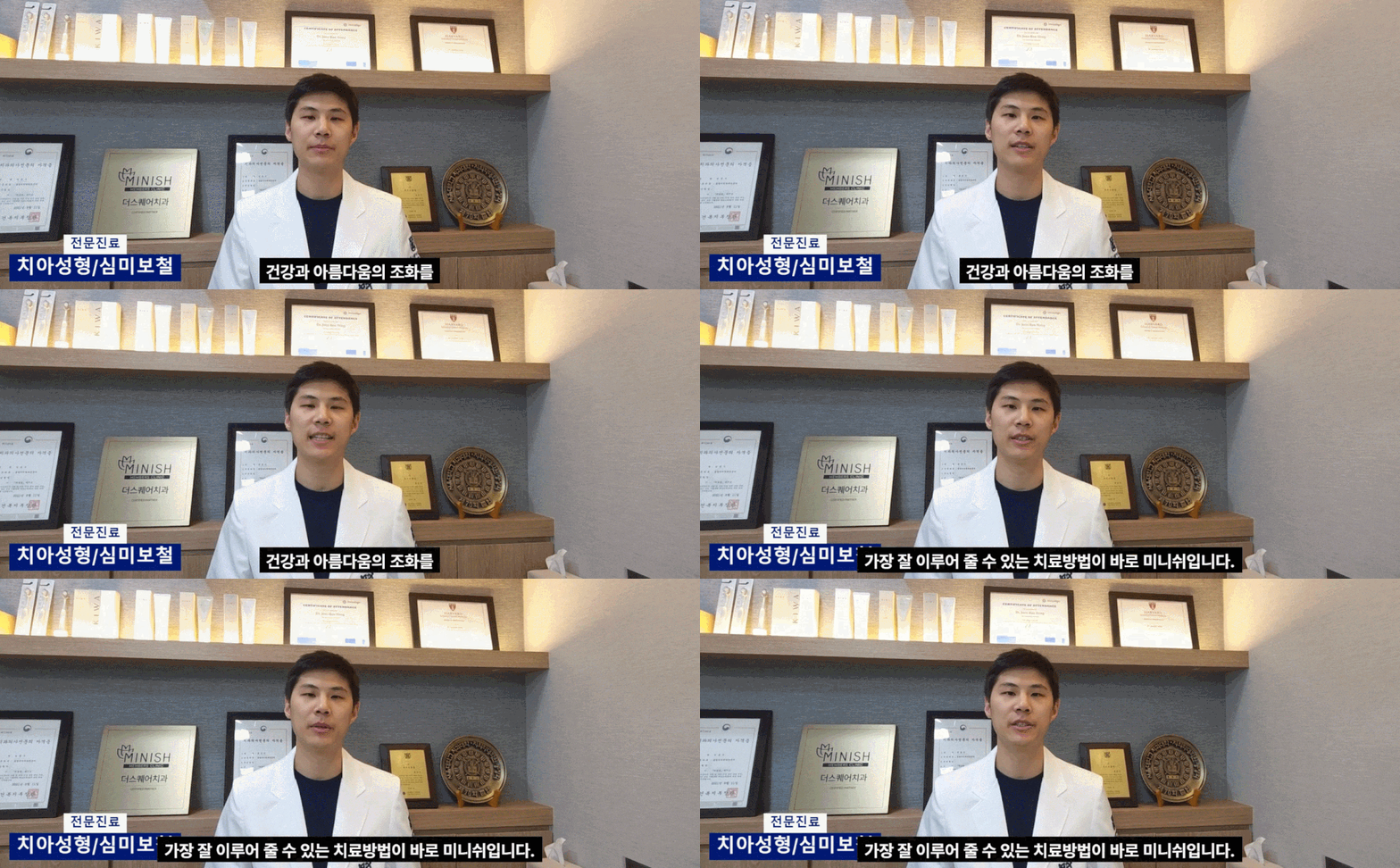
Minish, on the other hand, starts differently.
It does not begin by deciding from the start
how much to reduce.
It first checks the current tooth condition
and looks at what structure can be preserved.
After confirming the result in advance,
it is a method of adjusting only as much as needed
within that range.
Rather than matching everything,
it is an approach closer to preserving the current structure.

The two have different starting criteria from the beginning.
Laminate starts from the direction of matching the shape,
while Minish approaches based on
how much of the current structure can be preserved.
The amount of removal is not determined by the method.
It is determined by how you read the remaining structure now.
From resin to crowns,
the criteria are divided like this.
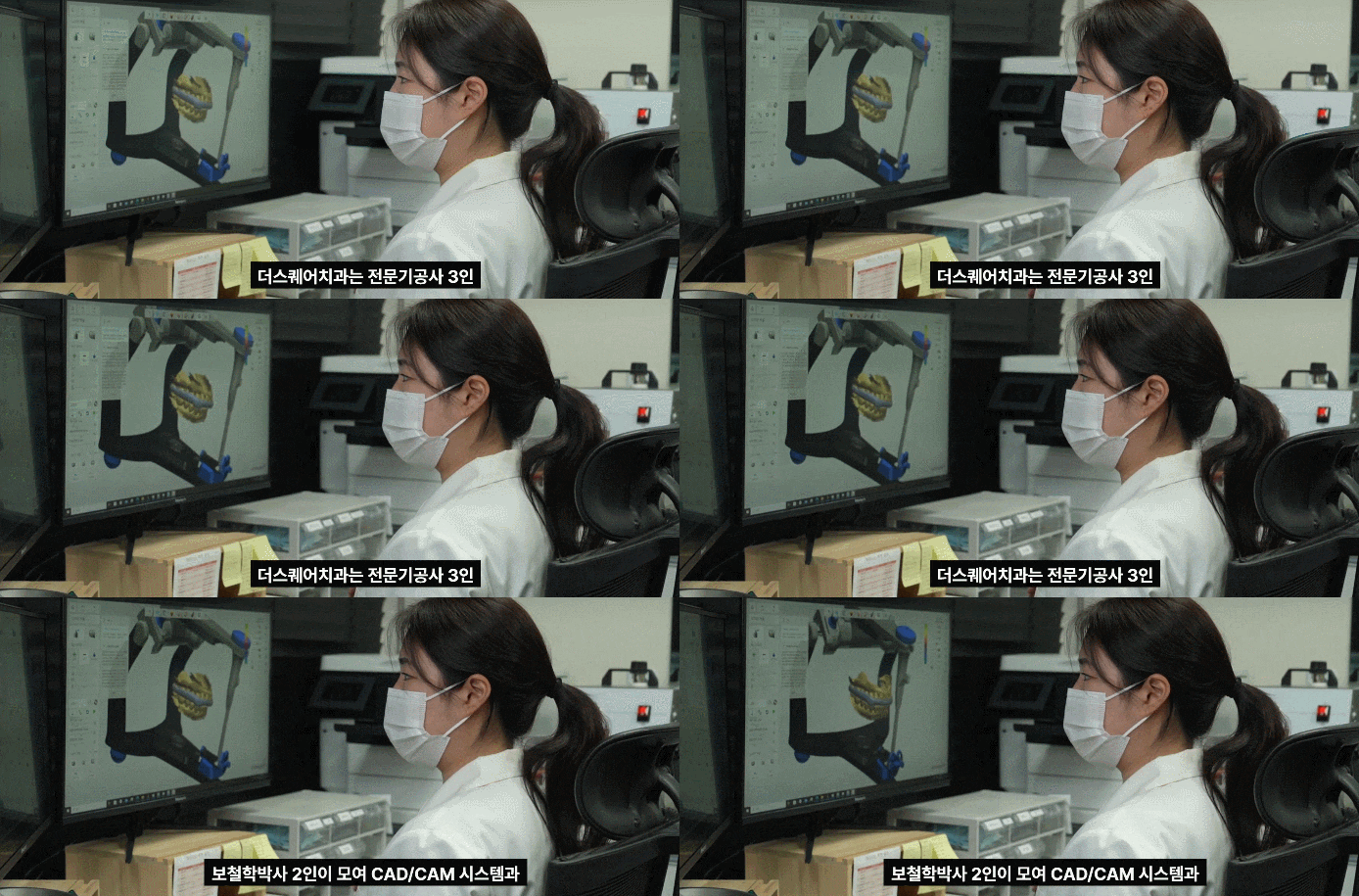
So anterior prosthetics are
not judged as one fixed option.
The condition is checked and then divided for judgment.
If only the outer layer is affected,
it is finished with resin.
If the range is a little wider,
laminate or Minish is considered.
If the remaining amount is insufficient
or the effect extends to the inner part,
we also look at the direction of covering it with a crown.
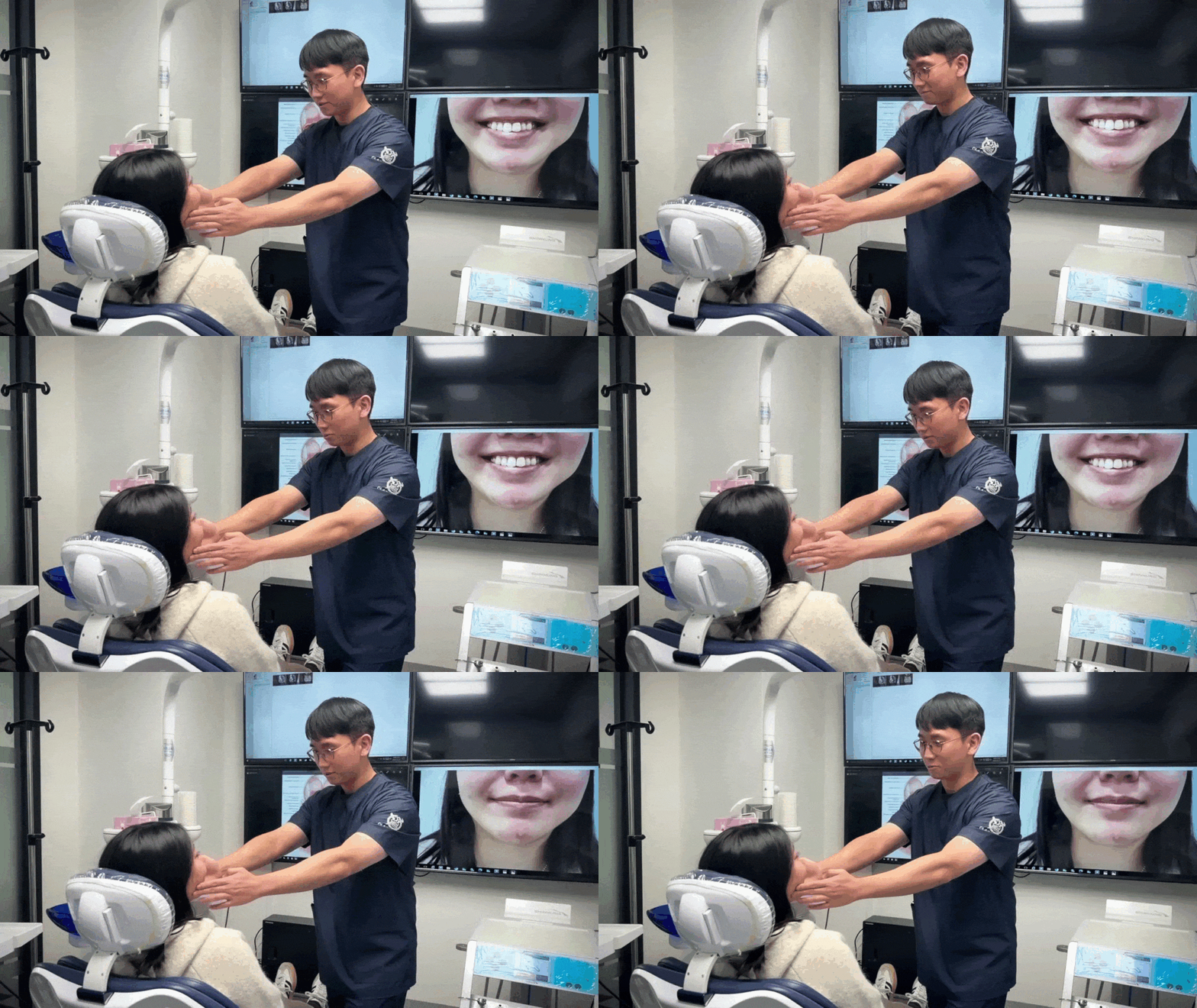
The reason they are divided is simple.
Because the available options change
depending on the current condition.
That is why we
✔️ first check where the force is being applied,
✔️ how much remains,
✔️ and how far the issue extends,
first.
Also,
· whether resin is possible
· whether to go with laminate or Minish,
· or whether a crown should be considered
we explain the criteria for judgment in order.
[Check the possible methods
based on the current condition first]
Laminate and Minish are
not different in thickness.
The difference is where you start.
The method of first deciding the shape and then
determining the amount of removal to match it,
and
the method of first checking the remaining structure
and then shaping within it
this difference in starting point
eventually determines the range of removal.
At The Square Dental Clinic,
we do not first talk about how much to reduce.
We first check what the current structure
allows,
and then decide the direction.
If you have questions while reading,
please feel free to leave a comment or ask us via Naver TalkTalk.
Thank you for reading this long post today.
This has been The Square Dental Clinic.
[What was your experience like?
You may also want to refer to honest reviews]
[If you are deciding on your own,
you can ask first via TalkTalk]
[To make your visit easy,
we provide location guidance]
| This post was written in compliance with the Medical Service Act (Article 56, Paragraph 1) so that you can obtain accurate information. Rather than simple promotion, we wanted to transparently share what actually happens in the treatment room. Rather than contacting us immediately after reading this post, it is enough if you simply take away accurate information. |