Hello.
We are The Square Dental Clinic, which first looks at the reasons behind what you can see.

“I was told I need to have the implant done again...”
When you hear this for the first time,
it can feel upsetting and heavy on your mind.
Because it was already done once,
the situation of needing it again
may not be easy to accept.
That is why many people
naturally think this:
“Then can’t we just reinsert it?”
However, implant replacement
is difficult to see as simply the process of inserting it again.
Because before looking at the result,
it is necessary to first check
why the problem occurred.
Depending on that cause,
the direction afterward changes.
So today, rather than a complicated explanation,
I will start by explaining
what should be checked first.
Same symptom, different cause
- The key is where it started.
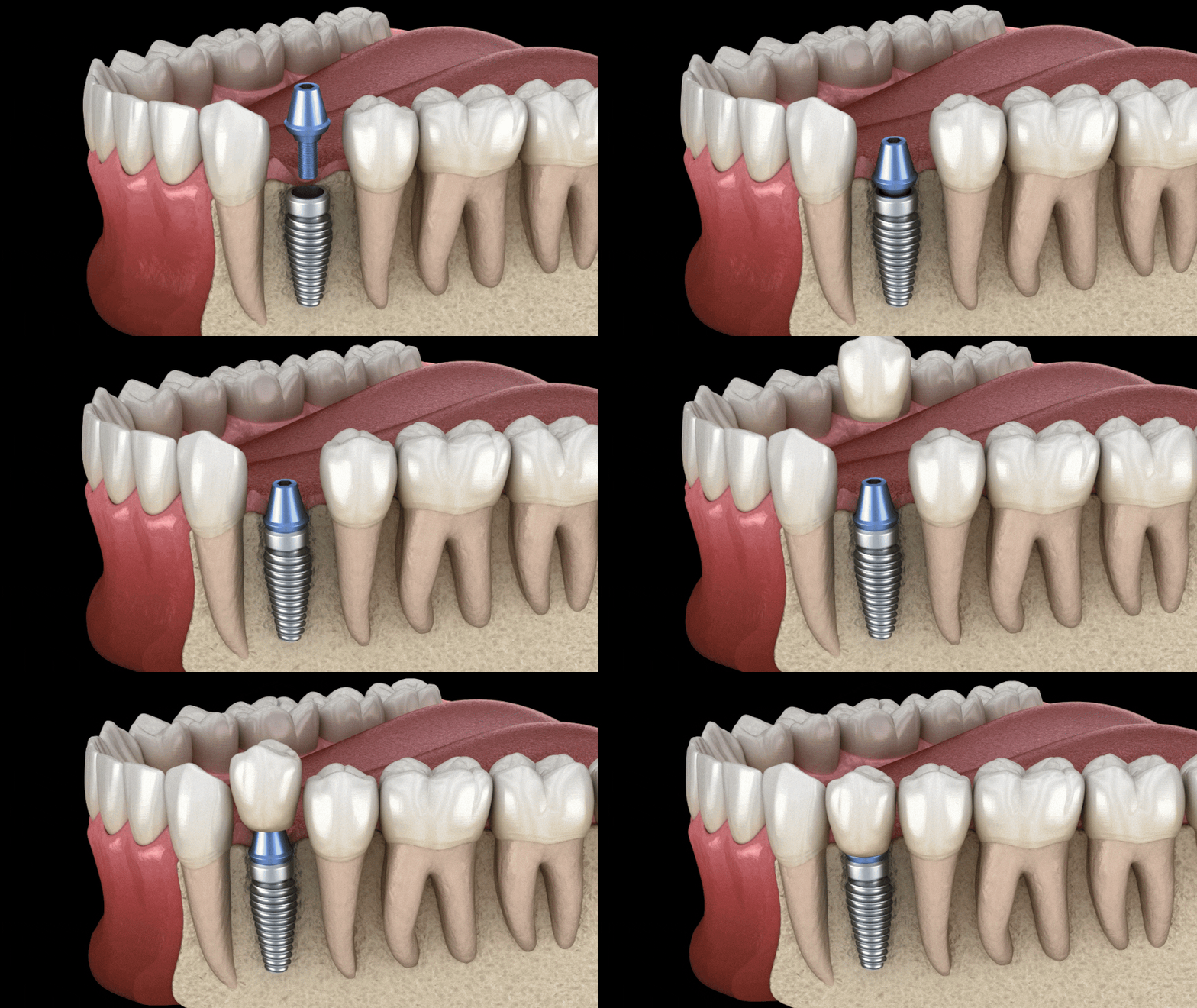
If there is a problem with an implant,
the reason may feel complicated.
But if we divide it structurally,
it can largely be grouped into two categories.
One is a prosthetic problem,
the other is a bone problem.
For example,
even if it feels similarly loose
or uncomfortable when eating,
it may have started in the prosthetic structure
connected on top,
or it may have started in the bone
that supports it underneath.
Depending on which side is the cause,
the parts that need to be checked
and the direction afterward will also change.
So the first step is to divide
whether the current change started
from the prosthesis or from the bone.
Prosthetic problem,
it happens when force is transmitted incorrectly.
Implant replacement
I’ll start by explaining
cases that begin on the prosthetic side.
An implant has a structure that is a little different from a natural tooth.
The key point is that it does not have a periodontal ligament.
That also means there is no cushioning role
that softly absorbs the force generated while eating.
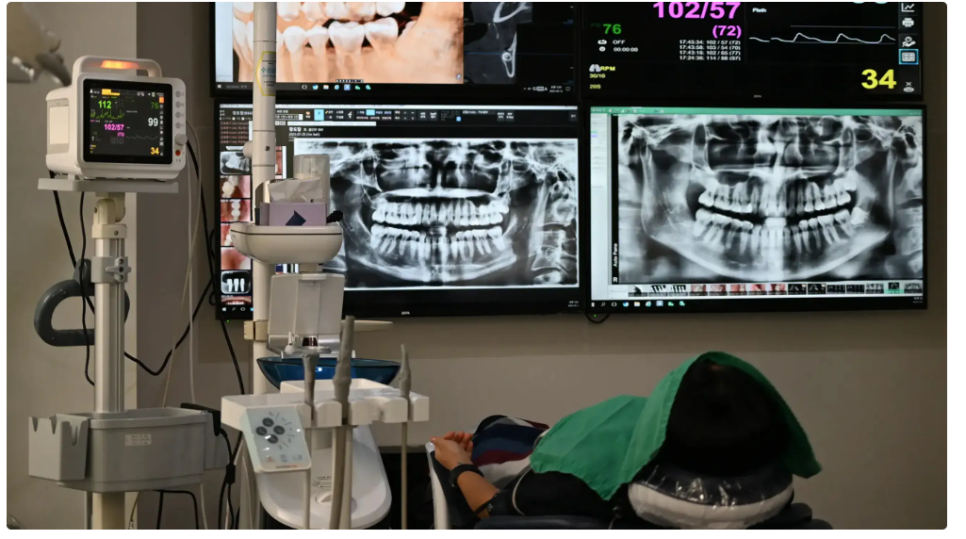
So if the bite is not well aligned
or the structure is biased to one side,
that force is transmitted directly
to the bone underneath.
When this state repeats,
it may not be obvious on the surface,
but very small looseness occurs,
and over time,
this leads to reduced stability.
In such cases, it is usually
| When the bite is concentrated on one side |
|---|
| When the connected structure above is too high or not balanced |
| When the internal connection becomes loose |
| When force repeatedly acts in a specific direction |
These factors often work together.
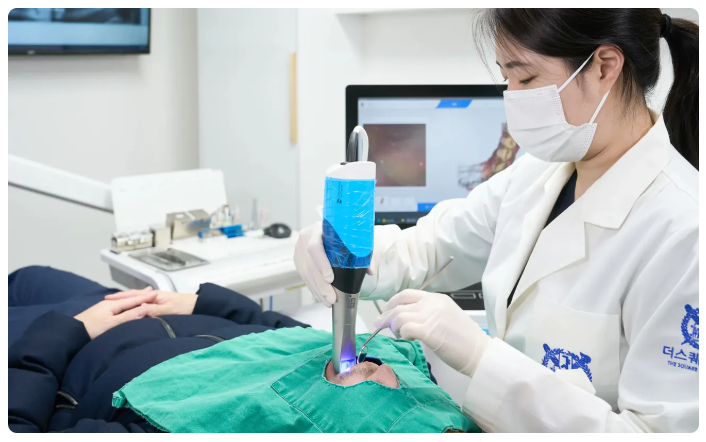
To put it in a simpler analogy:
If you alternate using both legs, the strain is less,
but if you keep putting your weight on only one leg,
it may seem fine at first, but gradually the burden builds up.
The same principle applies to implants.
If the force is not evenly distributed,
the structure progresses in a direction that is difficult to withstand.
Bone problem,
it is when the support base collapses.
Implant replacement
The second case is
when it starts from the bone.
An implant is not simply a structure
that goes inside;
it becomes established through the osseointegration process,
where it bonds directly with the bone.
This connection must be maintained well
in order to function stably over a long time.
However, if the balance begins to break down during this process,
| When osseointegration is not sufficiently formed |
|---|
| When inflammation occurs around the implant |
| When the bone gradually decreases |
| When the internal environment becomes unstable |
these changes appear.
In particular, when peri-implantitis progresses,
the bone gradually decreases due to inflammation.
As the supporting force weakens,
looseness begins to appear little by little.
This is not simply a problem with the upper structure,
but a state in which the foundation
that supports it from below has weakened.
So rather than what it looks like on the surface,
the first step is to check whether the supporting structure is stable.
If the cause is not clarified,
replacement has no meaning.
There is one point
I definitely want to emphasize here.
It is the case of proceeding again
without checking the cause.
If the problem started in the upper structure
and it is inserted again as is,
or if it is continued without fully considering the bone condition,
· same location
· similar structure
· concentrated force in a similar way
As these conditions repeat, the result is also
more likely to appear similarly.
So implant replacement is not simply
the process of removing and inserting again,
but should be seen as a sequence of
checking the cause,
reorganizing the current structure,
and then deciding the next step.
[Differences in implant cost,
they should be explainable]
To summarize,
the first standard to look at in implant replacement
is simpler than you might think.
Rather than how quickly it is done,
rather than which material is chosen,
it is necessary to first check
why this situation happened.
Because the direction afterward
is determined by that cause.
When looking at your current condition as well,
whether the change started from force distribution,
whether it comes from structural balance,
or whether it is a state that began in the bone,
it is helpful to divide it that way once.
That way, you can understand the current situation
more clearly.
If you have any questions while reading,
please feel free to leave a comment
or send us a question through Naver TalkTalk.
Thank you for reading this long post today.
This has been The Square Dental Clinic.
[If you would like to know what the experience was like,
you may also refer to honest reviews]
[If you are worried on your own,
you may ask first through TalkTalk]
[To make it easy for you to visit,
we provide directions to our location]
| This article has been written in compliance with the Medical Service Act (Article 56, Paragraph 1) so that you can obtain accurate information. Rather than simple promotion, we wanted to transparently share what actually happens in the treatment room. Rather than contacting us right away after reading this article, simply gaining accurate information is more than enough. |