Hello.
'Designing the First Impression'
This is The Square Dental Clinic.

When our teeth develop problems such as cavities or fractures,
we perform an 'inlay' treatment, which removes the damaged area and fills the empty space with a prosthetic restoration.

Even after going through the treatment process...
unexpectedly, inlay pain may continue, leaving you confused.
It is natural to worry whether the treatment was done incorrectly or whether root canal treatment might also be necessary.
So in this post,
- The pattern of inlay pain
- When you should visit the dentist
- Tips to minimize inlay pain
I will explain these three topics step by step. :)

What does inlay pain look like?
As mentioned above, an inlay is a procedure in which a restoration such as gold, ceramic, or resin is placed instead of the tooth's natural tissue.
If you have inlay pain right after treatment, it may be a normal symptom.
Your teeth also need time to adapt.
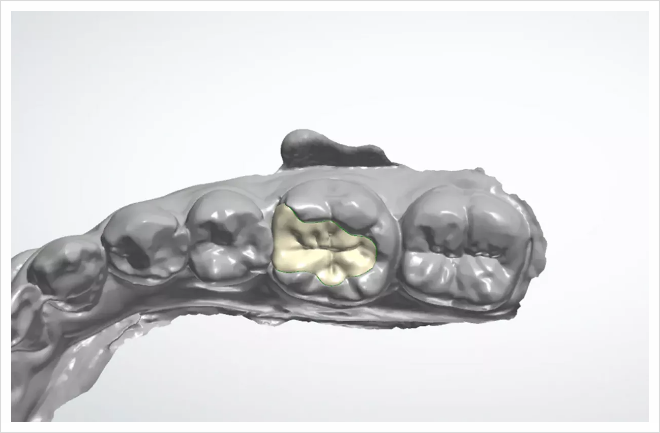
After the decay is removed, the tooth's nerve and protective layer become thinner.
At this time, when you eat cold or hot food, the nerve may react sensitively and you may feel a sharp, sensitive sensation.
In addition, gold inlays have high thermal conductivity, so they transfer temperature changes to the nerve more quickly,
which can cause an unfamiliar discomfort at first.
This kind of inlay pain usually lasts about 1 to 2 weeks, and in some cases up to about a month,
then gradually eases as a protective barrier forms inside the tooth.
Therefore, during this period, it is better to avoid foods that are too hard or irritating and take good care of the tooth.

If this applies to you, visit the clinic.
As an extension of what was discussed above,
if inlay pain continues even after about 2 to 4 weeks,
it may be due to the following problems,
so we recommend visiting the clinic for an appropriate diagnosis and treatment.
| 🦷 Bite problem |
If it feels fine when you are resting but feels sharp or sore only when chewing,
it may be because the restoration is slightly too high, causing chewing force to concentrate in one area.
This can be resolved immediately with a simple bite adjustment.
| 🦷 Need for root canal treatment |
If it throbs even when you are resting and hurts like a pulse,
it may be that the cavity has progressed deeper and inflammation has already developed in the nerve.
In such cases, root canal treatment may be necessary.
| 🦷 Poor fit |
If the gums around the restoration are swollen and painful even though it is not due to bite problems or cavities,
the cause may be poor inlay fit, so it is a good idea to undergo a detailed examination.
How can you extend the lifespan of an inlay?
Lastly, the typical lifespan of an inlay is considered to be about 7 to 10 years.
This is only an average,
✔️ the condition of the existing tooth
✔️ chewing force
✔️ the patient's usual habits
✔️ maintenance methods, etc.
can make the lifespan end in just 2 to 3 years for some people, while others can use it comfortably for more than 10 years.
Plaque can easily accumulate at the boundary between the natural tooth and the inlay.
This can also cause another cavity.
In particular, cavities hidden under a restoration are often difficult to detect until the pain becomes severe.
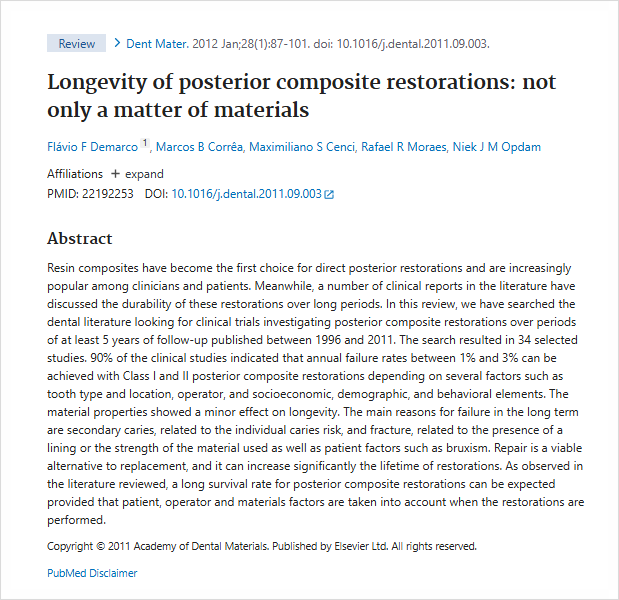
- Key point: According to a study published in the world's most authoritative journal in the field of dental materials,
the long-term lifespan of dental restorations such as inlays is determined more by post-treatment factors such as the patient's oral hygiene and chewing habits than by the material's characteristics.
- Source: Dent Mater. 2012 Jan;28(1):87-101. doi: 10.1016/j.dental.2011.09.003.
Therefore, in addition to maintaining good hygiene in daily life,
you should also follow the lifestyle habits below to extend the lifespan of your inlay.
📌 Be careful with sticky foods
Taffy, caramel, jelly, and similar foods exert a vertical pulling force on the inlay.
If the restoration lifts slightly or comes off, cavities can form in the gap.

📌 Use dental floss and interdental brushes
To prevent cavities at the boundary,
you should clean the spaces between teeth thoroughly with dental floss and interdental brushes.
📌 Regular checkups
It is a good idea to visit the dentist regularly to check whether the restoration is lifting
or whether there are any chipped areas.


Of course, the most important thing is to find a dental clinic that accurately reflects the patient's characteristics from the very beginning,
and carefully places the inlay so it is strong and healthy, while providing care all the way through.
If you choose a clinic where a specialist in orthodontics or integrated dentistry is present and can perform precise work so the restoration fits perfectly from the tooth preparation stage,
you will be one step closer to a more satisfying treatment result.
[Recommended reading]

 This post was written for those who may be struggling with pain after inlay treatment.
Here is a brief summary of the key points in the main text.
| 1️⃣ After an inlay, pain may be felt for up to about one month. |
|---|
| 2️⃣ If the pain remains even after 2 to 4 weeks, visit the clinic for an examination. |
| 3️⃣ To extend the lifespan of an inlay, treatment should be provided at a clinic that offers precise diagnosis and thorough follow-up care, and patients themselves should also manage it carefully. |
If you have any more questions for us, please feel free to leave a comment or send a message through Naver Talk Talk anytime. ^^
A dental clinic that strives for treatment with a high level of completion,
balancing aesthetics and function,
This was The Square Dental Clinic.
[Reviews]
[Naver Talk Talk]
[Directions]
| This post was written in compliance with the Medical Service Act (Article 56, Paragraph 1) so that you can obtain accurate information. Rather than simple promotion, we wanted to transparently share what actually happens in the treatment room. Please do not contact us immediately after reading this post; simply taking away accurate information is enough. |