Hello.
Beyond creating a beautiful first impression,
we are The Square Dental Clinic,
focusing on helping our patients restore
their quality of life and
confidence.

“Normally, my teeth are fine,
but they hurt when I chew food.”
“Why do my teeth hurt only when I chew
on a particular area?”
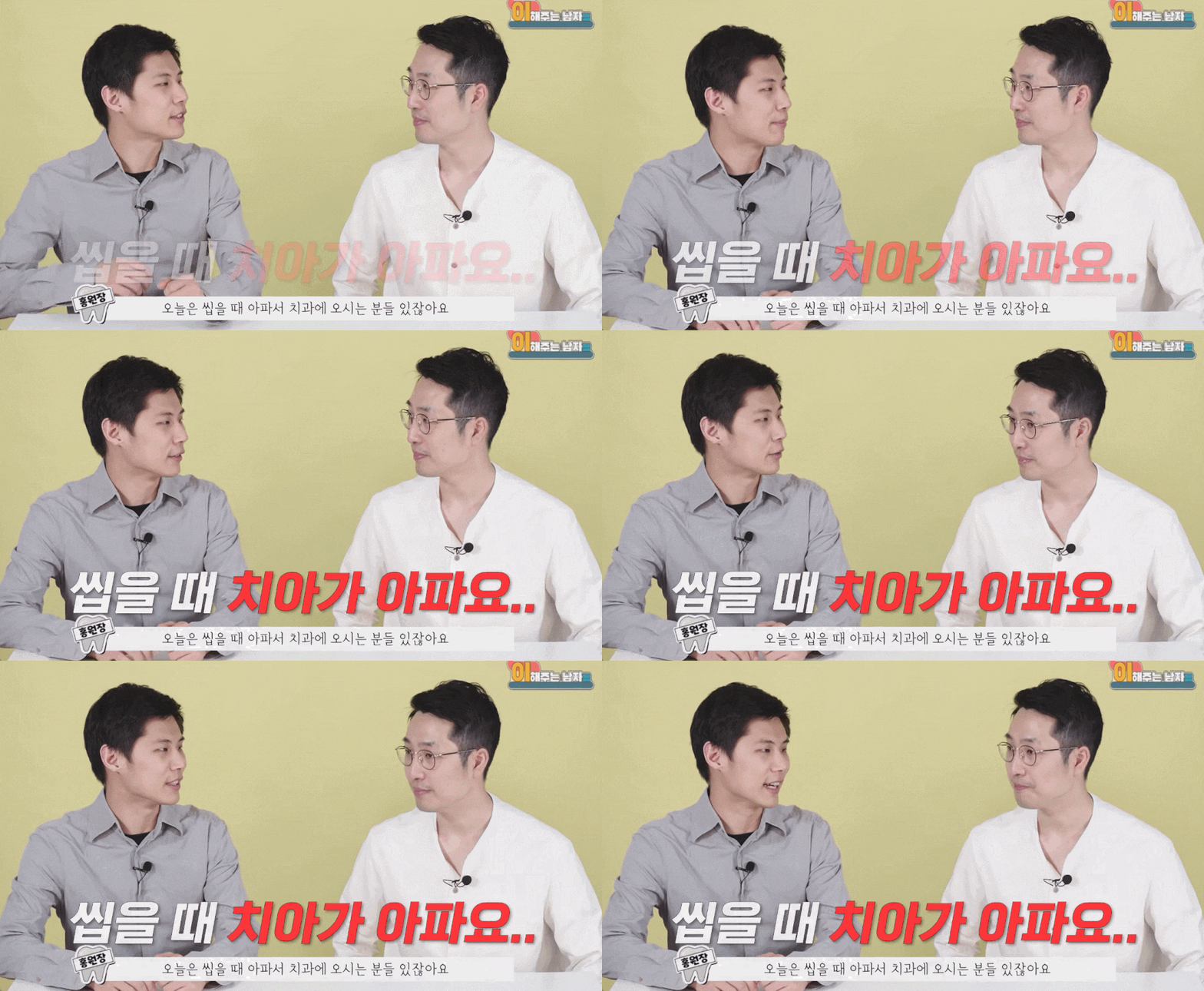
Many people visit the dentist because of tooth pain when chewing food.
Our teeth are not made of diamond,
so while chewing food under heavy pressure every day,
they inevitably continue to wear down or develop microscopic cracks.
However, if your teeth look perfectly fine on the outside...
but you experience especially severe pain when chewing food,
there is a high likelihood that your mouth is sending a serious warning sign.
That is why, in today’s column,
we will explain the causes of tooth pain when chewing
and what can happen if it is left untreated.


Causes of Tooth Pain When Chewing
① Gum Inflammation
The first cause that can lead to tooth pain while eating
is inflammation of the gums rather than a problem with the tooth itself.
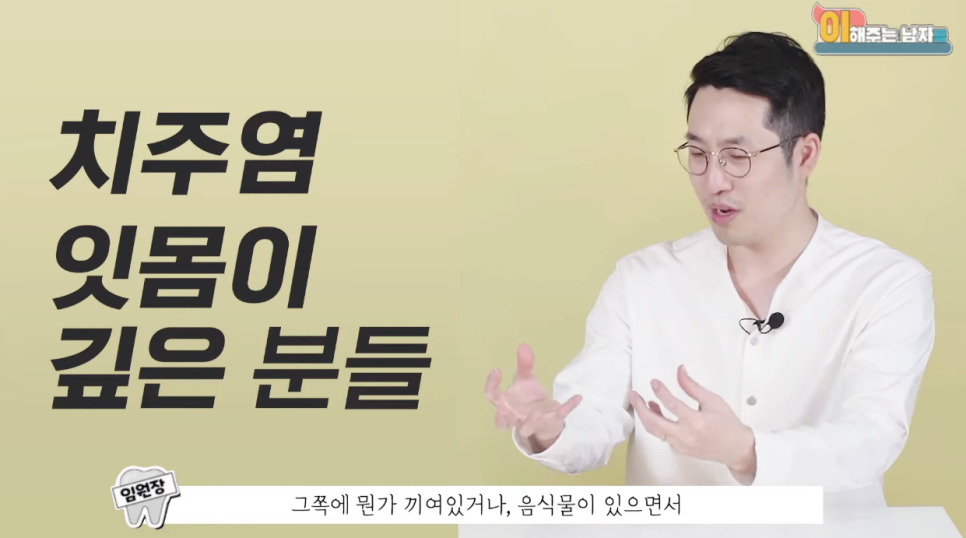
If your gums in a particular area feel uncomfortable or swollen when you chew,
you should consider the possibility of periodontitis.
Inflammation may have developed because food repeatedly became trapped between the gum grooves or because tartar accumulated.
If the symptoms are not severe, the condition may improve sufficiently simply by removing tartar from the tooth surfaces through scaling.
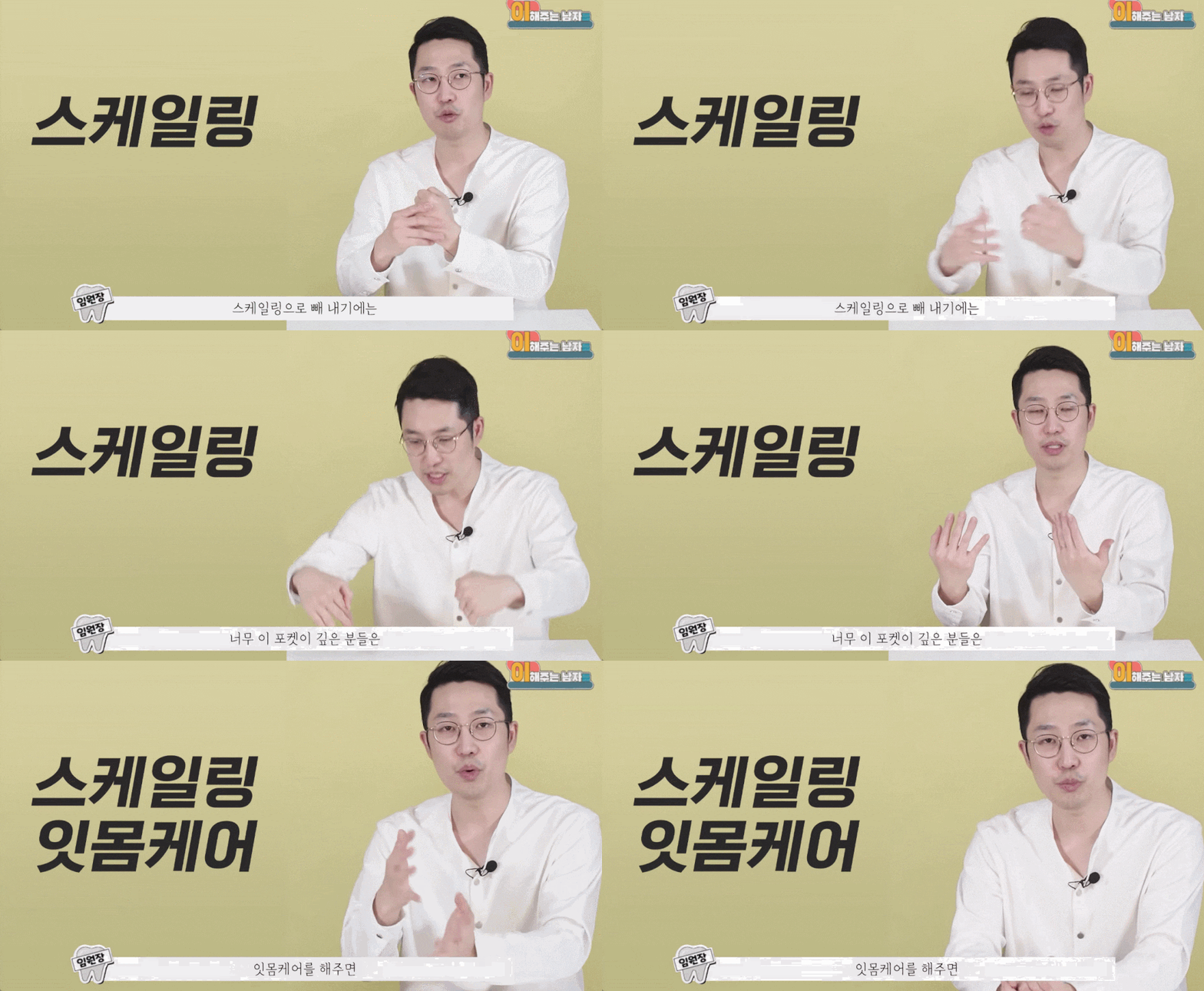
However, if the spaces are deep and do not improve with scaling alone,
treatment to remove inflammation and tartar from inside the gums may help relieve the symptoms.
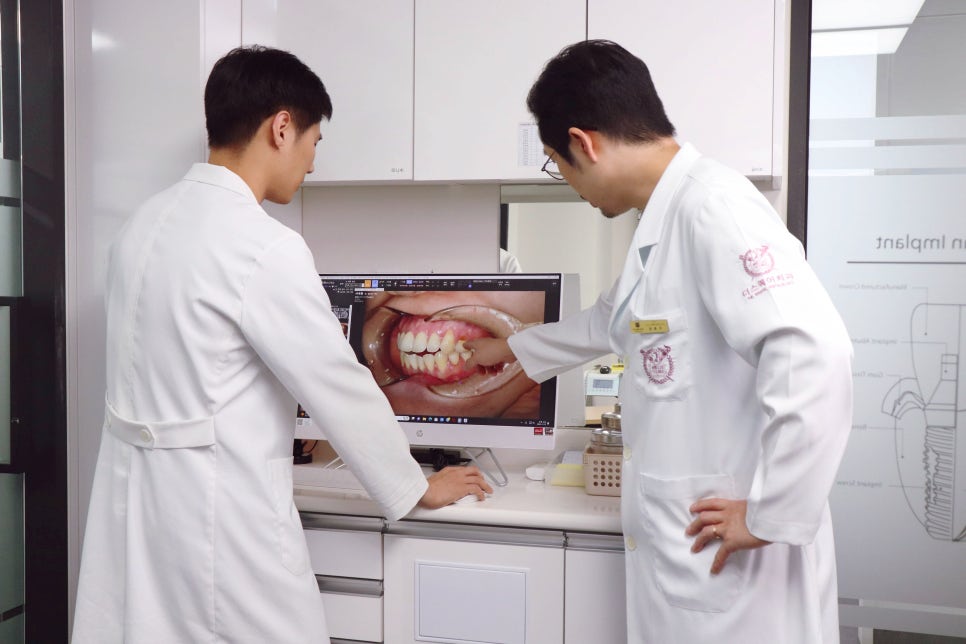
Causes of Tooth Pain When Chewing
② Tooth Fracture or Crack
The second cause is physical damage to the tooth itself.
This can broadly be divided into a tooth fracture, in which part of the tooth breaks off, and a crack, in which the tooth develops a fissure.
A fracture is a case in which a tooth breaks with a cracking sensation while chewing hard food, or because the tooth was already weakened.
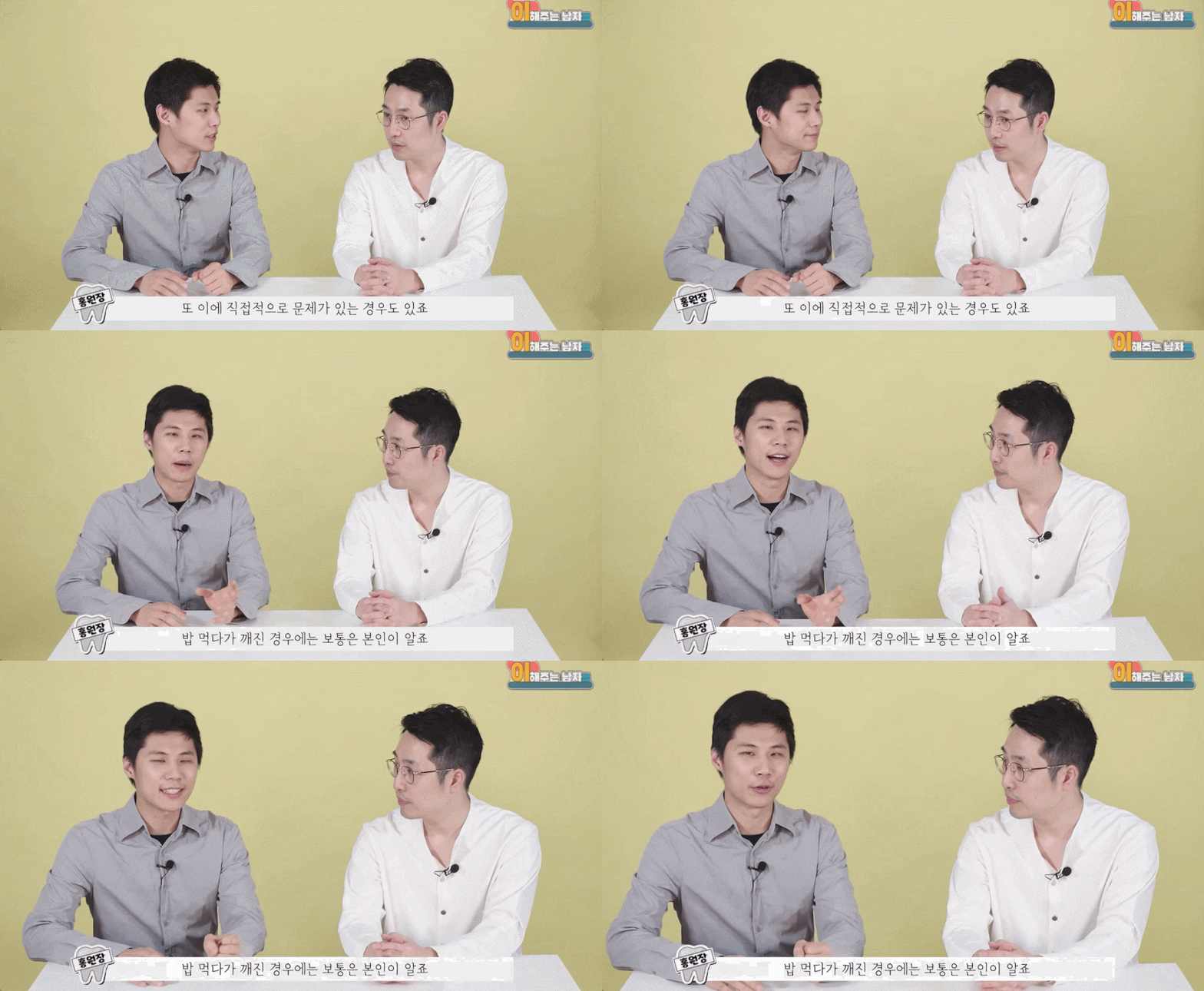
When a fracture occurs, patients can usually recognize it intuitively.
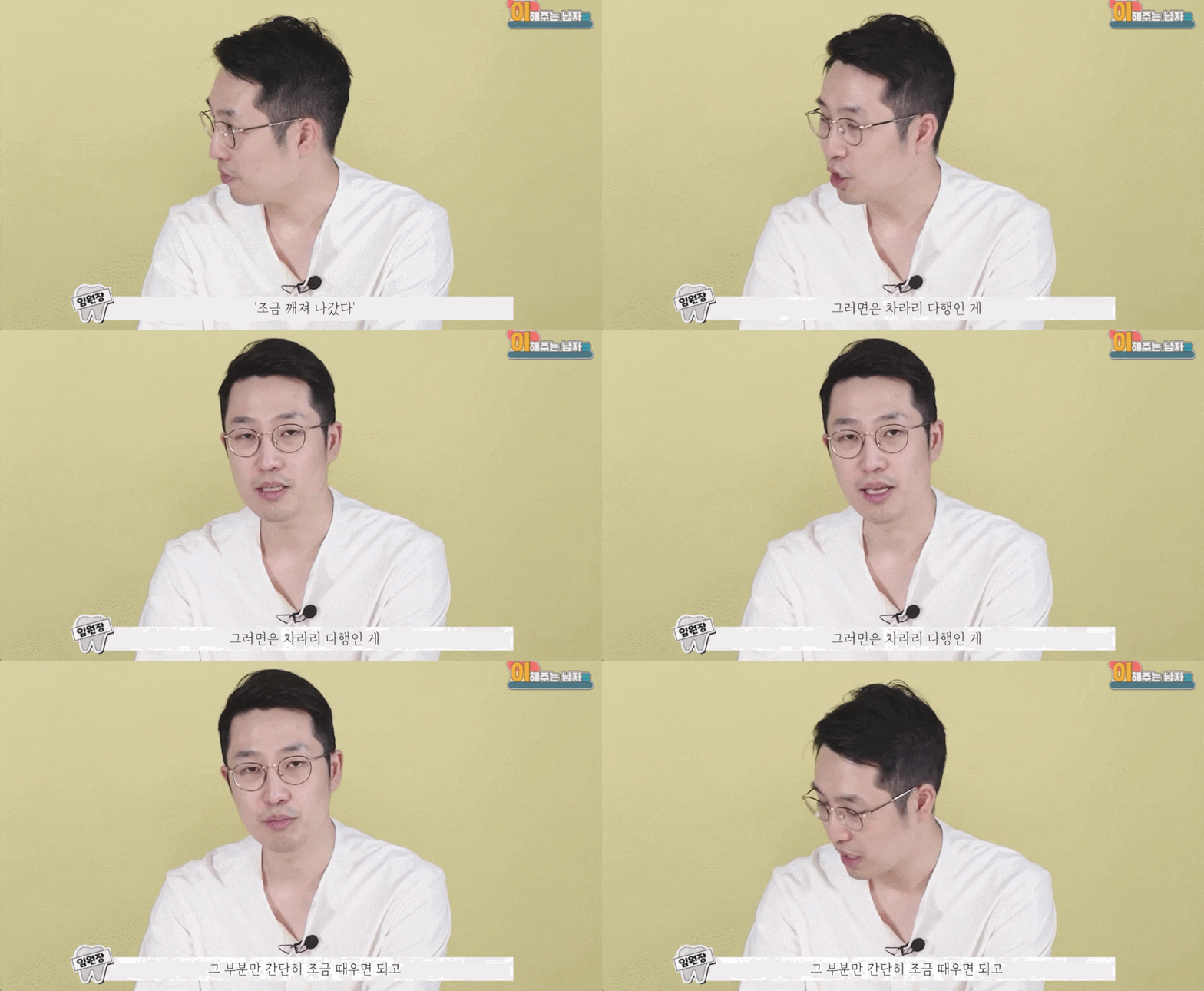
If only a small portion of the tooth has broken,
it can often be repaired relatively simply with resin, a tooth-colored polymer compound that is bonded to the tooth.
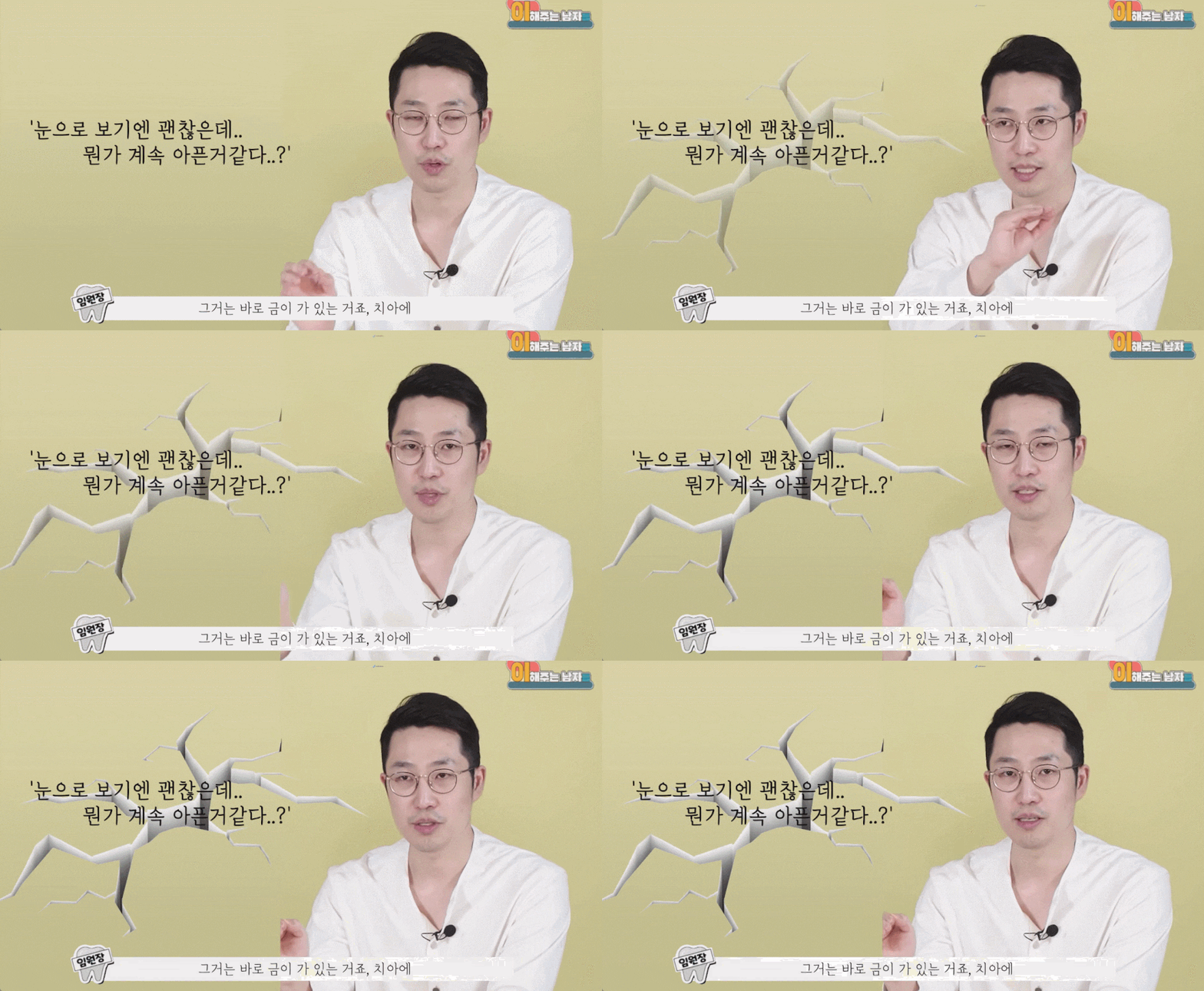
However, if the tooth looks fine on the outside but you feel a sharp or sensitive pain when chewing food in a particular area,
there is a strong possibility that the tooth has developed a crack.

A crack in a tooth does not heal on its own,
so crown treatment, in which a restoration is placed over the tooth to prevent the crack from spreading, may be necessary.
In particular, teeth that previously received gold crowns require special attention because the hardness of gold, compared with that of natural teeth, can make the surrounding natural teeth more susceptible to microscopic cracks.
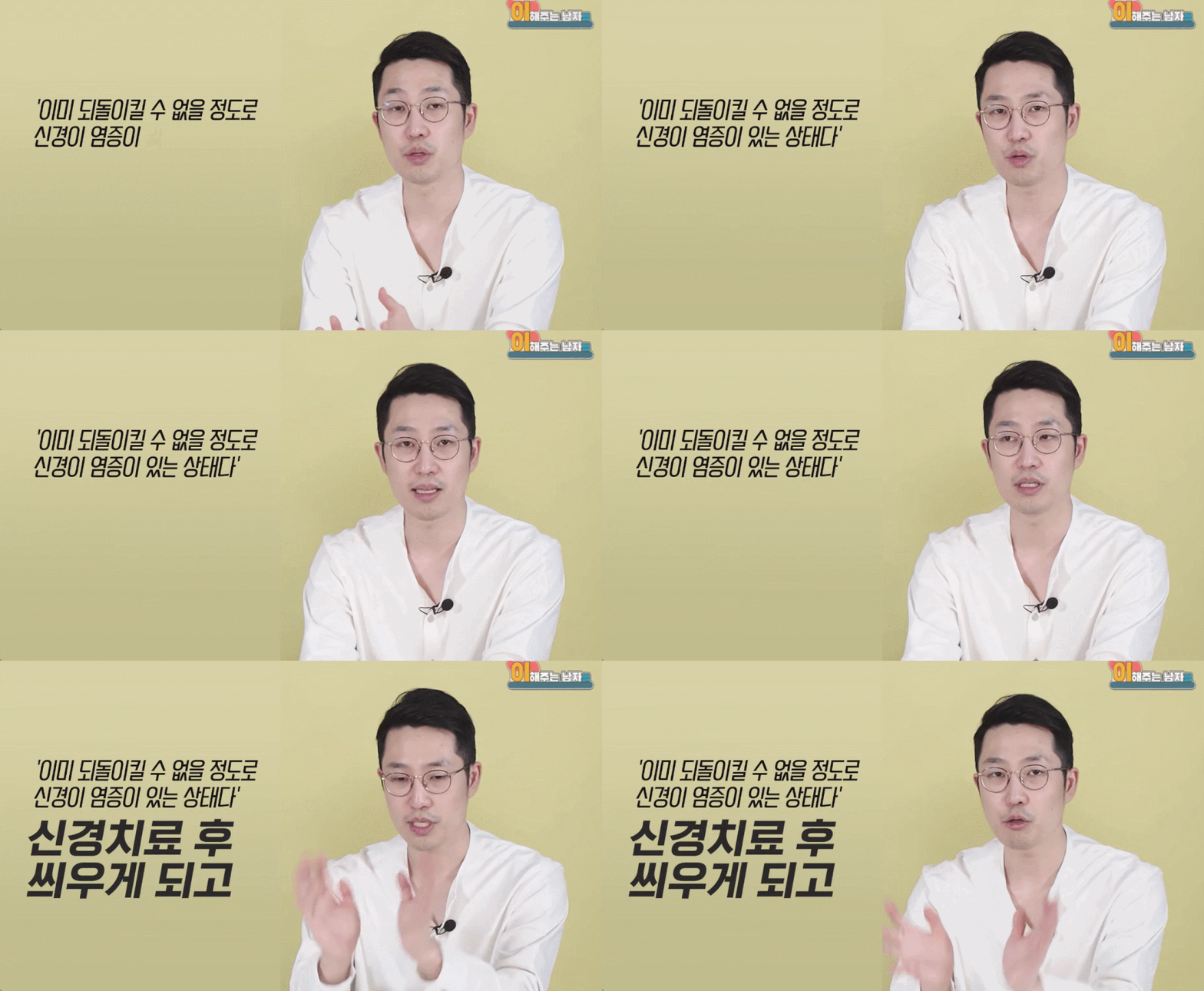
If the crack has also irritated the nerve and caused inflammation,
root canal treatment followed by a crown may be necessary.
Why Should You Not Leave the Pain Untreated?
Some people take the pain lightly, assuming that it will improve over time. However, there are also cases that progress to conditions such as:
🦷 A tooth breaking or cracking deep down to the root inside the jawbone
🦷 Tooth decay progressing deeply to the tip of the root
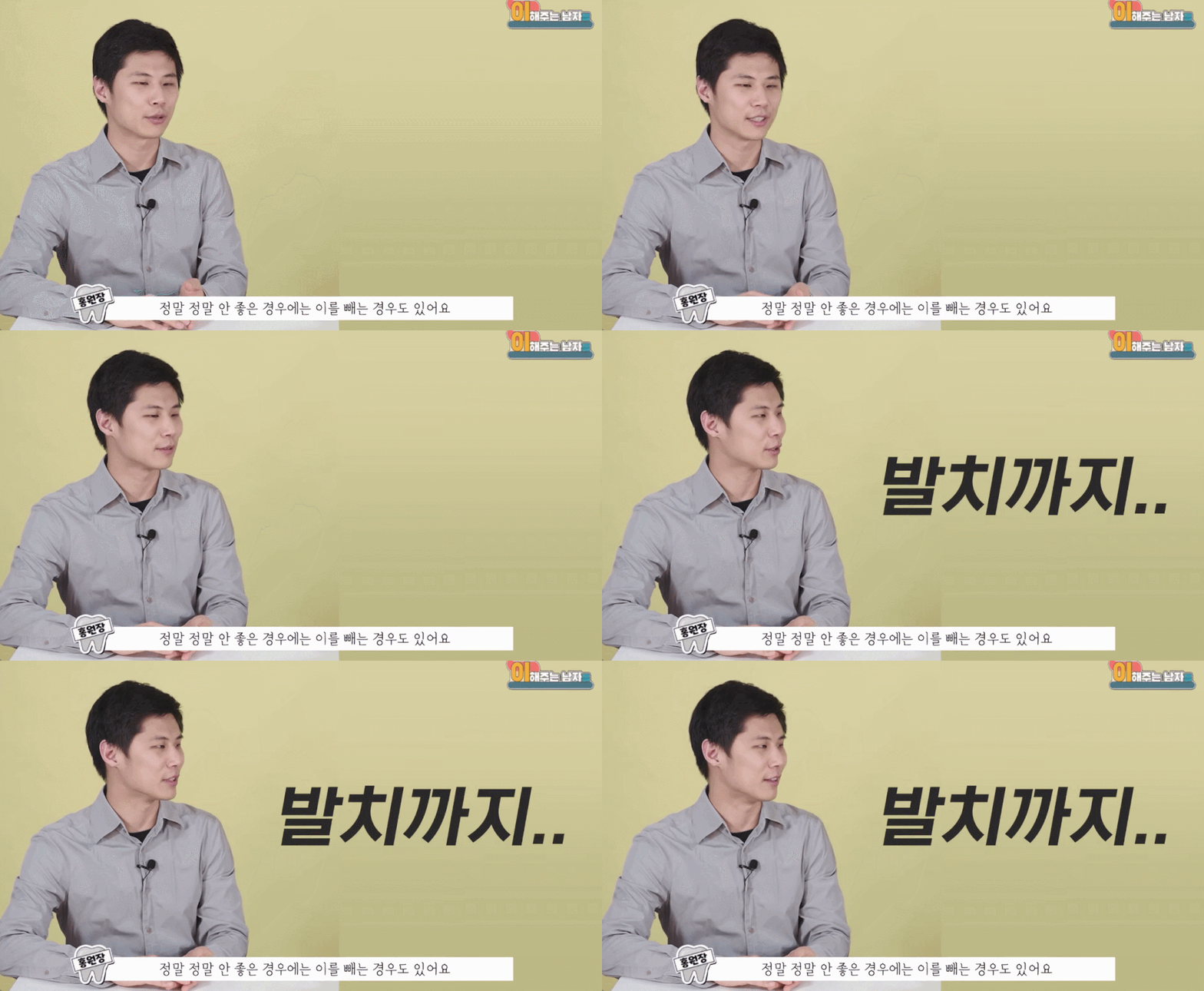
Unfortunately, it is difficult to save teeth in these cases.
This is because forcing the tooth to remain can cause the surrounding jawbone to dissolve as well.
Once the bone is lost, implant treatment may become more difficult later,
which ultimately means extracting the tooth and placing an implant.
Pain that occurs when chewing food
therefore requires a step-by-step diagnosis that progressively identifies its cause.
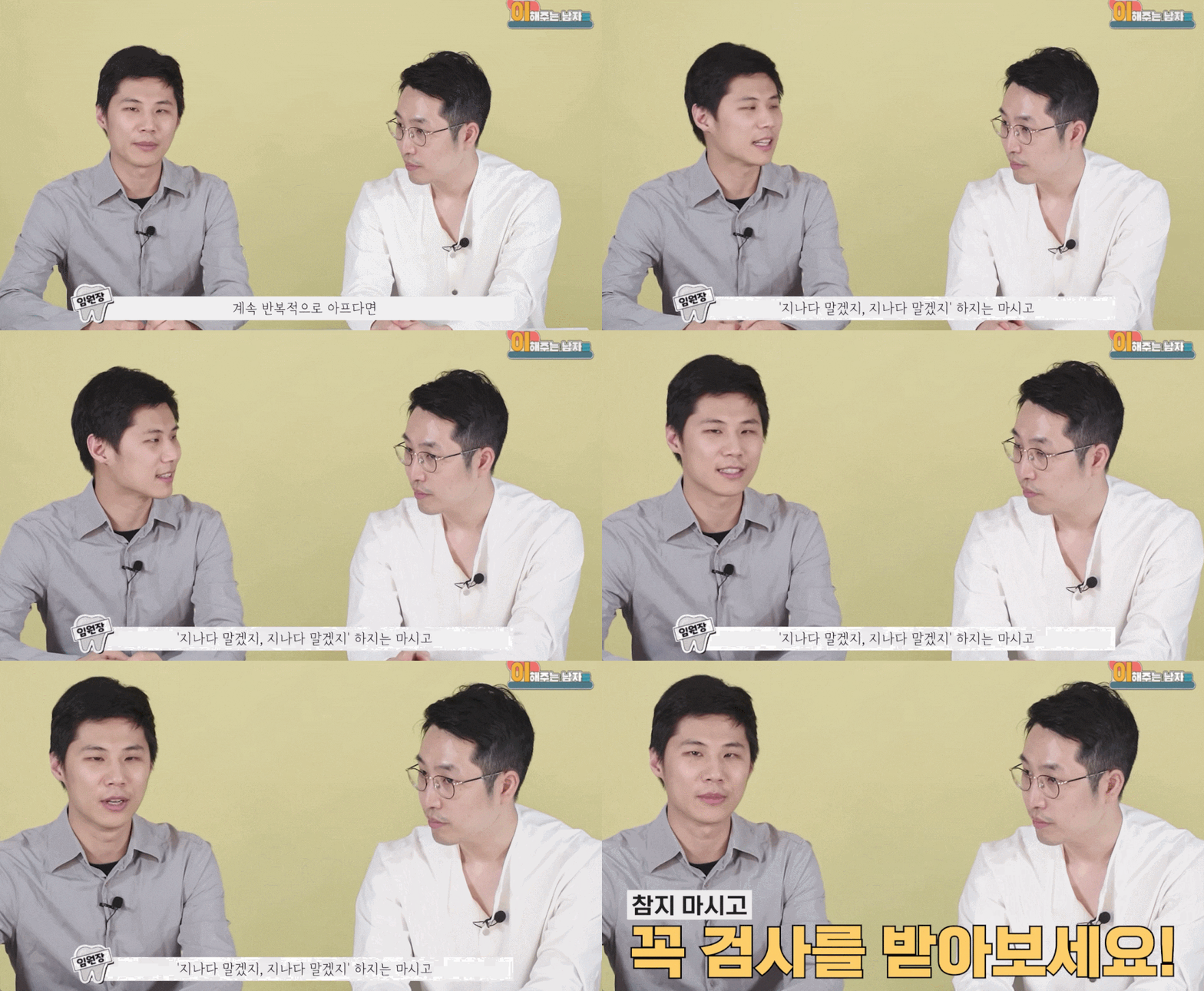
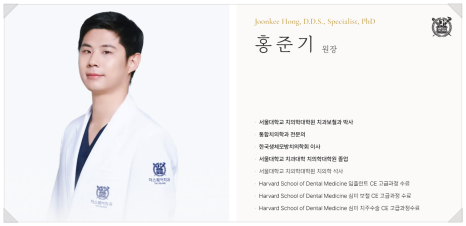
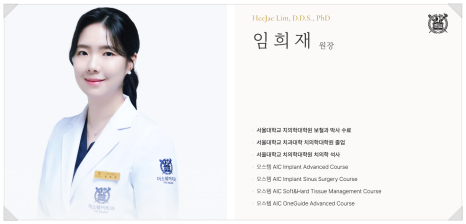
If you choose a dental clinic with specialists in integrated dentistry who precisely identify the location of microscopic cracks and place the preservation of natural teeth above all else,
as well as orthodontic specialists who can create treatment plans aimed at improving the bite with the surrounding teeth,
you may be able to reduce concerns about unnecessary treatment and find a treatment approach suited to you.

[Related Articles]
This article was written for those who have been troubled by tooth pain while eating.
Here is a brief summary of the main points.
| 1️⃣ The pain may be caused by gum inflammation rather than the tooth itself, and symptoms may improve with scaling or gum treatment. |
|---|
| 2️⃣ If the pain is caused by a tooth fracture or crack, resin or crown treatment (after root canal treatment) may be necessary. |
| 3️⃣ Please choose a dental clinic that develops a treatment plan from multiple perspectives, with the goal of preserving your natural teeth as much as possible. |
If you have any further questions for us, feel free to leave a comment or contact us through Naver TalkTalk. ^^
We are The Square Dental Clinic,
committed to providing specialized knowledge based on the latest findings,
three-dimensional diagnoses grounded in scientific evidence,
and reliable treatment that follows established principles.
[Patient Reviews]
[Naver TalkTalk]
[Directions]
| This article was written in compliance with the Medical Service Act (Article 56, Paragraph 1) so that you can obtain accurate information. Rather than simply promoting our services, we wanted to transparently share the processes that take place in an actual treatment setting. Instead of contacting us immediately after reading this article, it is enough simply to take away accurate information. |