Hello.
Beyond creating a beautiful first impression,
we are The Square Dental Clinic,
focused on helping patients restore
their quality of life
and confidence.

Many people complain of throbbing or bleeding molar gum pain
even though they brush their teeth carefully three times a day.

Some say it is because they are tired and their immune system has weakened,
while others say that taking gum medication should be enough...
But when molar gum pain does not easily go away, it can be both concerning and uncomfortable.
Everyone, there are specific medical facts behind the causes of molar gum pain.
Therefore, in such cases,
visit a dental clinic
and examine the
underlying cause of
molar gum pain,
and receive
the appropriate
standard treatment
for that cause.
We will discuss this topic step by step in today’s column. :)


It may be due to a “structural problem.”
The first cause of molar gum pain may be a structural problem.
It is easy to understand if you think about brushing your teeth in everyday life.
The front teeth, which are easy to see, have a straight alignment and are easy to reach,
so using a toothbrush or dental floss usually removes most food debris cleanly.

Molars are located deep in the darkest part of the mouth.
They can be considered to lie in a blind spot, making it difficult even for a dentist using a mirror to obtain a completely clear view.
As a result, no matter how diligently you brush, the bristles may not properly reach between the teeth or their inner surfaces,
making this an area where tiny pieces of food debris can easily remain.
The food left between the teeth forms plaque, a sticky bacterial film, on the tooth surfaces,
and when this builds up and becomes hard tartar, it continually irritates the surrounding gums.
Eventually, a vicious cycle begins: the gums become red and swollen, and bleeding occurs even when they are touched lightly.
“Wisdom teeth” may also be the cause.
On the other hand, if the molar gum pain is concentrated at the very back, the cause may be a wisdom tooth.
Because wisdom teeth erupt farther back than ordinary molars, they are also much more difficult to manage.
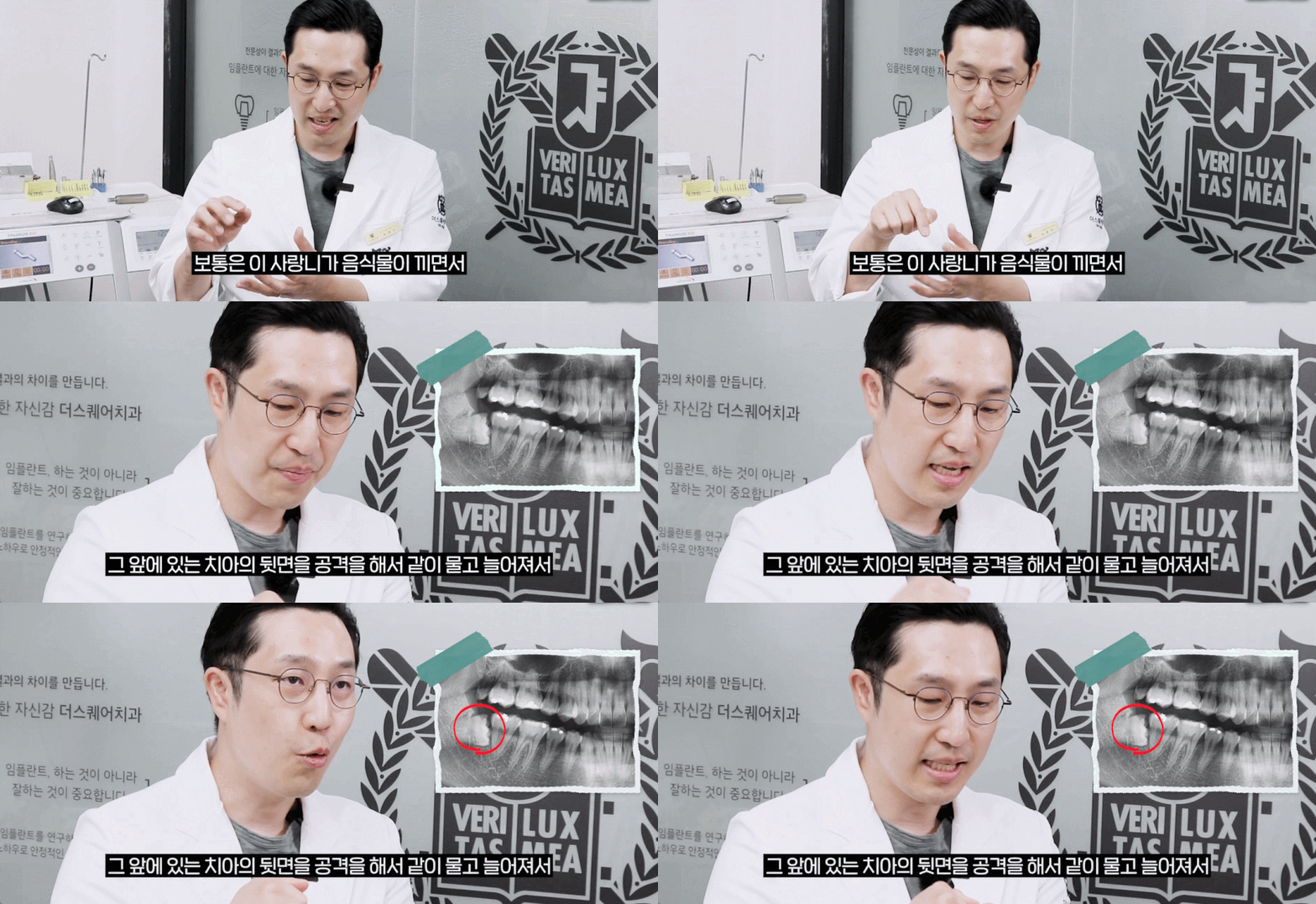
In particular, if a wisdom tooth does not grow straight
but grows at an angle or is partially impacted,
it creates an environment where food can easily become trapped between it and the adjacent molar.
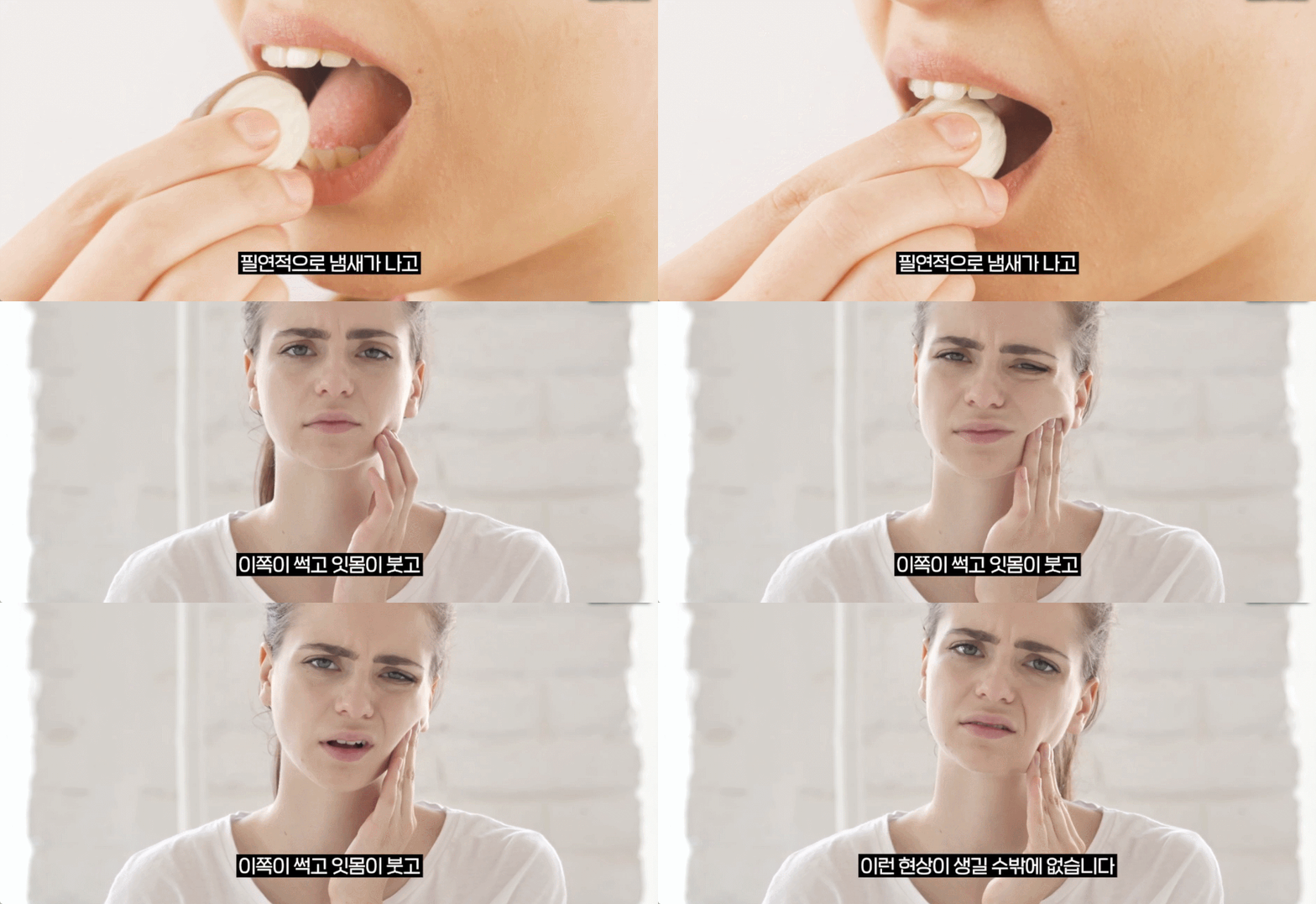
Even dental floss or an interdental brush may have difficulty entering this gap,
allowing the tooth to decay and causing severe periodontal inflammation in the surrounding gums.

What are the treatments for molar gum pain at each stage?
If the problem does not resolve even after getting enough rest and paying closer attention to hygiene,
this means that bacterial deposits may have already penetrated deep into the gums, so you should receive dental treatment without delay.
Depending on the patient’s symptoms, the following treatments may be considered.
🦷 Scaling and gum treatment
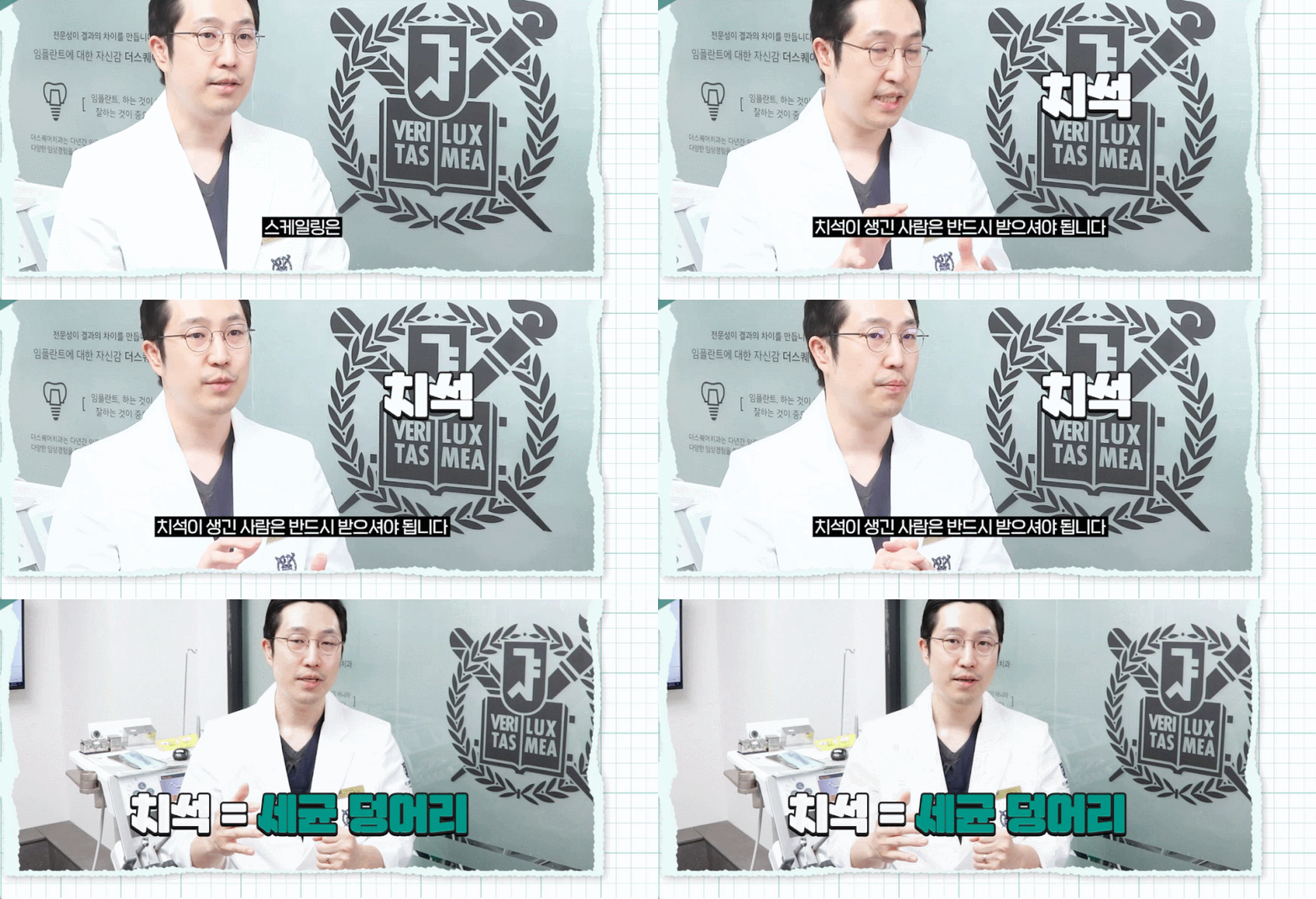
If the inflammation is at an early stage, scaling is performed to remove tartar from the tooth surfaces.

If the inflammation has extended deep toward the jawbone around the gums,
scaling alone has limitations,
so gum treatment is performed after administering anesthesia to thoroughly remove minute inflamed tissue and tartar attached to the inner walls of the gums.
🦷 Wisdom tooth extraction
If a wisdom tooth is the underlying cause of the pain, it is safely extracted after a detailed evaluation.
Of course, extraction is not always necessary,
but if the oral environment that initially caused the decay remains unchanged, the likelihood of recurrence is high,
so extraction removes the causative factor.
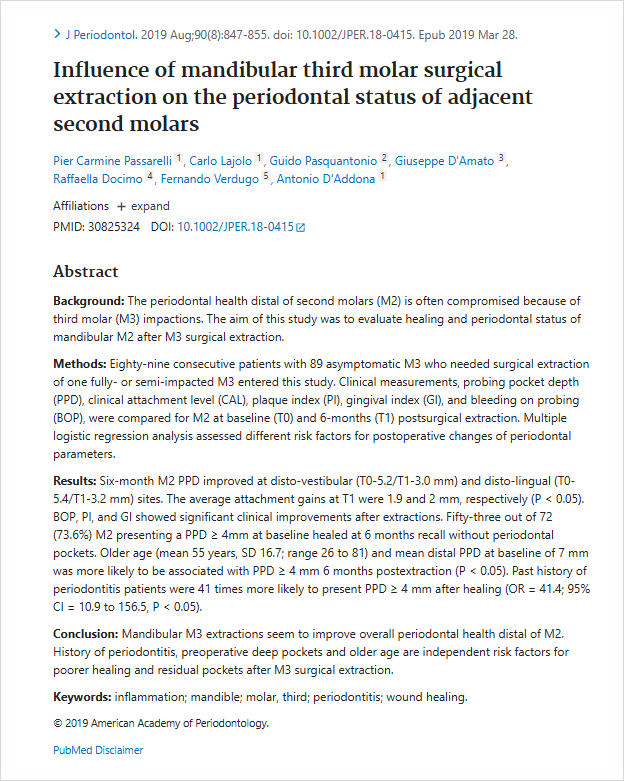
- Key point: According to a clinical study published in a globally respected periodontal journal,
partially impacted or angled wisdom teeth
may damage the gum health behind the molars.
When the problematic wisdom teeth were safely extracted,
the gum pocket depth around the adjacent molars
returned to normal levels,
and bleeding and inflammation indicators
showed significant improvement.
- Source: J Periodontol. 2019 Aug;90(8):847-855. doi: 10.1002/JPER.18-0415. Epub 2019 Mar 28.
🦷 Dental prosthetic treatment
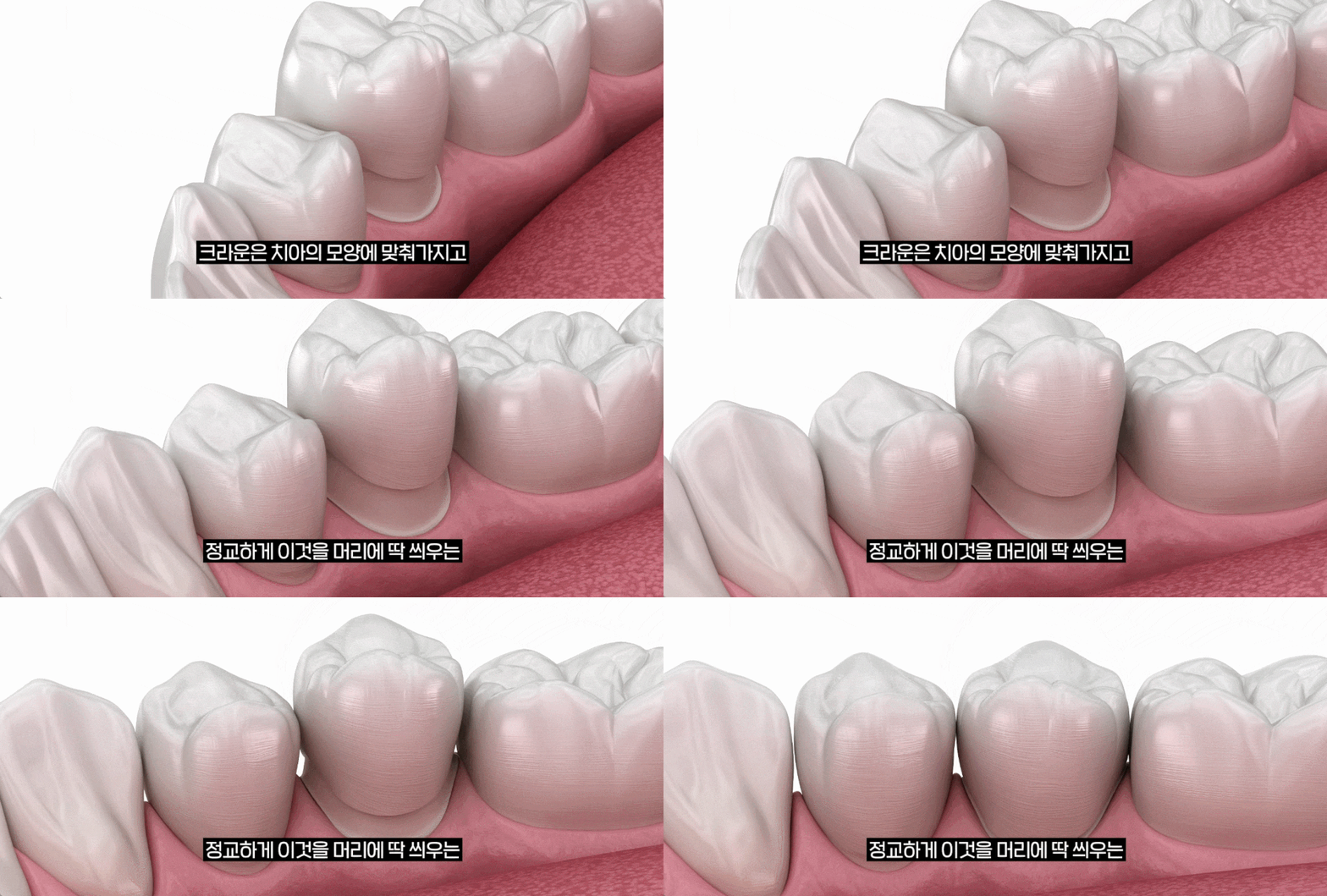
If the molar has a small crack or the pain is caused by inflammation at the root tip,
root canal treatment may be performed when necessary,
followed by restorative treatment using a crown or another prosthesis to prevent the tooth from separating further or breaking.
As you can see, the causes of pain in the molars and gums range widely, from simple bacterial inflammation to cracks within the tooth.
Therefore, we recommend choosing a clinic where specialists, including an integrated dentistry specialist who can clearly distinguish the cause and propose a treatment approach aimed at preserving the natural tooth as much as possible,
and an orthodontic specialist who can carefully analyze whether extraction is needed and the overall bite,
are available on-site to provide systematic treatment.


[Recommended related reading]


This article was written for those who may have been uncomfortable because of pain felt around a molar.
Here is a summary of the key points discussed today.
| 1️⃣ Molars are located deep in the mouth, making hygiene management difficult; food debris can combine with bacteria and cause pain. |
|---|
| 2️⃣ If a wisdom tooth is the cause of chronic pain, extraction may need to be considered. |
| 3️⃣ Depending on the symptoms, scaling, gum treatment, prosthetic treatment, and other procedures may be needed, so we recommend choosing a clinic with specialists in each field. |
If you have any further questions for us, please feel free to ask in the comments or via Naver TalkTalk at any time. ^^
We are The Square Dental Clinic,
committed to specialized knowledge based on the latest findings,
a multidimensional diagnosis based on scientific evidence,
and reliable treatment that follows established principles.
[Reviews]
[Naver TalkTalk]
[Directions]
| This article was written in compliance with Article 56, Paragraph 1 of the Medical Service Act so that you can obtain accurate information. Rather than simple promotion, we wanted to transparently share the processes that take place in an actual dental office. Instead of contacting us immediately after reading this article, it is sufficient simply to take away accurate information. |