Hello.
This is The Square Dental Clinic,
focused on restorative and conservative dental treatment.

Do you experience a sharp, tingling pain when chewing food?
This may indicate a cracked molar.

This is also a symptom commonly seen among Koreans, who tend to enjoy hard and chewy foods.
A crack that develops in a molar does not heal on its own,
and it tends to extend farther downward over time.
Therefore, if you want to preserve your natural tooth,
you should visit a dentist as soon as possible and receive appropriate treatment.
In today's column,
-
Characteristics of molar crack treatment
-
The representative prosthetic treatment: 'Crown'
-
An alternative to crowns: 'Overlay'
We will calmly discuss these three topics. :)

When a molar is cracked,
simply filling it is not enough.
As mentioned above, people in Korea tend to enjoy chewy and hard foods.
These molars are the areas primarily used for chewing food,
and they receive a powerful force approaching 100 kg directly each time we eat.

Therefore, if molars are continuously exposed to stimulation from eating hard foods or clenching your teeth,
they can become overloaded and are more likely to develop fine cracks.
At this point, many people ask,
'If my molar is cracked, can't it simply be filled?'
However, cutting a groove into a cracked tooth and filling the inside with material
may widen the gap in the crack, potentially causing the tooth to split completely.
Therefore, simply filling a cracked molar is not enough.
In many cases, prosthetic treatment that covers the tooth is essential to prevent the crack from spreading farther sideways.
When a molar is cracked,
(1) Crown after root canal treatment
A representative prosthetic treatment is the traditional mainstay of dental care: the 'crown.'
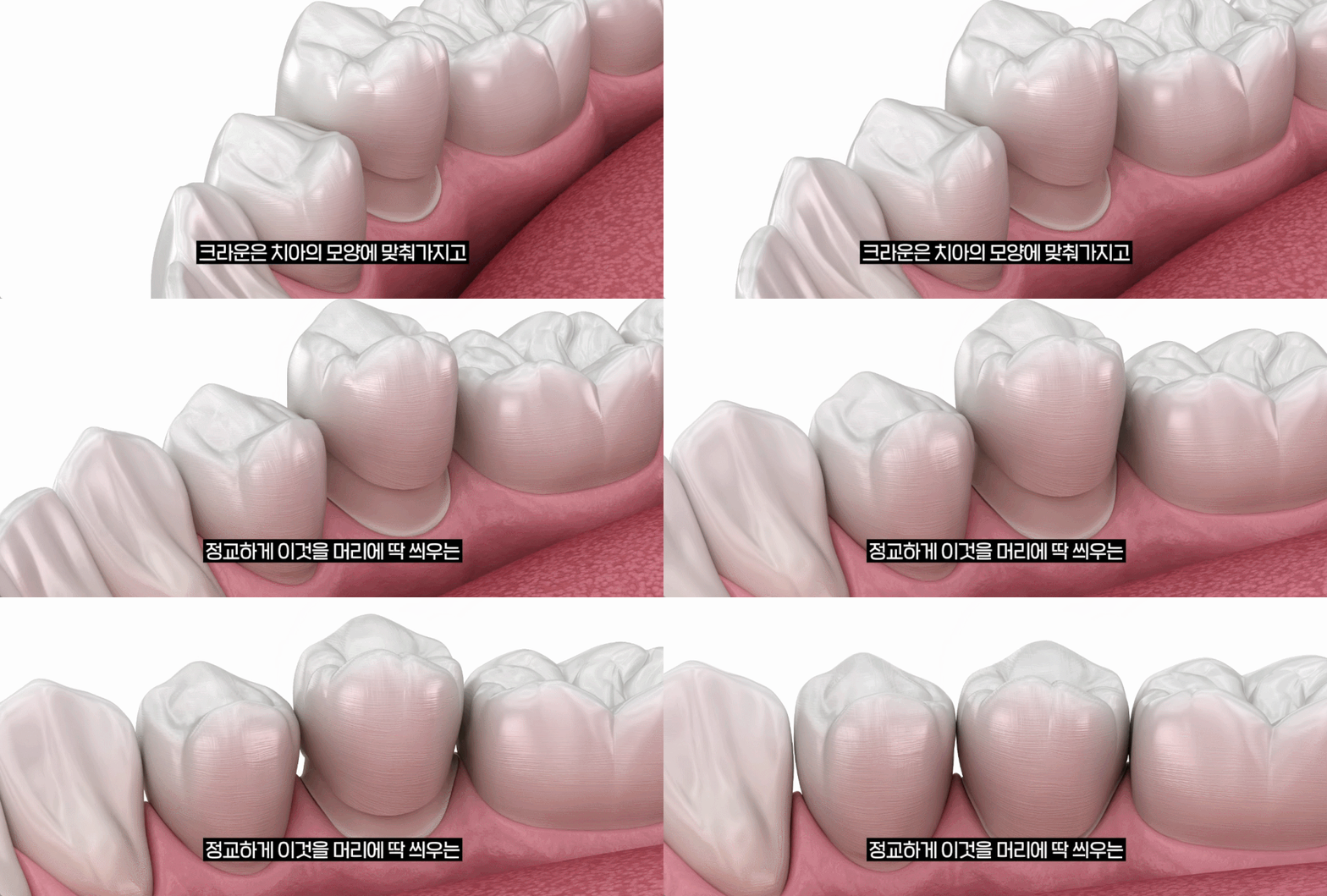
A crown is, as the name suggests, a treatment in which a prosthetic restoration is placed over a damaged tooth like a crown.
If the crack is severe enough to cause throbbing pain in the molar,
this means that bacteria have already penetrated through the crack and caused inflammation in the nerve.
In that case, the contaminated nerve tissue must be thoroughly removed and disinfected before covering the tooth with a prosthesis,
so a 'crown after root canal treatment' should also be considered.
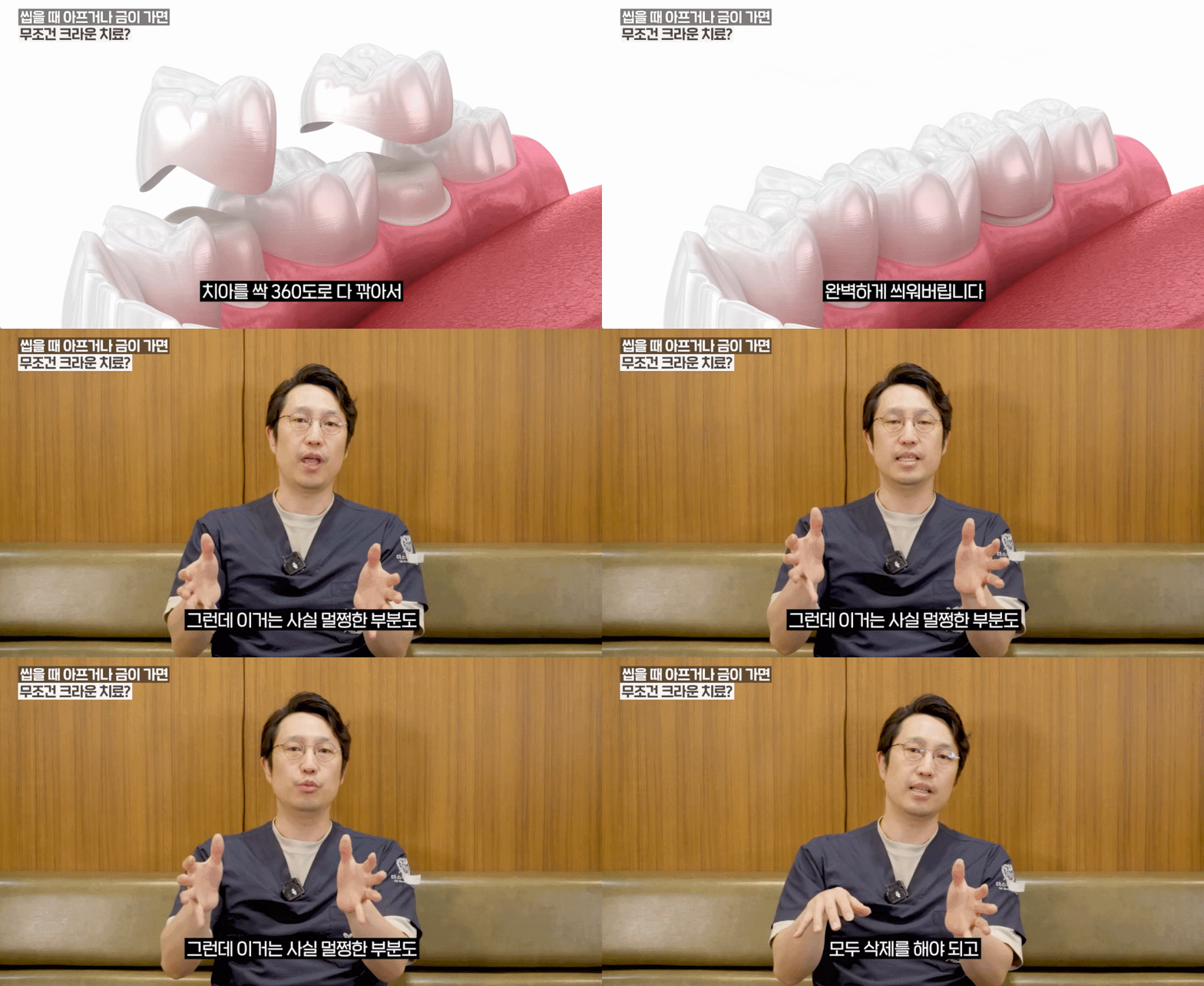
Although crowns are a treatment whose effectiveness has been confirmed over many years,
they also have the disadvantage that the natural tooth must be filed down all the way around 360 degrees
to create enough space for the prosthesis.
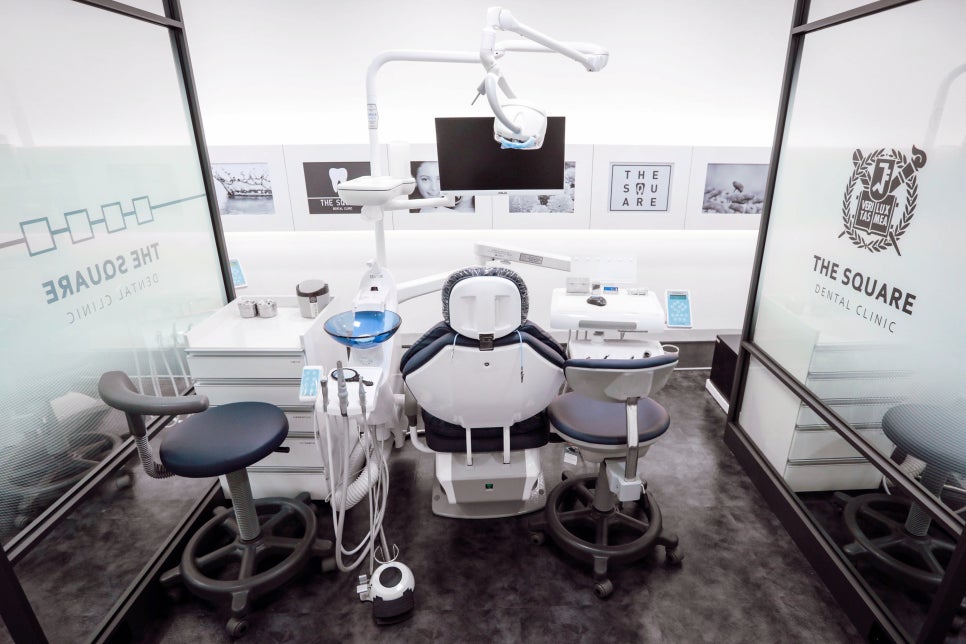
When a molar is cracked,
(2) 'Overlay,' an alternative to a 'crown'
Following what we discussed above, if you experience only temporary sensitivity when chewing
and have no pain when at rest, with the crack not extending to the nerve,
starting with crown treatment without further consideration may not be the best choice.
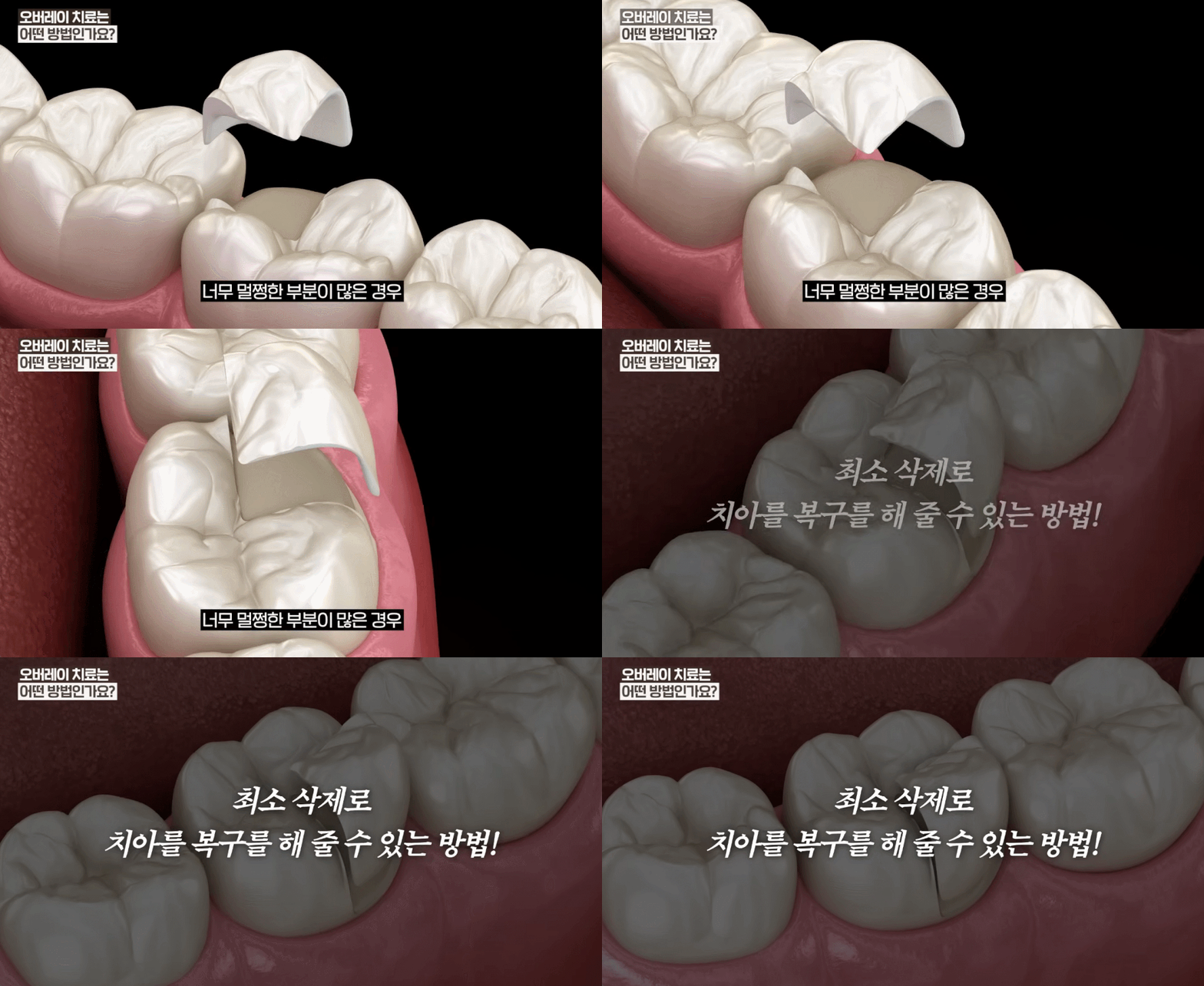
An 'overlay' can be an excellent alternative to a crown.
Although the treatment method itself is similar to that of a crown,
an overlay preserves the sides of the tooth while minimally reducing only the cracked or otherwise necessary upper surface,
then covers it with a precisely fabricated prosthesis.
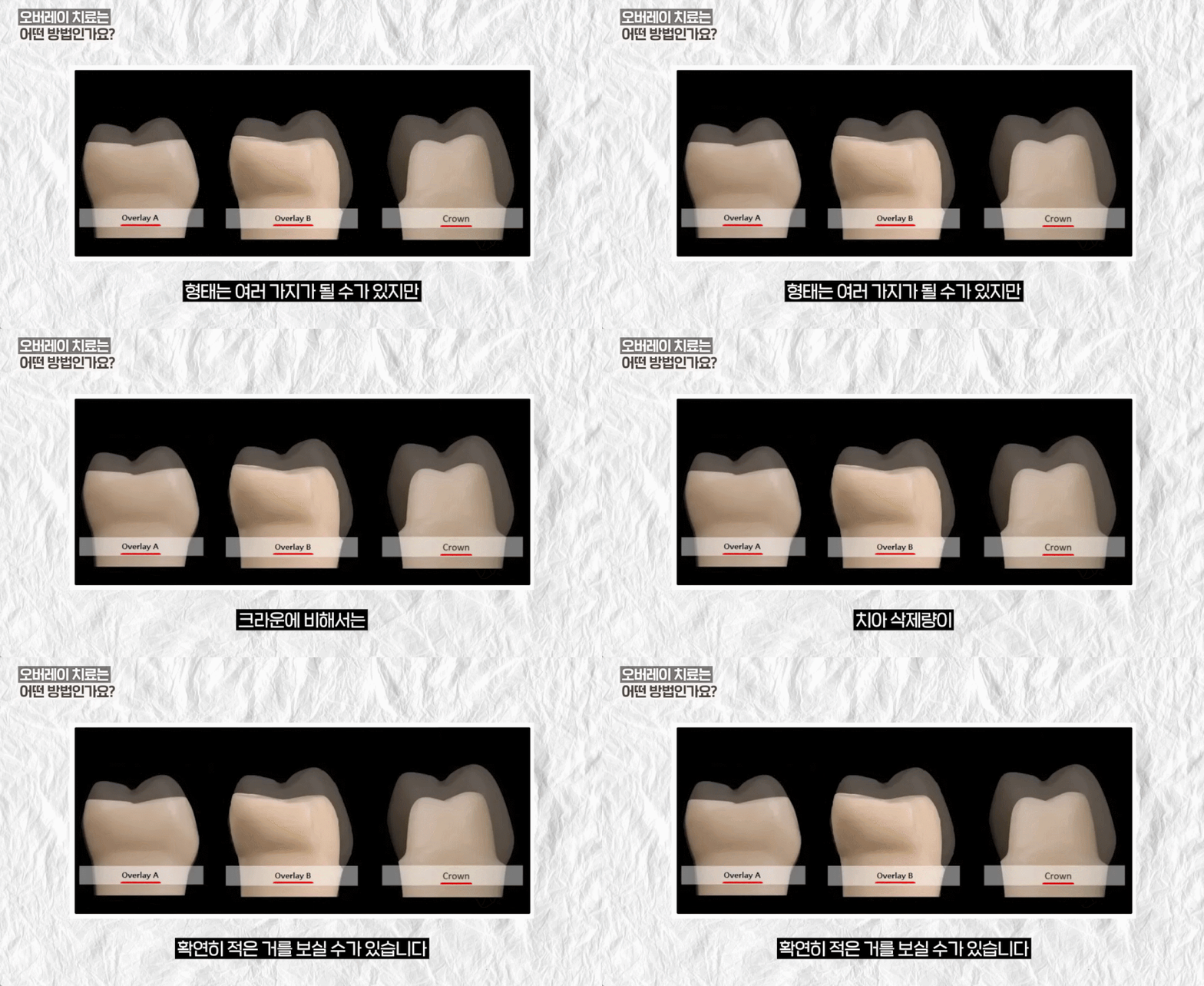
The amount of tooth reduction is said to be less than one-quarter of that required for a crown,
so as much of your valuable natural tooth as possible can be preserved.
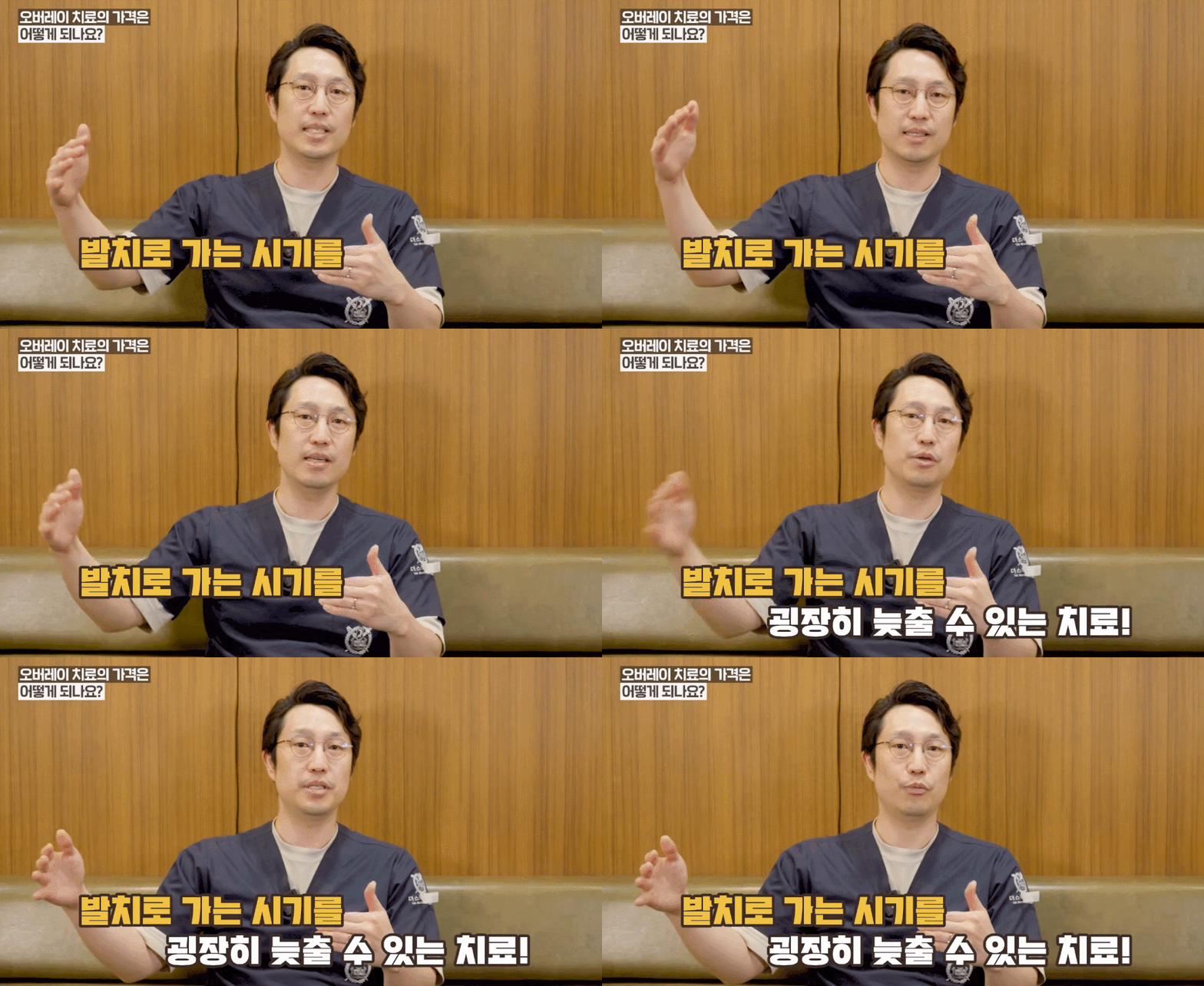
Is that all?
Even if the overlay eventually reaches the end of its service life, you can consider another overlay,
or move on to the next stage—a crown—when the time comes.
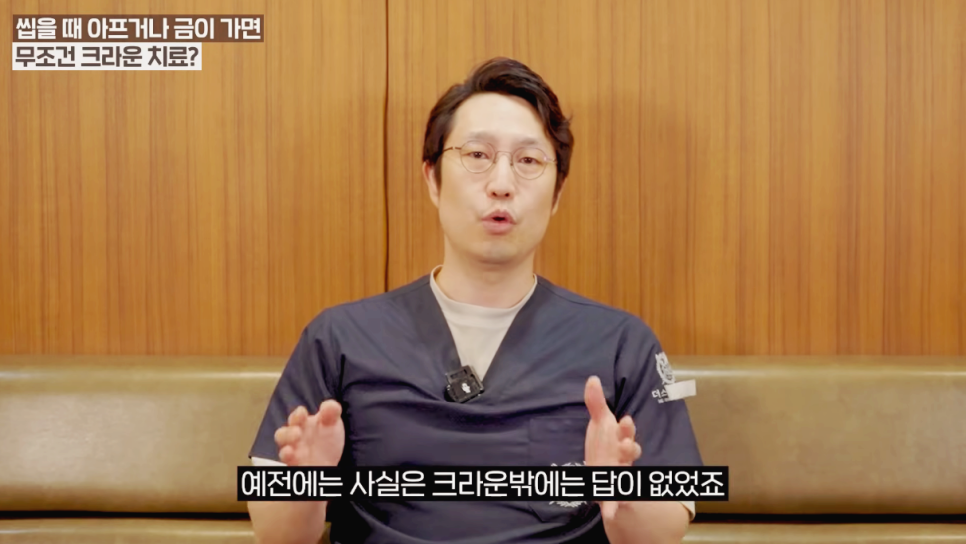
When a crown reaches the end of its service life, extraction followed by an implant is often necessary.
However, choosing an overlay can delay that point for as long as possible.
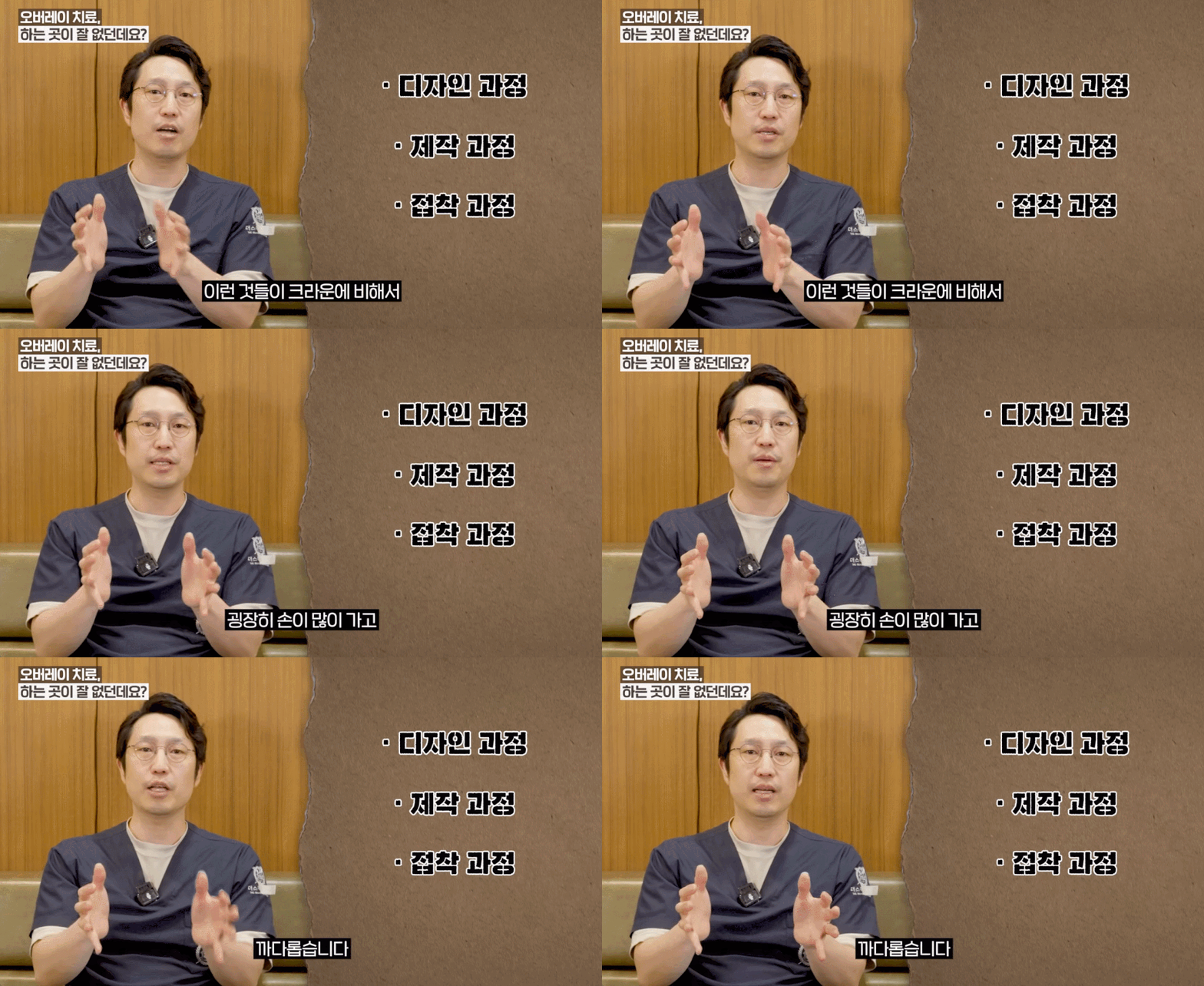
However, because an overlay is a technically demanding procedure—from its design and fabrication to the precise bonding of a very thin prosthesis—
it is not yet widely performed at every dental clinic.
Therefore, if you want to preserve your tooth with an overlay,
you should first check whether the clinic provides this treatment.
After that, it is advisable to receive a precise diagnosis from a dentist with sufficient experience,
discuss thoroughly whether this treatment can be applied in your case,
and find the treatment method that is most suitable for you.
[Recommended related reading]

This article was written for those who may have felt confused after developing a crack in a molar.
Here is a summary of the key points from today's article.
| 1️⃣ Simply filling a cracked molar can cause the crack to widen further. |
|---|
| 2️⃣ If the crack has reached the nerve, a crown must be placed after root canal treatment to prevent the tooth from fracturing. |
| 3️⃣ For an early- to moderate-stage crack without nerve damage, an 'overlay,' which minimizes tooth reduction, can be a good alternative. |
If you have any further questions, please feel free to ask us in the comments or through Naver TalkTalk at any time. ^^
We are The Square Dental Clinic,
committed to providing expert knowledge based on the latest findings,
multidimensional diagnoses based on scientific evidence,
and reliable treatment that follows established principles.
[Reviews]
[Naver TalkTalk]
[Directions]
| This article was written in compliance with Article 56, Paragraph 1 of the Medical Service Act so that you can obtain accurate information. Rather than simply promoting our services, we wanted to transparently share what happens in an actual treatment setting. Instead of contacting us immediately after reading this article, it is enough simply to take away accurate information. |