Hello.
This is The Square Dental Clinic, dedicated to preservation and restorative treatment.

When a cavity develops or a tooth becomes cracked,
we place a “crown” to protect the tooth.

However, the term “root canal treatment for a crown” is often closely associated with crowns,
so many people believe that “root canal treatment must always be performed before getting a crown.”
To give you the conclusion first, root canal treatment for a crown is not always the correct answer.
In other words, it is possible to place only a crown without performing root canal treatment.
Today, in this column,
we will整理 the following three topics:
- Cases where root canal treatment can be omitted
- Cases where root canal treatment is essential
- Crown treatment duration and lifespan
Let’s take some time to go over these three topics. :)

Root Canal Treatment for a Crown
In “these cases,” root canal treatment may not be necessary.
Many people are reluctant to undergo root canal treatment because they understand it as “a treatment that kills the nerve.”
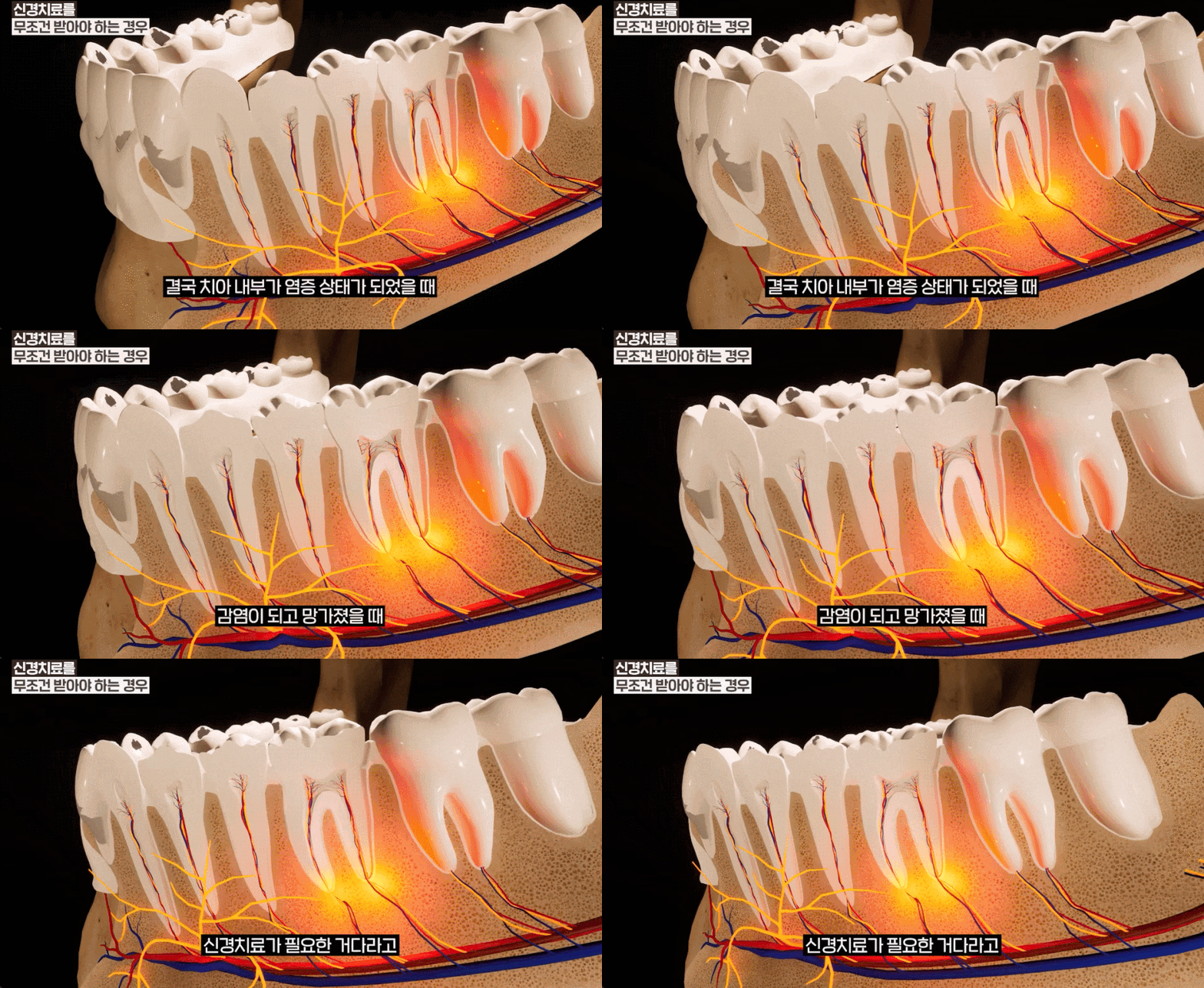
Strictly speaking, root canal treatment involves removing and disinfecting contaminated tissue inside the tooth.
As described above, even if a cavity has developed or part of the tooth has broken,
root canal treatment is not always necessary.
<If the nerve tissue inside the tooth is healthy and has not been contaminated>
rather than undergoing root canal treatment unnecessarily,
it may be possible to place only a crown to protect the tooth from further damage.
Root Canal Treatment for a Crown
When is root canal treatment “always” necessary?
On the other hand, there are cases in which root canal treatment cannot be avoided.
The exact opposite of what was described above—
when the nerve tissue has lost its ability to recover on its own, root canal treatment must be performed before placing the crown.
Here are four representative cases in which root canal treatment for a crown is unavoidable.
| 🦷 Spontaneous pain |

If the tooth throbs even when you are staying still and the pain continues to the point that you cannot sleep at night,
this is a sign that the inside of the nerve is filled with inflammation and pressure.
| 🦷 Sensitivity to temperature changes |

If the tooth feels sharp and painful when you drink cold water or eat hot food, and the pain continues for several days,
it indicates that the inflammation has progressed to the tip of the root.
| 🦷 Insensitivity to temperature changes |

Conversely, if you feel nothing when eating cold or hot food,
this means that the nerve has already become necrotic.
| 🦷 Tooth discoloration |

When the blood supply inside the tooth is interrupted, it turns dark reddish or dark gray.
If this process is ignored and the tooth is merely covered with a crown,
the tooth may continue to decay beneath the restoration,
possibly ultimately leading to extraction and the need for an implant.

Root Canal Treatment for a Crown
How can you extend the crown treatment period and lifespan?
Once you have decided on the direction of your treatment, it is time to learn about the crown treatment duration and lifespan.
In some cases, crown fabrication can be completed in one day,
but if root canal treatment is not performed,
approximately one week is needed to take the impression, fabricate the restoration, and bond it in place.
If conventional root canal treatment is performed as well,
the overall crown treatment period may take an average of two weeks to one month.

In addition, the average lifespan of a crown is generally considered to be approximately 10 years.
This is an average range, and depending on how it is maintained,
it may last less or more than that.

Repeated impact can shorten the lifespan of a crown,
so if you have a habit of clenching or grinding your teeth, we recommend wearing a night guard.
We also recommend avoiding excessive consumption of foods that are particularly hard, chewy, hot, or cold.

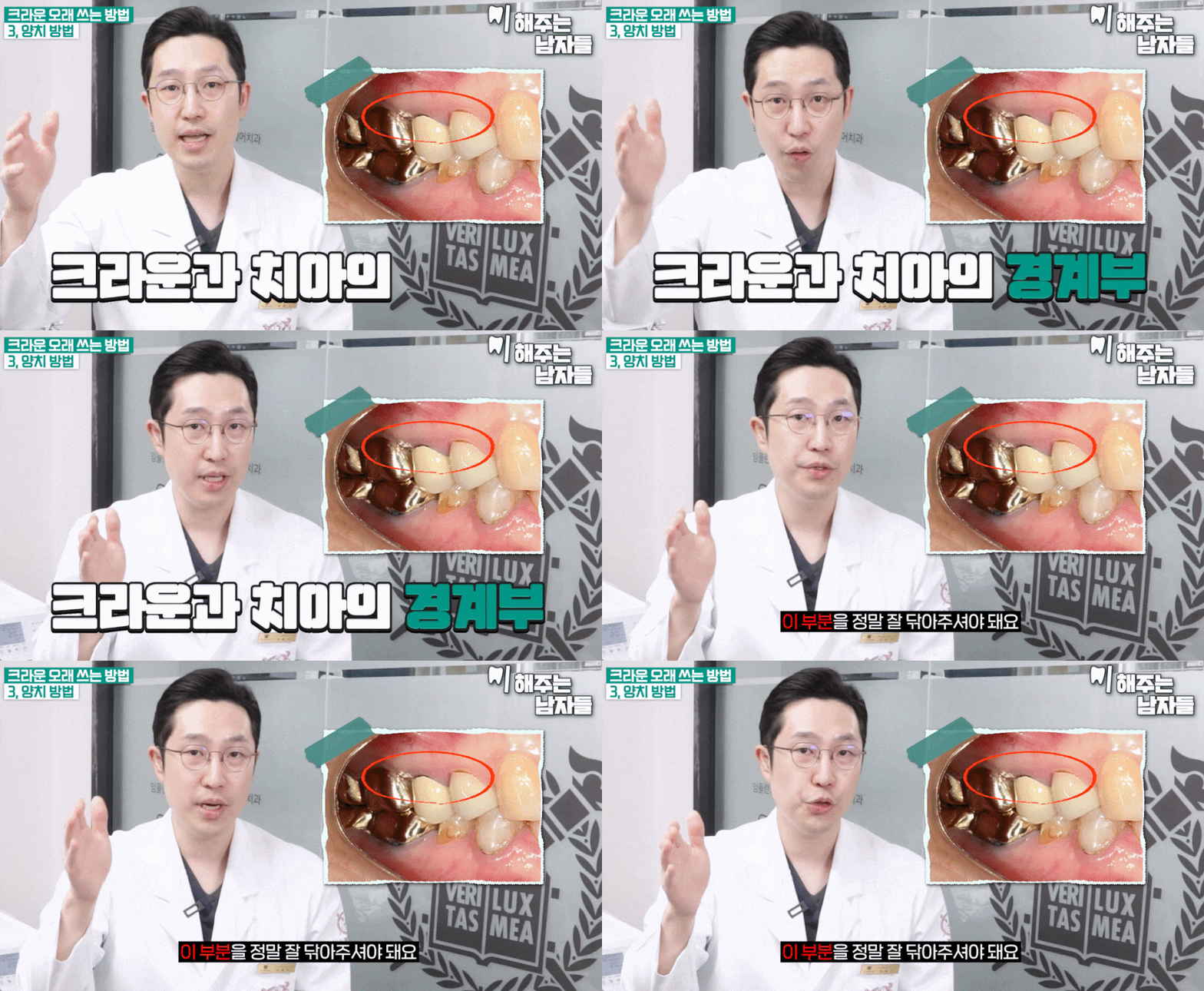
In addition, thorough hygiene management through brushing and using an interdental brush
can be considered the standard way to extend the lifespan of a crown.
Crown treatment is a series of procedures that cleans the complex, microscopic nerve canals hidden inside the tooth
and designs the completed restoration so that it fits together precisely with the surrounding teeth.
Therefore, if you choose a dental clinic where specialists in comprehensive dentistry and orthodontics are available,
you may have fewer concerns about side effects and expect a stable outcome.


[Related articles you may enjoy]


This article was written for those who expected to need crown treatment and were considering various concerns.
Here is a summary of the key points discussed in the article.
| 1️⃣ Even if you have a cavity, a crown may be placed without root canal treatment if the nerve inside the tooth is healthy. |
|---|
| 2️⃣ If you have symptoms such as spontaneous pain, a response to temperature, or discoloration, root canal treatment is necessary. |
| 3️⃣ The average lifespan of a crown is approximately 10 years, and its lifespan varies depending on how it is maintained. |
If you have any further questions, you can leave a comment on Naver or send us a question through Naver TalkTalk. ^^
This has been The Square Dental Clinic, dedicated to highly complete treatment that harmonizes aesthetics and function.
[Reviews]
[Naver TalkTalk]
[Directions]
| This article was written in compliance with the Medical Service Act (Article 56, Paragraph 1) so that you can obtain accurate information. Rather than simply promoting our services, we wanted to transparently share the processes that take place in an actual treatment room. Instead of contacting us immediately after reading this article, it is entirely sufficient simply to take away accurate information. |