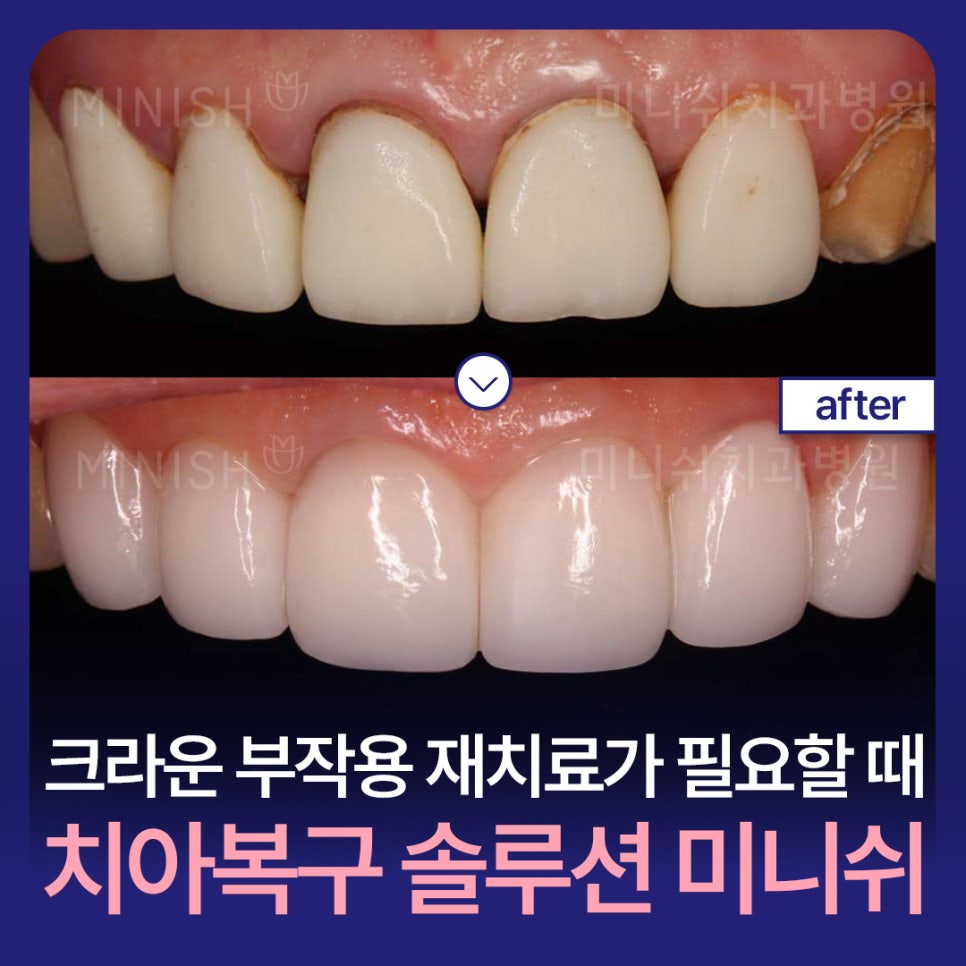
As crowns are used over a long period of time, they may come loose, cause gum inflammation, or become aesthetically unsatisfactory.
In such cases, the usual approach is to remove the crown and place a new one, but if you are worried about damage to the natural tooth, you may want to consider Minish. Let’s take a closer look at how it differs from the conventional method.
When Crown Retreatment Is Needed
- Gum inflammation and pain
If a tiny gap forms between the crown and the gum, food can get trapped and bacteria can multiply, causing inflammation. If your gums are swollen or bleed frequently, crown replacement may be necessary.
- Crown loosening or fracture
Older crowns can lose adhesion and may fall out or break. In particular, crowns on molars, which are subjected to strong chewing forces, are more likely to wear down or become damaged over time.
- Discoloration due to gum recession
As time passes and the gums recede, the border between the crown and the natural tooth can become exposed and discolored. In the case of metal-based crowns especially, dark discoloration can be more noticeable.
- Discomfort when chewing
If the crown is harder than the natural tooth or the height does not fit properly, discomfort may occur when chewing, and it can also place stress on the opposing tooth.
Conventional Crown Retreatment vs. the Tooth Restoration Solution Minish
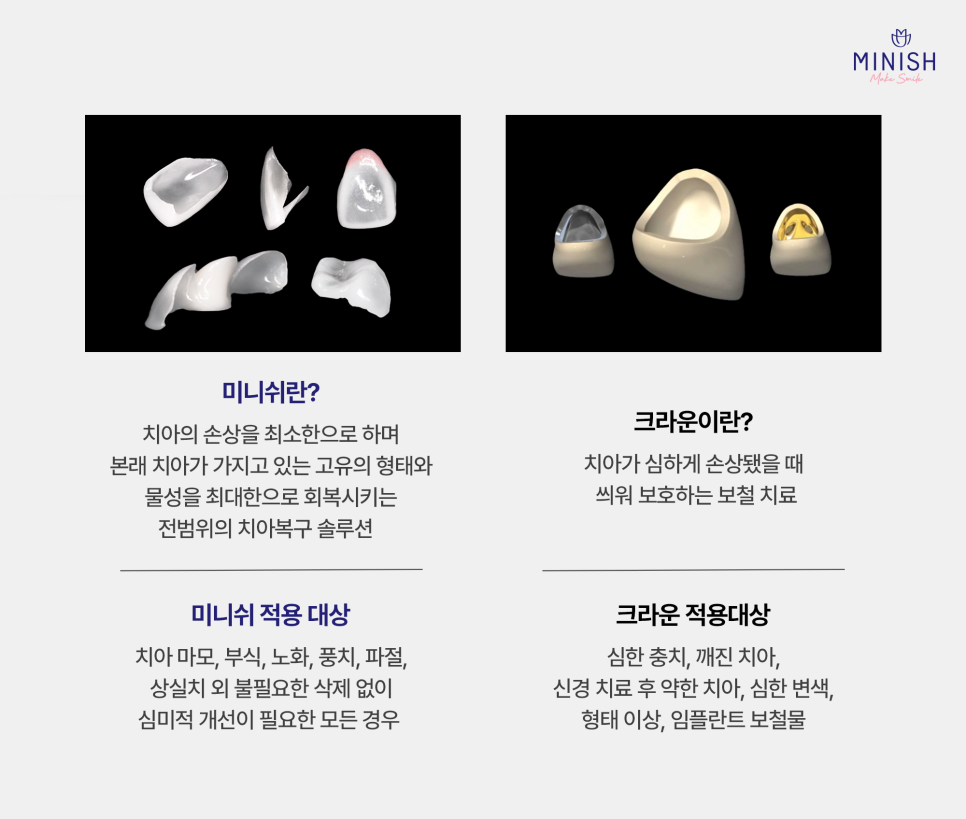
| Category | Crown Retreatment | Tooth Restoration Solution Minish |
|---|
| Method | Remove the existing crown and remake it | Remove the crown and restore while preserving as much of the natural tooth as possible |
| Damage to the natural tooth | More tooth reduction | Minimal tooth reduction (minimally invasive) |
| Gum health | Risk of inflammation at the crown margin | Naturally integrated with the gums, reducing the risk of inflammation |
| Aesthetics | The margins may discolor over time | Maintains color and translucency similar to the natural tooth |
| Durability | Problems may occur at the crown-to-tooth margin | Excellent durability by maintaining strength similar to that of the natural tooth |
What Is Minish Remedy?
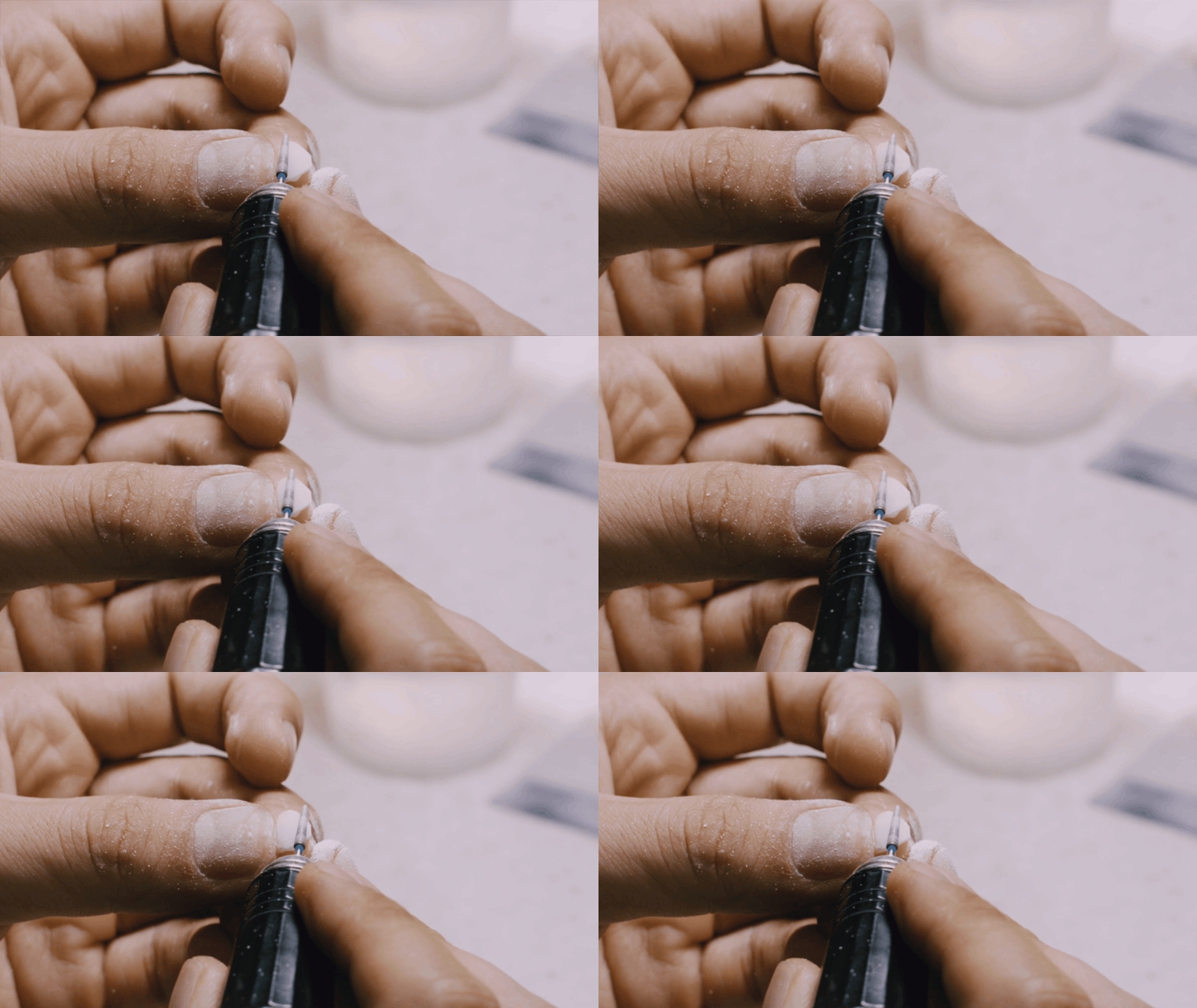
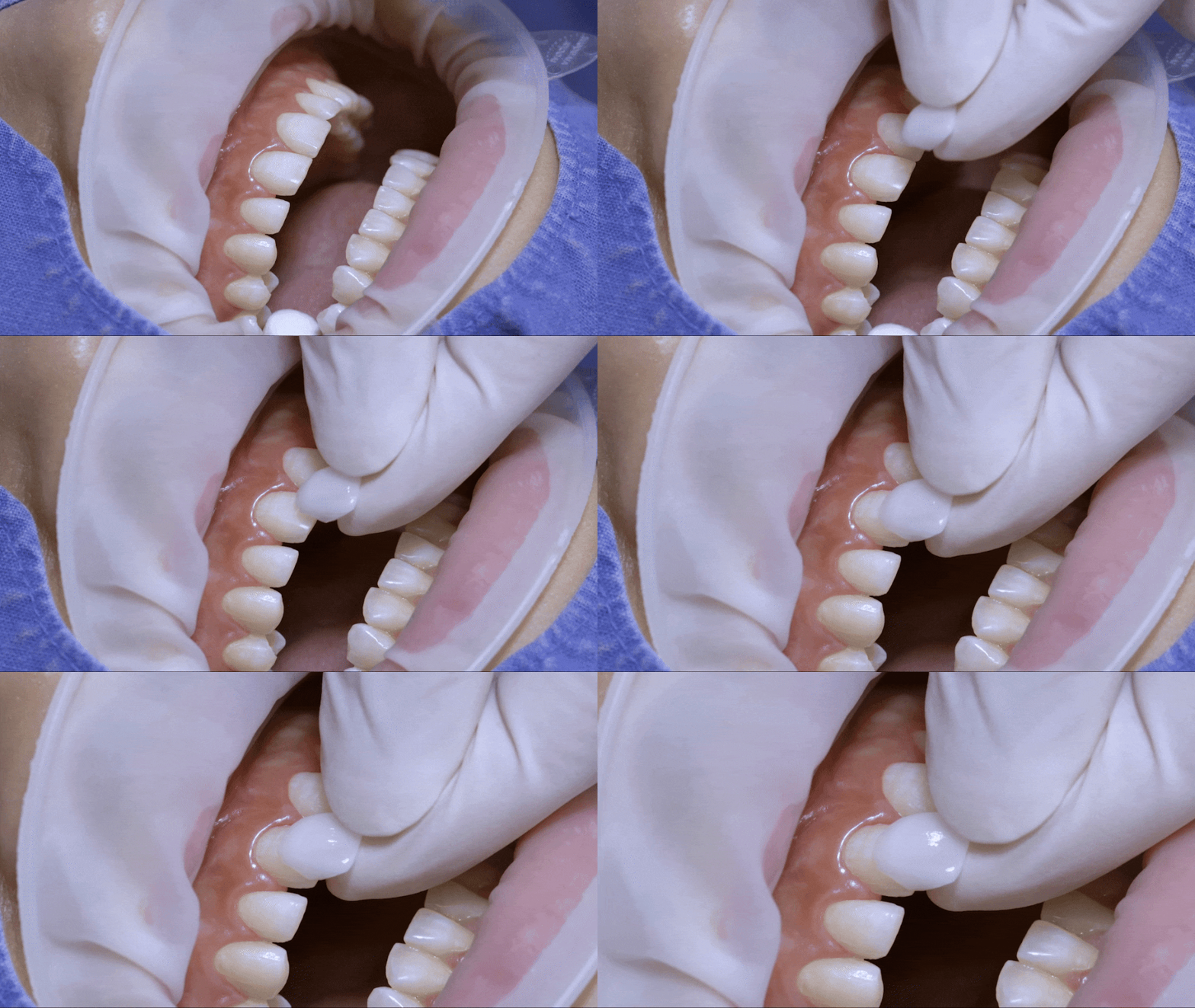
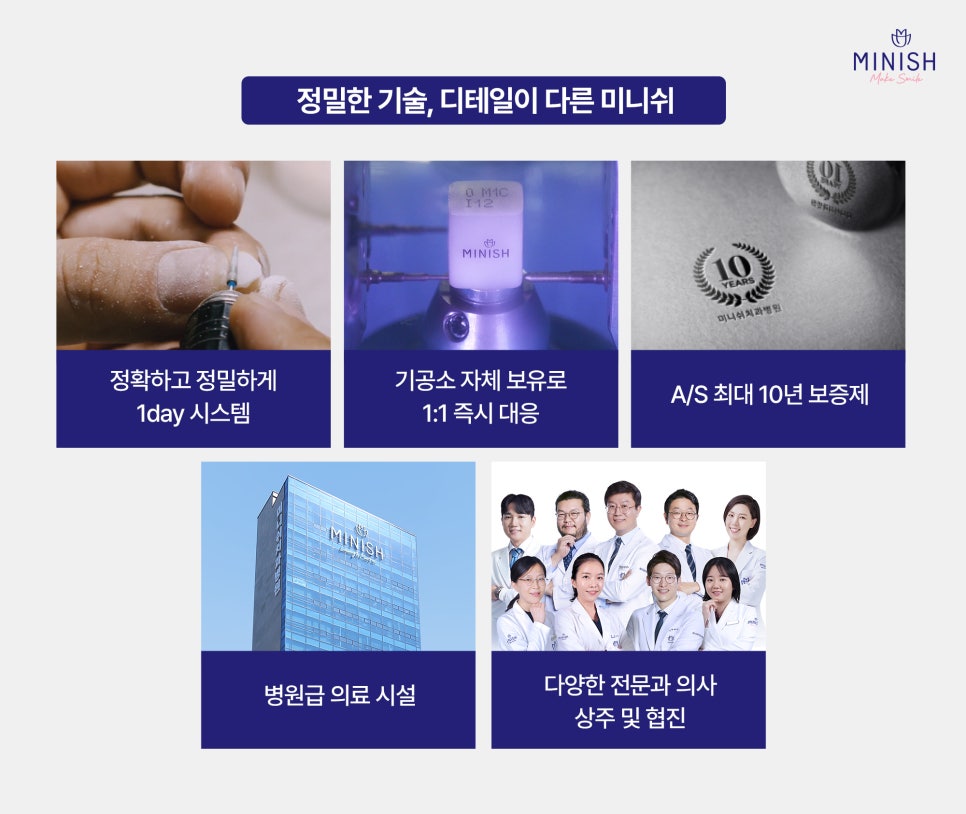
Minish Remedy is a tooth restoration solution that preserves aesthetics and durability while minimizing damage to the natural tooth. Based on the ultra-precision processing technology and biomimicry theory of Minish Dental Hospital, it uses Minish blocks to compensate for the shortcomings of existing crowns.
When Is Minish Remedy Needed?
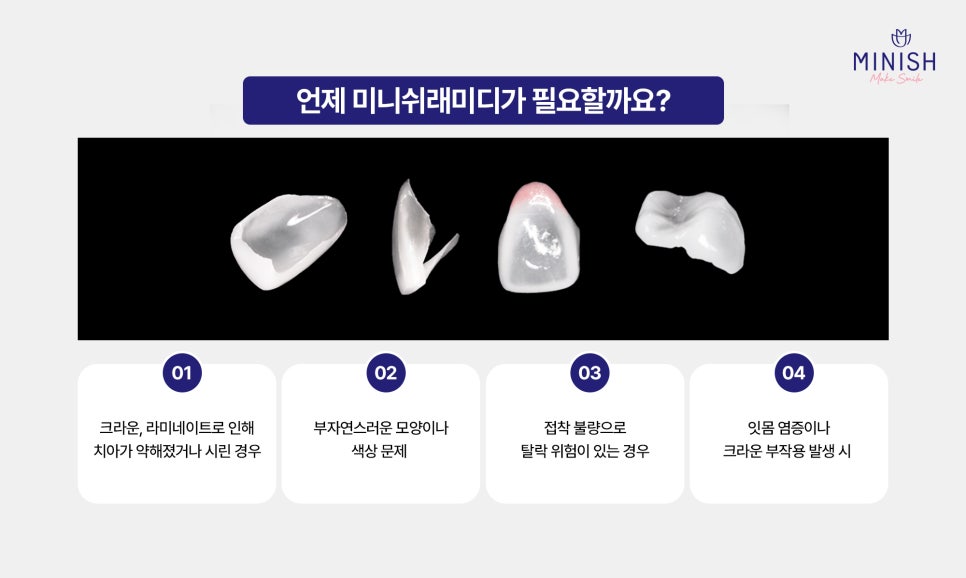
-
When a crown has been used for a long time and discoloration, loosening, or inflammation occurs
-
When a crown repeatedly breaks or feels uncomfortable
-
When there is a gap at the margin of an existing crown and food gets trapped
-
When you want to preserve as much of the natural tooth as possible without replacing the crown
Features of Minish
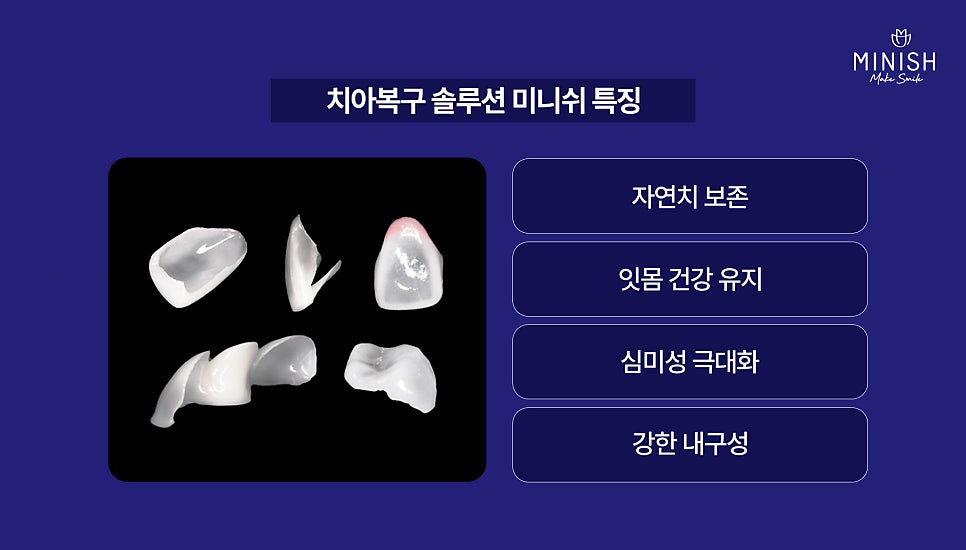
- Preserves the natural tooth - Keeps teeth healthy by minimizing unnecessary reduction
- Maintains gum health - The crown margin is smooth, helping prevent gum inflammation
- Maximizes aesthetics - Maintains color and translucency similar to the natural tooth
- Strong durability - Can last a long time while maintaining strength similar to the natural tooth
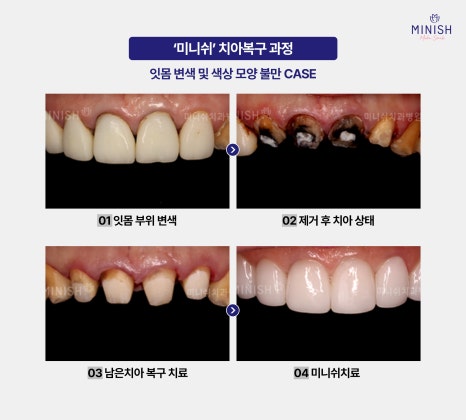
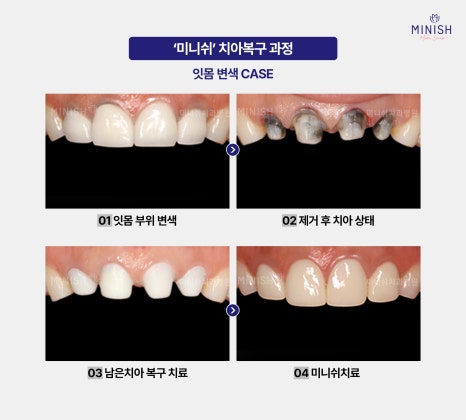
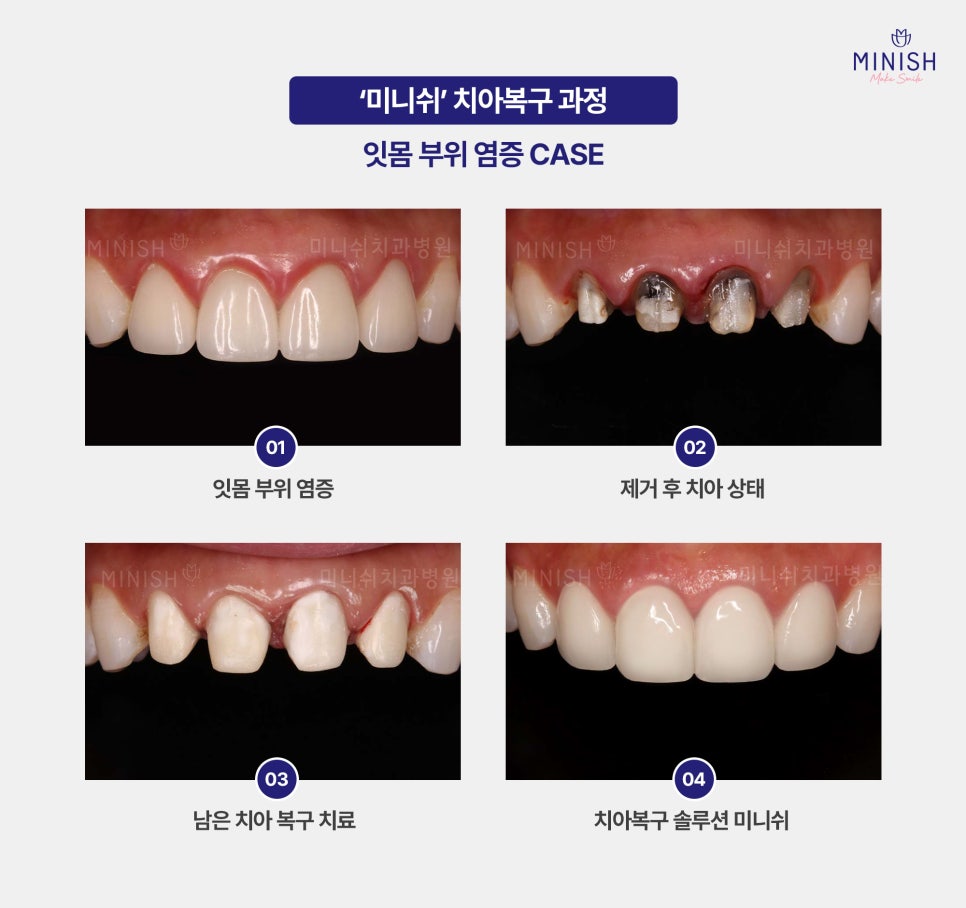
The Tooth Restoration Solution Minish Process
If an existing crown is placed again, additional reduction is required, and the tooth may weaken each time the process is repeated.
However, Minish Remedy is not simply a crown replacement; it is a tooth restoration solution that places the highest priority on preserving the natural tooth. If you want to overcome the limitations of conventional crowns and maintain healthy teeth and gums, consider Minish Remedy!