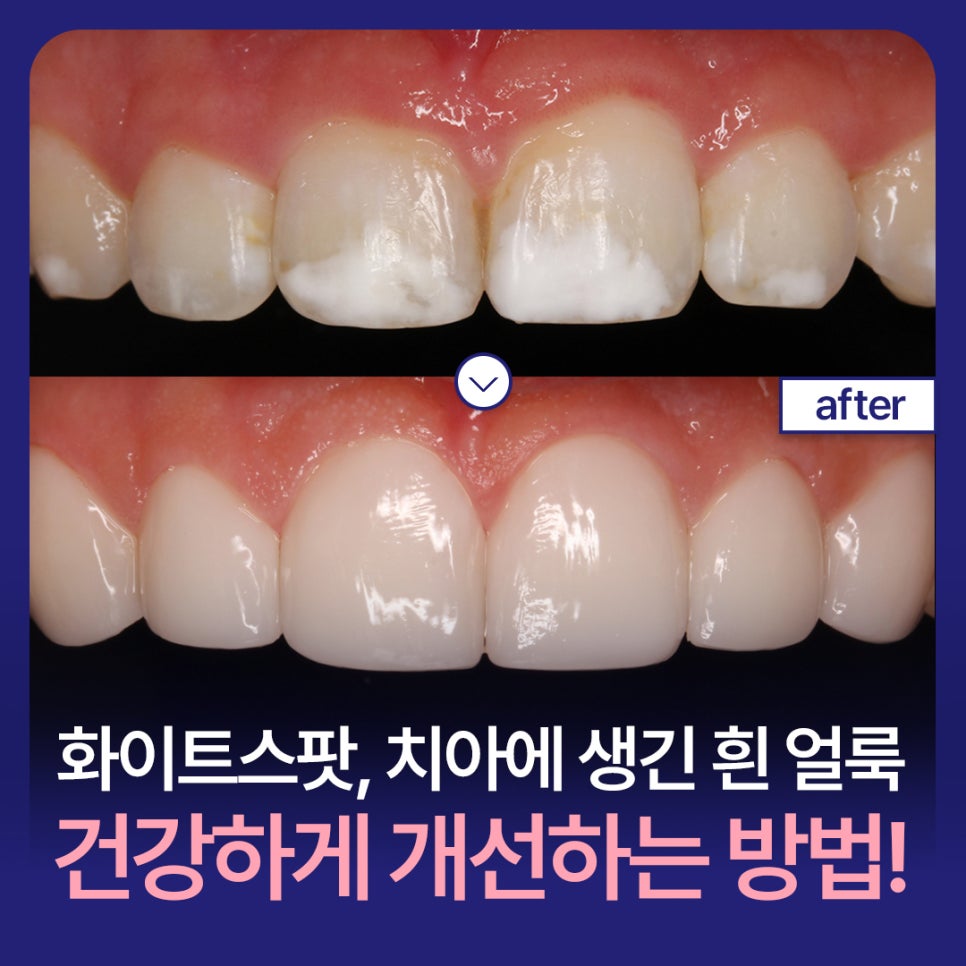
Have you ever noticed small white stains on your teeth while looking in the mirror or taking photos and felt concerned about them?
Even a tiny, blurry spot can stand out depending on the angle or lighting, making some people want to hide their smile.
These white spots or stains on the tooth surface are called white spots, or white spot lesions. Today, we’ll look at why white spots appear, what ways there are to improve them, and healthy, natural solutions as well.
What Are White Spots?
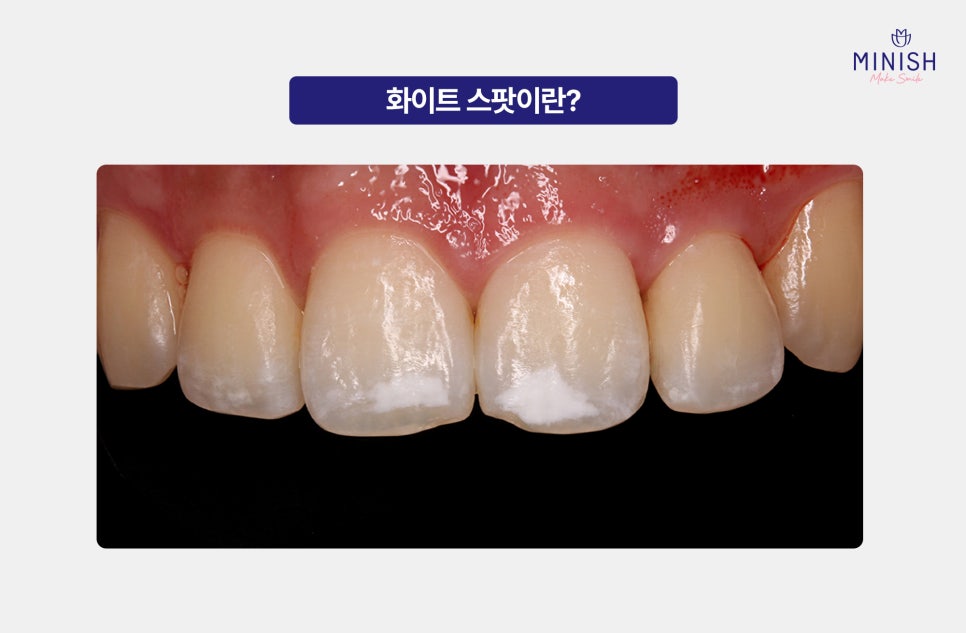
White spots, as the name suggests, are white patches that appear on the surface of teeth. They are also called white spot lesions, and unlike simple staining, they are characterized by a loss of tooth gloss and a chalky, cloudy appearance on the surface.
This occurs when the enamel layer is not formed evenly or when demineralization takes place, causing uneven reflection of light and making the area stand out visually like a stain. White spots are not easily removed by ordinary brushing, scaling, or whitening. In fact, if whitening is attempted, the surrounding teeth may become brighter while the white spot area remains unchanged, making it look even more noticeable.
Because of this, it can become psychologically burdensome, such as making it difficult to smile naturally when taking photos or during conversations.
Why Do White Spots Appear?
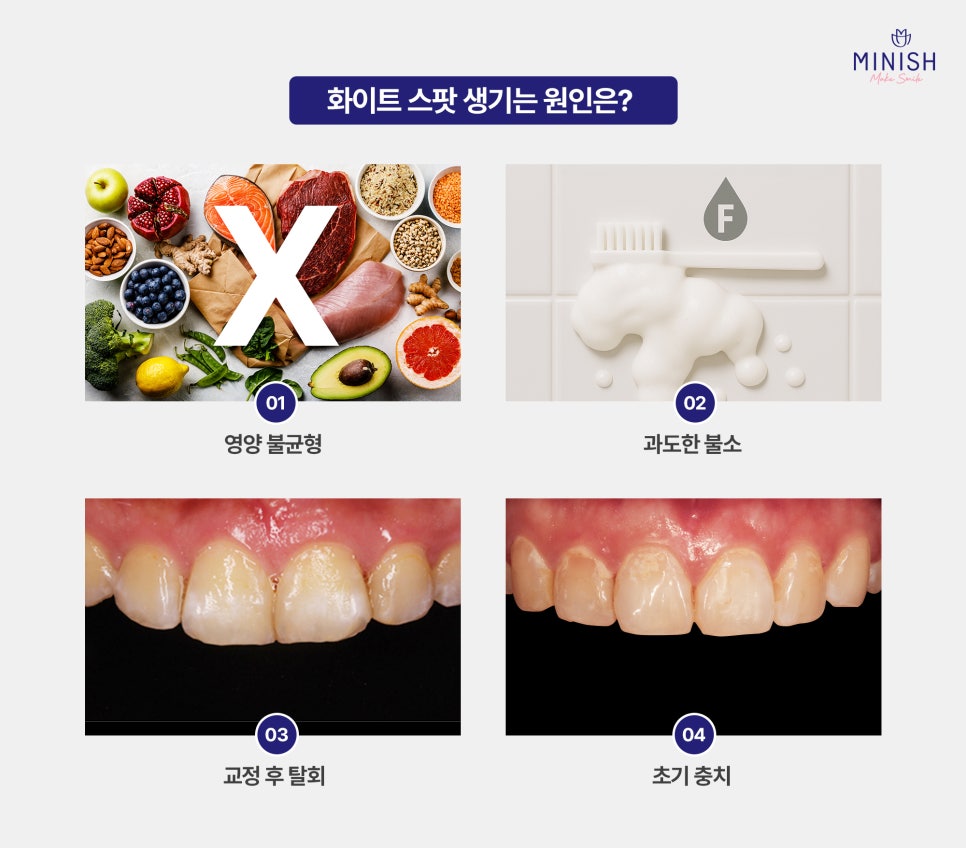
There are many causes of white spots, but most are closely related to the tooth development process or changes in the oral environment. Common causes include the following:
- Nutritional imbalance during tooth development
→ During childhood, an imbalance of calcium or minerals may prevent the tooth surface from forming evenly.
- Excessive fluoride intake
→ Excessive fluoride intake during childhood can cause white spot lesions. Fluoride strengthens teeth in appropriate amounts, but if too much is consumed during growth, the enamel layer may form unevenly and appear as white spots or streaks on the tooth surface.
- Demineralization after orthodontic treatment
→ When plaque builds up around orthodontic appliances and demineralization occurs, the surface may turn white.
→ In the early stage of tooth decay, before a cavity forms, the tooth may appear white and eroded.
How Can White Spots Be Improved?
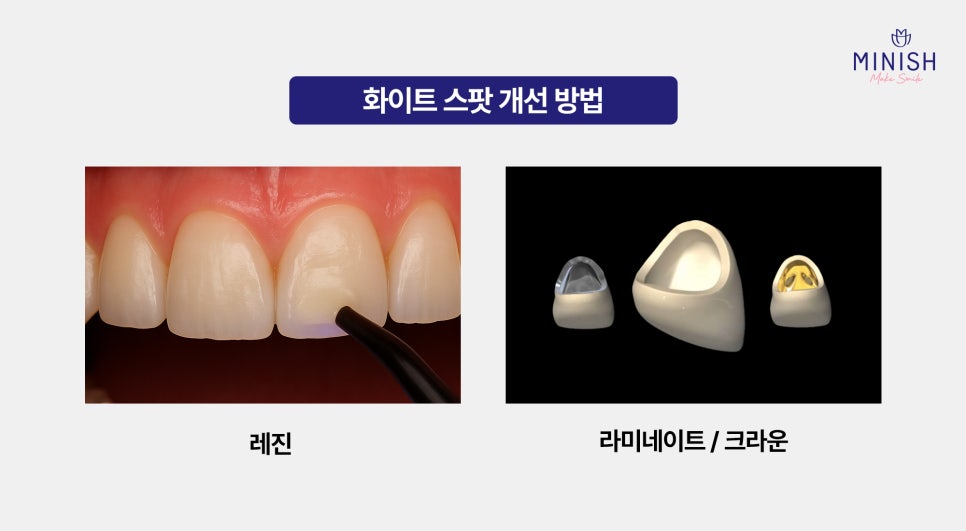
Resin
This method involves thinly layering tooth-colored composite resin over the white spot area so it blends with the surrounding tooth color. It is one of the simplest treatment methods, and for small spots or white spot lesions with only a few areas, it can be tried quickly and economically. It removes very little tooth structure and is relatively affordable, so it is often used for mild cases.
However, this treatment may not be suitable for widespread white spots or cases with many spots. In addition, resin may develop the following drawbacks over time:
-
Discoloration and staining of the restored area
-
Due to contraction and expansion of the material from heat, gaps may form at the bonding margin, and there is a possibility of detachment
Therefore, touch-up or replacement may be needed after a certain period, and ongoing maintenance is required.
Laminate Veneer / Crown
This method improves appearance by removing the front surface or all of the tooth and covering it with a prosthetic restoration. It may be considered not only for white spots but also when changing the shape or size of the tooth at the same time. While the visible cosmetic improvement can be significant, it requires a large amount of natural tooth reduction, so careful consideration is necessary.
Preserving Natural Teeth and Improving Aesthetics at the Same Time, Minish Bella
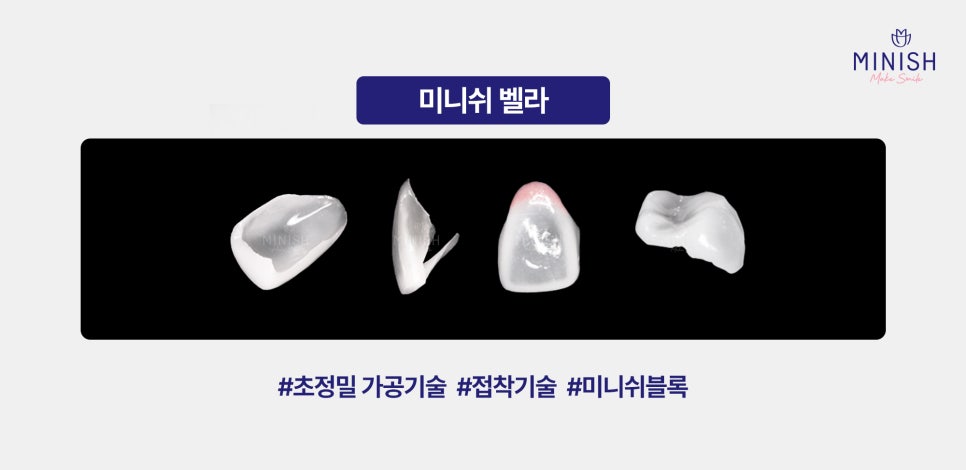
Minish Bella goes beyond simply improving the appearance of teeth. It is a healthy tooth restoration solution that restores function while also creating a harmonious and bright look. It is designed to correct the balance of teeth that have become dull due to white spots and to carefully plan detailed elements such as color, texture, size, and shape to suit each person’s harmony, helping them regain a natural impression and a bright smile.
-
Preserves as much of the original tooth as possible without unnecessary tooth reduction
-
Uses materials with properties similar to natural teeth and is precision-processed to create a natural, healthy result that brings out gloss and surface texture
-
Applies marginal sealing technology to achieve a tight fit without gaps between the restoration and the tooth, fundamentally blocking bacterial infiltration and lifting, and maintaining stable long-term results
-
Later, the expression changes smoothly according to the movement of the facial muscles, and a corner-lifting effect along with a more harmonious impression can be expected
📸 White Spot Improvement, Minish Bella Before and After
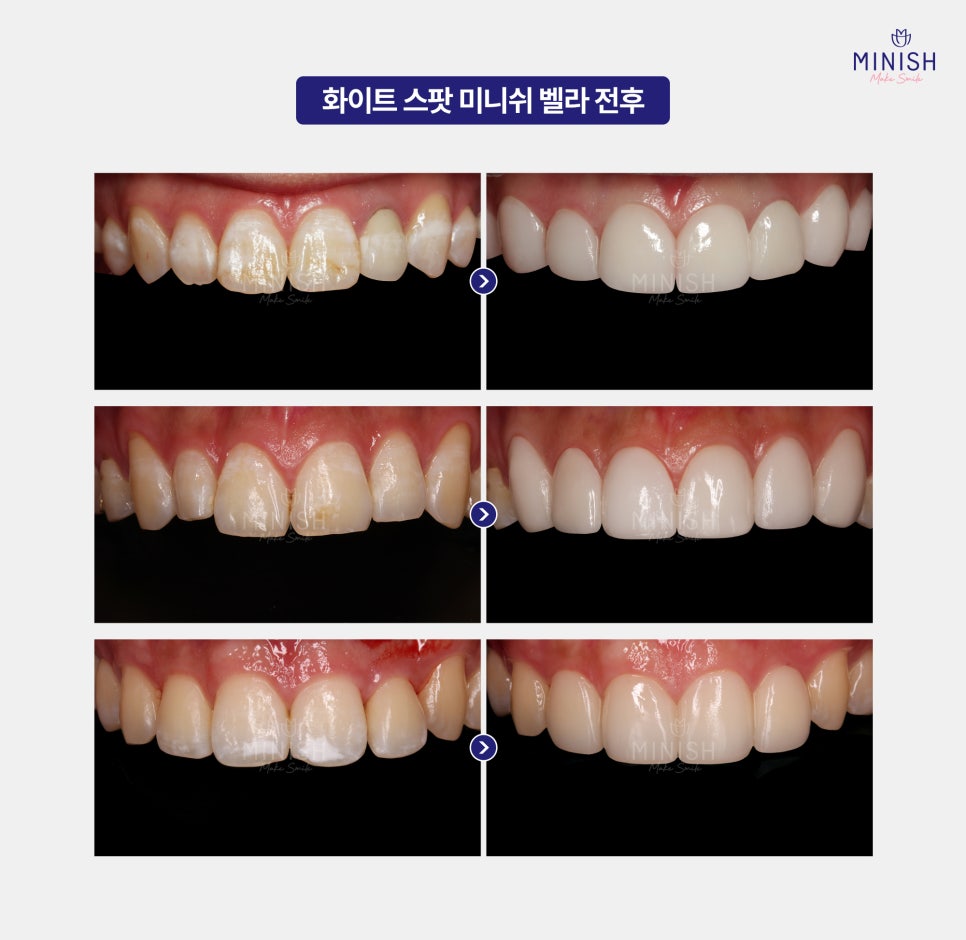
If you have been covering your mouth every time you smile because of white spots, see for yourself how naturally and harmoniously Minish Bella can change the appearance. The spot where the noticeable white stain once interfered with your smile can now be replaced by a healthy, even tooth line, allowing you to smile with confidence.
If you’re worried about white spots on your teeth, you don’t have to keep worrying alone. If even one noticeable spot is making you hesitate to smile, Minish Bella can help you regain a natural and healthy impression with a tooth restoration solution that carefully considers color, texture, and brightness while preserving as much natural tooth structure as possible.
A brighter, more confident smile can clearly make a difference. 😊