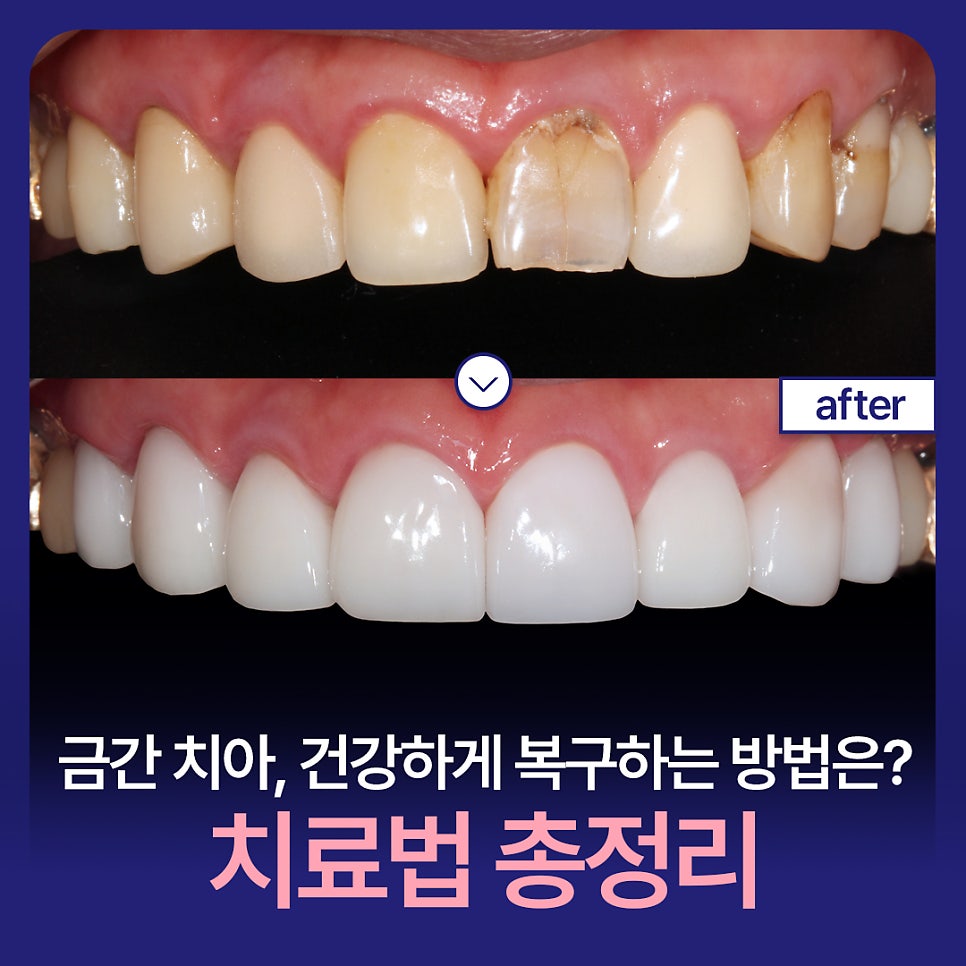
If you feel a sharp, stabbing pain while chewing hard foods, or even without any clear reason. If you look in the mirror and think there may be a tiny crack on the surface of your tooth, you should never take it lightly. A cracked tooth is a problem that can worsen over time, leading to deeper damage, pain, and reduced function. Today, we’ll cover why cracks occur, the symptoms to watch for, various treatment options depending on the condition, and Minish Ever, a tooth restoration solution that can help preserve as much of your natural tooth as possible while restoring it precisely.
Cracked teeth: why do they happen?
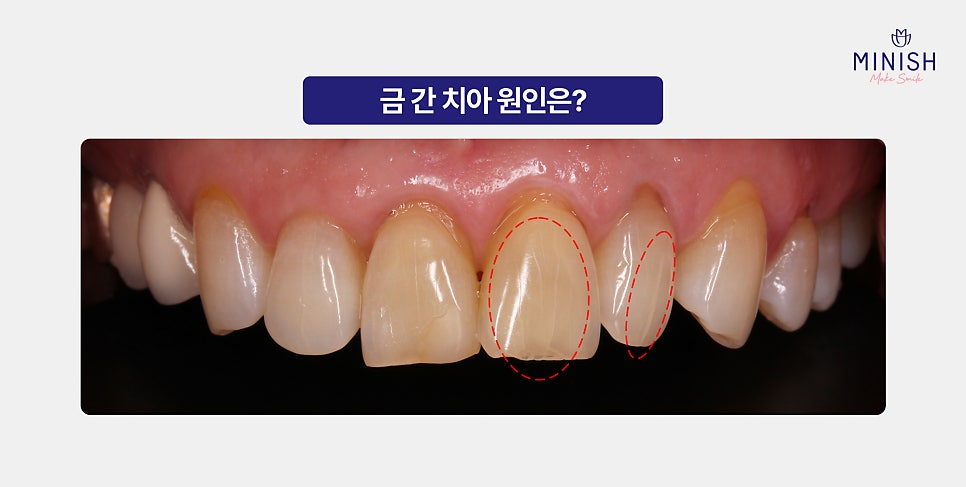
There are many causes of tooth cracks, but the following are especially common in everyday life.
Impacts from car accidents, sports activities, or falling and hitting your face can cause direct damage to a tooth.
Repeatedly chewing hard foods such as ice, bone-in foods, or nuts can create microcracks in teeth.
- Teeth grinding and unconscious clenching habits
Habitually clenching your teeth when stressed or grinding your teeth during sleep can place continuous pressure on teeth and cause damage.
- Structural weakening due to aging
As people age, teeth gradually weaken and can become more likely to crack even from small stimuli.
Symptoms of a cracked tooth and why it should not be left untreated
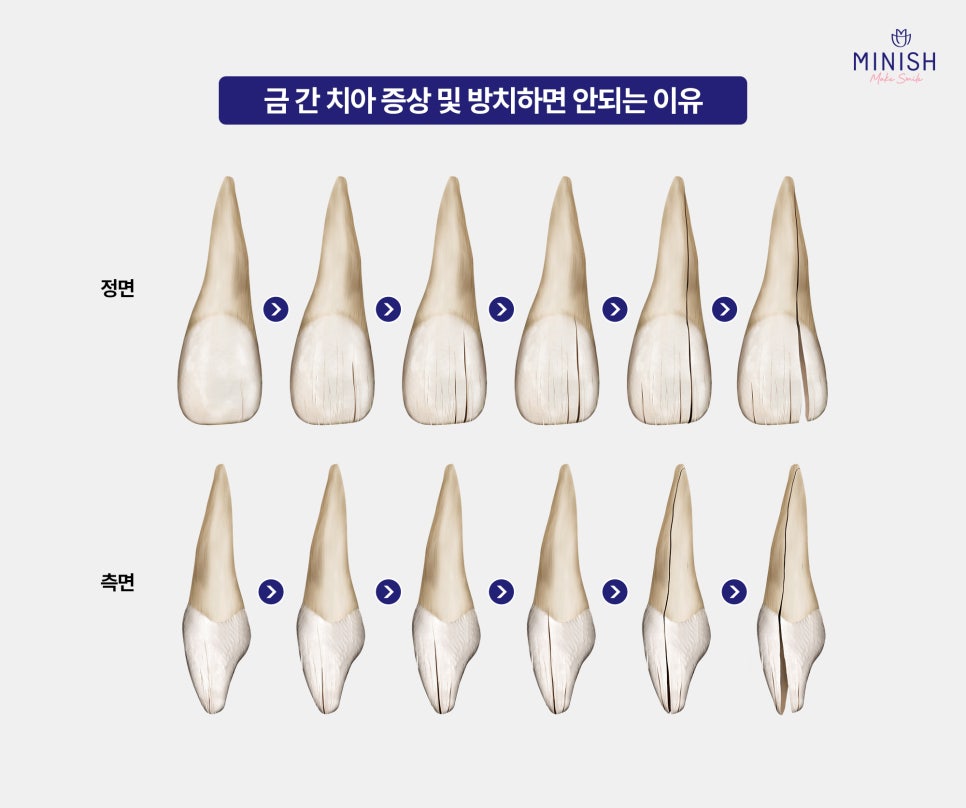
At first, a cracked tooth often causes little discomfort or only mild pain. However, over time, the following symptoms and problems may appear, so caution is needed.
When chewing food with a cracked tooth, you may feel a sharp, stabbing pain, and symptoms can become worse when eating hard or chewy foods.
- Sensitivity to temperature changes
You may feel sensitivity or a sharp pain when eating hot or cold foods. This happens because external stimuli are transmitted through the crack toward the nerve.
If the nerves and blood vessels inside a cracked tooth are damaged, they may gradually die, and the tooth can become gray or brown during this process. In aesthetic areas such as the front teeth, this can cause significant visual discomfort.
- In severe cases, tooth fracture
If the crack gradually becomes deeper, it can affect the entire tooth structure and lead to tooth fracture, such as breaking or splitting. In this case, functional damage is accompanied by aesthetic concerns as well.
In this way, a cracked tooth does not heal on its own, and symptoms worsen over time. If the damaged area becomes larger, it may be difficult to resolve with a simple repair. It is important not to leave even a small crack untreated and to receive appropriate treatment early.
Treatment methods depending on the condition of a cracked tooth
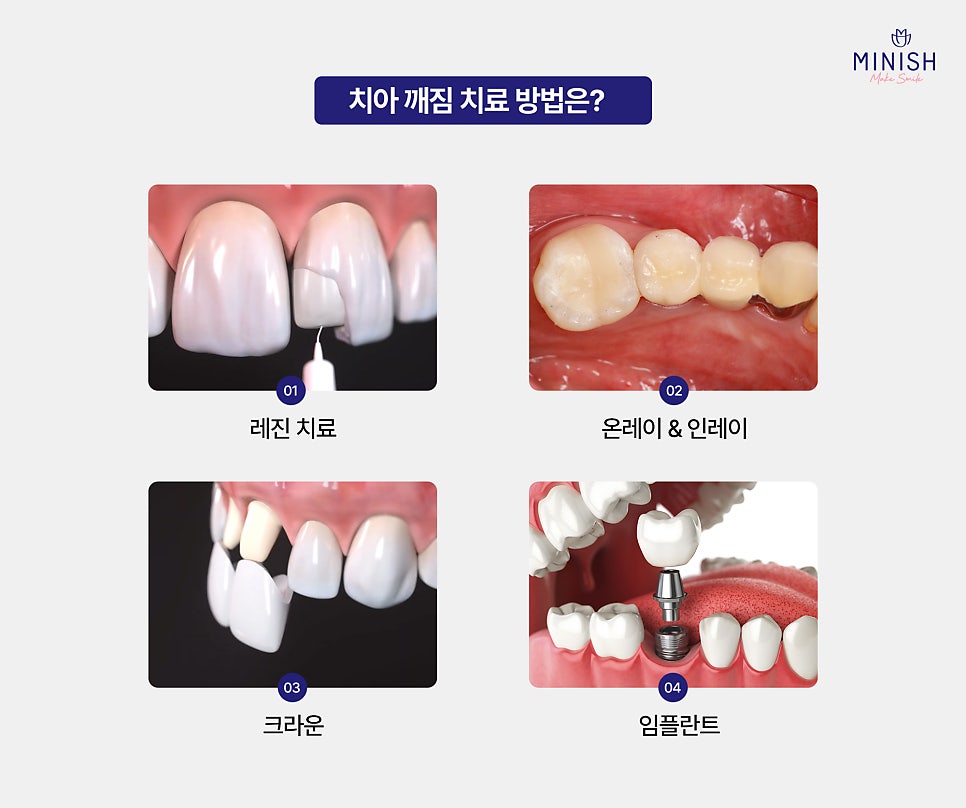
The treatment needed for a cracked tooth varies depending on the depth and extent of the damage. From relatively minor cracks to deep and extensive damage, it is important to choose the method best suited to the current condition of the tooth. Below, let’s look at representative treatment methods and their advantages and disadvantages.
- Resin
-
Applied to mild surface cracks.
-
This method fills the area with composite resin in a tooth-like color.
-
It can be applied quickly and is relatively inexpensive.
-
However, over time it is prone to discoloration and may lose adhesion, causing lifting.
-
Its ability to restore function is limited, and if not properly maintained, food and bacteria can enter the lifted area, increasing the risk of ‘secondary caries.’
- Inlay/Onlay
-
Applied when the inside of the tooth or part of the outer surface is damaged.
-
An inlay reinforces the inside of the tooth, while an onlay covers the outer area as well.
-
It is strong and effective at maintaining function.
-
However, treatment takes time and costs more than resin.
-
It is mainly used for molars and may not be suitable for areas where aesthetics are important, such as the front teeth.
-
Since inlays and onlays use high-hardness materials, chewing force can be concentrated inside the tooth, which may deepen microcracks.
-
In particular, when applied to an already cracked tooth, the crack may progress, making the tooth more likely to break or fracture down to the root.
- Crown
-
Applied when the damaged area is extensive or the tooth is structurally weakened.
-
It covers the entire tooth and protects it from external stimuli.
-
It can stably restore chewing function.
-
However, a large amount of tooth structure must be removed, and treatment may take longer due to the prosthesis fabrication process.
-
Depending on the material, chewing force may be transmitted directly to the root, which can lead to root fracture if a crack is already present.
-
Depending on the material used, the color or translucency may differ from that of natural teeth, so careful selection is needed in areas where aesthetics are important.
- Implant
-
Applied when the tooth is damaged beyond saving.
-
An artificial root is placed and designed to function like a natural tooth.
-
It is highly durable and effective at restoring chewing function.
-
The treatment process may involve severe pain or swelling, and recovery can take time.
-
The treatment period is long and the cost is high, and the procedure may be difficult depending on the condition of the jawbone.
Various treatment methods are used depending on the degree of damage, and each method has its own advantages and disadvantages. So, is there a way to protect natural teeth as much as possible while still restoring them healthily? The answer is Minish Ever.
How is Minish Ever different as a precise tooth restoration solution?
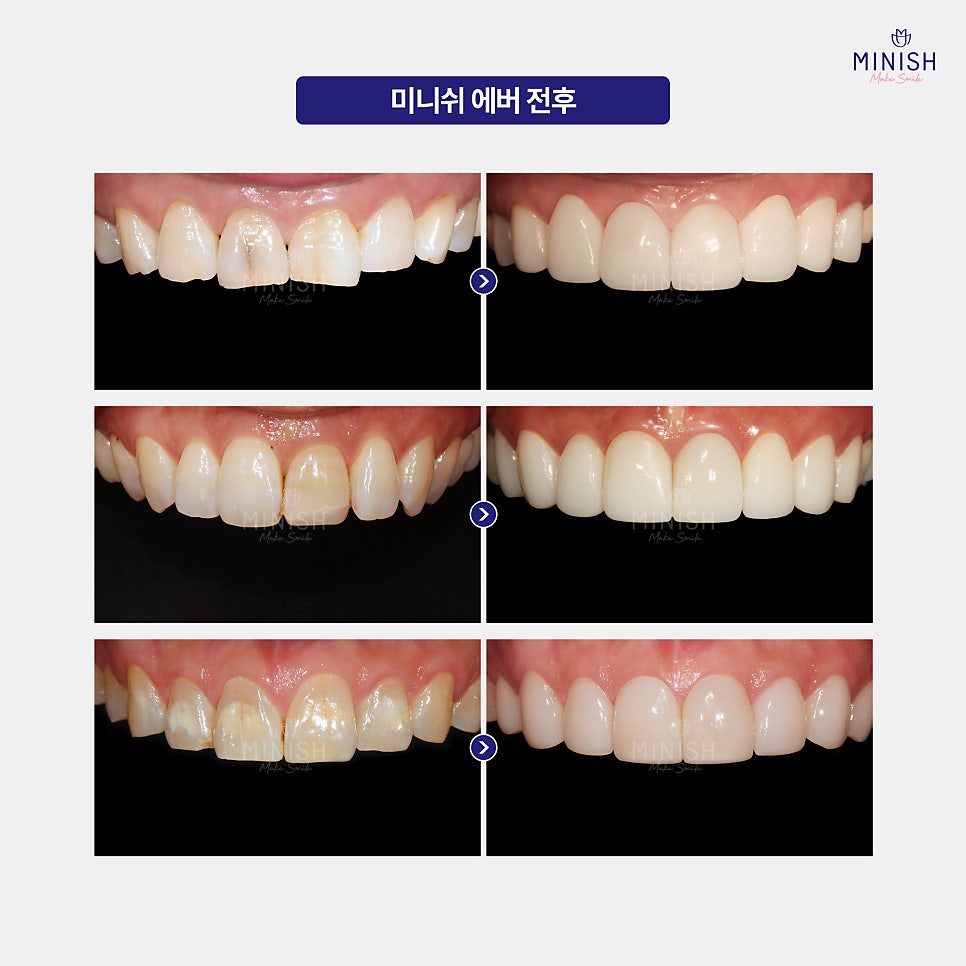
Minish Ever is not simply a solution for filling damaged areas, but a tooth restoration solution that considers both functional recovery and aesthetic improvement. Its key goal is to preserve as much of the natural tooth structure as possible while restoring the tooth’s original strength and shape to a healthy state.
- Strength and elasticity similar to natural teeth
It is made using materials similar to actual teeth, allowing chewing force to be distributed evenly without burdening surrounding teeth. Because it is thin yet precisely fabricated, it bonds as if it were a single unit with the natural tooth, naturally restoring occlusal stability as well.
- Restoration without unnecessary tooth reduction
Because it restores the tooth in the same form while considering its original structure, it can precisely repair only the damaged area while preserving as much of the tooth’s inherent strength and function as possible.
- Prevention of secondary problems through precision fabrication with no margin of error
It is fabricated with no margin of error, allowing Minish and the tooth to fit tightly without gaps. This creates a ‘marginal seal,’ preventing bacterial infiltration and lifting while reducing the risk of secondary cavities.
- Improvement of both function and aesthetics
Through a design that considers not only chewing function and occlusal stability but also shape and shade, it can restore both healthy function and a natural appearance at the same time.
- A one-day system possible in a single day
From scanning to design to restoration, completion can be possible on the same day, reducing the time burden as well.
A cracked tooth does not recover on its own, and if left untreated, it can lead to more serious damage or even extraction. In the early stages, it is easy to overlook because there may be no special symptoms, but receiving proper treatment quickly is the most important thing.
If you want a restoration that considers both function and aesthetics, consider Minish Ever, a tooth restoration solution that can precisely restore your teeth while preserving as much of your natural teeth as possible. At Minish Dental Hospital, professional medical staff will provide a precise diagnosis and guide you to the most suitable method for your tooth condition.
Make a consultation appointment now and regain healthy teeth and a confident smile 😊