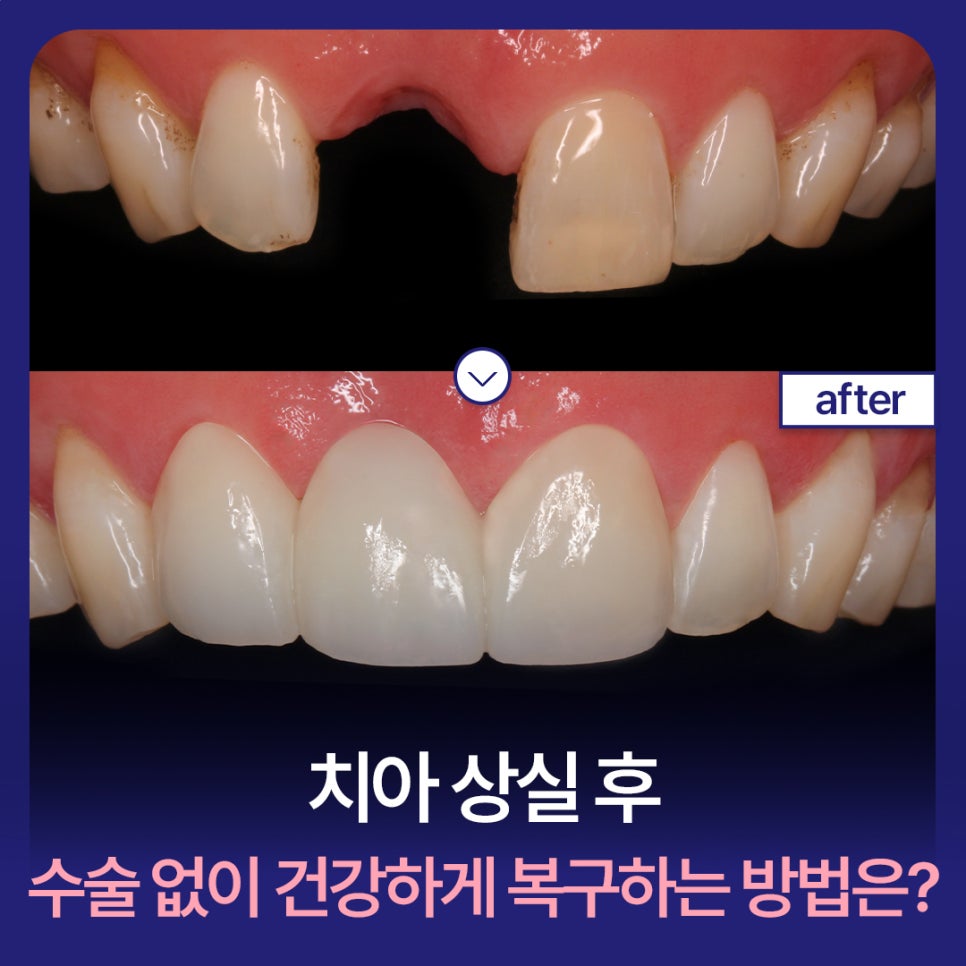
As the body changes with age, teeth also gradually become weaker and more prone to damage.
When tooth loss occurs due to various causes such as a strong impact, severe cavities, or periodontal disease, people often feel flustered and start thinking about treatment options. In particular, some people delay treatment because they are afraid of implant surgery or feel the financial burden. However, you must remember that leaving tooth loss untreated can seriously affect overall oral health.
Tooth loss: Why shouldn’t you just leave it alone?
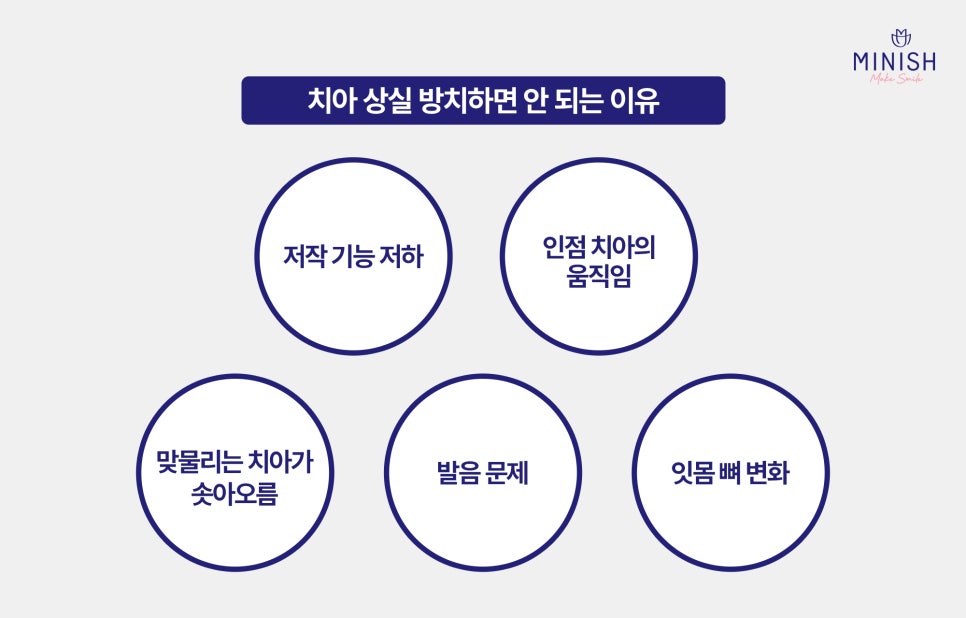
Tooth loss may seem like it simply creates an “empty space,” but in reality it brings the following problems as well.
- Difficulty chewing food → Burden on digestion
Teeth are not just about appearance; their main role is function. When you eat with a missing tooth, your chewing power decreases, and food that has not been broken down well can pass into the stomach as is, leading to digestive problems or reduced nutrient absorption.
- Adjacent teeth shift
Teeth maintain their position in balance with the neighboring teeth. But when one tooth is lost, the adjacent teeth gradually tilt or move as if trying to fill the empty space. As a result, the overall alignment becomes disturbed, food becomes easier to get trapped, and the risk of cavities and gum disease also increases.
- Opposing teeth erupt upward (supra-eruption of the opposing tooth)
Teeth achieve balance by interlocking between the upper and lower jaws. But when one tooth is lost, the opposing tooth that used to bite against it may naturally rise upward, a phenomenon called supra-eruption. This can throw off the overall bite and place stress on the temporomandibular joint, causing pain. If left untreated, the erupted tooth can also be damaged, so appropriate prosthetic treatment is needed early.
- Slurred pronunciation and lowered confidence
Especially when front teeth are lost, pronunciation of sounds such as “s,” “j,” and “ch” becomes unclear and air leaks out. In many cases, people become more withdrawn in social relationships or experience greater psychological stress.
- Loss of jawbone
Since the area without a tooth no longer receives stimulation, the gum bone (alveolar bone) gradually resorbs and becomes thinner. Over time, this can make treatments such as implants more difficult.
Crown bridge VS Minish bridge
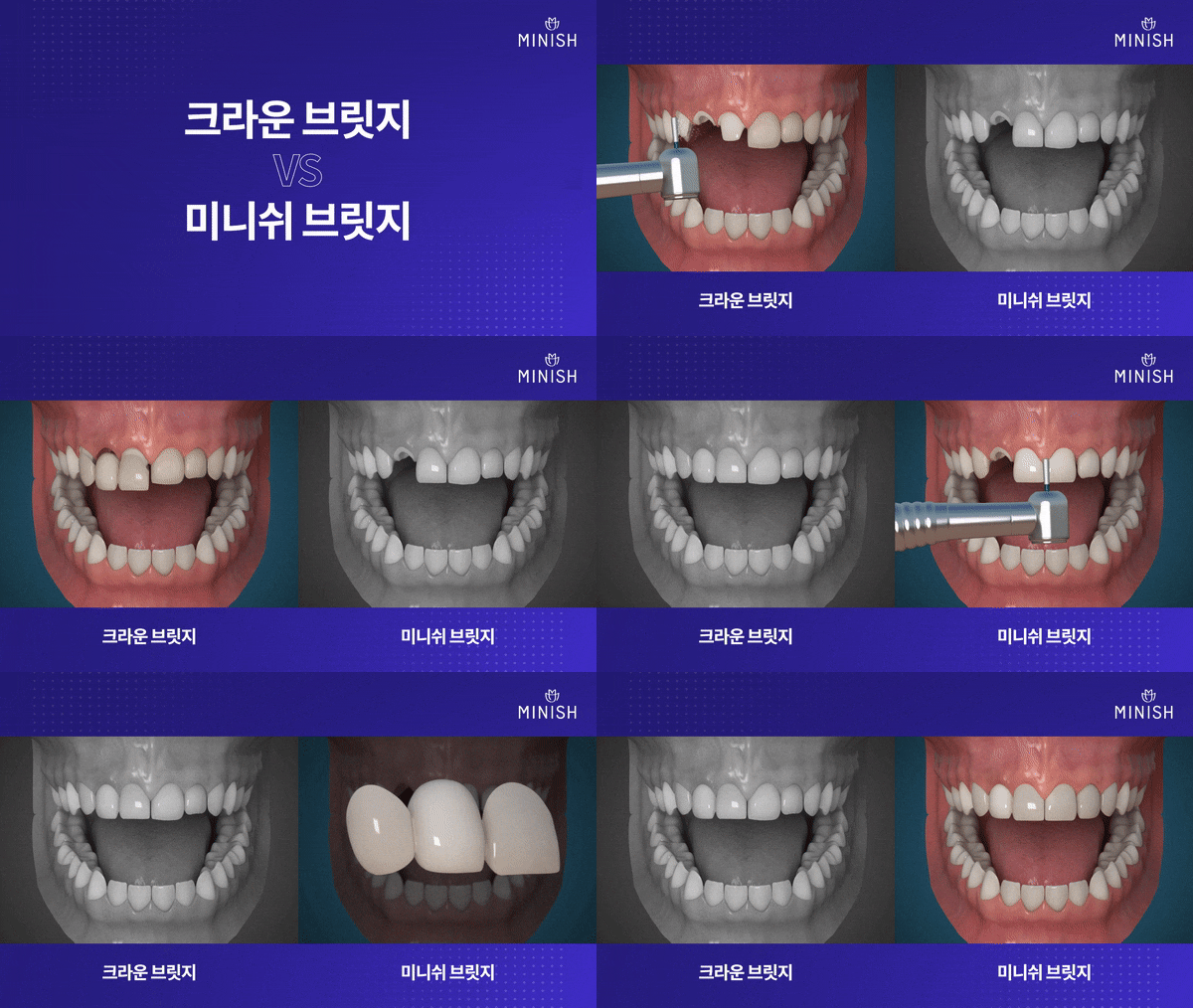
Crown bridge
One treatment method that has been used relatively long for tooth loss is the crown bridge. This method grinds down the healthy teeth on both sides of the missing tooth to create pillars, then places prosthetics on top to form a three-unit connected structure.
Advantages
-
No surgery is needed, so it is less burdensome
-
The treatment period is relatively short and the cost is lower
Disadvantages
-
Two healthy adjacent teeth must be reduced to replace one tooth
-
Over time, chewing force and daily wear may create tiny gaps at the bonded areas, and food debris or bacteria can seep into those gaps, leading to cavities under the prosthesis or issues with it becoming detached
The structural limitations of crown bridges, which require even healthy teeth to be damaged, are clear. So is there a way to naturally replace a missing tooth without grinding down healthy teeth? The Minish bridge was developed specifically for that purpose.
Minish bridge
The Minish bridge is a tooth restoration solution designed to replace missing teeth while preserving as much of the natural tooth as possible. While traditional crown bridges require extensive reduction of healthy teeth, the greatest feature of the Minish bridge is that it can replace the missing area without unnecessary damage to adjacent teeth. Also, unlike implants, it does not require cutting the gums or placing an artificial root (screw), so there is no burden of surgical treatment, and there is no concern about metal screw visibility or gum discoloration. In particular, even in areas where aesthetics matter greatly, such as the front teeth, it can maintain an appearance and harmony similar to natural teeth, making it possible to restore both function and aesthetics.
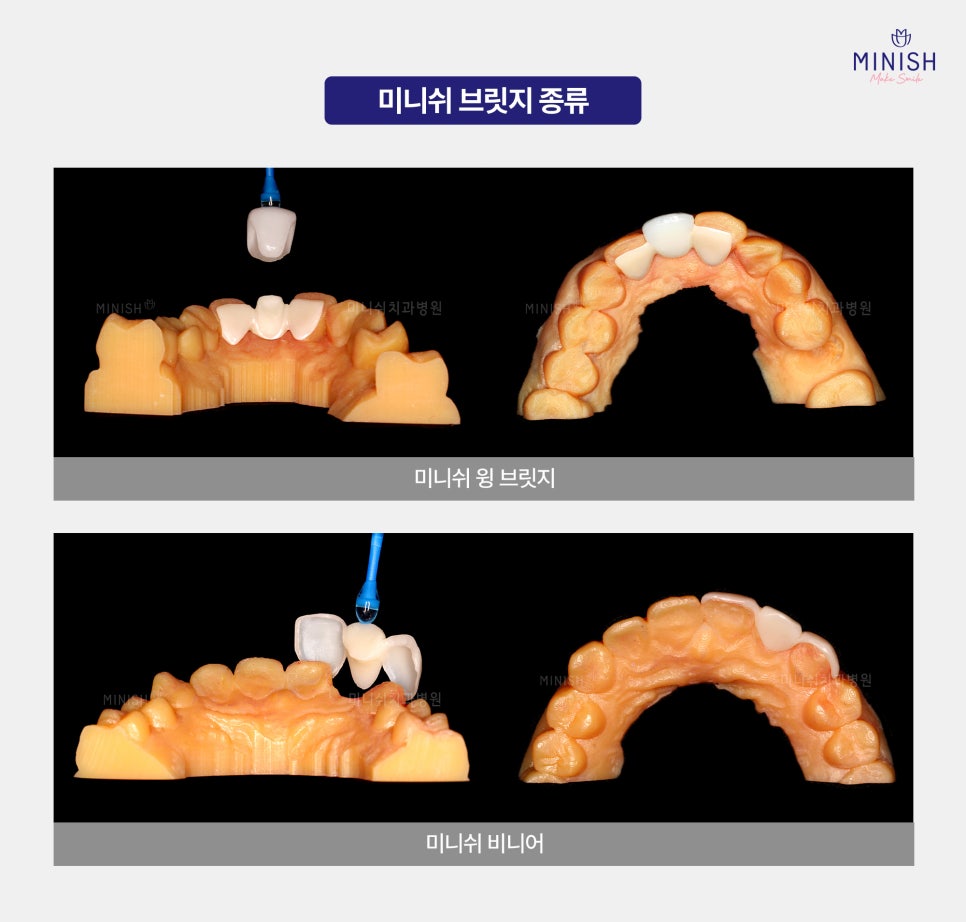
In addition, it can be applied when implants are difficult due to insufficient jawbone or when there is a strong burden regarding surgery, so it is attracting attention as a practical alternative. Depending on the location of the missing tooth and the condition of the teeth on both sides, it is divided into two methods: the Minish Wing Bridge and the Minish Veneer Bridge, and each patient’s condition is custom-designed so that both function and aesthetics can be restored.
✔ Minish Wing Bridge
-
Used when the teeth on both sides of the missing tooth are healthy
-
Suitable for people who are uncomfortable with tooth reduction, as there is almost no reduction of the teeth; a thin wing-shaped structure is attached to the teeth on both sides for fixation
-
A non-surgical alternative with high aesthetics and preservation
✔ Minish Veneer Bridge
-
Applied when the teeth on both sides also have issues such as wear, cavities, or cracks
-
Damaged teeth are restored with Minish, and the missing area is linked with an artificial tooth (Pontic) through a custom design to improve close adaptation to the gums
-
A method that minimizes tooth damage while securing strength and support
-
Designed to consider not only appearance but also functional recovery
-
Even in areas with high aesthetic demands, such as the front teeth, natural restoration is possible without screw visibility or gum discoloration
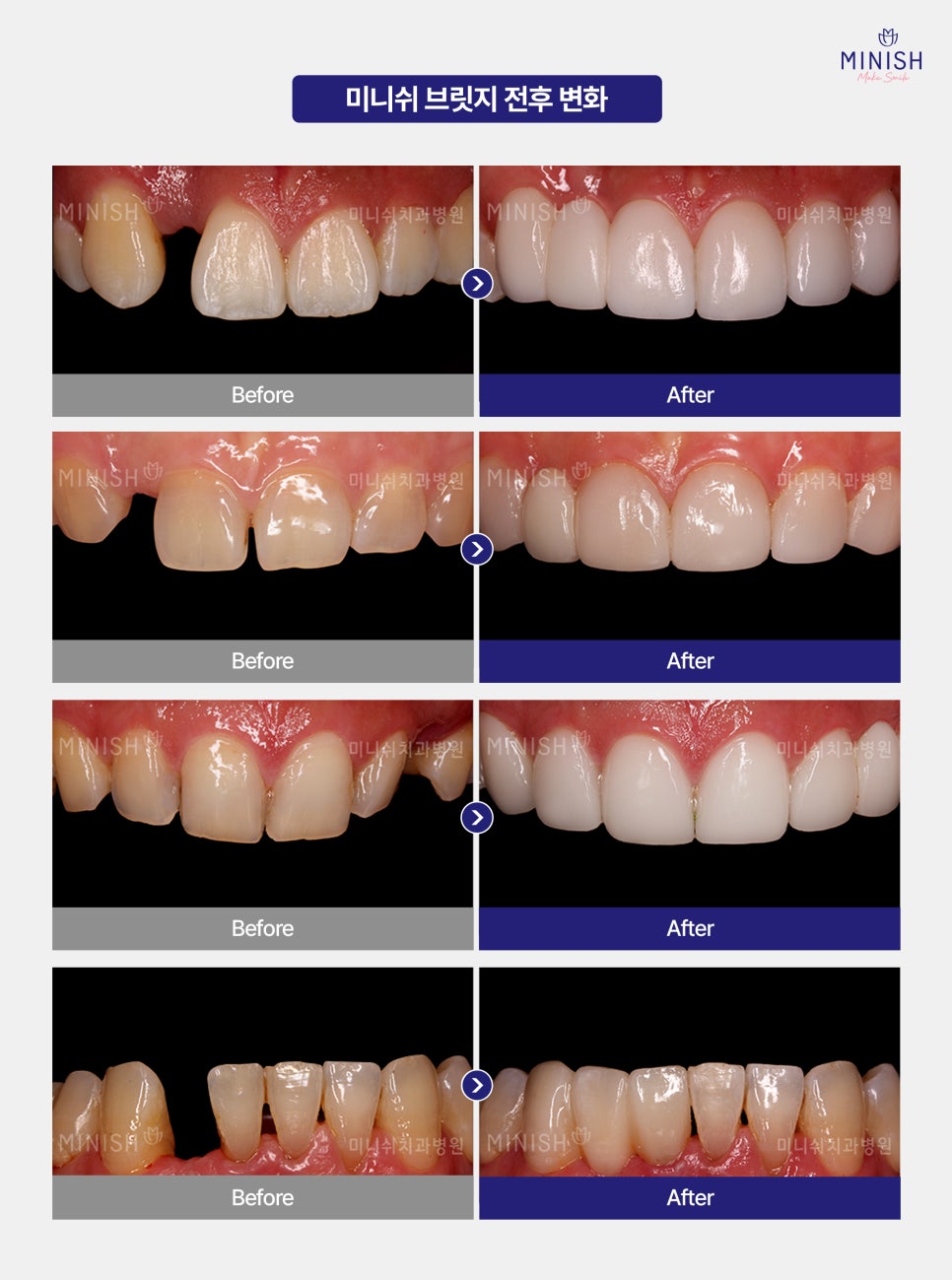
Tooth loss is not simply the problem of one tooth missing; it is an important health issue that can affect chewing function, speech, changes in tooth alignment, and even your facial impression.
Rather than methods like traditional bridges that damage even healthy teeth, treatment is needed that can precisely restore the missing area while preserving natural teeth as much as possible. If surgery feels burdensome or implants are difficult, the Minish bridge, which considers function, aesthetics, and tooth preservation, can be a wise alternative.
If you want more than a simple replacement and are looking for a healthier, more natural restoration, please contact Minish Dental Hospital :)