When changes occur in dental health, many people wonder which treatment method would be appropriate. In particular, there are many questions about Minish, so we have organized six questions that are asked most often in practice.
When there is tooth wear or discoloration
Q1.
If there is tooth wear or discoloration, what kind of cosmetic treatment is needed?
A1.
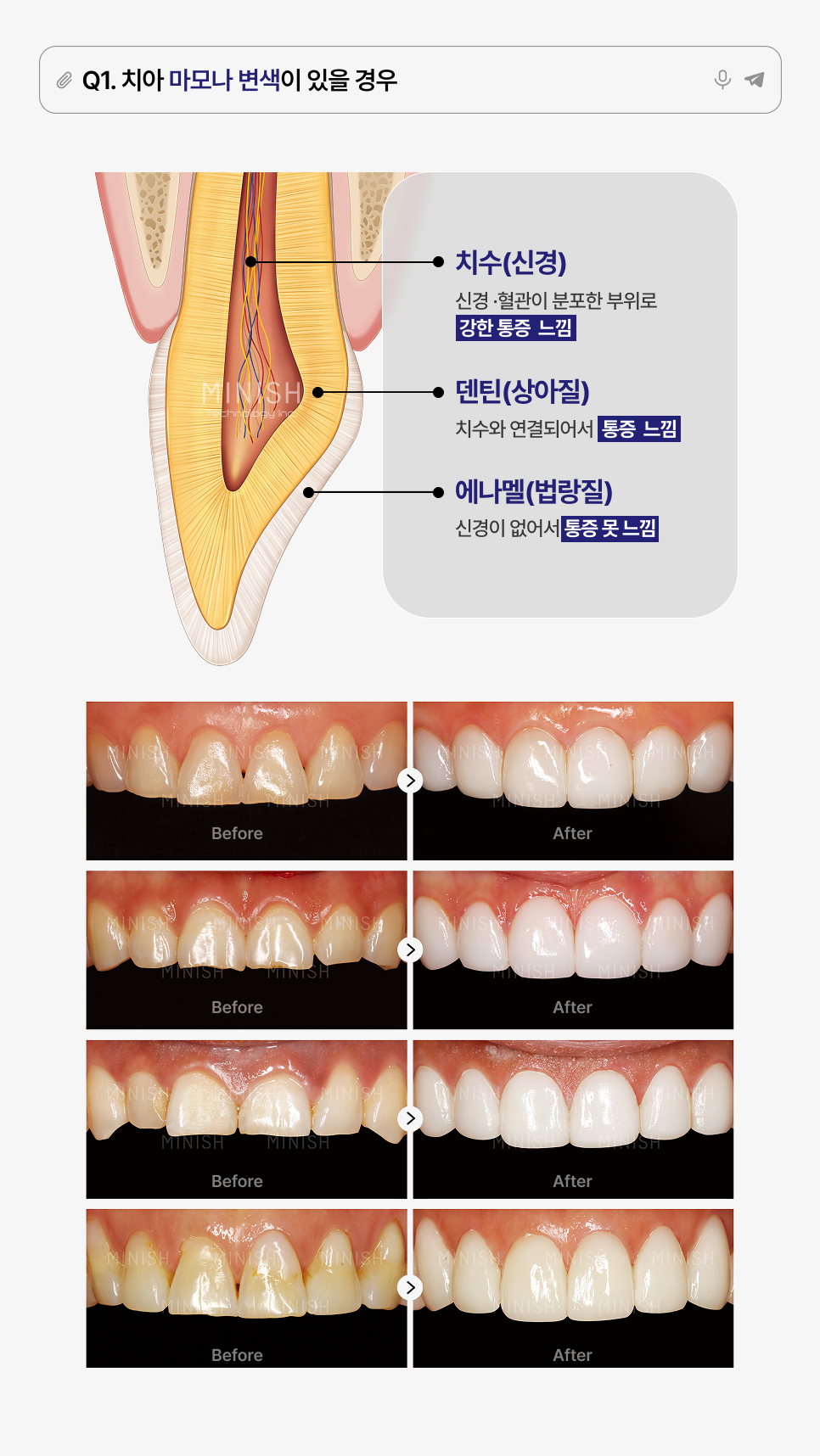
Tooth wear or discoloration can be more than a simple appearance issue; it may be a sign of damage to the tooth structure. In particular, when dentin is exposed, sensitivity may occur, and simple whitening may not be enough to solve the problem. In such cases, a comprehensive approach that considers both function and aesthetics is needed. Depending on the diagnosis, whitening, resin, laminate veneer, Minish, and other methods may be used, and each has different indications, effects, and limitations.
Whitening is a method that only brightens the color of the teeth, so its effect is limited when discoloration is severe or when internal color changes are present. It is also difficult to apply when there is wear or structural damage. Resin is simple and low in cost, but it may discolor or fracture over time, and if precision is lacking, it can lead to secondary cavities. Laminate veneers offer excellent aesthetics, but they require a certain amount of tooth reduction and are limited by the tooth shapes to which they can be applied. There is also a risk of debonding or discoloration.
By contrast, Minish is a method that precisely restores damaged structures while preserving natural teeth as much as possible, allowing both aesthetics and function to be improved at the same time. Using materials close to natural teeth, it can precisely restore color, texture, and shape, and it can be effectively applied even to worn teeth.
Costs increase in the order of whitening, resin, laminate veneers, and Minish, so it is best to make a careful decision based on the condition of the teeth, budget, and purpose. In particular, when long-term results and satisfaction are considered, Minish can be an appropriate choice for those who want both functional recovery and aesthetic improvement.
Can aesthetics be improved without removing much tooth structure?
Q2.
Can improvement be made without removing much tooth structure?
A2.
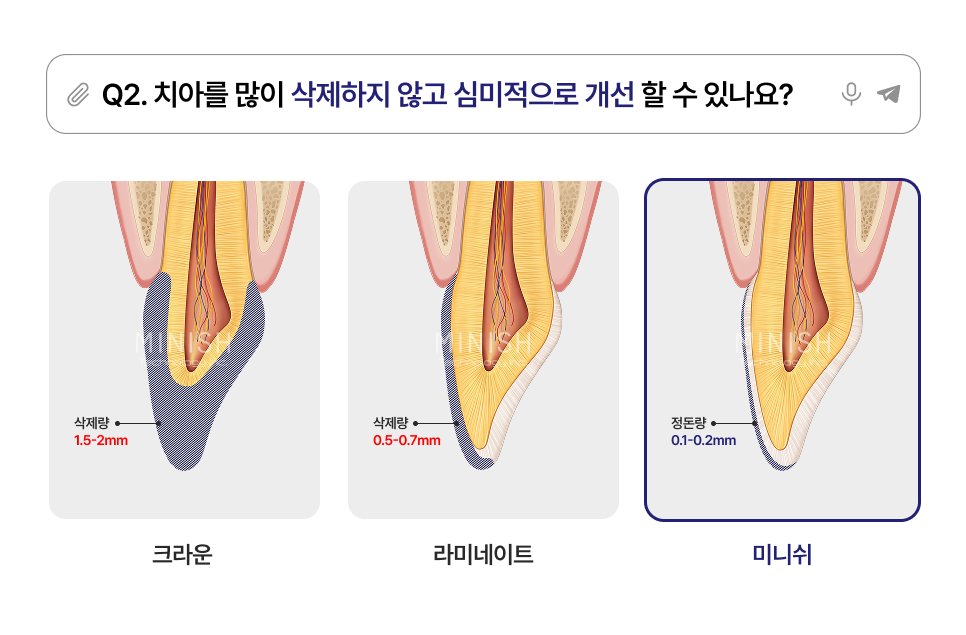
One method that can improve the teeth while minimizing removal is Minish. Minish is a method in which the teeth are not unnecessarily shaved, and Minish is attached while preserving as much of the natural tooth structure as possible, allowing aesthetic elements such as tooth color, alignment, shape, and surface texture to be improved at the same time.
Traditional laminate veneers require front-surface reduction, and crowns require reduction of the entire tooth, but Minish is designed to minimize the amount removed so that the original function and shape of the teeth can be maintained. In addition, by applying materials and high-precision technology that are closest to natural teeth, the result can look very natural from the outside as well. If you want to improve both function and aesthetics without the burden of tooth reduction, Minish is a suitable alternative.
If there is a cavity, is resin enough?
Q3.
If there is a cavity, is resin alone enough?
A3.
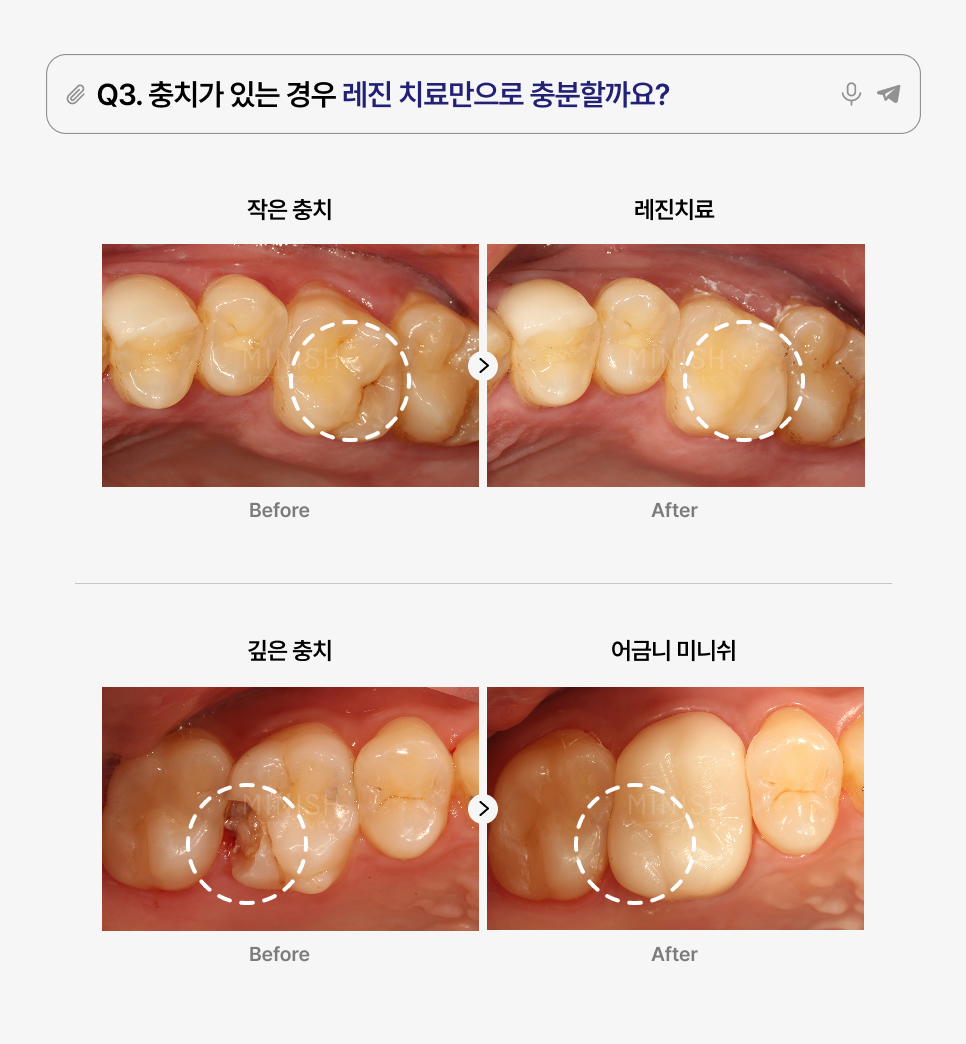
For small cavities, resin treatment alone is often sufficient. Because treatment is quick and the cost burden is low, it is generally applied to early-stage cavities. However, if the cavity is widespread or deeply progressed, resin alone has limitations. Over time, resin can fracture or come off easily, which may lead to secondary cavities, and repeated retreatment may be necessary.
In such cases, a stronger restorative method is needed, and in general, inlays, crowns, or Minish may be considered. Inlays are used when the cavity is large or deep, and crowns cover the entire tooth, which can mean a greater amount of tooth reduction. By contrast, Minish precisely restores only the damaged area, making it a method that can improve structural stability and aesthetics while minimizing tooth reduction.
In particular, Minish can also be applied to molars, and it is regarded as an appropriate alternative when function, durability, and aesthetics all need to be considered. This is because it can precisely restore weakened areas while reducing unnecessary damage to the teeth.
Above all, the most important criterion in choosing a treatment is the size and depth of the cavity. Since this is difficult to judge accurately with the naked eye, the lesion must be analyzed precisely through detailed diagnosis such as X-ray imaging. Through this process, it is determined which treatment can be a more stable and conservative choice in the long term.
Is there a faster way to straighten teeth?
Q4.
Is there a faster way to straighten teeth?
A4.
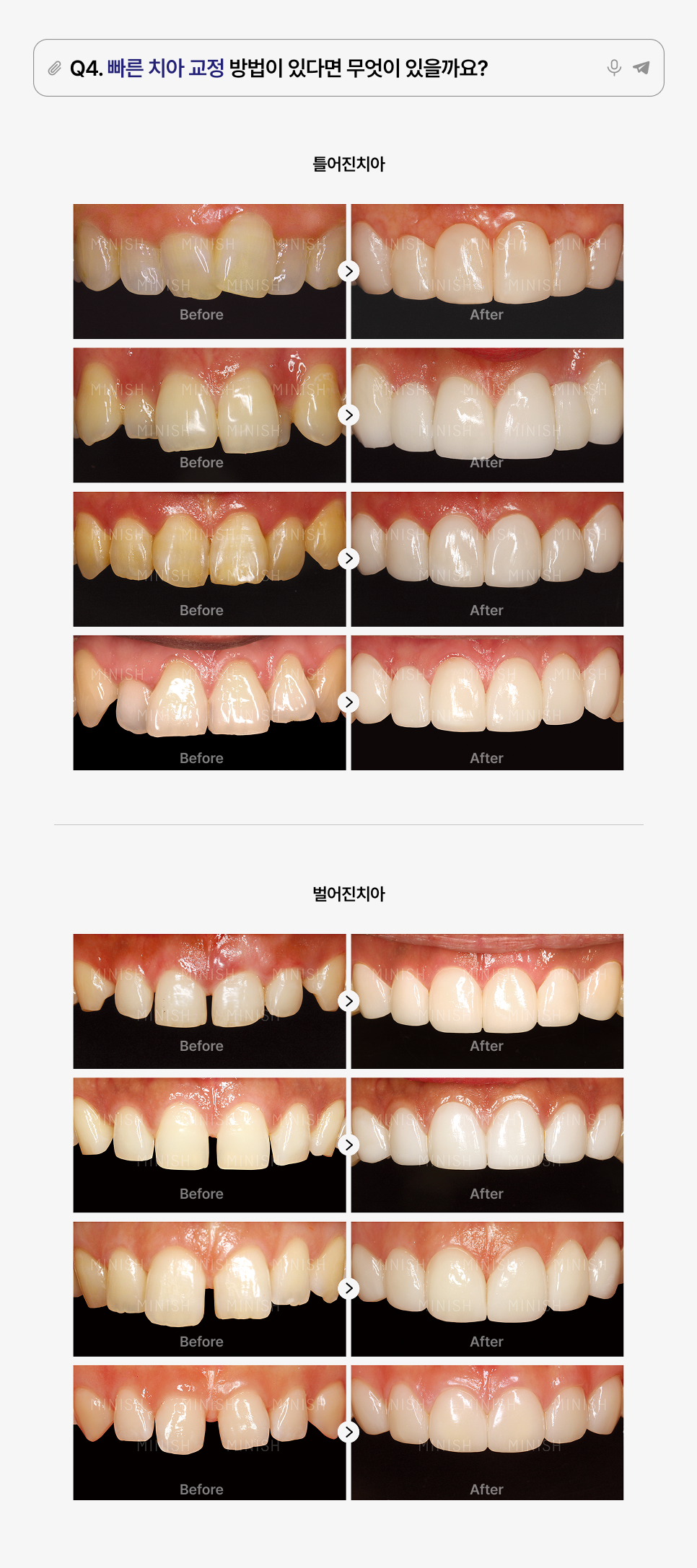
If you want to improve tooth alignment faster than with traditional orthodontic treatment, Minish can be one alternative. Unlike traditional orthodontics, which physically moves the teeth, Minish is a method that improves the aesthetic asymmetry of tooth alignment in a short time. In particular, because it can restore function and aesthetics at the same time while minimizing tooth reduction, it is suitable for those who want faster improvement.
Traditional orthodontics requires wearing metal brackets or clear aligners for a long period, and because it moves the entire structure including the tooth roots, it usually takes 1 to 2 years or more. By contrast, Minish designs the shape of the teeth precisely without orthodontic appliances and naturally corrects visual issues such as gaps between teeth, protruding teeth, and size asymmetry in a short time.
In addition, because Minish is performed with little or minimal tooth reduction, the burden of damaging natural teeth is low, and pain or discomfort in daily life during treatment is also minimal. Beyond aesthetic improvement, functional benefits such as reducing tooth wear, sensitivity, and preventing cavities can also be expected. However, Minish is effective for visual improvement in tooth alignment, but it is not suitable when skeletal movement or functional bite adjustment is needed. In complex cases requiring extraction or cases where jaw position correction is needed, traditional orthodontics may be the better option.
Therefore, after obtaining an accurate diagnosis and clearly identifying the condition of the teeth and treatment goals, it is important to determine whether Minish is possible or whether orthodontic treatment is needed.
What should I do if sensitivity continues?
Q5.
What should I do if sensitivity continues?
A5.
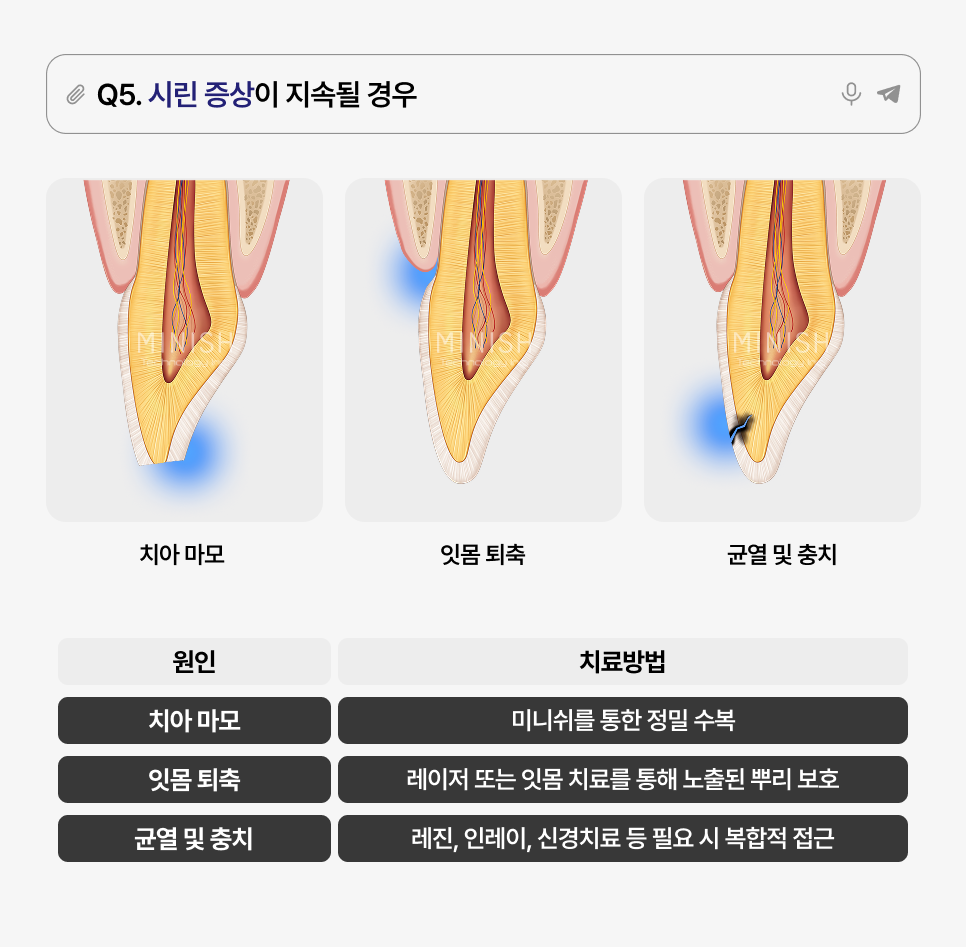
Sensitivity is more than a temporary discomfort; it can be a sign accompanied by various causes. Sensitivity toothpaste may help temporarily, but for a fundamental solution, the cause must be analyzed first. Major causes include tooth wear, dentin exposure, gum recession, cavities, and cracks, and the approach differs depending on the cause.
-
For worn or exposed areas, a precise restorative method such as Minish can be helpful.
-
If the gums have receded, gum grafting or laser treatment may be applied.
-
Cavities or cracks may require resin, inlays, or root canal treatment depending on the area.
If sensitivity persists, an accurate diagnosis including X-rays should be used to identify the cause clearly, and then a treatment plan should be established accordingly to reduce the recurrence of symptoms.
What is the most effective method?
Q6.
If cost matters less than effectiveness, which method is best?
A6.
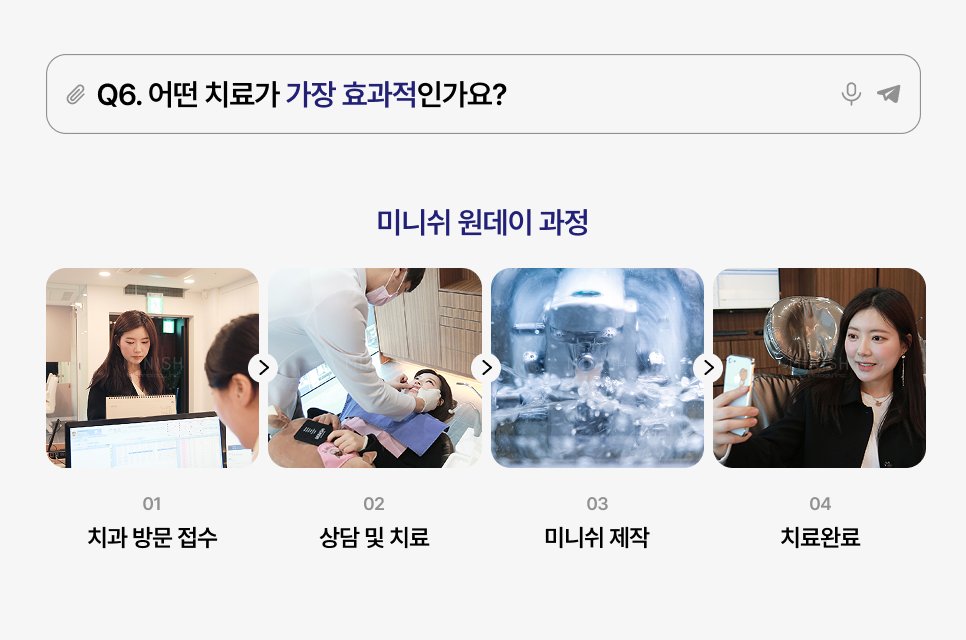
The most effective dental treatment cannot be determined by naming a single method. Many factors must be considered comprehensively, including the patient’s tooth condition, the damaged area, and the need for functional recovery, and above all, an accurate diagnosis is the most important. Even teeth that appear to have simple discoloration on the surface may actually have internal structural damage, or may be worn down and accompanied by sensitivity. Since wear, cavities, cracks, and gum recession often act together in complex ways, simple cosmetic treatment alone can make it difficult to solve the problem.
In such situations, Minish is drawing attention as a solution that can restore the entire structure while preserving natural teeth as much as possible. Because it can improve both function and aesthetics while minimizing tooth reduction, it is highly regarded in terms of long-term satisfaction.
In addition, based on clinical data from more than 180,000 cases over 17 years, treatment is carried out through customized design for each patient. Unlike existing resin or laminate veneers, it can selectively restore only the damaged area, which is advantageous for maintaining dental health. Minish can be a practical alternative that achieves both functional recovery and structural preservation beyond simple cosmetic purposes.
If you have more questions about Minish or need a consultation, please contact Minish Dental Hospital : )