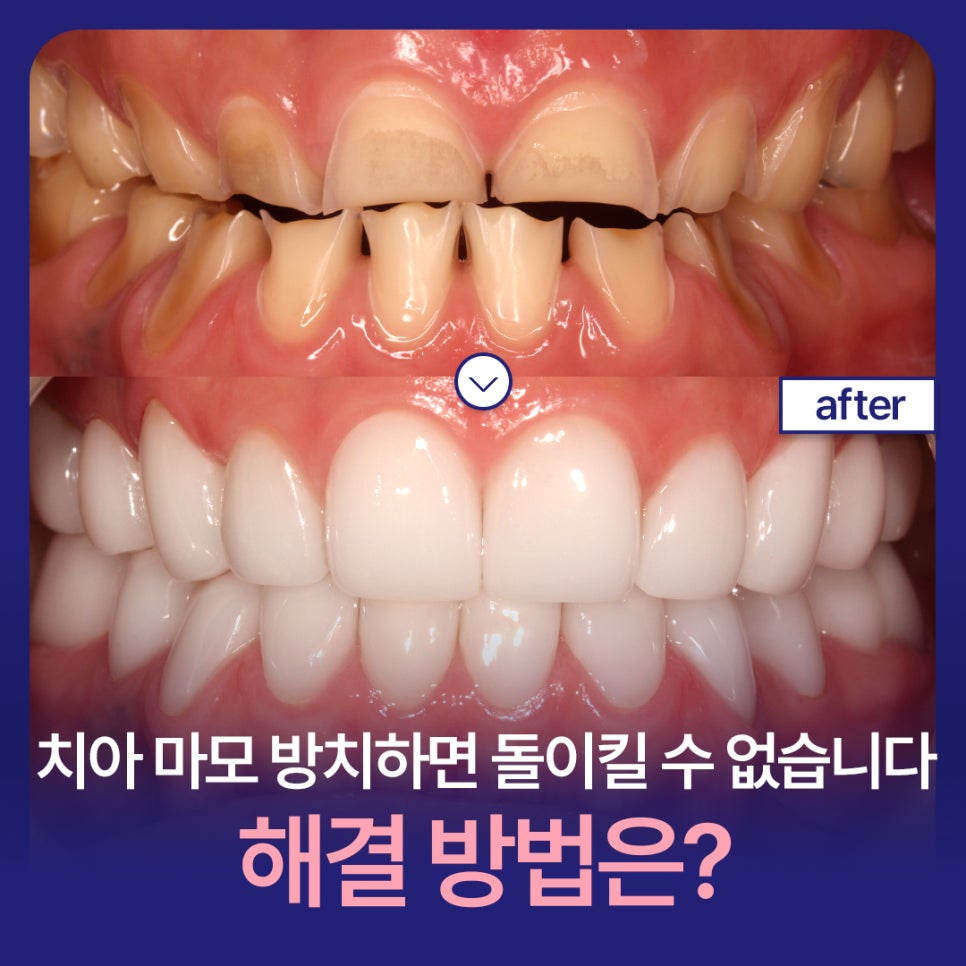
Have you ever noticed that your teeth feel sensitive when chewing, or that they seem shorter than before when you look in the mirror? If you feel a sudden sharp pain when eating hard foods, or discomfort even when drinking cold beverages, it may be a sign that tooth wear is progressing.
Tooth wear is often thought of as a natural change that simply comes with age, but it can happen at any time for various reasons such as teeth grinding, strong bite force, acidic foods and drinks, and poor brushing habits. If left untreated, it can lead not only to sensitivity and pain, but also to fractures and bite problems, so early treatment is important.
Why does tooth wear happen?
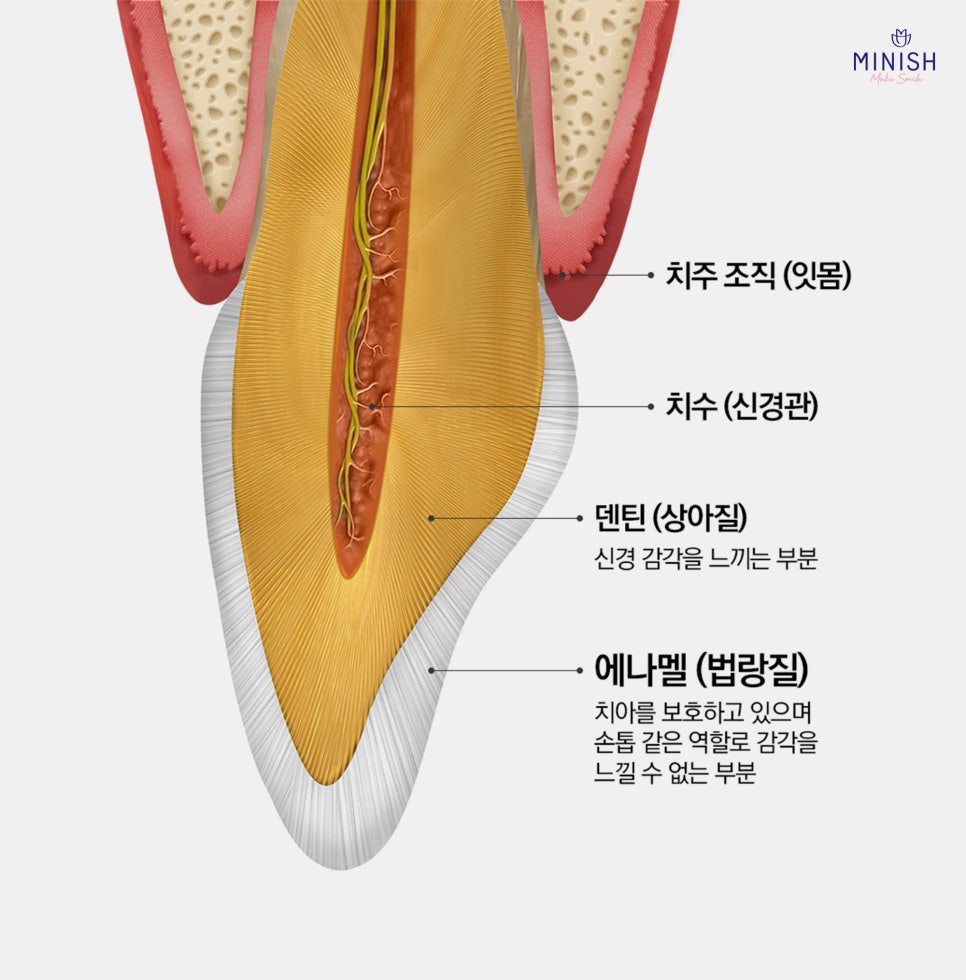
Teeth are covered on the outside by a hard enamel layer, and inside that is dentin, which is close to the nerves. Tooth wear is the gradual loss of enamel, which acts as the tooth’s protective barrier. When the internal dentin becomes exposed, sensitivity increases and sensitivity or pain occurs. The main causes are as follows.
- Teeth grinding and strong bite force
When repeated pressure is applied due to grinding teeth during sleep or the habit of clenching the teeth tightly
- Consumption of acidic foods and drinks
Frequent intake of highly acidic foods such as carbonated drinks, fruit juice, and vinegar weakens the teeth chemically.
- Reflux esophagitis and acid reflux
Stomach acid corrodes the teeth and accelerates wear.
Brushing by scrubbing the tooth surface too hard damages both the teeth and the gums.
Problems caused by leaving tooth wear untreated
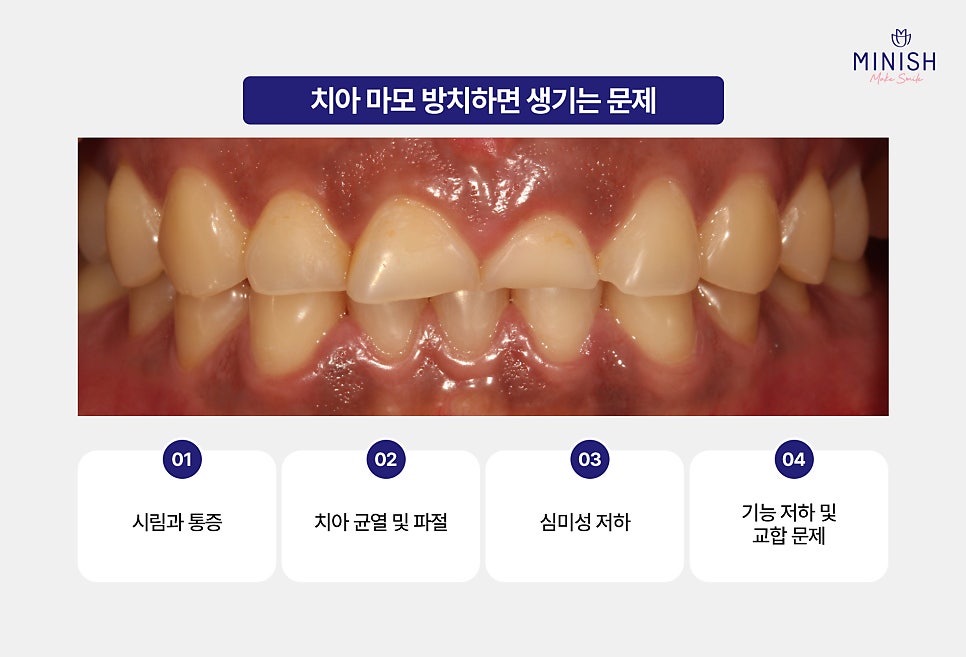
At first, the teeth may look slightly shorter or appear to have changed color, but as wear becomes more severe, deeper damage and discomfort follow.
When enamel disappears, the dentin directly senses external stimulation and becomes sensitive.
- Tooth cracks and fractures
Weakened teeth can easily develop cracks or break even from minor impacts.
As the teeth gradually become shorter, your appearance can change and you may look older.
- Reduced function and bite problems
If wear becomes severe, chewing function declines and stress may be placed on the temporomandibular joint.
Because tooth wear progresses faster over time, irreversible damage can occur if it is not treated early.
Tooth wear, treatment methods
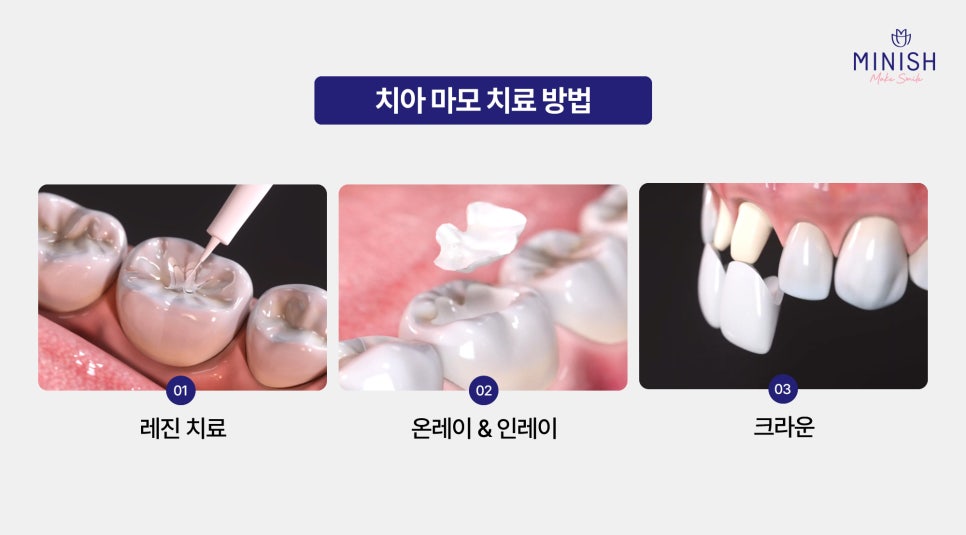
If tooth wear has progressed, appropriate treatment can protect the teeth and restore function. The treatment method varies depending on the degree of tooth damage, so choosing the right option for the condition is important.
Advantages: Relatively simple and fast, and the cost is generally lower.
Disadvantages: Because resin is made of a synthetic material, it is vulnerable to wear and discoloration, and when strong chewing force is applied, it has durability limits and may crack or come off over time. In addition, resin is sensitive to temperature changes, so when repeatedly exposed to hot and cold foods in the mouth, it expands and contracts repeatedly. This can weaken the bond and create tiny gaps at the margin with the tooth, which may lead to detachment or the need for retreatment.
Advantages: Custom fabrication allows for a better fit to the tooth, and durability is superior to resin.
Disadvantages: It takes time to make, and the cost may be somewhat higher than resin.
Advantages: When the tooth is severely worn, it can cover and protect the entire tooth and restore function.
Disadvantages: Because a crown structurally covers the entire tooth, a wide area of the natural tooth must be removed. In this process, even healthy tooth structure is lost, and depending on the depth of removal, there is a high possibility that root canal treatment may be needed. Also, some of the materials used are very hard and may cause wear on the opposing tooth.
Because each treatment has clear pros and cons, it is necessary to choose after fully considering the extent of damage and the condition of the tooth. In particular, when wear has progressed extensively, a crown is often recommended, but it comes with the burden of having to remove a large amount of natural tooth structure.
A tooth restoration solution without unnecessary tooth removal
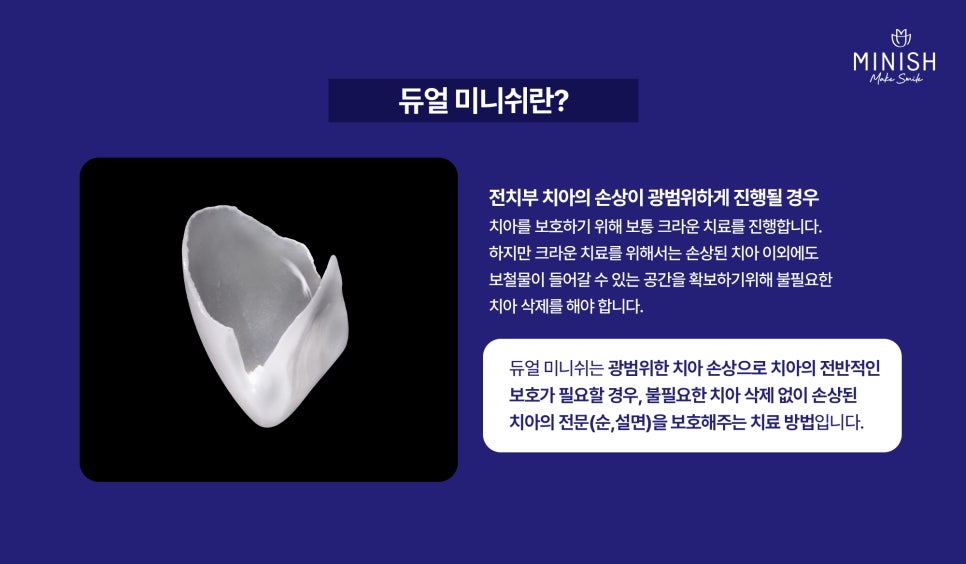
Teeth that are extensively damaged, even on the inside (lingual side), can be more easily damaged by external stimulation, so a method that protects the tooth from both the front and back is needed. Dual Minishe is a method that protects both the front (labial side) and back (lingual side) of the tooth without unnecessary tooth removal when overall protection is needed due to extensive tooth damage.
- No unnecessary tooth removal
Instead of filing down the tooth excessively to create a large space like a crown, only the necessary area is treated, helping preserve as much of the natural tooth as possible.
- Protects both front and back
Front teeth with extensive damage are more vulnerable to external stimulation. Dual Minishe surrounds both the front (labial side) and back (lingual side) of the tooth, functioning like a protective barrier.
- Restores both aesthetics and function
It can naturally restore the shape of worn teeth, reduce sensitivity and pain, and bring back original chewing function.
Dual Minishe is a conservative alternative that can replace crown treatment, a tooth restoration solution that increases protection while preserving as much natural tooth as possible. Tooth wear is not just a change in appearance; it is a progressive form of damage that can lead to sensitivity and pain, and even fractures and reduced function.
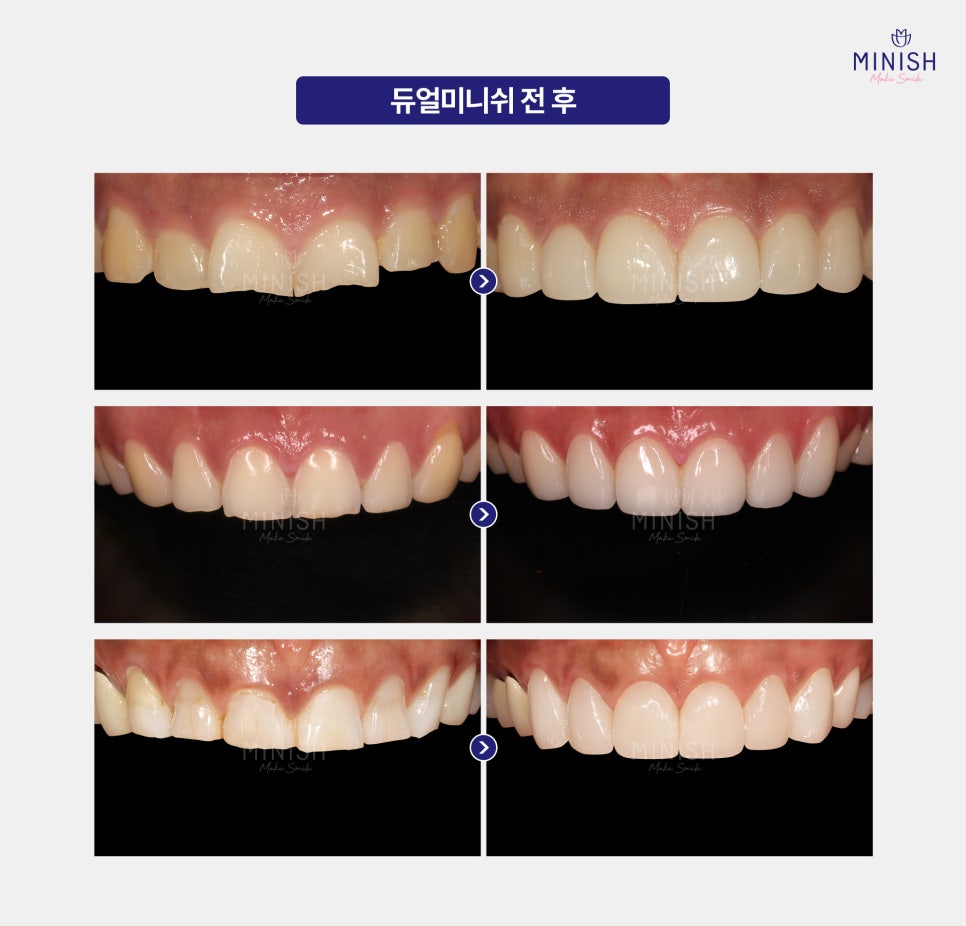
In the early stages, simple care may be enough, but if left untreated, the treatment range can become broader and preserving the natural tooth may become difficult. If your teeth are already significantly worn, consider Dual Minishe, which preserves as much of the natural tooth as possible while protecting it from both the front and back, instead of a crown. Early diagnosis and customized treatment are the first steps toward maintaining healthy teeth.