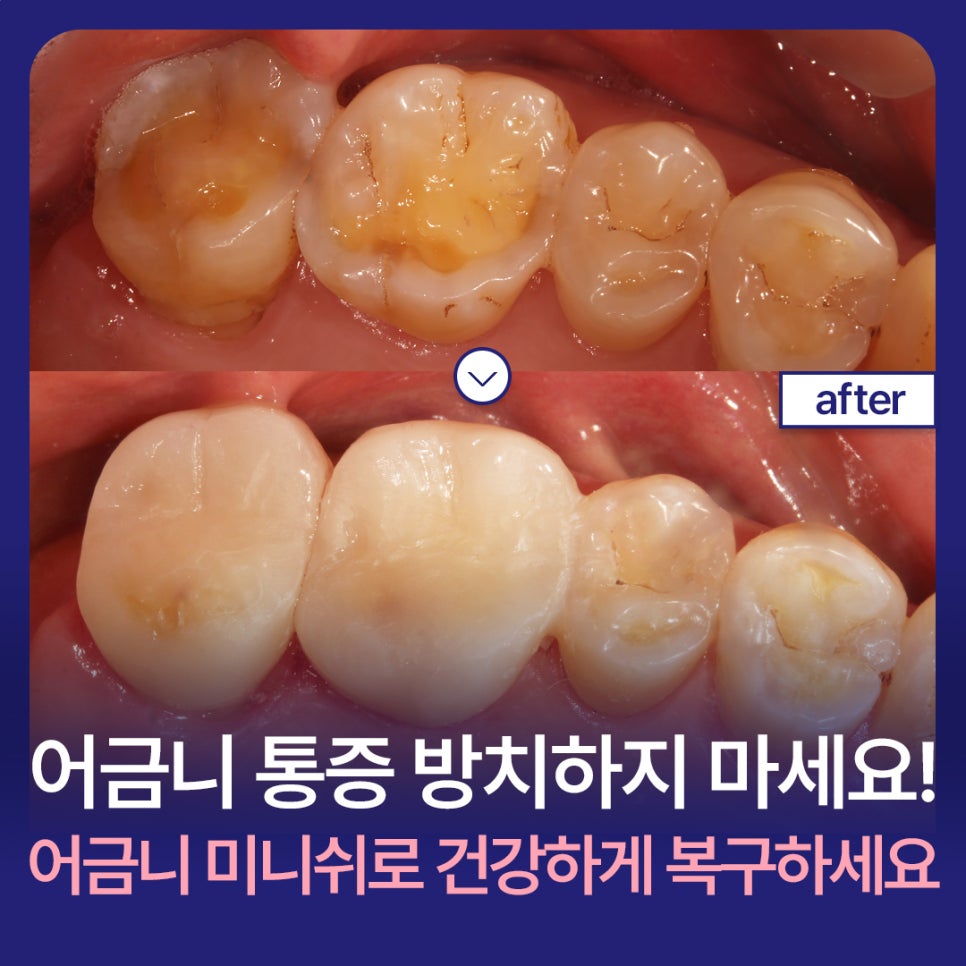
Molar pain is something many people experience, but it is often not taken seriously. Since molars play the most important role among the teeth responsible for chewing, it is important to quickly identify the cause and treat it when pain occurs. If left untreated, the pain can become worse and the tooth damage can increase, making treatment more complicated. In this article, we will take a detailed look at the causes of molar pain, the symptoms by stage of damage, the pros and cons of representative treatment methods, and the features of Molar Minishe, a tooth restoration solution.
Main Causes of Molar Pain
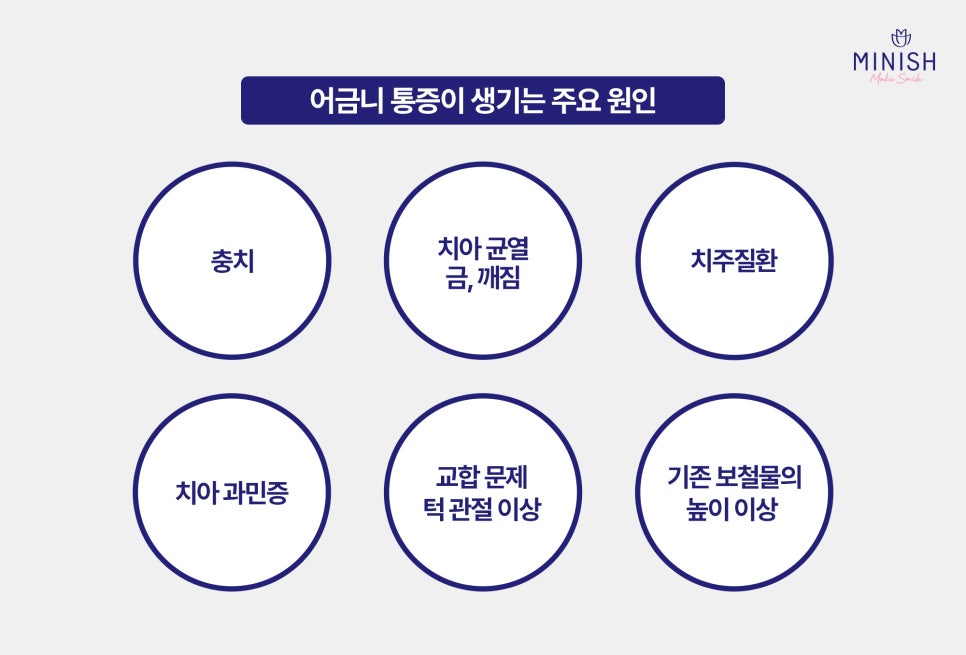
Molar pain can be caused by a variety of factors. Among them, the main causes that many people commonly experience are as follows.
When a cavity progresses beyond the enamel and dentin and irritates the pulp (nerve), pain occurs. In the early stages, the tooth may be sensitive to cold water or sweets, and as it progresses, persistent pain appears.
- Tooth cracks, fissures, and fractures
If a molar develops a tiny crack or fissure, you may feel a momentary pain when chewing. If the damage progresses further and part of the tooth breaks, symptoms may include not only sharp pain but also food getting stuck and increased sensitivity. In particular, the closer the crack gets to the nerve, the more severe the pain becomes, and if left untreated, root canal treatment or extraction may be necessary.
- Periodontal disease (gum inflammation)
When inflammation develops in the gums and alveolar bone, symptoms such as pain, gum bleeding, and swelling appear. In severe cases, the teeth may become loose.
When dentin is exposed due to tooth wear or gum recession, pain occurs because the tooth becomes sensitive to cold water, hot food, and so on.
- Bite problems and jaw joint abnormalities
If excessive force is applied to the molars due to a misaligned bite, or if there is a problem with the jaw joint, pain associated with muscle pain may occur.
- Height issues with existing prosthetics
If a prosthetic restoration is too hard, the opposing natural tooth may wear down, changing the bite height and causing molar pain.
Why Molar Damage Should Not Be Ignored
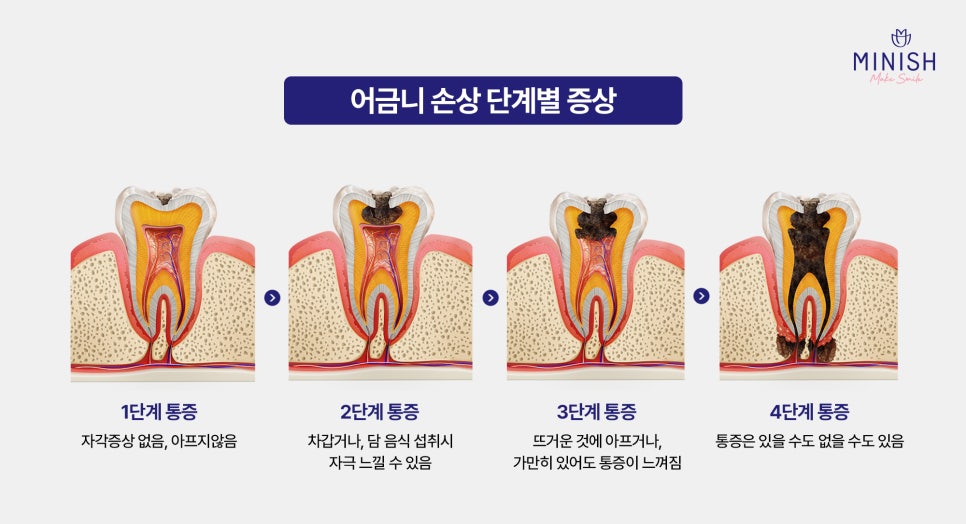
The causes of molar pain are varied, but most cases begin with sensitivity and gradually progress to more severe pain. In the early stages, you may only feel brief sensitivity when exposed to cold food or sweets, but as symptoms worsen, they can develop into throbbing pain every time you chew or pain triggered by hot stimuli. Also, if the pain becomes worse at night or if throbbing pain appears without any particular trigger, this may be a sign that inflammation in the nerve tissue has progressed significantly.
In particular, as tooth damage passes through the dentin and approaches the pulp (nerve) area, the pain becomes sharper and more persistent, eventually worsening to a state that requires root canal treatment on the molar. If you leave it untreated because there are no noticeable symptoms, the damaged area can expand and the prognosis can worsen, so it is very important to receive an accurate diagnosis at the first sign of symptoms.
Pros and Cons of Molar Treatment Methods
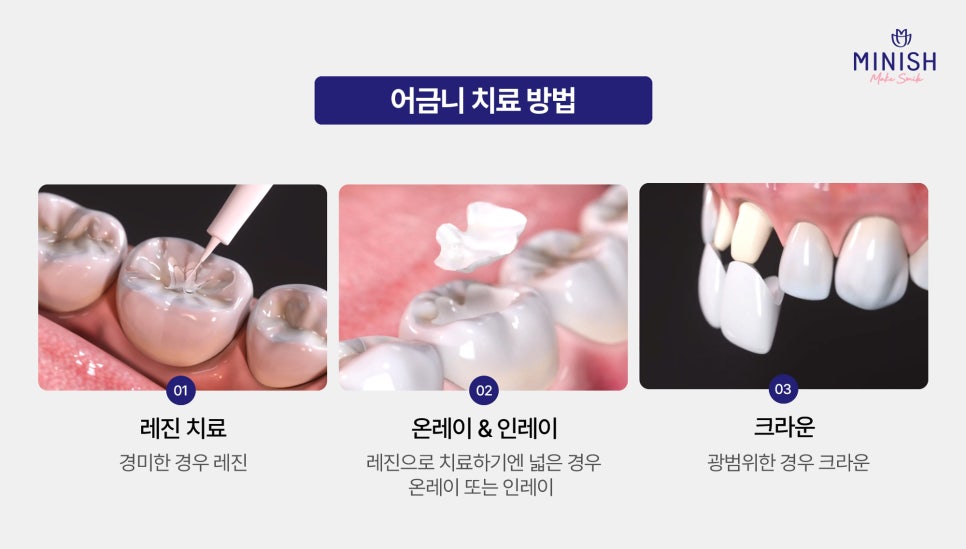
- Resin
Applied to small cracks or shallow surface damage, it restores the shape by filling the damaged area with composite resin (a plastic-based restorative material). Because there is often no pain and treatment is completed in a short time, it is relatively less burdensome.
Advantages
-
Almost no tooth removal is needed, so healthy tooth structure can be preserved.
-
The cost is relatively low, and treatment is completed in a single visit.
Disadvantages
-
In areas with strong chewing forces such as molars, there is a high risk of the material fracturing or coming off.
-
Over time, it can discolor or wear down, and if adhesion weakens, secondary damage can occur due to the infiltration of foreign substances.
-
Because resin shrinks slightly during hardening, very small gaps can form at the bonding area. This can cause food to get stuck or the contact area to loosen, increasing the chance of it falling out.
- Inlay / Onlay
This is used when the damage is too extensive to restore with resin, but not so severe that a full crown is needed. After precisely removing the damaged area, a custom inlay (internal only) or onlay (including the outer surface) prosthetic is fabricated and bonded to match the tooth shape.
Advantages
-
It is more durable than resin and offers better bite stability.
-
It restores the tooth to a shape similar to a natural tooth, satisfying both aesthetics and function.
-
Less tooth reduction is required than with a crown.
Disadvantages
-
At least two visits are required, and the cost is higher than resin.
-
If bonding precision is poor, bacteria may enter the margin area, which can lead to secondary cavities.
-
If the onlay covers a large area, stress may be placed on the remaining tooth structure, increasing the risk of fracture.
- Crown
Used when tooth damage is extensive or when the tooth has become structurally weak after root canal treatment. As a full-coverage prosthetic, it protects the damaged tooth and restores function.
Advantages
-
It fully covers the tooth, so it offers excellent strength and durability.
-
It is stable even in areas like molars where bite force is high.
Disadvantages
-
Healthy tooth structure must also be removed extensively.
-
Depending on the material, there may be risks of gum irritation, marginal leakage, and secondary cavities, and the cost burden is high.
-
It can place strain on the opposing tooth, and additional tooth reduction is needed for retreatment, which may shorten the tooth’s lifespan.
If You Want to Preserve Natural Teeth While Restoring Functionally
Molar Minishe
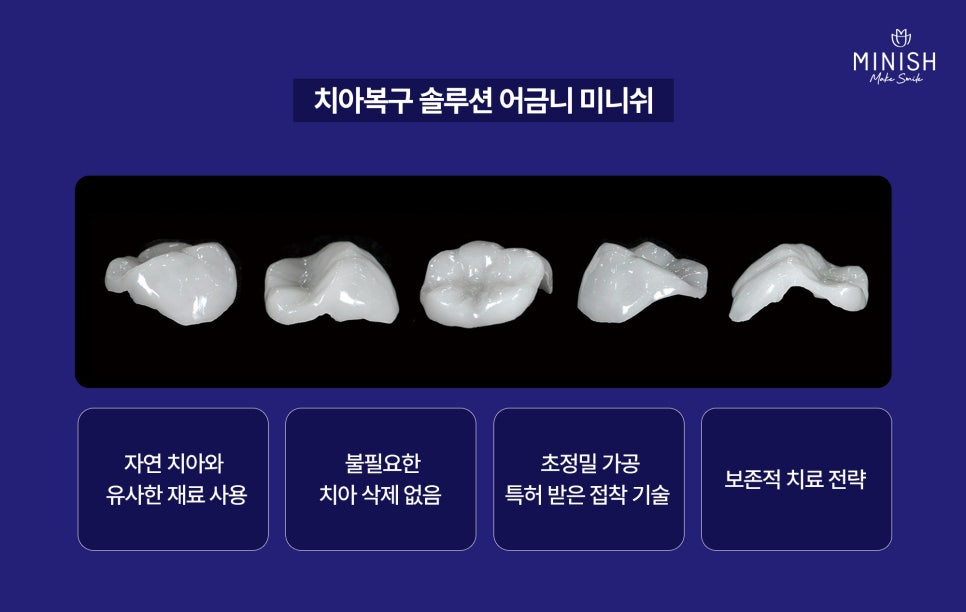
If traditional treatment methods only “supplement” the damaged area, Molar Minishe is a tooth restoration solution that “restores” it into a structure similar to a natural tooth. In particular, for areas like molars that bear strong chewing forces, structural restoration is very important, not just simple prosthetic replacement.
- Uses materials similar to natural teeth
It restores the original shape and function of the tooth by using materials that are closest to natural teeth. Minishe blocks have strength and physical properties similar to natural teeth, so they do not place unnecessary stress on the opposing teeth. As a result, they place less burden during chewing and can maintain durability for a long time.
- No unnecessary tooth removal
Only the damaged area is precisely shaped, while healthy tooth structure is preserved as much as possible. Designed with function in mind, it can be used for a long time like a natural tooth.
- Ultra-precise processing and patented bonding technology
It is produced with ultra-precise CAD/CAM-based processing, minimizing the margin of error that can occur during fabrication. Through this process, the natural tooth and Minishe are sealed together at the margins as one unit, which can effectively help prevent secondary cavities.
- Conservative treatment strategy
Even if a future problem arises, this is an approach that takes preservation into account so that expanded treatment such as a crown remains possible.
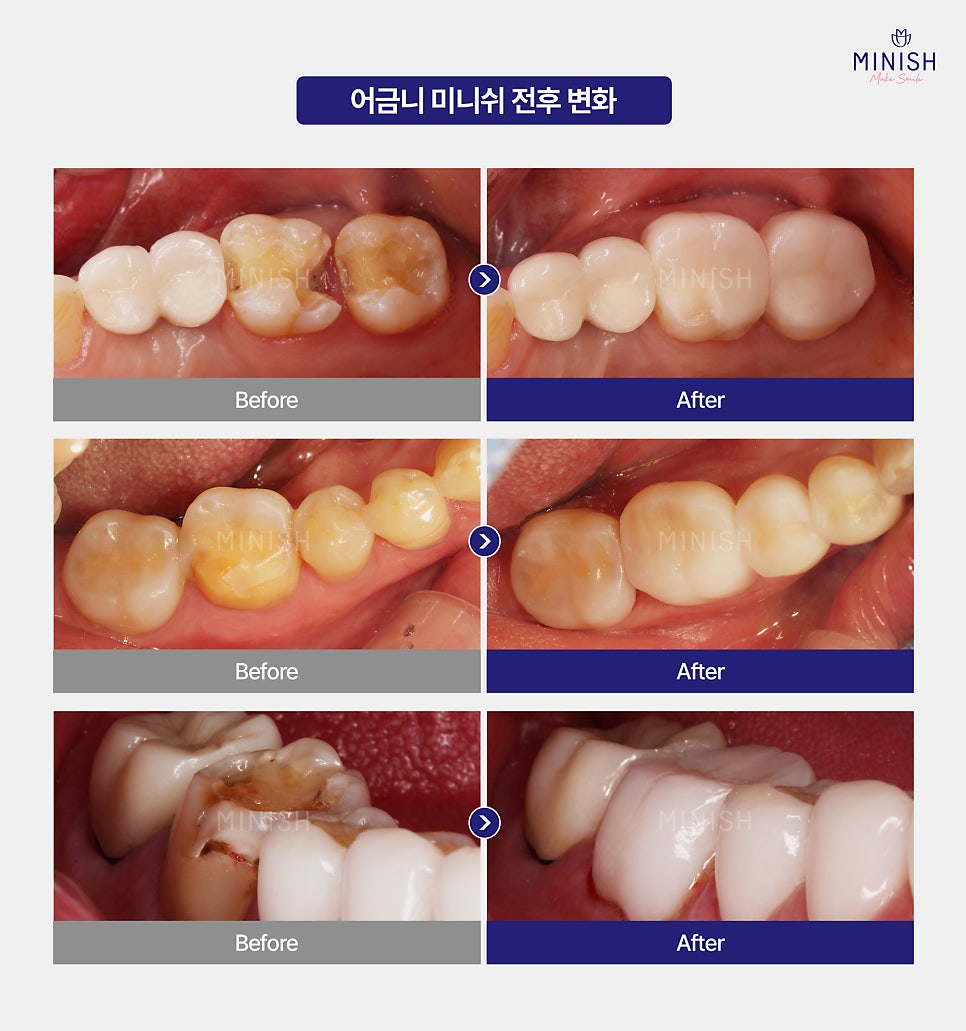
Even if the initial symptoms of molar pain are mild, leaving them untreated can lead to greater tooth damage and make treatment more difficult. Each traditional treatment method has clear pros and cons, but if you want to preserve as much natural tooth structure as possible while restoring function completely, Molar Minishe is the optimal choice.
If you feel molar pain or discomfort, create the best treatment plan through professional consultation and maintain healthy teeth for a long time.