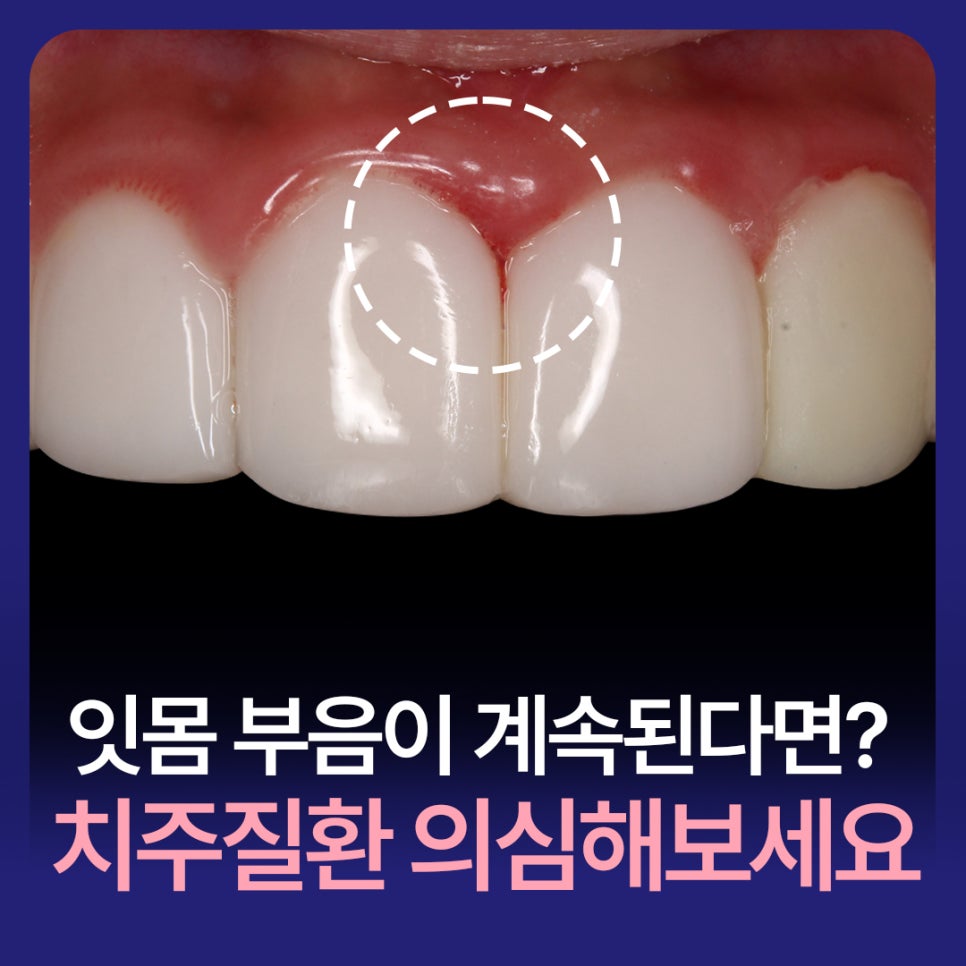
Have you ever looked in the mirror and suddenly thought, “My gums are swollen”? Have you ever experienced bleeding while brushing your teeth, or felt your gums swelling and throbbing for no apparent reason? Most people tend to brush it off, thinking, “Maybe I’m just tired,” or “It’ll probably get better in a day or two.”
But if gum swelling keeps recurring, or if only a specific area swells up frequently, it may be a sign of not just simple inflammation but of periodontal disease. In the early stages, it may seem mild, but if treatment is delayed, it can progress faster than expected, making accurate diagnosis and early response very important.
Why do gums swell?
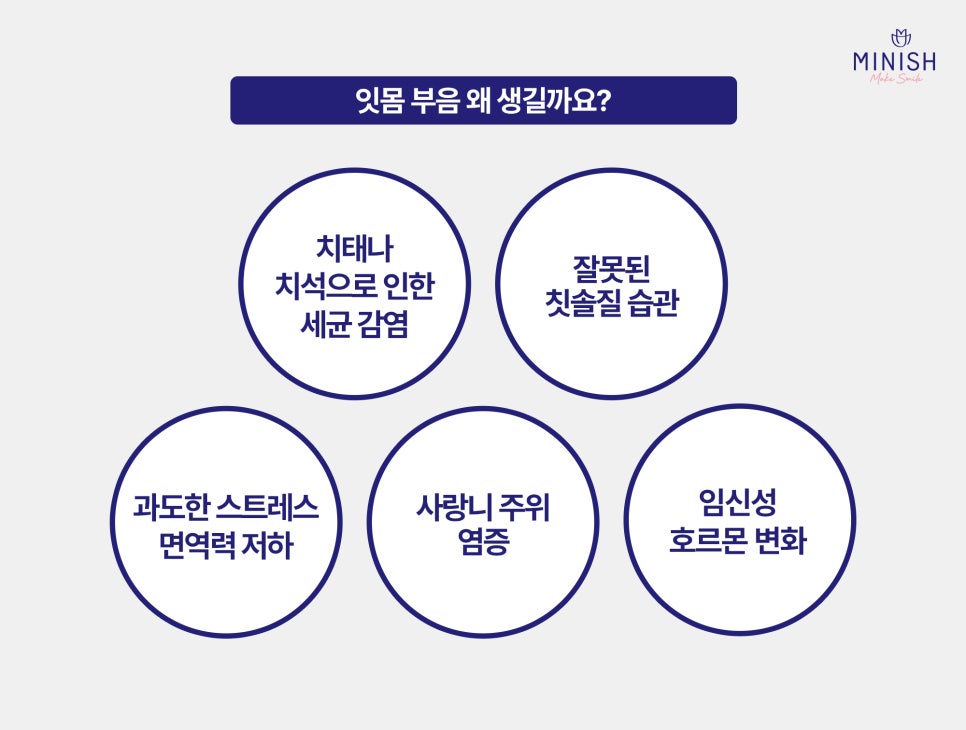
There are many causes of swollen gums, but the main reasons are as follows.
-
Bacterial infection caused by plaque or tartar
-
Incorrect brushing habits
-
Excessive stress or weakened immunity
-
Inflammation around wisdom teeth
-
Hormonal changes during pregnancy
Although the causes vary, the important common factor is that they all involve an inflammatory response. If this inflammation is not properly managed, it can progress from simple gum swelling to periodontal disease (periodontitis).
What happens if gum swelling is left untreated?
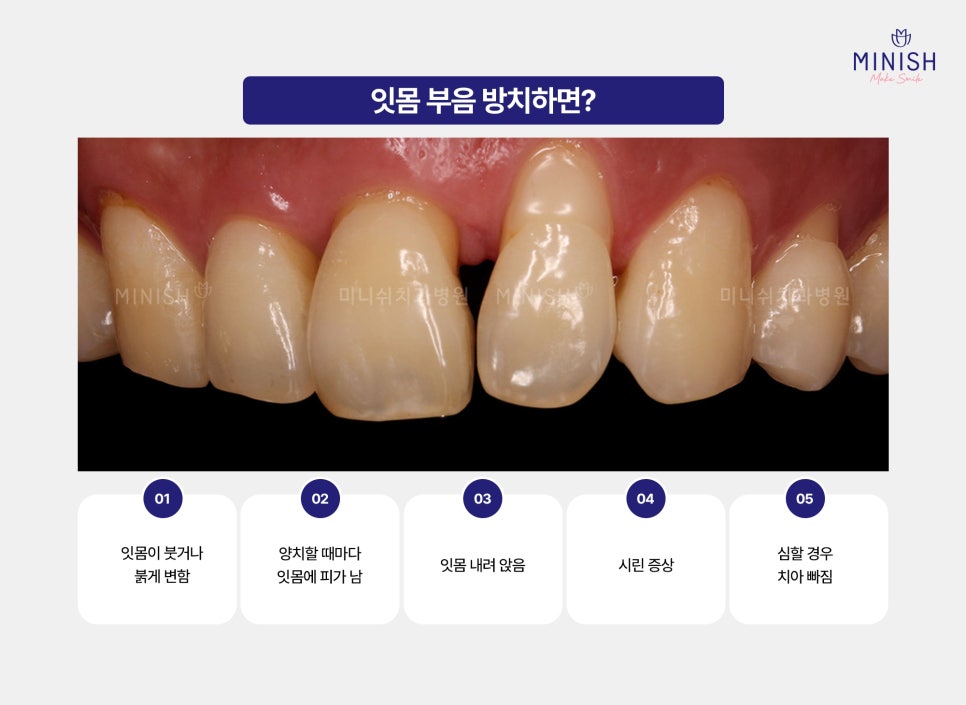
In the early stage, it begins as gingivitis, where the gums swell and bleed. At this point, scaling alone can often improve the condition. However, if left untreated, the inflammation can spread to the jawbone, developing into periodontitis, where the alveolar bone is destroyed.
-
Gums swell or turn red
-
Gums bleed every time you brush
-
Gums gradually recede, making teeth look longer
-
Sensitivity worsens
-
In severe cases, teeth may become loose and fall out
👉 In particular, if gum swelling continues, it may already be beyond the early stage of periodontitis, so professional examination and treatment are essential.
Periodontal disease: symptoms and treatment by stage
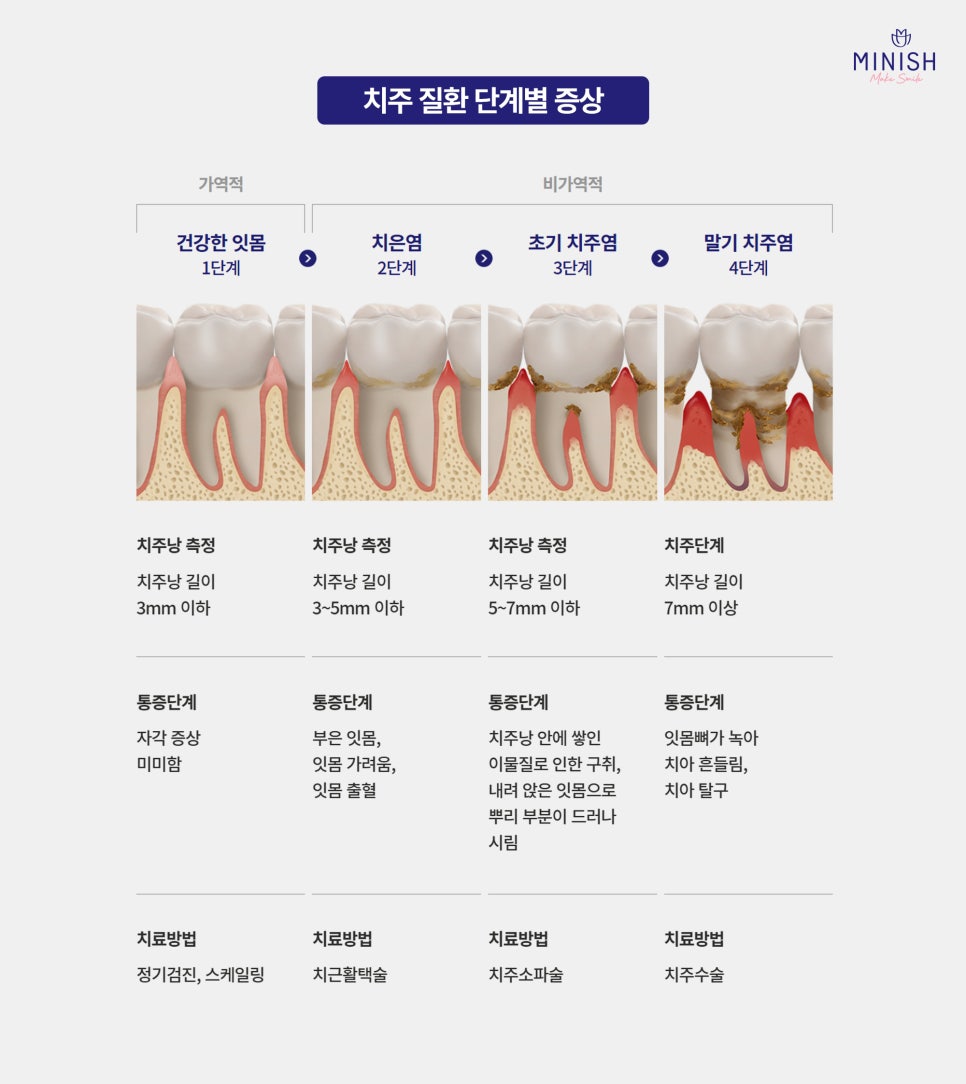
Whether gum swelling is just simple inflammation or advanced periodontitis differs by stage in terms of symptoms and treatment methods.
| Stage | Symptoms | Periodontal pocket depth | Main pain | Treatment |
|---|
| Stage 1 - Healthy gums | No inflammation | 3 mm or less | No symptoms | Regular checkups, scaling |
| Stage 2 - Gingivitis | Gum swelling, itching, bleeding | 3–5 mm or less | Swollen gums, bleeding | Root planing |
| Stage 3 - Early periodontitis | Tartar buildup, gum recession | 5–7 mm or less | Sensitivity, receding gums | Curettage |
| Stage 4 - Advanced periodontitis | Loose teeth, gaps between teeth | 7 mm or more | Severe pain, tooth dislocation | Periodontal surgery |
Gingivitis is inflammation limited to the gums, while periodontitis refers to a state in which the inflammation has spread to the jawbone and alveolar bone. If gum swelling recurs frequently and is accompanied by pain or bleeding, it is likely already at stage 2 or beyond.
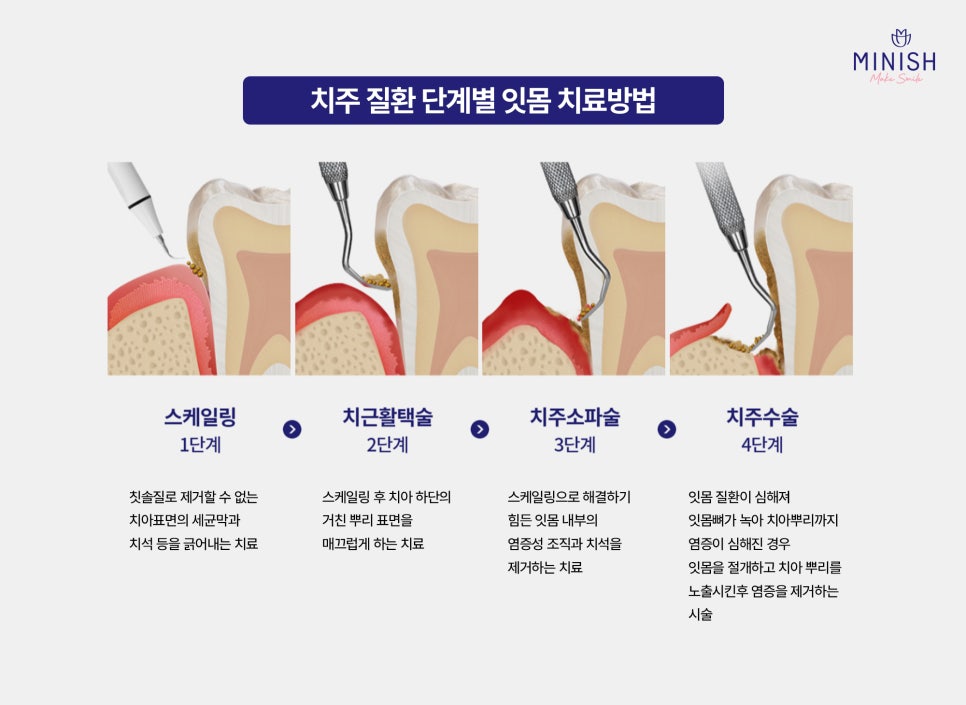
If gum swelling continues, the treatment method also changes depending on the severity of the symptoms. Some stages can be resolved with scaling alone, while in cases where the inflammation has progressed into the inner area of the gum bone, surgical treatment that involves making an incision in the gums may be necessary.
| Treatment stage | Treatment | Description |
|---|
| Stage 1 | Scaling | Removes tartar and bacterial film that cannot be removed by brushing, helping reduce gum inflammation. |
| Stage 2 | Root planing | Smooths the surface of the tooth roots to help reattachment and restore gum attachment. |
| Stage 3 | Curettage | A non-surgical treatment that removes inflamed tissue and tartar formed deep inside the gums. |
| Stage 4 | Periodontal surgery | Incises the area where inflammation has progressed deeply, exposing the tooth roots and thoroughly removing the infected area. |
If gum swelling occurs frequently, it is a good idea to check which stage your gums are currently in. Accurate diagnosis and customized treatment are the best way to prevent further periodontal damage.
Before and after periodontal treatment
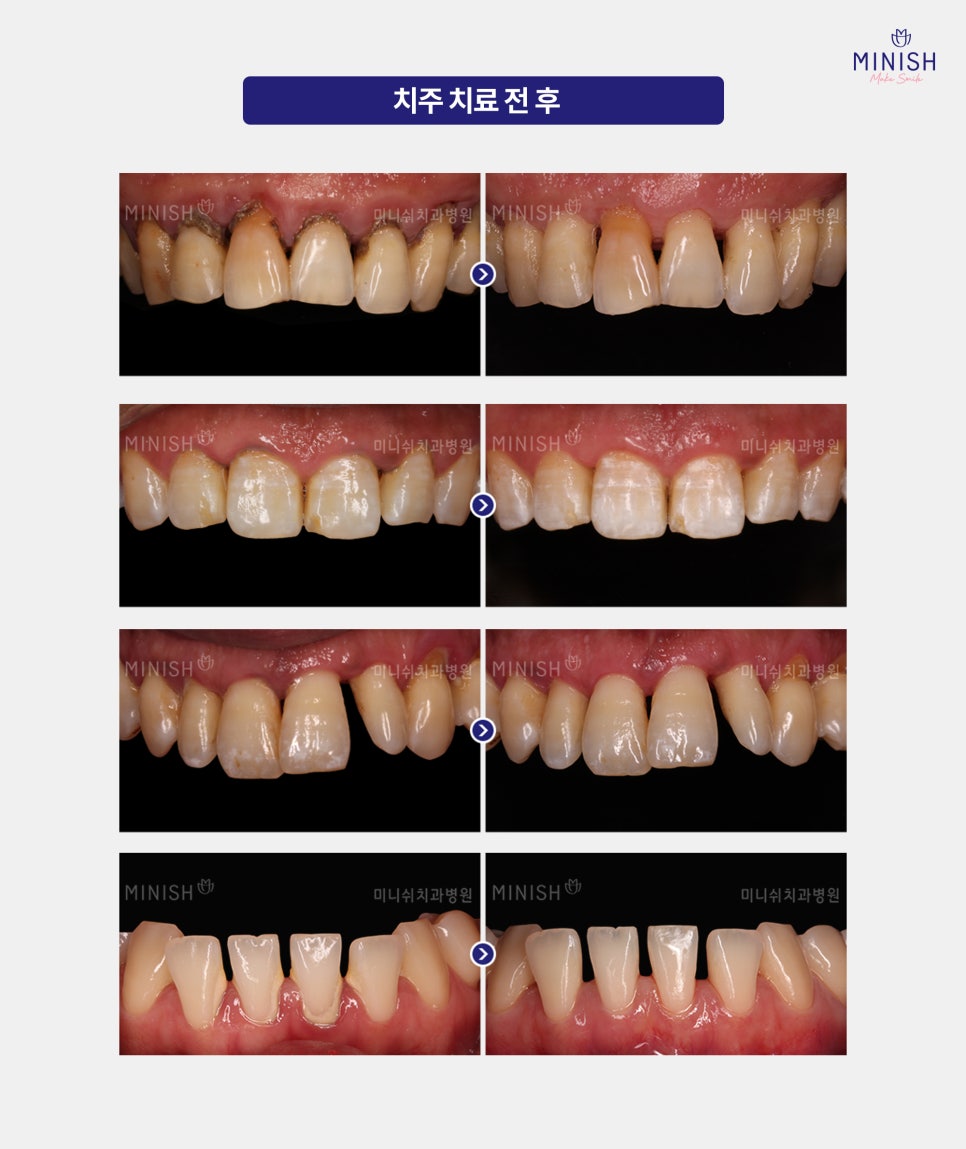
Periodontal disease often does not improve with simple scaling alone, so stage-based customized treatment is needed depending on the patient’s symptoms. Once gum tissue has been damaged, it is difficult to recover naturally, so proper brushing habits and thorough gum care from the early stage are essential. Even if the symptoms have already progressed, it may still be possible to slow the progression and preserve the remaining teeth through professional treatment and consistent aftercare.
Through the before-and-after periodontal treatment performed at Minish Dental Hospital, you can see at a glance how the overall condition changes, including tartar removal, inflammation relief, and improved tooth alignment.
Aesthetic concerns remaining after gum treatment?
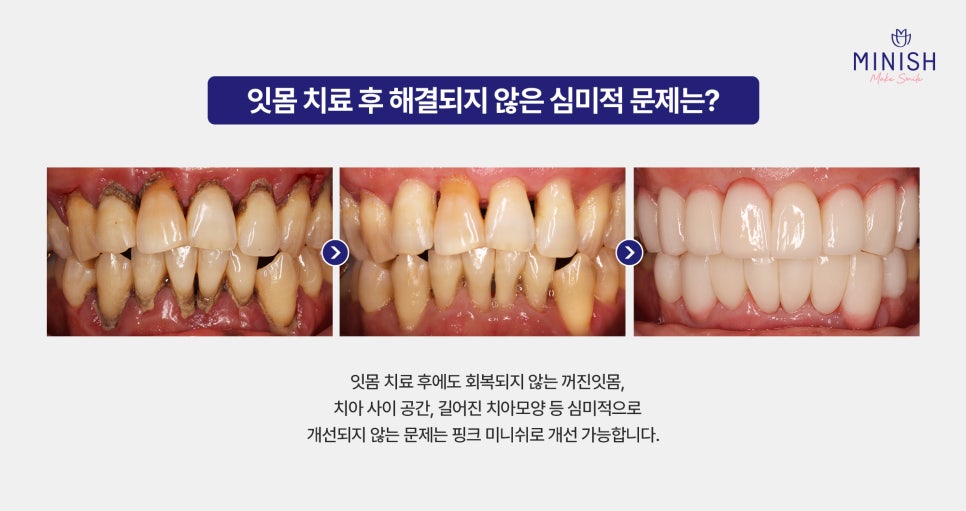
Although the inflammation has improved through periodontal treatment, many people still feel uncomfortable with outward changes such as sunken gums, gaps between teeth, and teeth that look longer. In such cases, these can be restored naturally and healthily through “Pink Minish.” Pink Minish forms the gum border line in pink to create a natural and healthy visual effect, as if the gums have filled back in. It also improves the spaces between teeth (black triangles), removing gaps where secondary cavities can develop, while also compensating for worn or discolored tooth color to enhance overall aesthetics and function.
👉 Go learn about Pink Minish, the tooth restoration solution
If gum swelling appears, do not take it lightly. Early professional diagnosis and care are very important. At Minish Dental Hospital, we put the health of your teeth first and help you protect healthy gums and a beautiful smile through ultra-precise diagnosis and customized treatment. Visit Minish Dental Hospital now and make the wise choice to protect your precious dental health.