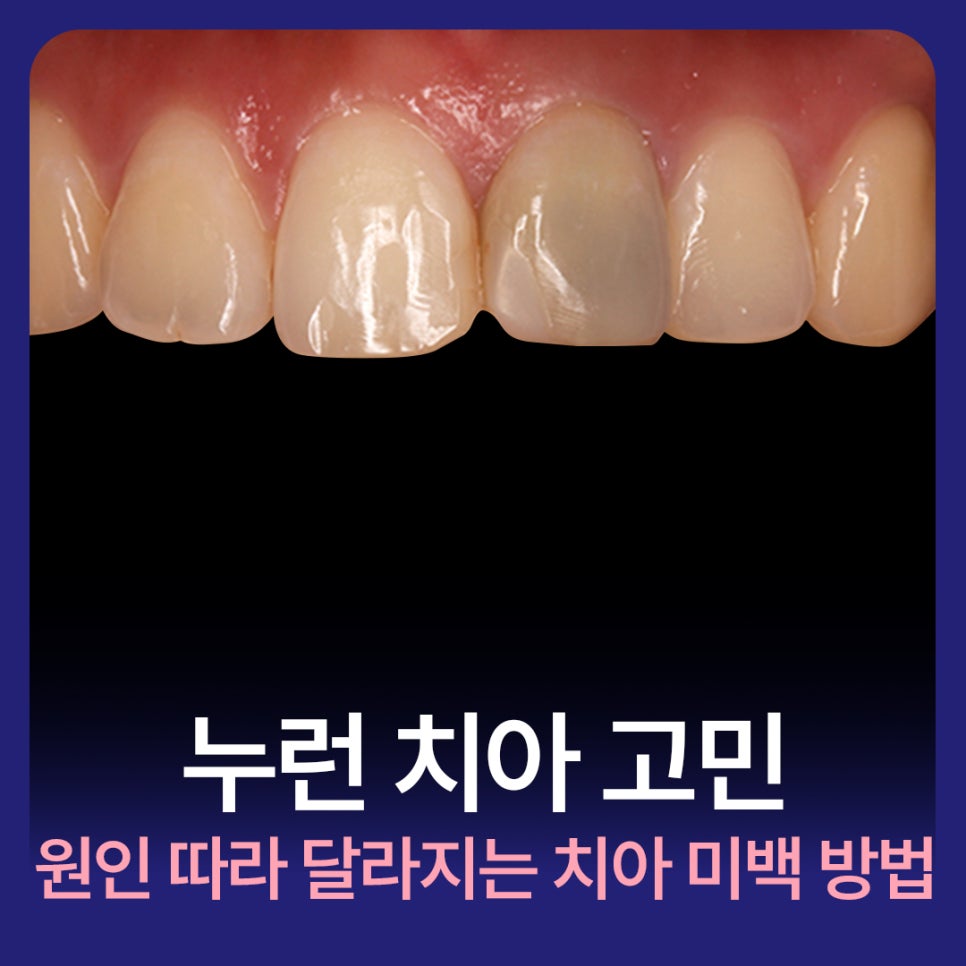
Have you ever wanted to smile brightly in front of the mirror, only to feel your confidence drop because of noticeable yellow teeth? From beverages we often enjoy, such as coffee, tea, and wine, to age and lifestyle habits, the causes of tooth discoloration are more varied than you might think. That is why, rather than simply aiming to “whiten teeth,” you need a tailored solution based on the cause. Today, let’s look at the main causes of yellow teeth and the teeth whitening methods that may differ depending on the cause.
What Causes Tooth Discoloration?
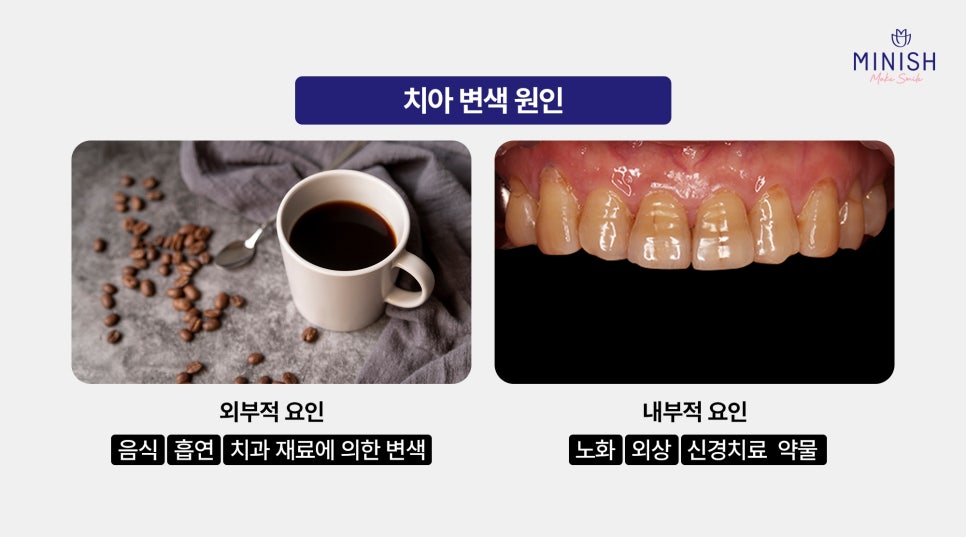
Many people want to maintain bright, clean teeth, but more people than expected struggle with tooth discoloration. The reasons teeth turn yellow can be broadly divided into external factors and internal factors, and because whitening methods differ depending on the cause, it is important to know them accurately.
[External Factors]
- Discoloration Caused by Food and Drink
Foods and drinks with strong pigments, such as black tea, green tea, coffee, wine, and chocolate, stain the tooth surface and gradually make teeth appear yellow. In addition, if consumed consistently, the staining can become deeper, making it difficult to improve with brushing alone.
- Discoloration Caused by Smoking
When you smoke, nicotine and tar in cigarettes adhere to the teeth and cause staining. It does not simply make the whole tooth look yellow; it can especially appear as if dark grime has built up between the front teeth. In such cases, it can negatively affect oral health, and staining may recur quickly even after whitening treatment, so caution is needed.
- Discoloration Caused by Dental Treatment Materials
Metal-ceramic crowns (PFM restorations) used in the past may, over time, expose the internal metal, making the gum line look dark or the entire tooth appear dull. In addition, old amalgam fillings can oxidize and discolor the surrounding teeth gray or black, affecting aesthetics.
[Internal Factors]
- Discoloration Caused by Aging
As people age, the enamel on the tooth surface gradually wears down, revealing the yellow dentin underneath. This makes the teeth look more sunken and yellowish, which is age-related discoloration.
- Discoloration Caused by Trauma
If a tooth receives a strong impact, the internal nerves and blood vessels can be damaged, and as the tooth gradually dies, its color may change. In this process, the tooth becomes dull and darker, turning grayish or brownish. Because the discoloration occurs deep inside the tooth, it is difficult to improve with ordinary surface treatment.
- Discoloration Occurring After Root Canal Treatment
Teeth may darken due to improperly performed root canal treatment, or due to residual necrotic tissue and bacterial infection after treatment. Some filling materials used during root canal treatment can also cause tooth discoloration.
- Discoloration Caused by Medication
If certain drugs or chemicals are taken incorrectly during the tooth-forming stage, staining can develop inside the teeth. Common examples include the antibiotic tetracycline and excessive fluoride intake.
Types of Teeth Whitening ①
Vital Bleaching
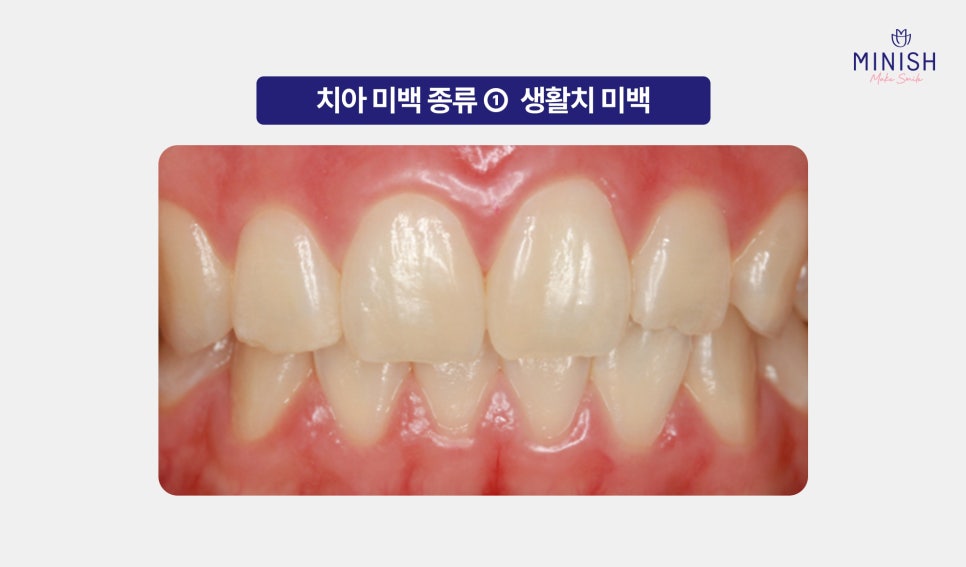
The procedure that restores or brightens discolored or naturally yellowed teeth to their original shade using a high concentration of hydrogen peroxide or carbamide peroxide gel is called vital bleaching. Vital bleaching is broadly divided into professional whitening performed at a dental clinic and take-home whitening done at home under the guidance of medical staff.
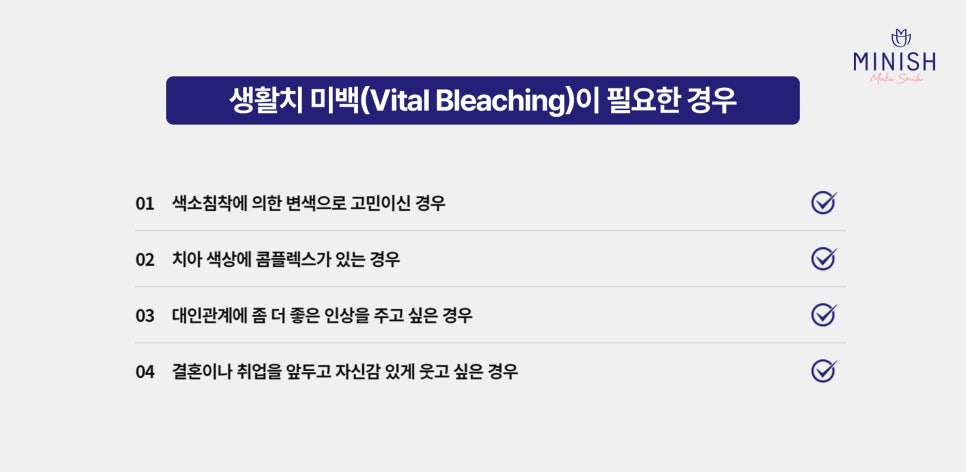
Teeth whitening is not just for improving discoloration; it is also suitable for those who want a brighter, healthier-looking impression. If your confidence has dropped because of your tooth color, or if you want to leave a good impression in an important social setting, vital bleaching is recommended.
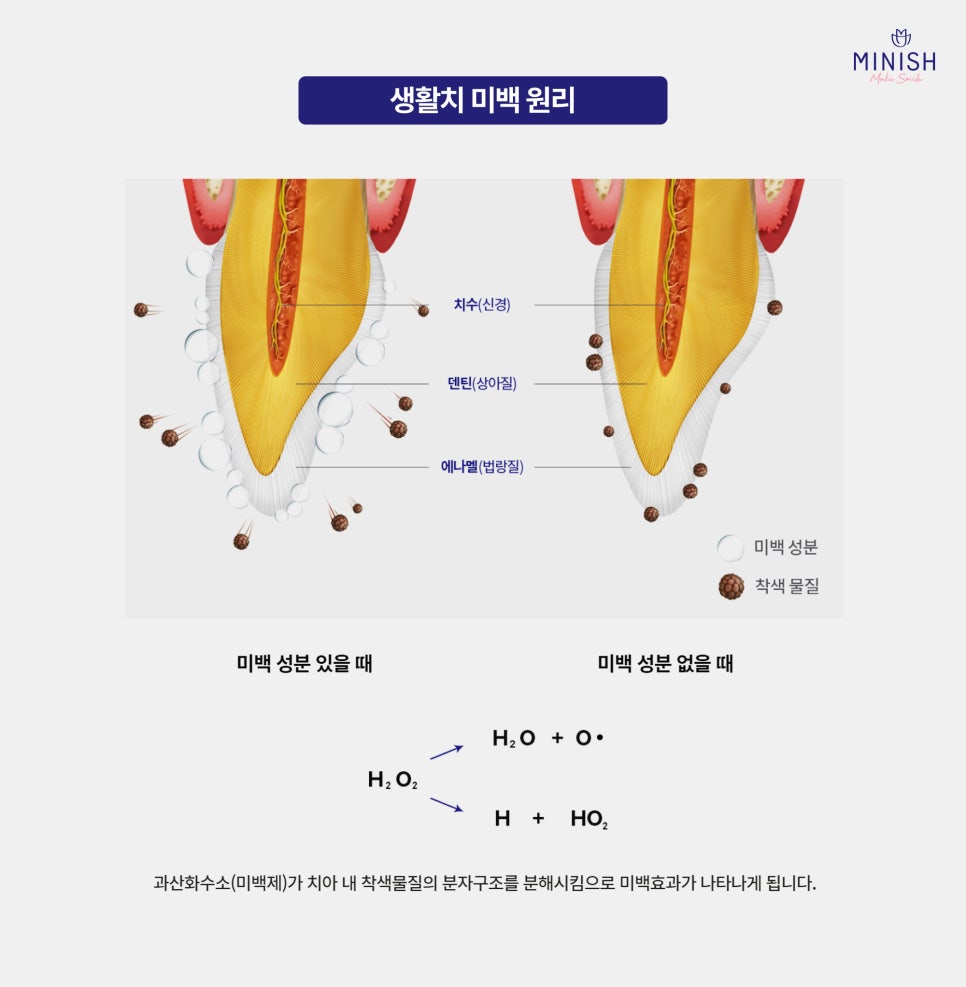
Vital bleaching is a method that breaks down staining substances deposited in the enamel layer of the teeth to brighten the color. Hydrogen peroxide, the main ingredient, breaks down the molecular structure of staining substances inside the tooth, producing a natural whitening effect.
Vital Bleaching – Professional Whitening
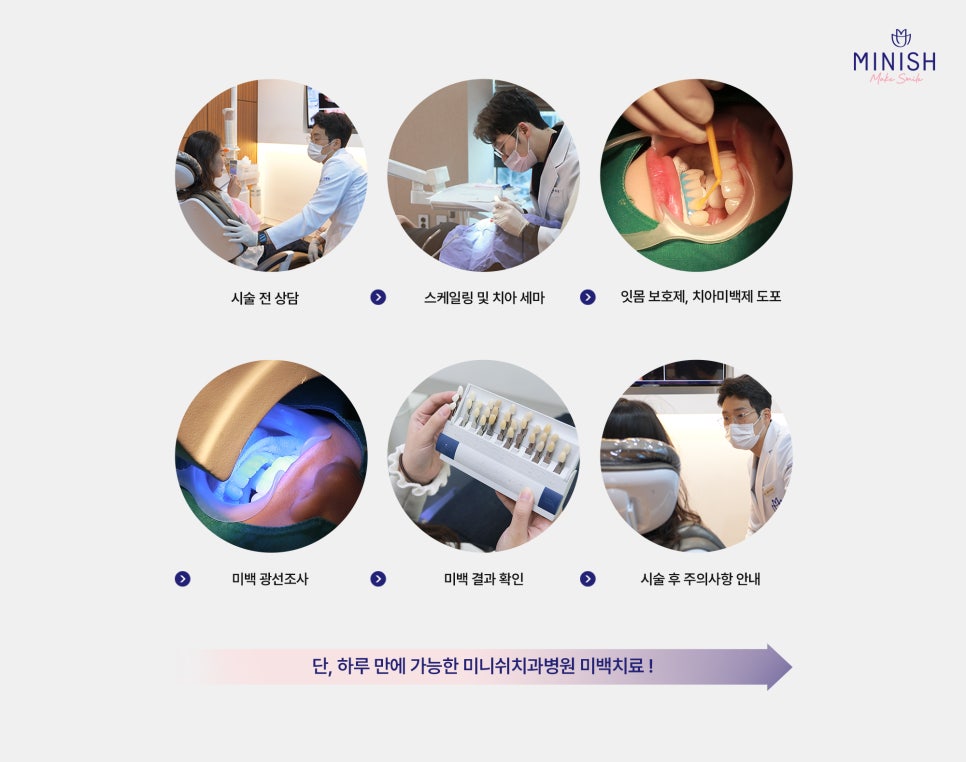
Professional whitening is a planned whitening procedure carried out after consultation with dental staff, and it is a safe way to achieve quick results. After applying a high-concentration whitening agent to the teeth, light is used to activate the agent, allowing a noticeable change in brightness in a short time. At Minish Dental Hospital, scaling is performed before whitening when necessary for better results, and the whitening program is managed as a total of 2 sessions and 4 stages of professional whitening.
Vital Bleaching – Take-Home Whitening
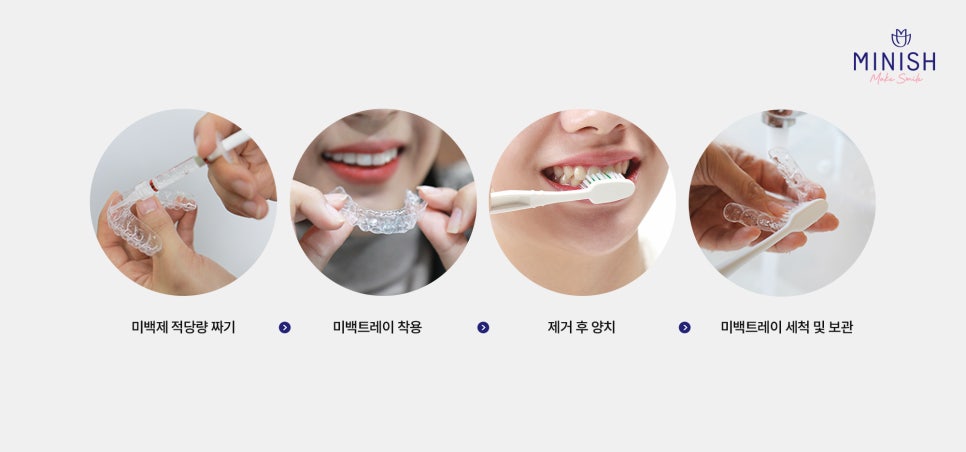
Take-home whitening is a method of brightening teeth by conveniently applying whitening gel at home, using custom take-home whitening trays made in the in-house dental lab at Minish Dental Hospital. Using whitening gel containing 10–15% hydrogen peroxide, the whitening effect appears slowly over a long period. When combined with professional whitening, the effect is maximized and bright teeth can be maintained for a longer time.
[How to Use Take-Home Whitening]
- Squeeze an appropriate amount of whitening gel into the center front area of the tray.
- Be careful not to use too much, as the whitening gel may overflow.
- Put on the tray and press it lightly so the whitening gel spreads evenly.
- Wipe away any gel that spills out with a cotton swab or tissue.
-
Wear it for at least 2 hours, and continue for 2 to 4 weeks depending on the degree of tooth staining.
-
Remove the tray and brush your teeth.
-
After use, rinse the remaining whitening gel off the tray under running water, dry it completely, and store it in the case.
Changes Before and After Vital Bleaching
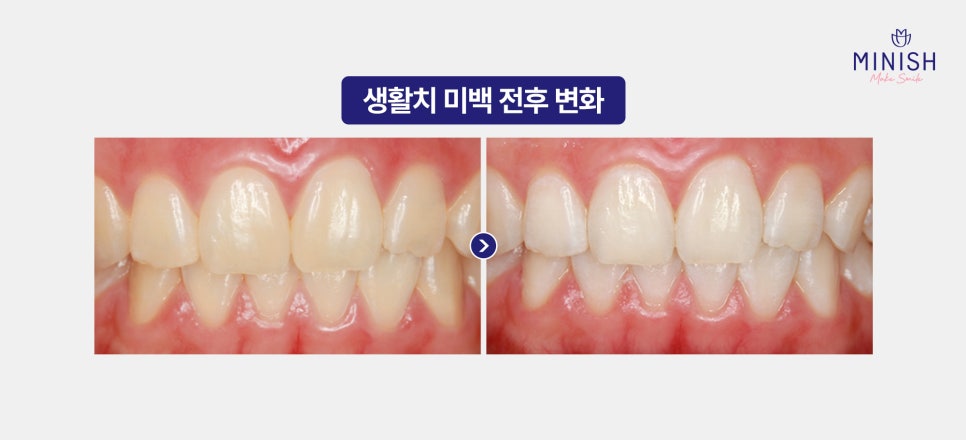
Through the image above, see for yourself how the color of the teeth has brightened after vital bleaching. Not only the difference in color, but also the clearer and healthier appearance of the teeth has noticeably improved.
Types of Teeth Whitening ②
Non-vital Bleaching
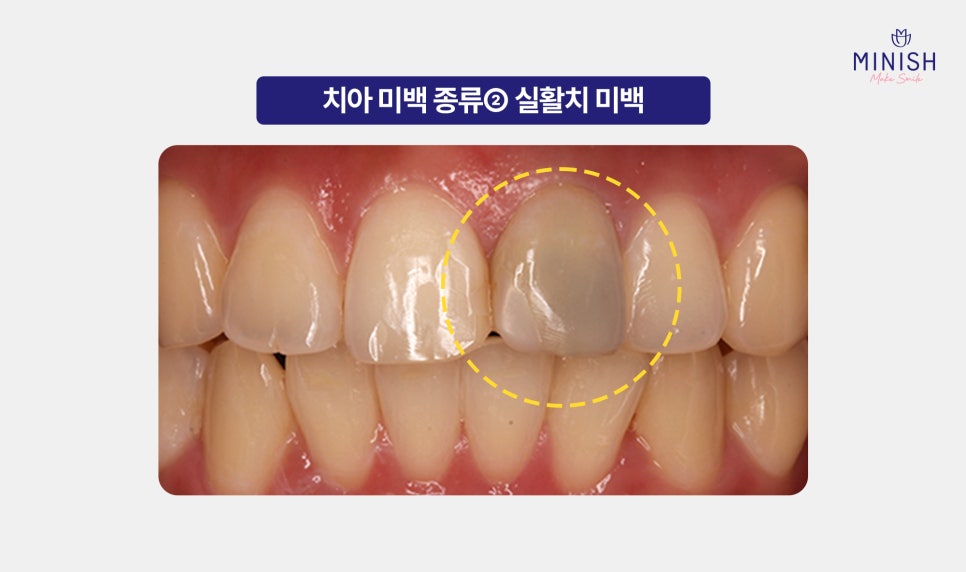
A non-vital tooth refers to a tooth that has lost vitality because the pulp (nerve) has necrosed due to external stimulation. Because of blood components inside the pulp, especially hemoglobin, the tooth color may change to gray or dark brown, and in such cases non-vital bleaching is needed. At Minish Dental Hospital, professional non-vital bleaching restores a natural tooth color so that both aesthetics and confidence can be regained.

In cases like the one above, non-vital bleaching may be helpful. It is suitable for teeth that have undergone root canal treatment, teeth discolored by trauma, and those who want a brighter tooth tone for aesthetic reasons.
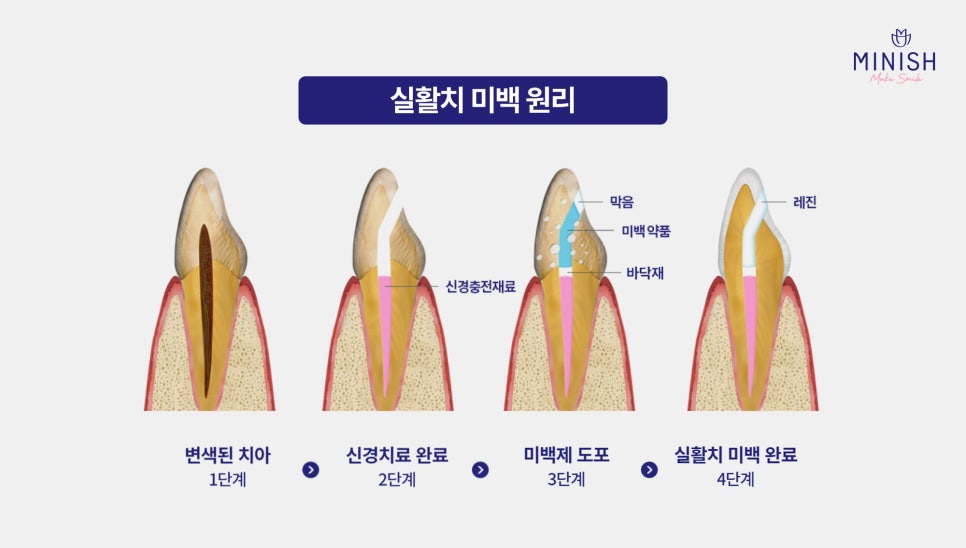
Non-vital bleaching is a method that improves discoloration in teeth whose nerves (pulp) have been removed. Tooth discoloration occurs when blood components inside the pulp, especially the iron component of hemoglobin, penetrate the mineral crystals of the tooth. At this point, if a whitening agent containing hydrogen peroxide is placed inside the tooth, the tooth color gradually becomes brighter and a natural whitening effect can be achieved. In cases where non-vital bleaching is difficult, teeth in which the nerve has already completely dried out cannot undergo root canal treatment itself, so non-vital bleaching cannot be applied. Therefore, if the discoloration is severe or treatment has been delayed, other aesthetic tooth preservation methods should be considered.
Changes Before and After Non-vital Bleaching
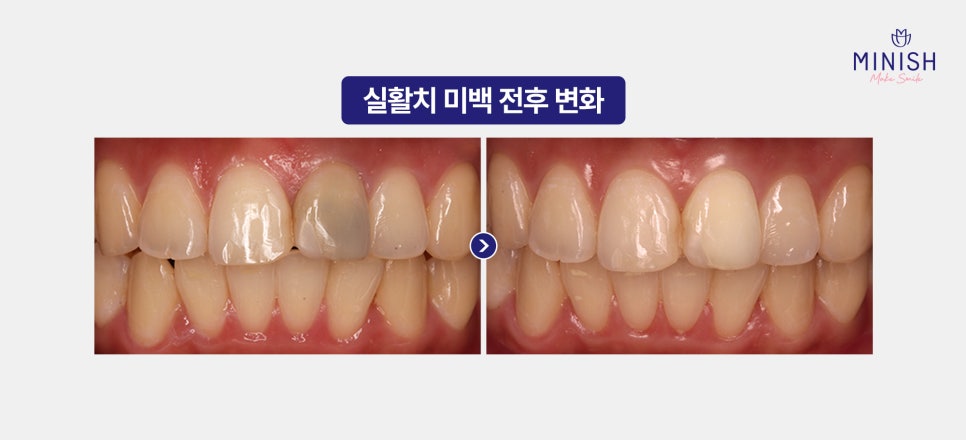
Through the image above, see for yourself how the tooth color improved after non-vital bleaching. Even in a tooth without a pulp (nerve), the darkly discolored tooth was restored to a bright and natural color, and not only the color but also the tooth’s natural translucency and healthy appearance were noticeably improved.
Types of Teeth Whitening ③
Gum Whitening
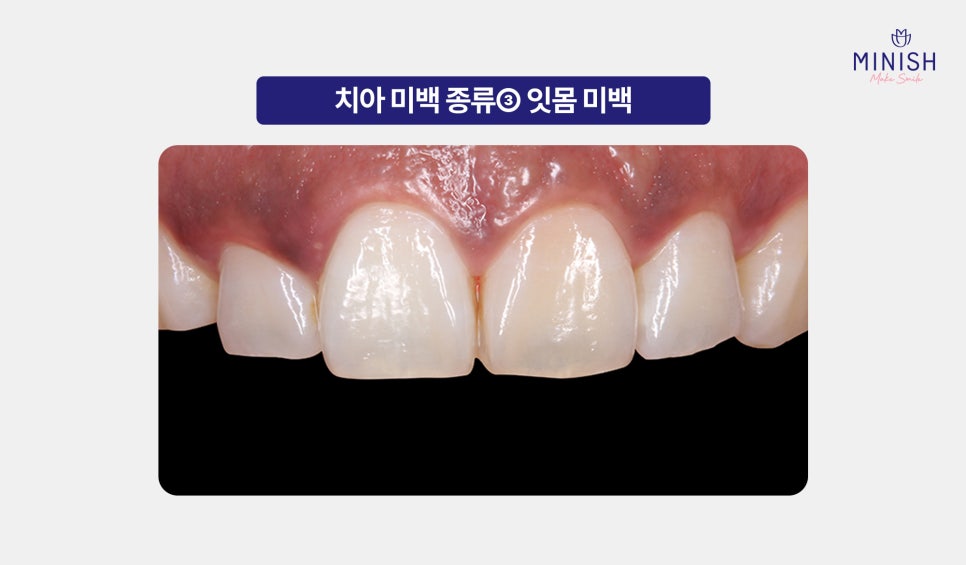
This is a procedure that removes melanin pigment accumulated in the gums and returns darkly pigmented gums to a healthy pink color. The areas where melanin has accumulated are gently removed, almost like exfoliation, creating a natural and even gum tone. Especially when the gum edges look dark while smiling, gum whitening can help restore a brighter and healthier impression.
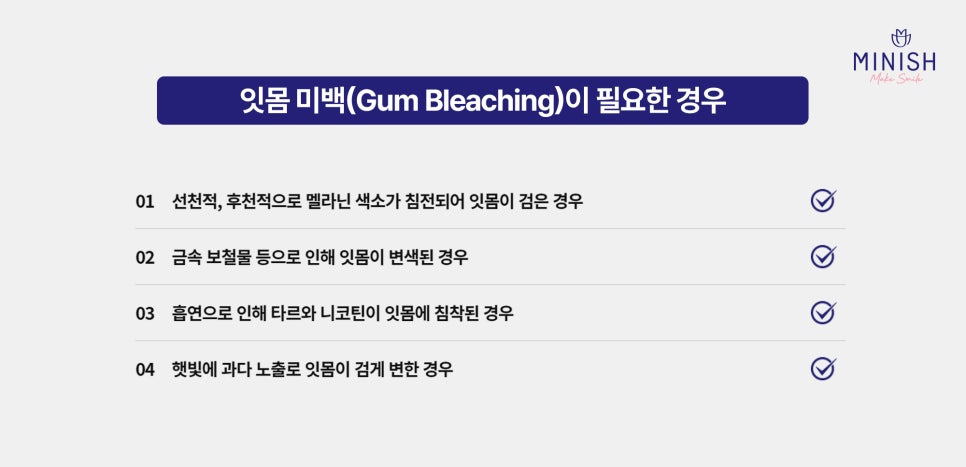
In cases like the one above, gum bleaching may be necessary. It returns gums discolored by congenital or acquired melanin, metal restorations, smoking, sun exposure, and other factors to a healthy pink color.
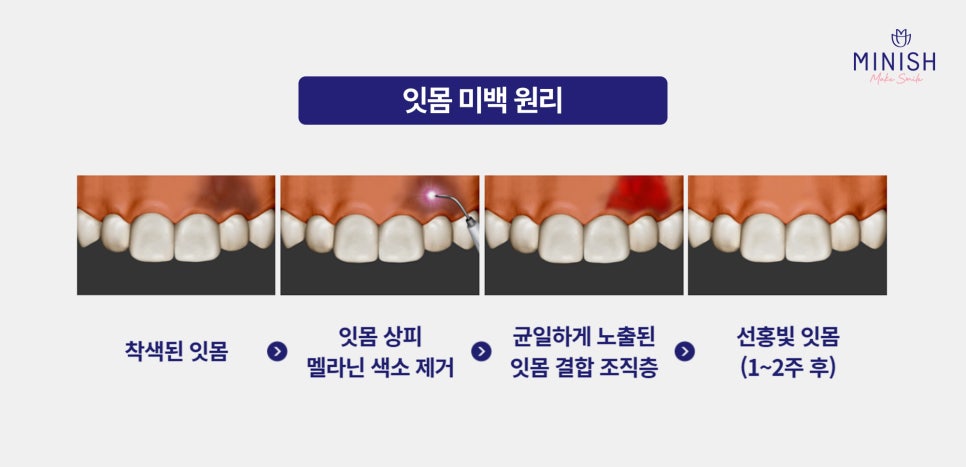
Gum whitening is performed on a principle similar to skin exfoliation. It is a procedure that removes melanin pigment accumulated in the gum epithelial tissue and reveals the healthy gum tissue beneath, creating clear and brighter gums.
Changes Before and After Gum Whitening
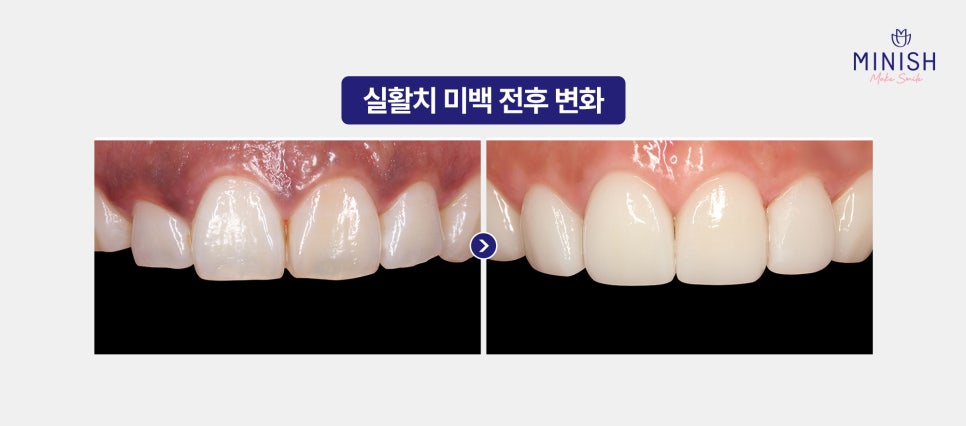
Darkly pigmented gums can be seen changing to a healthy, clear pink color after the procedure.
When Teeth Whitening Is Not Enough: Minish, a Tooth Restoration Solution
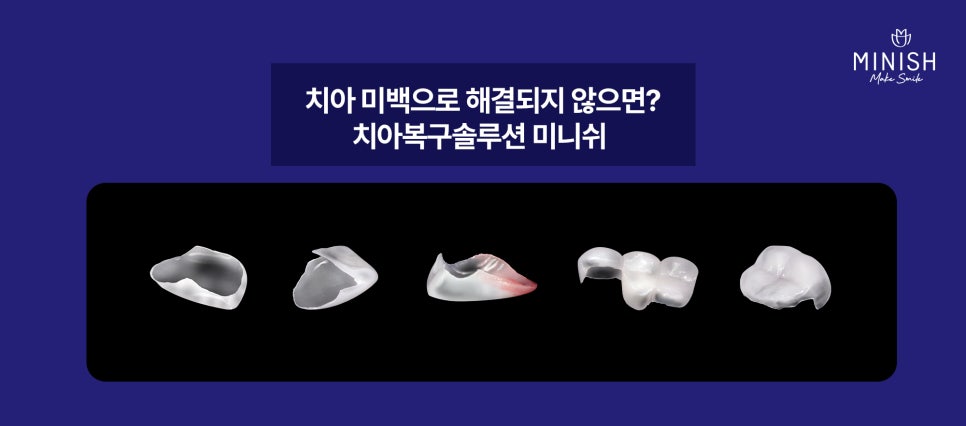
For severe discoloration caused by congenital factors, medication such as tetracycline, aging, nerve damage, or staining due to a rough tooth surface, whitening alone makes it difficult to achieve satisfying aesthetic results.
If regular whitening treatment is difficult, or if you want permanent results while minimizing tooth damage, we recommend the tooth restoration solution Minish. Minish preserves natural teeth as much as possible while improving color and restoring the tooth’s texture and translucency in a healthy way. After accurately checking your dental condition, it is important to choose the method that is most suitable for you.
After accurately identifying the cause of tooth discoloration, Minish Dental Hospital suggests the optimal whitening method for each cause. Even when ordinary whitening is difficult to improve, there is the tooth restoration solution Minish, which can help preserve natural teeth while improving health and aesthetics. If you are worried about tooth color, visit Minish Dental Hospital and see how it can be improved in a healthy way with the method that suits you best.