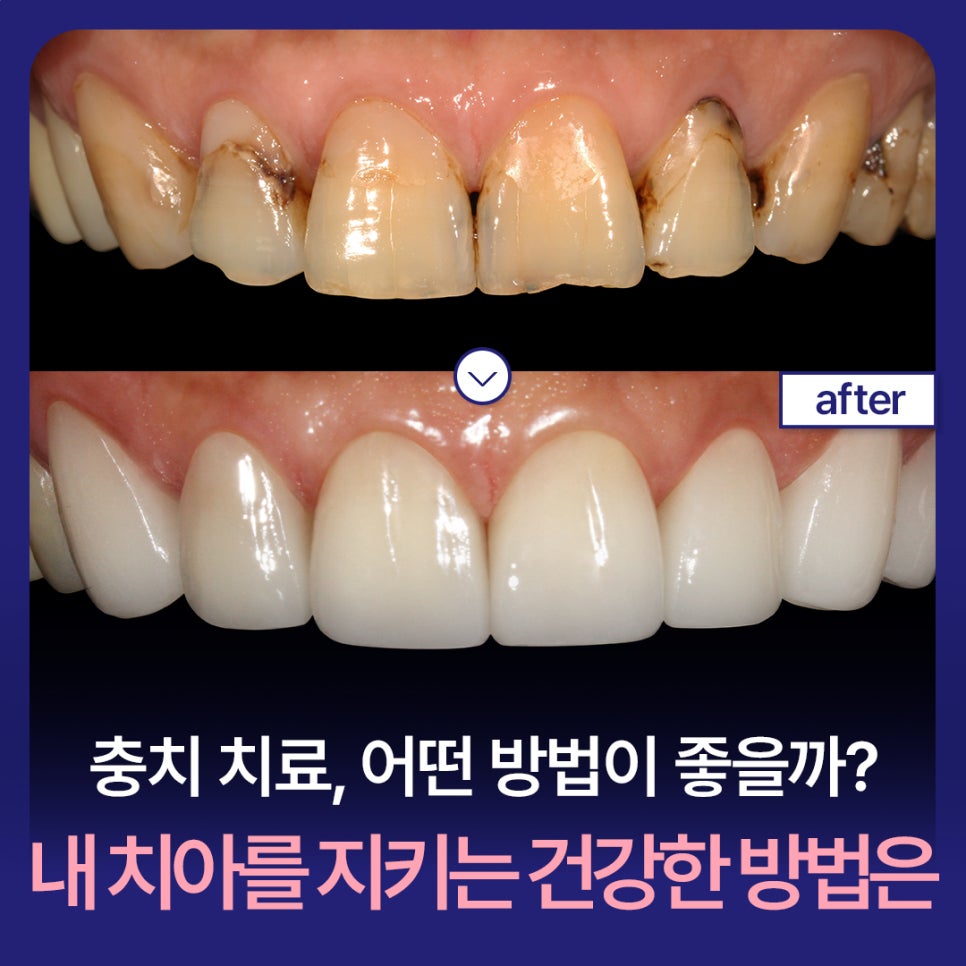
You may not notice it much when there is no pain, but once a cavity develops, many people end up visiting the dentist. When you actually go for treatment, it can feel confusing and difficult to decide between resin, inlay, or whether a crown is needed. There are many treatment methods, but what matters most is choosing a way to protect your teeth for a long time and keep them healthy. Today, we will look at cavity treatment methods step by step, and also introduce another option that can consider both natural tooth preservation and aesthetics.
Symptoms and prosthetic treatment by cavity stage
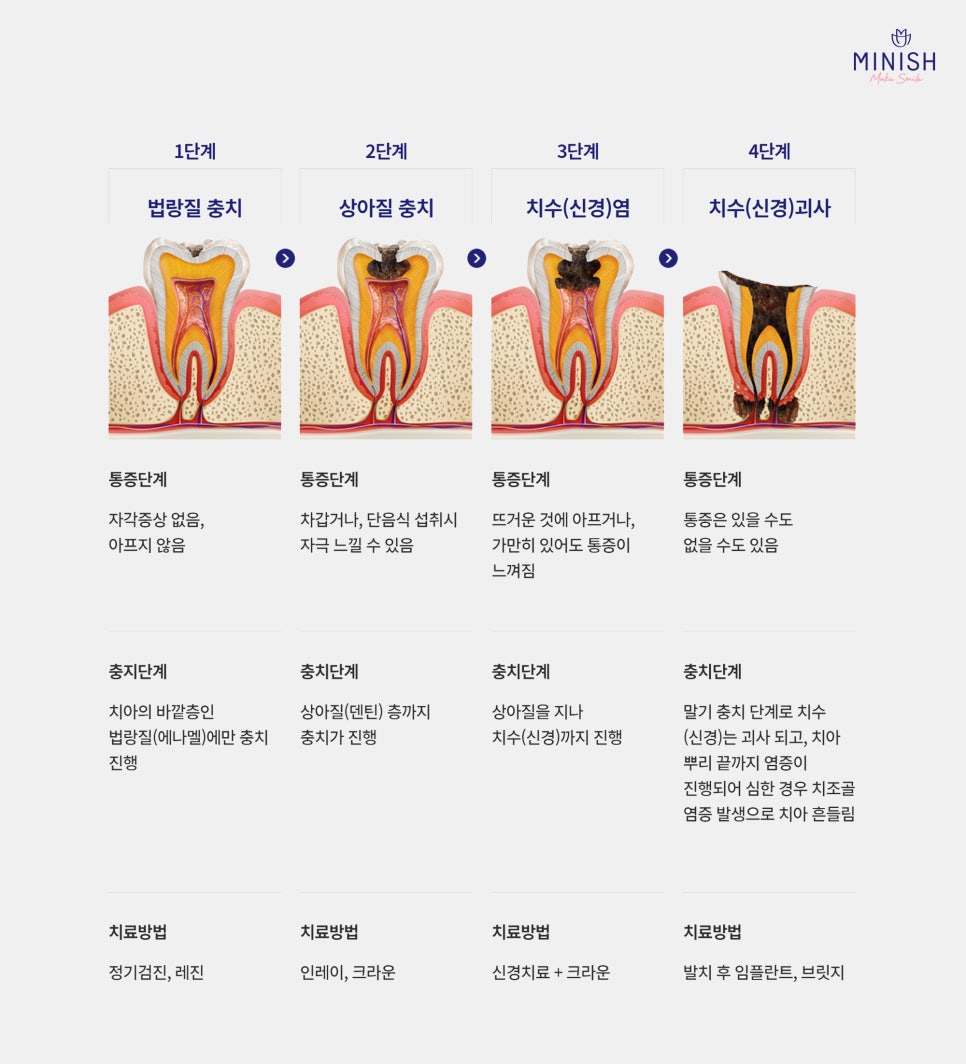
Cavity treatment methods vary depending on the stage of progression. In the early stages, simple treatment with regular checkups and resin may be possible, but as it progresses, inlay, crown, root canal treatment, and in severe cases, extraction followed by implant or bridge treatment may be necessary. Accurately checking the condition of the tooth and treating it at the appropriate time is the safest way to protect healthy teeth.
Various cavity treatment methods
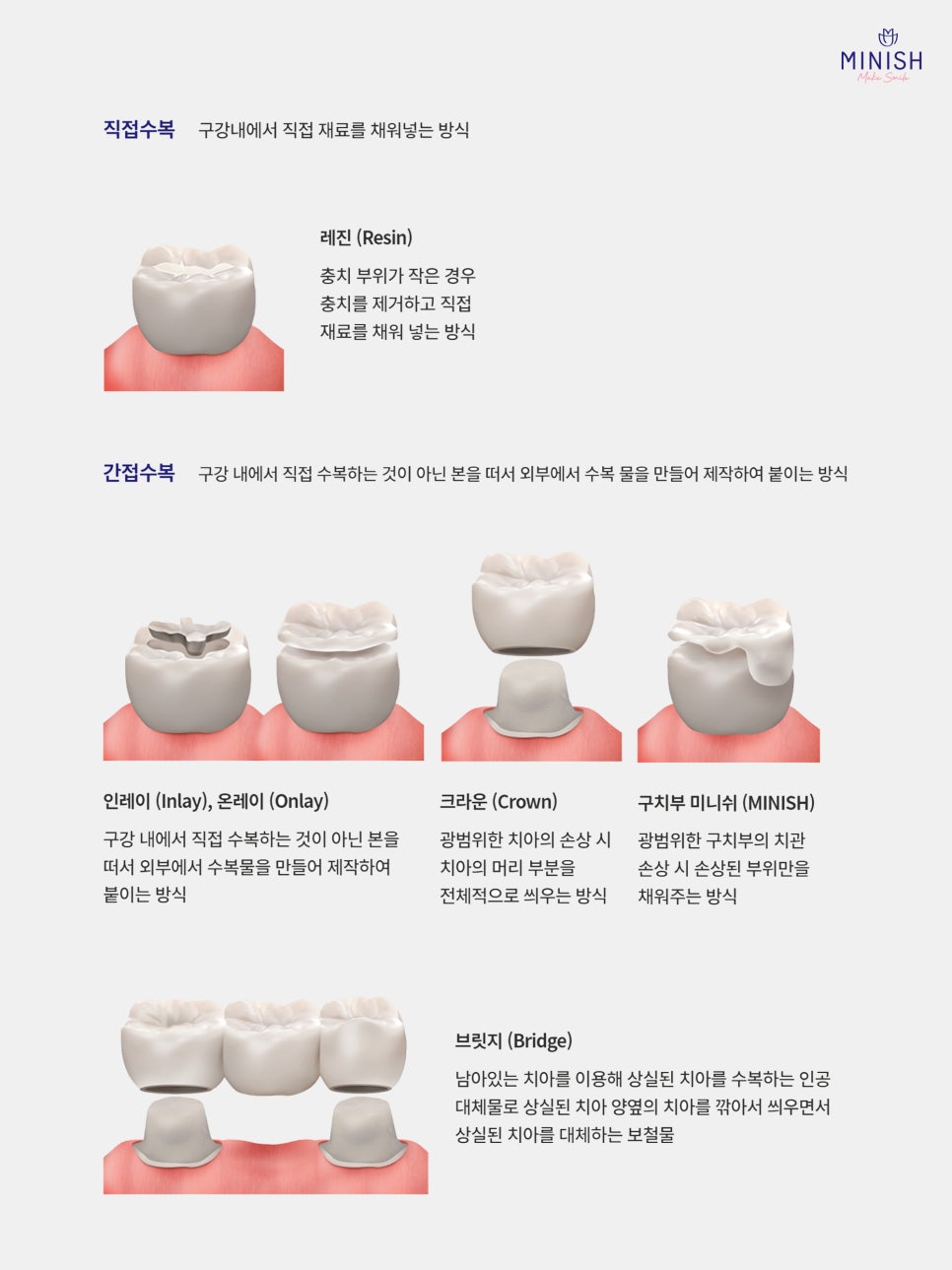
Cavity treatment is broadly divided into two methods: direct restoration and indirect restoration. Direct restoration is a method in which material is placed directly into the tooth when the cavity area is relatively small. Indirect restoration is a method in which the damaged area is modeled and a restoration is made externally before being attached. Depending on the extent of the cavity or damage, various treatments such as resin, inlay/onlay, crown, Minish, and bridge may be applied.
What if the molar cavity is large?
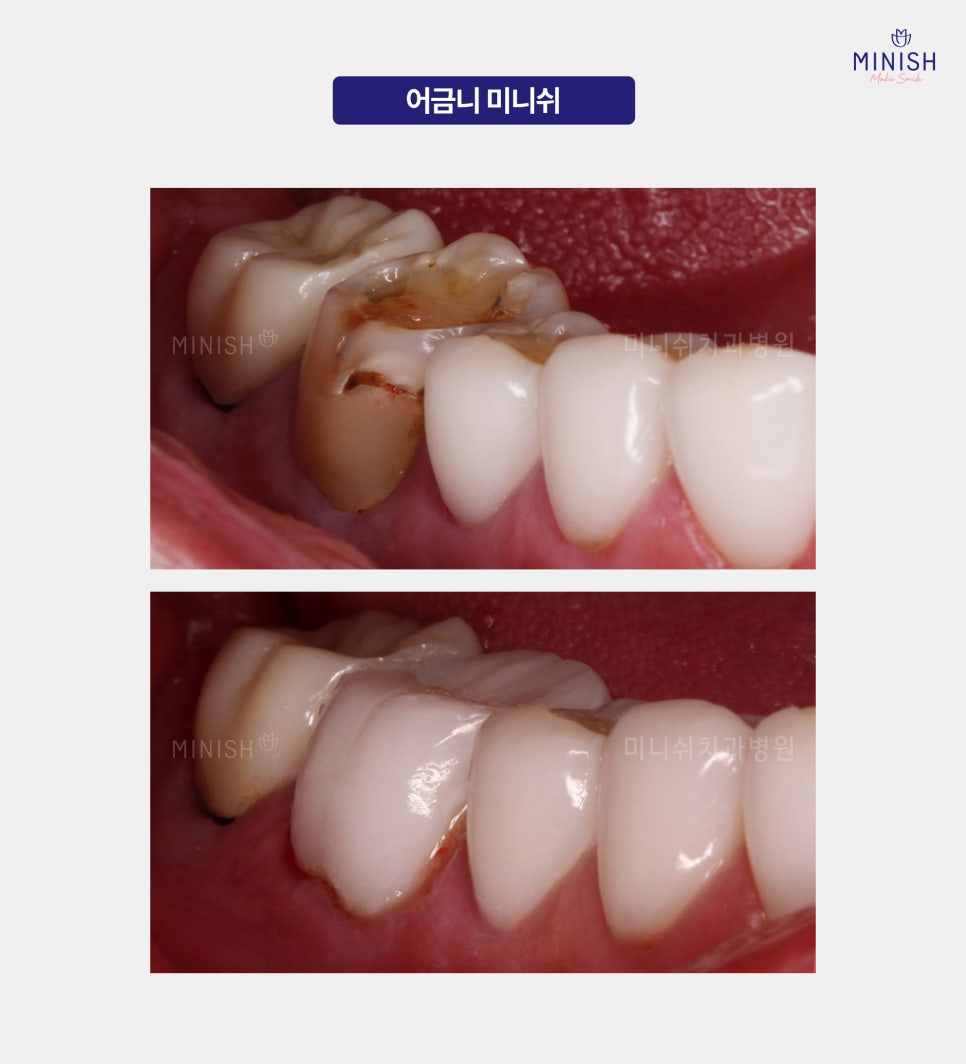
When a cavity is large, or when there is a crack, fracture, or damage after root canal treatment, crown treatment is generally often performed to protect the molar. However, crowns have limitations in that a large portion of healthy tooth structure must be removed, and they can place a burden on gum health as well. At Minish Dental Hospital, Minish is also applied to molars (posterior teeth), offering a way to minimize unnecessary tooth removal and help protect gum health. In particular, conventional crowns require at least 0.8–2 mm or more of tooth reduction, while Minish can be performed with minimal reduction only in the necessary areas, making it highly conservative. Even if an unexpected problem such as restoration fracture occurs, it can still be converted to conventional crown treatment, which makes posterior Minish a conservative alternative for protecting teeth.
A healthy choice that reduces tooth damage: Minish Bridge
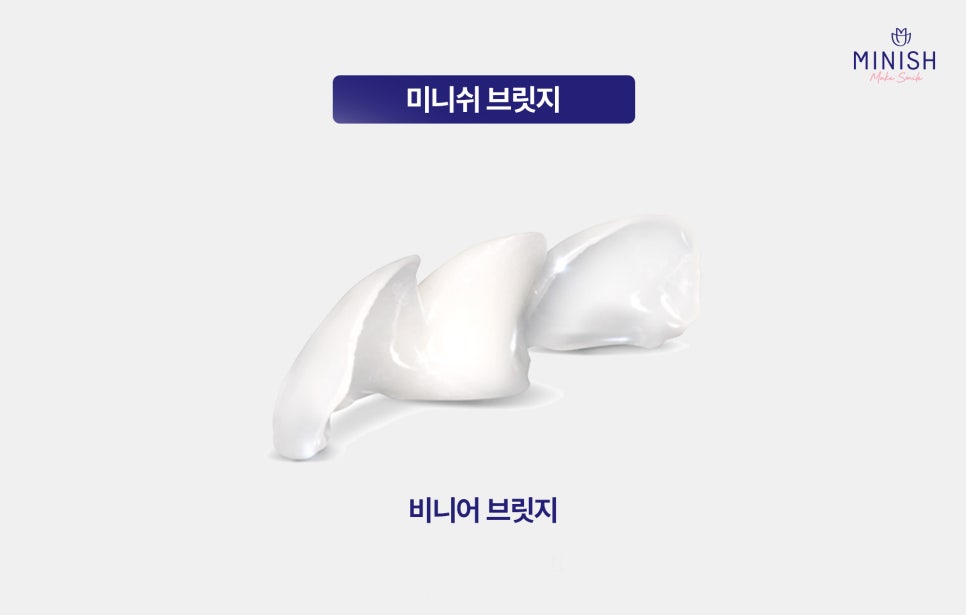
A Minish bridge has the advantage of minimizing damage to the adjacent teeth compared with a conventional bridge when replacing a missing tooth area. In other words, it is a conservative method that compensates for the missing tooth while preserving the neighboring healthy teeth as much as possible. Minish bridges are divided into two types depending on the case: Wing Bridge and Veneer Bridge.
🔹 Wing Bridge
Wing Bridge is used when the teeth on both sides of the missing tooth are healthy. It fills the missing area by bonding a “wing-shaped” structure without extensively削 (removing) the adjacent teeth. It is especially recommended for people who are concerned about tooth reduction.
🔹 Veneer Bridge
Veneer Bridge is applied when the adjacent teeth need enamel restoration due to wear, cavities, or erosion. After minimally removing only the problematic areas, a Minish veneer (a thin prosthetic that covers the front surface) and an artificial tooth (pontic) are made as one piece and connected. This allows damaged areas to be restored while also naturally replacing the missing tooth.
Minish Dental Hospital’s cavity prosthetic treatment system
Early diagnosis and proper conservative care are the most important factors in cavity treatment. Minish Dental Hospital operates a customized prosthetic system tailored to each patient’s tooth condition, reducing unnecessary tooth damage caused by cavities and minimizing pain and discomfort. Through the following three treatment processes, we manage cavities while preserving healthy teeth as much as possible.
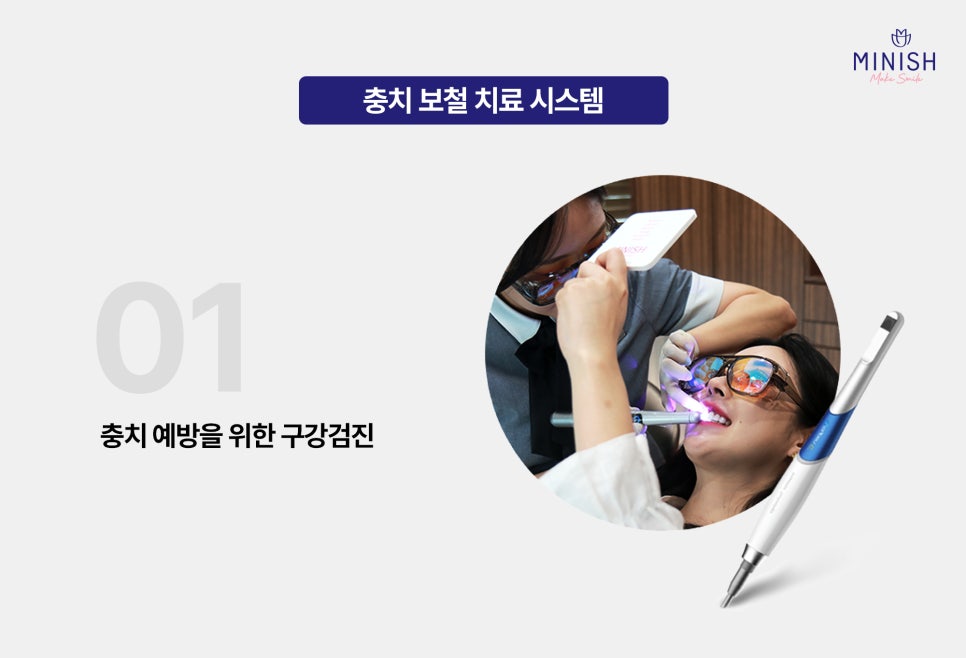
- Precise oral examination for cavity prevention
As cavities progress over time, the scope of treatment grows, and so do pain, cost, and treatment duration. Therefore, early detection is key to protecting dental health. At Minish Dental Hospital, we use advanced diagnostic equipment such as CURELAPEN C and CURELAVIEW C to operate a precise examination system that can detect even interproximal cavities, which are difficult to see with the naked eye, at an early stage.
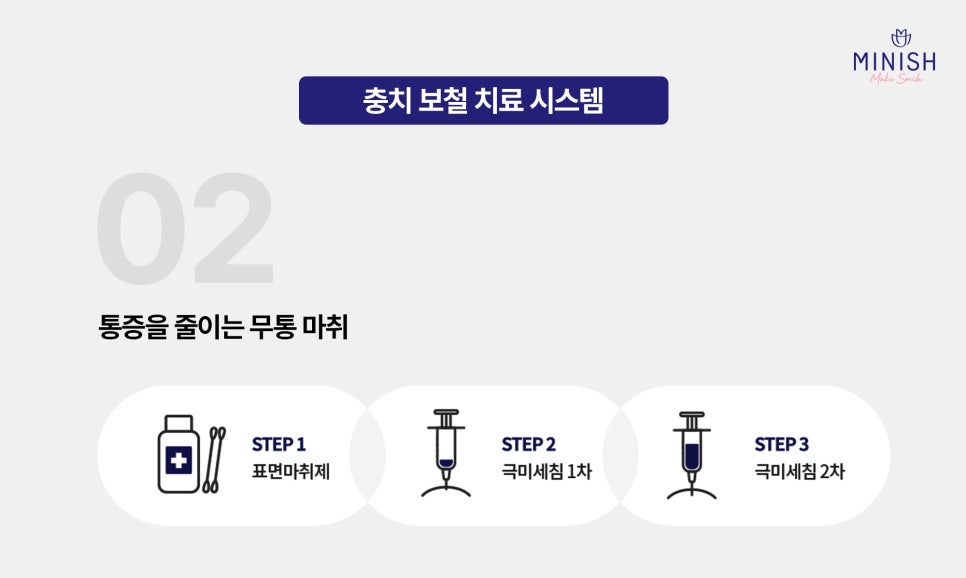
- Painless anesthesia that reduces discomfort
“If it hurts, we stop treatment.” We do not continue treatment while the patient is feeling pain. Our experienced medical staff apply a 3- to 5-stage anesthesia system to provide anesthesia that is not stronger than necessary but still sufficiently effective. This helps prevent unnecessary pain during treatment.
[Anesthesia system prepared for a comfortable treatment environment]
✔ Warmer (warmed anesthetic solution)
✔ Gargle/topical anesthetic
✔ Painless anesthesia device
✔ Sedation therapy
Even those who have dental phobia or fear pain can receive treatment with peace of mind.
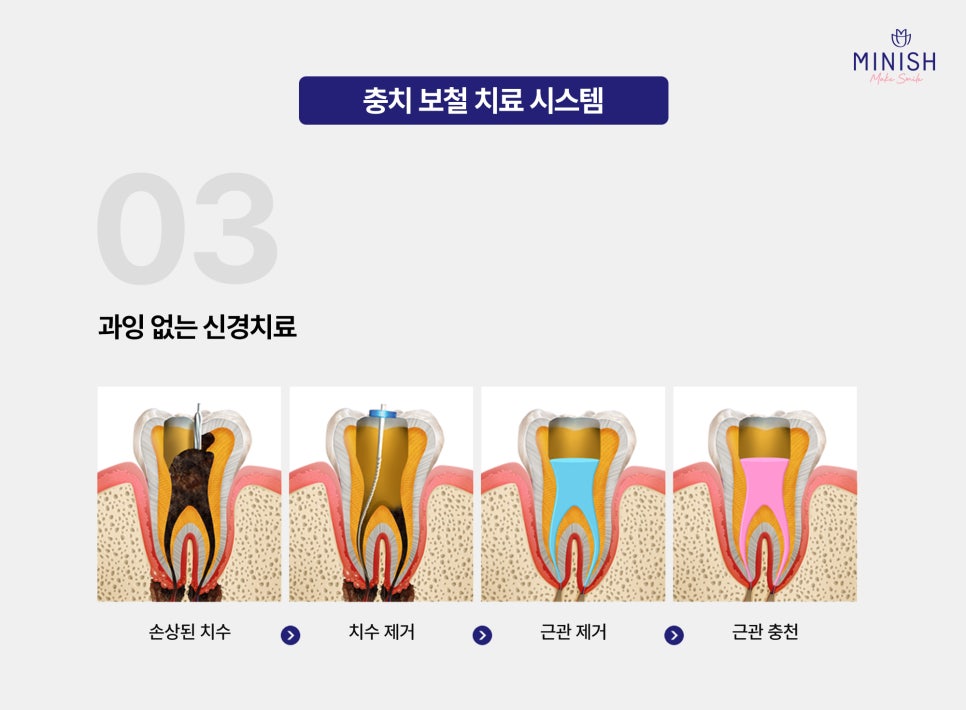
- No-overuse root canal treatment
Root canal treatment is the process of removing the nerve of a tooth infected by cavities or trauma, disinfecting it, and then replacing it with an artificial nerve. However, root canal treatment is not necessary in every case. Minish Dental Hospital does not recommend unnecessary root canal treatment. We only perform root canal treatment when damage to the tooth nerve is clear, preserving healthy nerves as much as possible.
[When root canal treatment is needed]
✔ When the cavity is close to or has already reached the nerve
✔ When a crack in the tooth has caused pulpitis
✔ When the nerve has been damaged by repeated irritation or long-term inflammation
✔ When severe sensitivity persists to the point that daily life becomes difficult
✔ When pain appears even while at rest, and especially worsens at night
Minish Dental Hospital, one-day cavity treatment
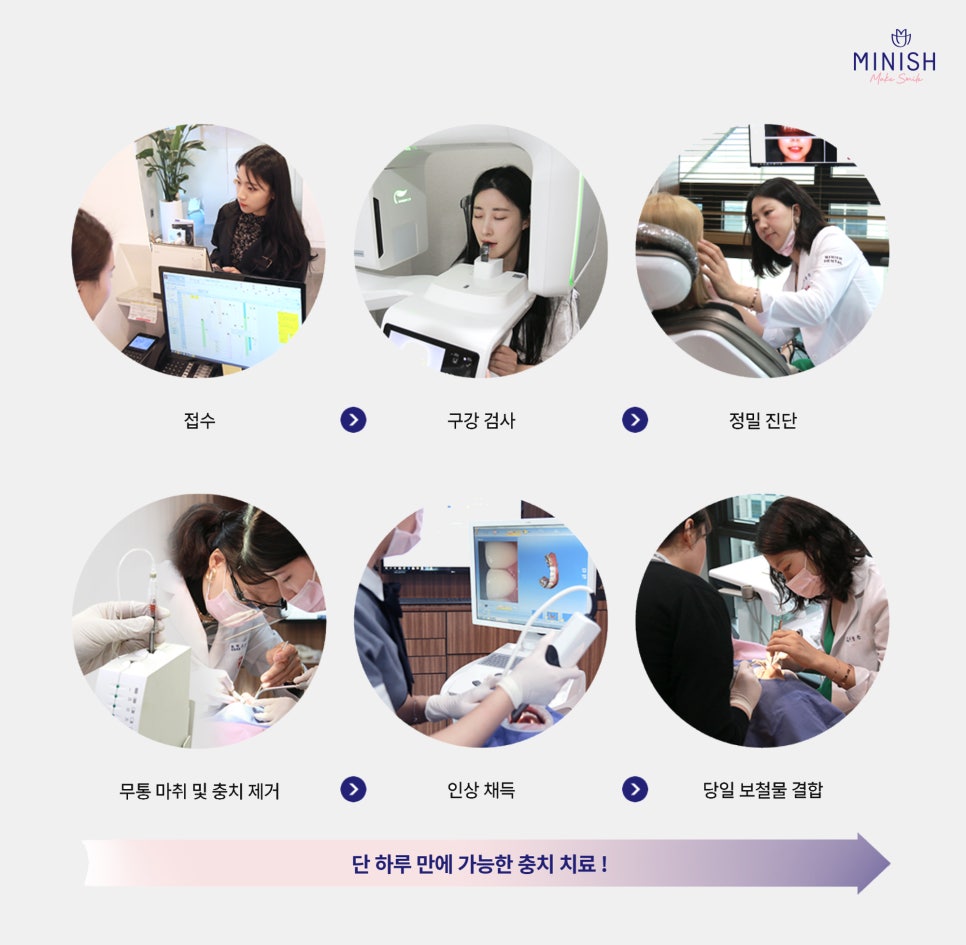
At Minish Dental Hospital, advanced digital equipment is used to carry out cavity prosthetic procedures through a one-day system. Because the entire process from diagnosis to prosthetic application is carried out digitally within the hospital, same-day treatment is possible without unnecessary visits. As a result, issues with fit that can occur when the fabrication period becomes long are minimized, allowing for faster and more precise prosthetic treatment.
(*However, depending on the patient’s tooth condition and diagnostic results, same-day treatment may not be possible in some cases.)
Cavity treatment methods vary depending on how far the cavity has progressed. What matters is choosing the best method for your tooth condition and reducing unnecessary tooth damage. The goal of dental treatment is not simply to remove the cavity, but to preserve natural teeth as much as possible while protecting function and health at the same time.
Minish is a conservative method that protects natural teeth without unnecessary tooth reduction, helping to keep teeth weakened by cavities healthy. Having a cavity does not necessarily mean it must lead to major treatment. Finding the right method based on a careful diagnosis is the wisest choice.