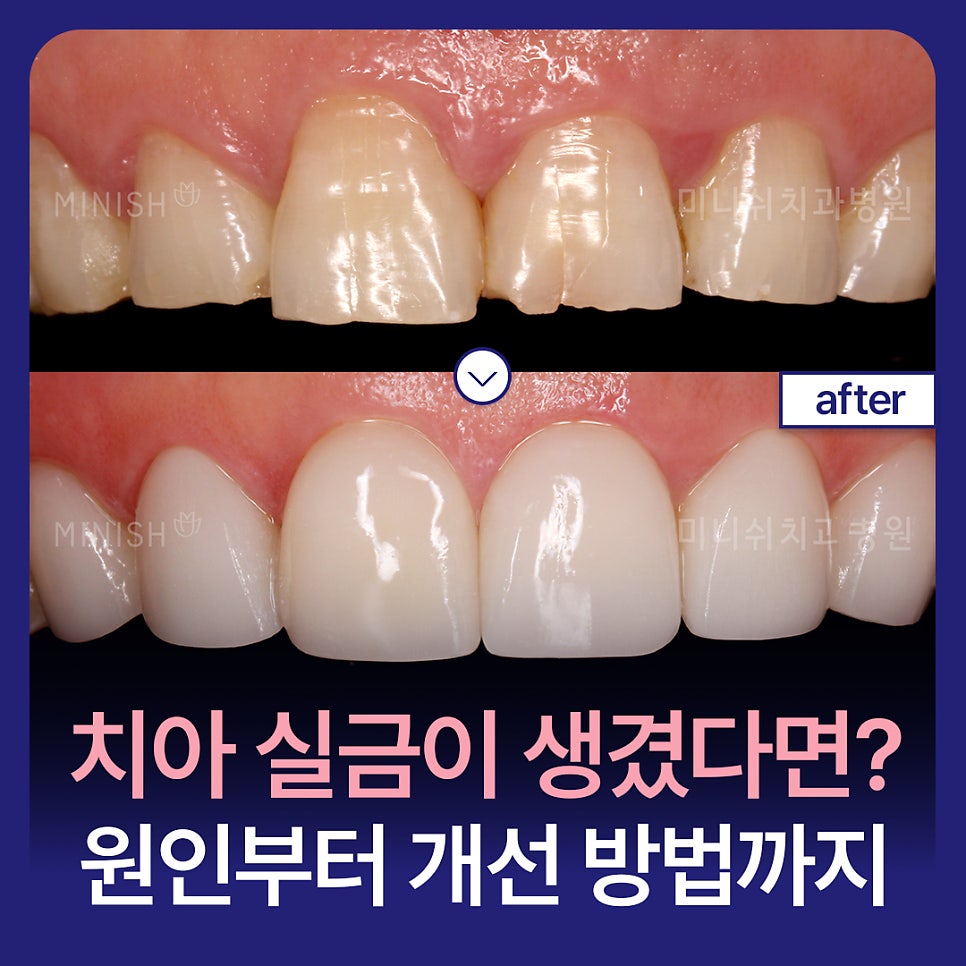
Teeth are continuously put under pressure throughout the day as we chew food and speak. Even ordinary daily use can cause stress to build up, and when this is combined with habits such as grinding teeth during sleep or clenching them habitually, the likelihood of a tooth crack increases. At first glance, it may look like a tiny line and seem insignificant, but cracks can gradually deepen over time, and damage may spread into the inside of the tooth. If left untreated, they can lead to cavities or tooth fracture, so care is needed from the early stages.
Causes of Tooth Cracks
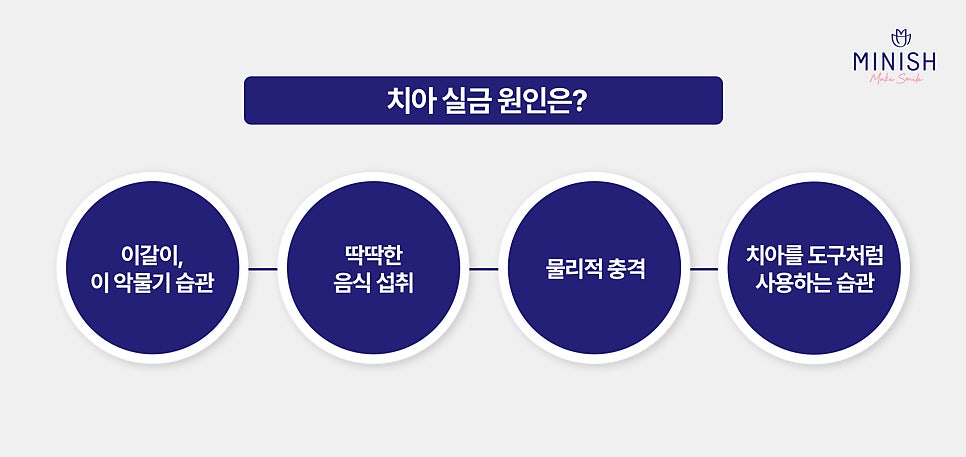
Causes of tooth cracksTooth cracks can occur for a variety of reasons.
-
Teeth grinding and clenching habits: Grinding teeth during sleep or unconsciously clenching them during the day can place continuous pressure on the teeth and cause cracks.
-
Eating hard foods: Hard foods such as ice and nuts can apply sudden force to the teeth and cause cracks.
-
Physical impact: Cracks can occur when you fall or when an external impact is applied around the mouth.
-
Using teeth like tools: Behaviors such as tearing open packaging or biting objects are major causes of tooth damage.
To prevent these causes, managing daily habits is the first priority. However, because it is difficult to change habits on your own, it is a good idea to receive proper consultation and help from a dentist.
Can Tooth Cracks Be Prevented?
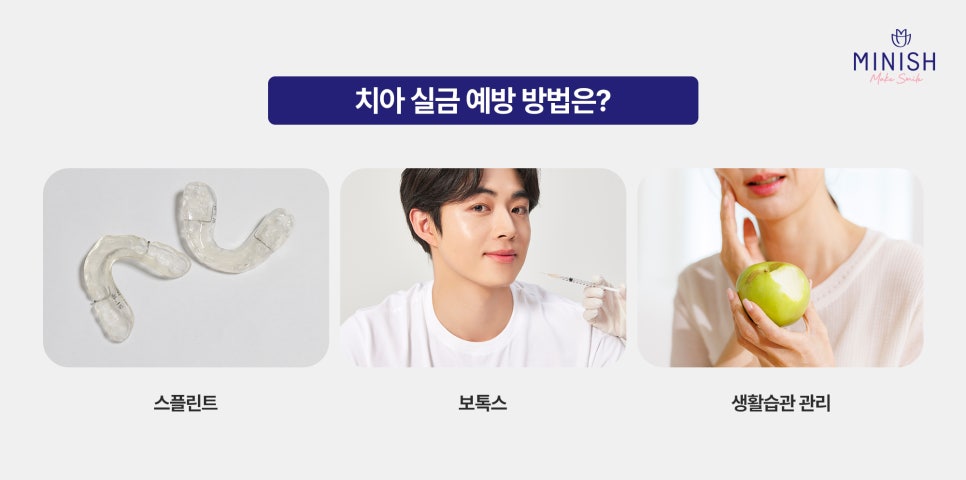
Since tooth cracks do not heal naturally once they occur, prevention is most important. The following methods can help reduce the risk of cracks.
- Splint (anti-grinding device)
This is effective for people who grind their teeth (the habit of unconsciously grinding teeth during sleep). It prevents the teeth from directly touching while you sleep, reducing unnecessary pressure and protecting the teeth. It also helps relieve the burden placed on the temporomandibular joint. Therefore, it can help prevent tooth cracks in the long term.
- Botox treatment
When the chewing muscles are overdeveloped and exert strong force on the teeth, relaxing the muscle tension can help reduce the occurrence of cracks. Botox plays a role in easing the pressure on the teeth by controlling overuse of the chewing muscles, so it can also be helpful for people who clench their teeth strongly.
- Lifestyle management
It is necessary to steadily correct habits, such as avoiding hard foods and reducing unconscious clenching. It is also a good idea to receive regular dental checkups to identify subtle changes before cracks occur.
What If a Tooth Crack Has Already Occurred?
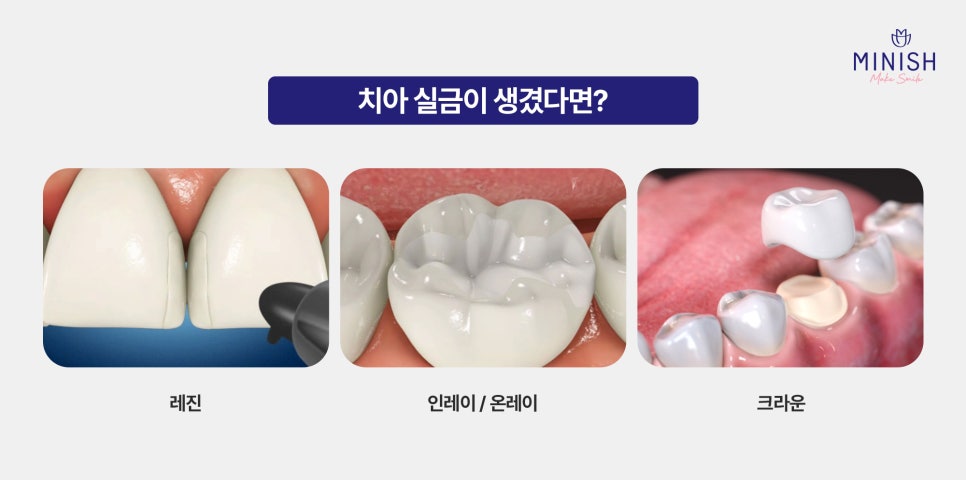
If a crack occurs in a tooth, it may look minor on the surface, but the crack can deepen over time. In particular, if the crack extends into the dentin or nerve area, pain or sensitivity may appear, so accurate treatment is needed depending on the depth and location of the crack.
- Resin
Resin is a method that can be applied to minor surface cracks or early-stage fracture areas. It is relatively simple to perform, but its strength is weak, so it is not suitable for molars or other areas that receive strong chewing force, or for deep cracks. In addition, due to the nature of the material, it may become discolored or worn over time and require retreatment, and repeated retreatment can actually place more burden on the tooth.
- Inlay / Onlay
When the damaged area is wide, an inlay or onlay that partially covers the tooth may be considered. It is made from ceramic material and has excellent durability, but it has the limitation that it cannot completely seal cracks that have progressed deeply. Also, if the margins do not fit completely during the bonding process, tiny gaps can form, and bacteria may enter through those gaps and cause secondary decay. In particular, if the factors that caused the crack, such as teeth grinding or excessive chewing pressure, remain unchanged, there is a high risk of the crack recurring even after restoration.
- Crown
When the crack has progressed deep inside the tooth or the tooth has become structurally weakened, wrapping the entire tooth with a crown is an effective way to protect it. A crown distributes chewing force evenly and helps prevent the crack from spreading further. However, this process requires removing a certain amount of tooth structure, so it is better to consider conservative methods first whenever possible in the early stages. If the crack has extended to the nerve, root canal treatment must be performed first, and then the tooth should be covered with a crown to keep it stable.
As such, existing treatment methods each have clear advantages and disadvantages, but they have the limitation of making it difficult to restore both function and aesthetics while minimizing tooth damage. That is why the one-day system that precisely restores only the damaged area and can be completed in a single day, Minish Ever, was introduced.
A Tooth Restoration Solution That Protects Natural Teeth
Minish Ever
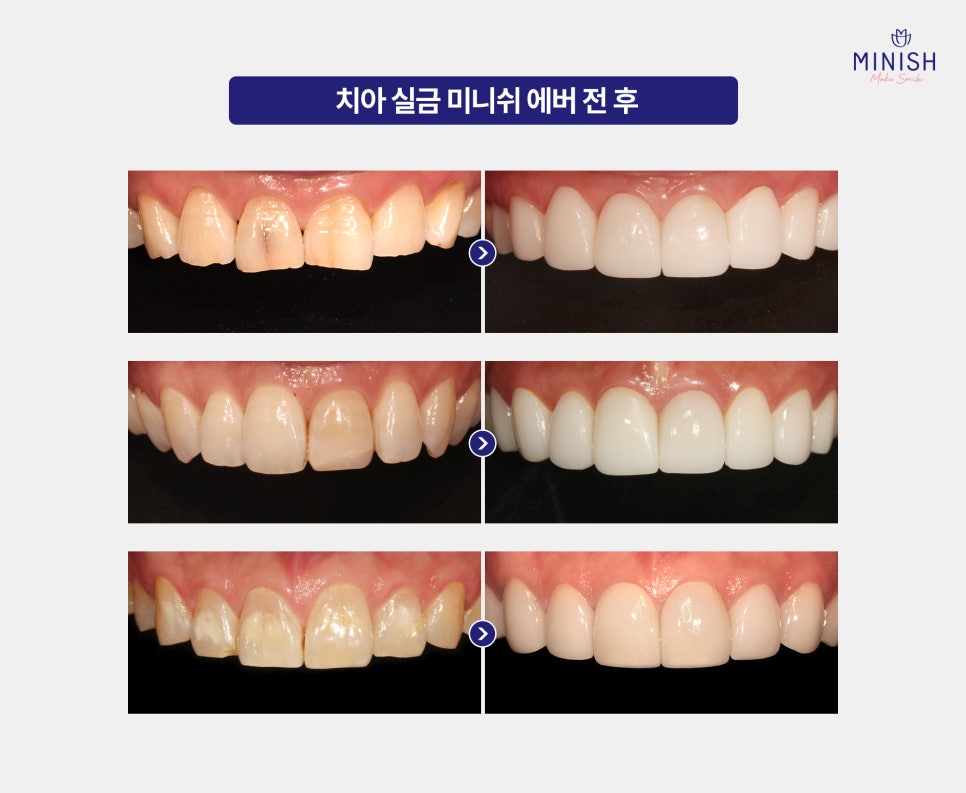
Minish Ever preserves natural teeth as much as possible, restoring both function and aesthetics without unnecessary tooth reduction, and can be completed within one day from scanning to fabrication and bonding.
✔ Preserves healthy teeth without unnecessary reduction
Minish Ever selectively and precisely restores only the damaged area, so healthy natural tooth structure is not unnecessarily shaved down. This approach compensates for the limitations of existing treatments that shorten the lifespan of teeth, and it is designed to preserve the tooth’s original shape and sensation.
✔ Strength and elasticity close to natural teeth
By recreating strength and elasticity similar to natural teeth, chewing force is distributed evenly rather than concentrating on one side. Materials that are too hard or excessively strong, such as metal or ceramic crowns, can damage the opposing teeth, but Minish Ever uses materials that are closest to natural teeth to minimize the burden during chewing.
✔ Prevents bacterial invasion through ultra-precise digital restoration
It is produced through digital scanning and ultra-precise processing technology that corrects even tiny errors. Through a meticulous bonding process, it adheres closely so that there are no gaps between Minish and the natural tooth, leaving no space for bacteria to invade and helping prevent secondary decay and discoloration.
✔ Restores function and improves aesthetics at the same time
Minish Ever is not simply an aesthetic restoration that only refines visible areas. It restores chewing function and occlusal stability, delivering not only natural functional recovery but also a bright and healthy smile with a balanced shape and color.
For tooth cracks, early management is the most important. Even a small crack requires an accurate diagnosis and appropriate action, and for that reason, receiving professional consultation and a treatment plan at Minish Dental Hospital is the wisest way to protect healthy teeth for a long time.