Have you ever experienced a sharp, sensitive pain in your teeth just from drinking a glass of ice water? This sensitivity may not simply be because your teeth are sensitive—it can be a sign that something is wrong with your dental health. It is easy to dismiss it as a momentary discomfort, but if left untreated, it can lead to bigger problems, so it is important to know the exact cause and the right way to address it. Today, we will explain everything from the causes of tooth sensitivity to treatment methods.
Causes of Tooth Sensitivity
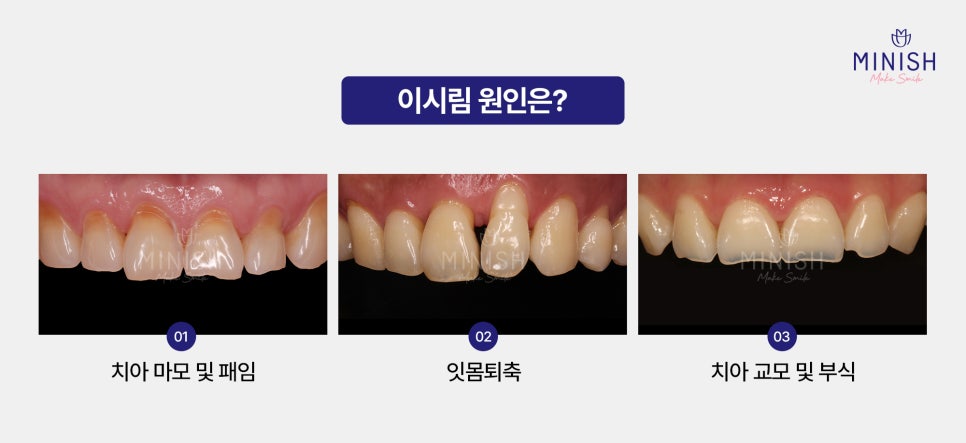
The biggest cause of tooth sensitivity is the exposure of dentin inside the tooth to the outside. When the enamel covering the outside of the tooth is damaged or the gums recede and expose the dentin, the teeth become sensitive even to cold food or wind.
- Tooth wear and notching
Bad brushing habits, using toothpaste with abrasives, clenching your teeth, and similar habits can wear down the neck of the tooth or create a V-shaped notch, causing sensitivity.
- Gum recession
When the gums recede and the tooth roots are exposed, they are directly exposed to external stimuli. Gingivitis, periodontitis, aging, and brushing too hard are major causes, and if left untreated, it can even lead to loose teeth or tooth loss.
- Tooth attrition and erosion
Long-term chewing habits, teeth grinding, or consuming acidic drinks can wear down or erode the tooth surface. As the enamel becomes thinner and the dentin is exposed, sensitivity becomes worse.
Tooth sensitivity is not just simple pain; it is a sign that the tooth structure is weakening. If left as it is, it can lead to tooth fracture, inflammation, and in severe cases, tooth loss, so it is important to manage it early and choose the right restoration method for your situation.
Treatment Methods for Tooth Sensitivity
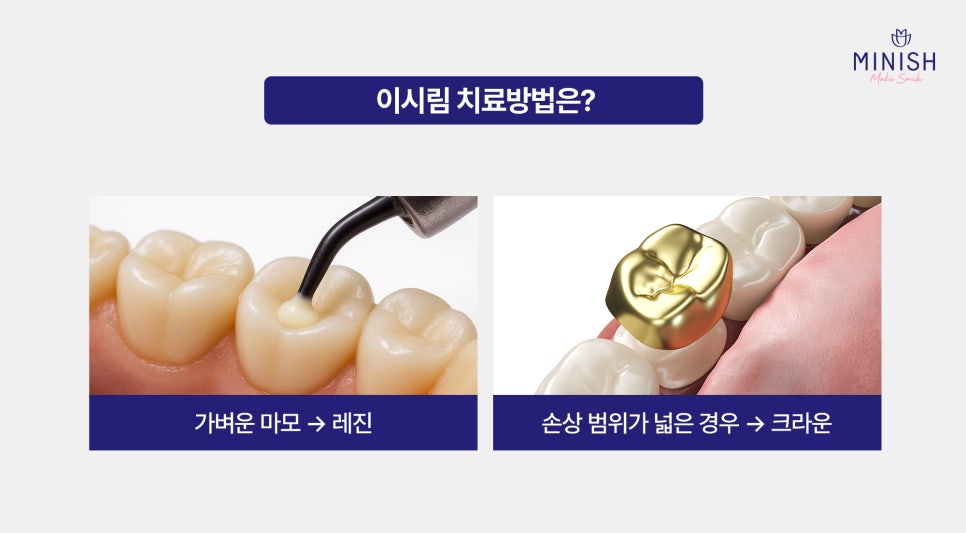
Depending on the degree and cause of tooth sensitivity, the general treatment method will vary. A step-by-step approach is needed, from mild wear to deep damage.
- Resin
If the tooth is slightly chipped or the surface is worn, resin can be used to fill the damaged area and block external stimulation. Because a composite resin material similar in color to the tooth is used, it looks natural aesthetically, the procedure is simple, and it is often completed on the same day.
-
Advantages: Fast procedure, natural color match possible
-
Disadvantages: It may discolor or come off over time, and it is vulnerable to wear or impact
-
Note: Because of the material’s characteristics, long-term durability is limited, so it may not be suitable for molars that bear strong chewing forces or areas with high bite force.
- Crown
If the damaged area is extensive or if a root canal treatment has been performed, a crown is placed for protection. A crown covers the tooth entirely, which helps restore function, but the drawback is that a large amount of tooth structure must be removed, making it difficult to preserve the natural tooth.
-
Advantages: Fully covers the damaged area to protect the tooth; can restore shape and function
-
Disadvantages: Requires a large amount of tooth reduction, and secondary cavities or gum inflammation may occur at the edges of the prosthesis
-
Note: Depending on the material (metal, ceramic, etc.), there are significant differences in cost, durability, and aesthetics. With long-term use, aging of the adhesive or micro-gaps may require retreatment.
In the end, resin and crowns are common treatment options that can help relieve tooth sensitivity, but they have limitations when it comes to fundamental restoration, as retreatment may be needed over time or the tooth may be excessively shaved down.
Tooth Restoration Solution, Minishe
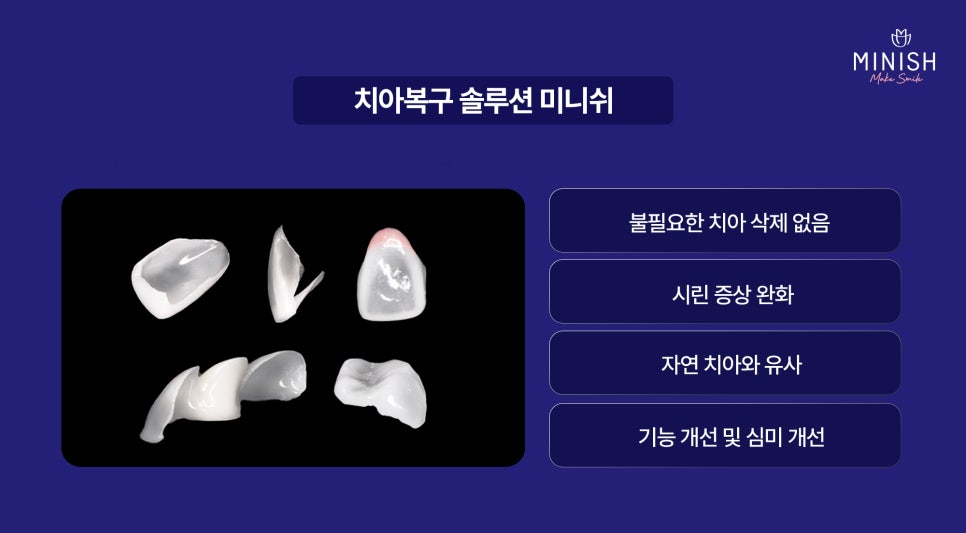
Minishe is a method that restores the structure and function of the original tooth by handling only the damaged area precisely without excessive removal of tooth structure. Unlike resin, which temporarily relieves sensitivity, or crowns, which cover the entire tooth, the biggest feature of Minishe is that it preserves as much of the natural tooth as possible while restoring its original shape, strength, and aesthetics at the same time.
- No unnecessary tooth reduction
Instead of shaving down the tooth to make a large space like a conventional crown, only the necessary parts are handled precisely to preserve as much of the natural tooth as possible.
Minishe protects the tooth from external stimuli and blocks sensitive nerves, quickly relieving tooth sensitivity.
- Strength similar to natural teeth
Using Minishe blocks, which are made of a material most similar to natural teeth, the result is similar to real teeth in fracture strength, elasticity, and compressive strength. Chewing forces are distributed evenly, so nearby teeth are not burdened.
By reproducing the tooth’s original color, translucency, and shape, it helps create a natural and beautiful smile.
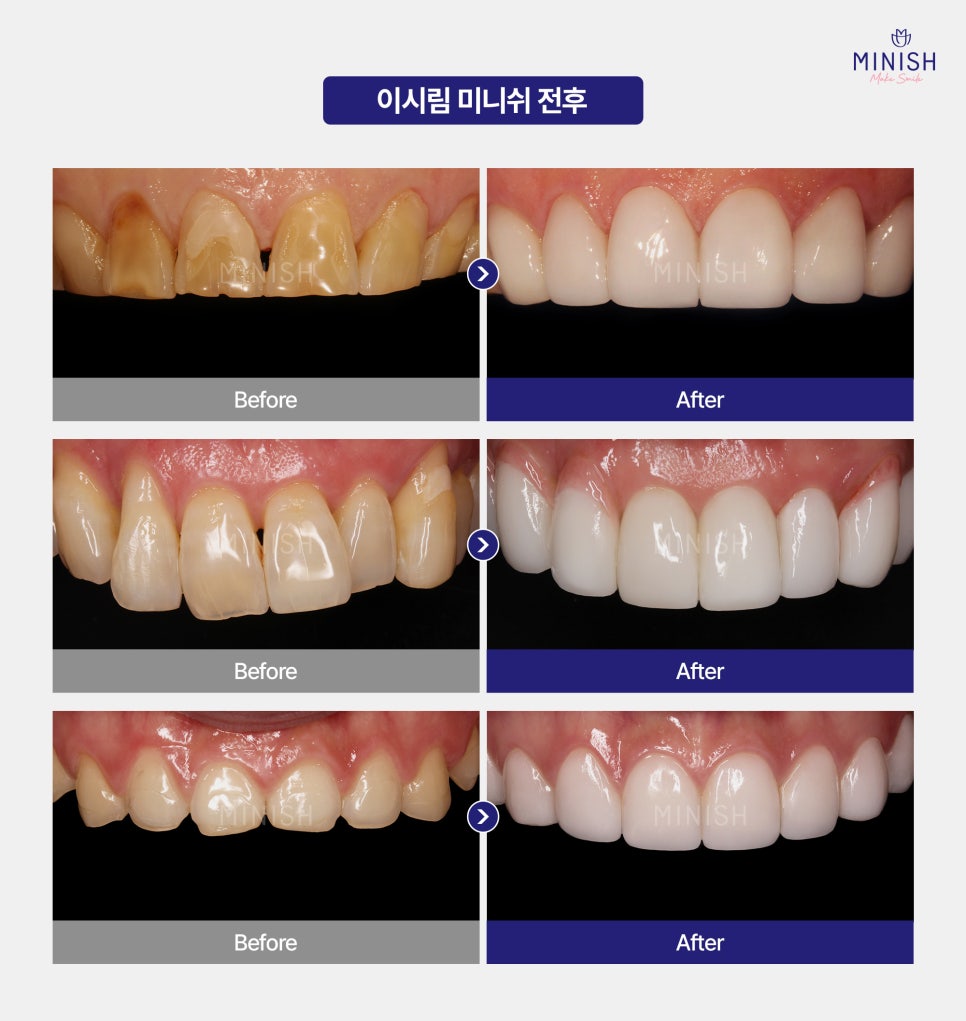
You can see the before-and-after results of teeth that were sensitive and then restored healthily with no unnecessary reduction.
Tooth sensitivity may feel like a small inconvenience in daily life, but within it lies a signal from your teeth saying, “I need help.” Rather than enduring temporary pain, it is important to accurately check the condition of your teeth and find a way to keep them healthy for a long time. If you want to preserve your natural teeth without unnecessary damage, we recommend visiting Minishe Dental Hospital.