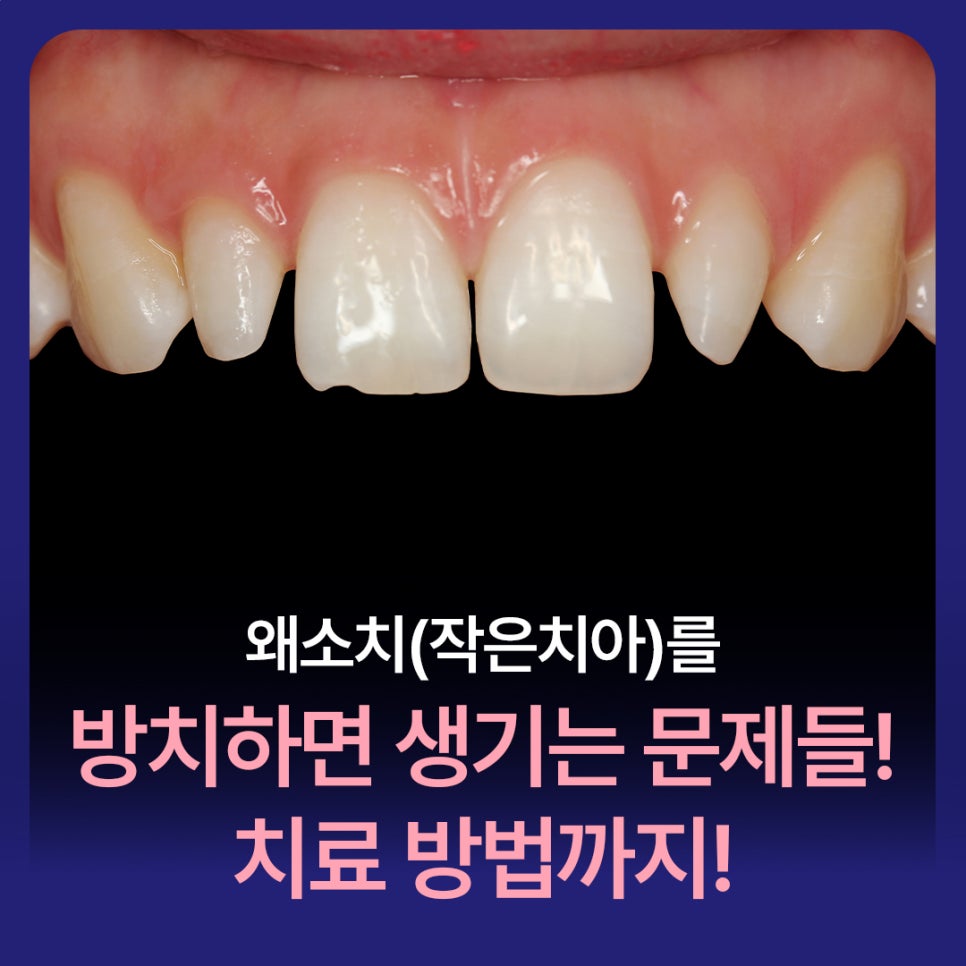
Have you ever looked in the mirror and noticed that the tooth next to your front tooth seemed unusually small and found yourself bothered by it? At first, you may think, “Well, maybe that’s just how it is,” but many people actually experience a complex due to microdontia. Small teeth may seem like a purely cosmetic issue, but over time they can also affect function, so it is important not to leave them untreated. Today, we will explain what microdontia is, why it should not be overlooked, and how it can be improved.
What Is Microdontia?
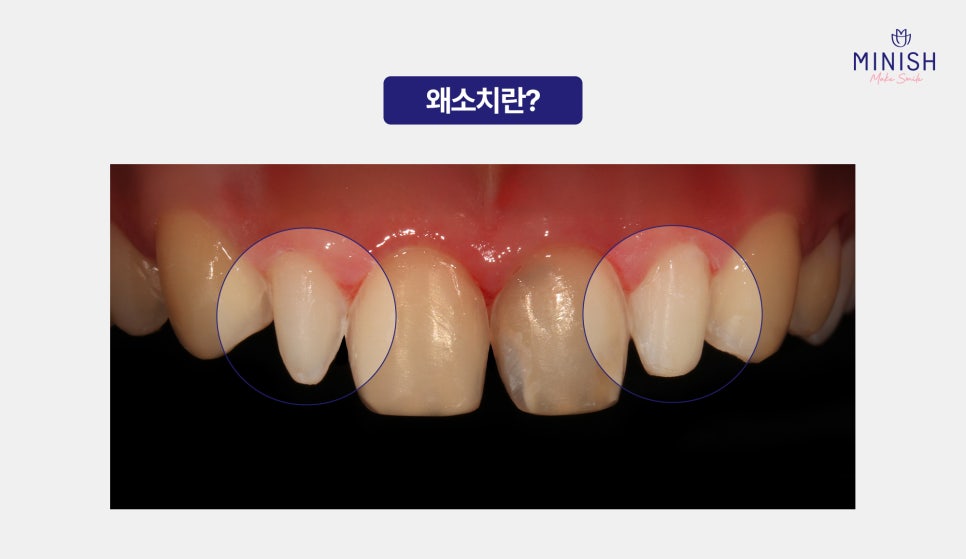
Microdontia refers to teeth that are noticeably smaller than normal teeth, and it commonly appears in the tooth 바로 next to the upper front teeth. The shape may be pointed and cone-like, or narrow and nail-like, making it different from typical teeth and easily disrupting the harmony of the overall dental arch. Because it appears in a highly visible area, it can cause significant cosmetic stress, and because the size and shape of the teeth differ, it can also lead to various functional effects.
Why Microdontia Should Not Be Left Untreated
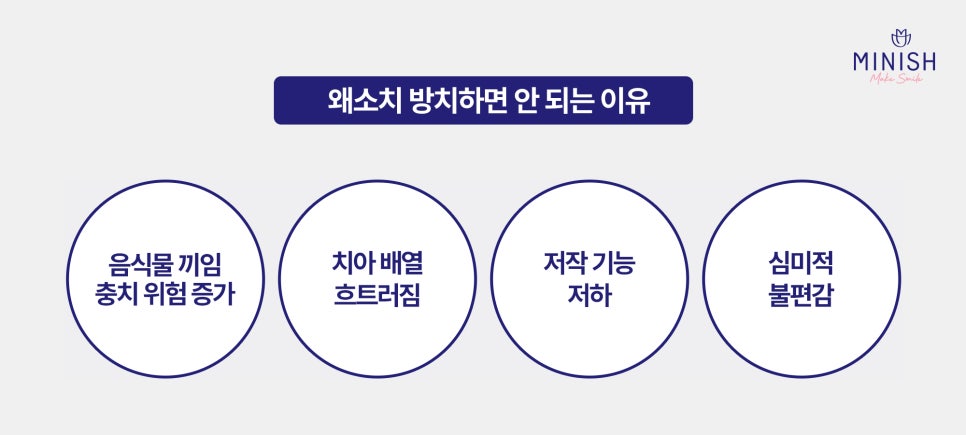
- Increased space between teeth → Higher risk of food impaction and cavities
Microdontia is narrow, so gaps are likely to form on both sides, making food more likely to get stuck there. This increases the likelihood of recurring cavities and gum inflammation.
- Disrupted tooth alignment
The space left by a small tooth may cause surrounding teeth to shift or the alignment to become distorted.
- Possible decrease in chewing function
The front teeth play an important functional role, and microdontia can affect biting and function.
- Asymmetrical front tooth line
A loss of balance in tooth size creates an uneven appearance when smiling, which can lead to ongoing cosmetic stress.
How Is Microdontia Treated?
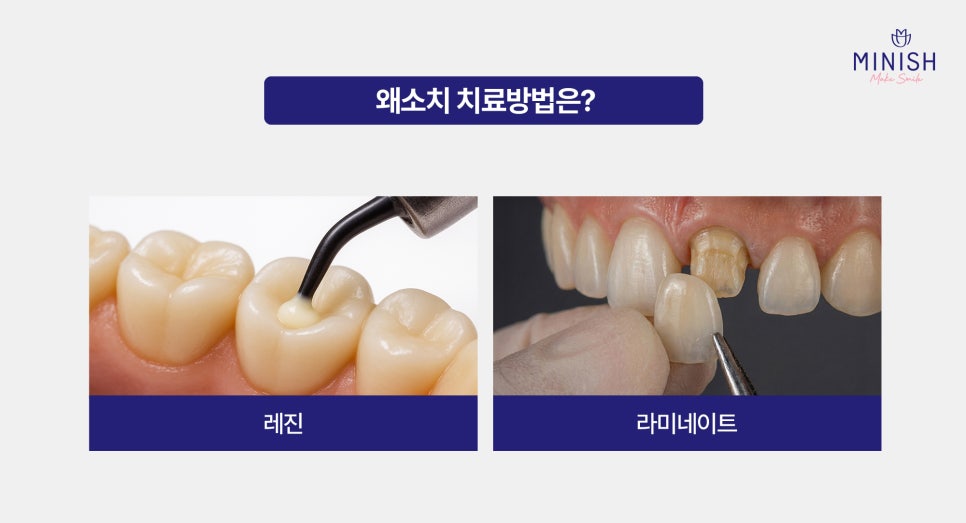
There are several ways to improve microdontia, but the most commonly chosen methods are resin and laminate veneers. Both help compensate for tooth size and shape, but the approaches are different and each has clear advantages and disadvantages, so it is important to choose according to your own dental condition. In particular, because microdontia involves a tooth size and shape that differ from normal teeth, balance with the surrounding teeth must also be considered. It is best to fully understand the differences between each method before choosing.
- Resin: This method directly fills in the missing tooth shape using a material similar in color to natural teeth.
✅ Advantages
-
It can improve tooth shape while preserving as much of the natural tooth as possible.
-
The procedure time is relatively short and economical.
-
There is almost no tooth reduction.
✅ Disadvantages
-
Because of the material’s properties, there is a possibility of fracture or detachment.
-
Discoloration may occur at the margins, so periodic replacement is necessary.
- Laminate veneer: This method attaches a prosthetic restoration to the front surface of the tooth to improve size, shape, and color at the same time.
✅ Advantages
✅ Disadvantages
-
Natural tooth reduction may be necessary for laminate veneers, and if a large amount is removed, pain and side effects may occur.
-
If the fabrication and bonding process is not precise, gaps at the margins, lifting, and discoloration may occur.
-
Because the material is much harder than natural teeth, the opposing natural teeth may wear down.
A Tooth Restoration Solution That Can Improve Microdontia in One Day,
‘Minish’
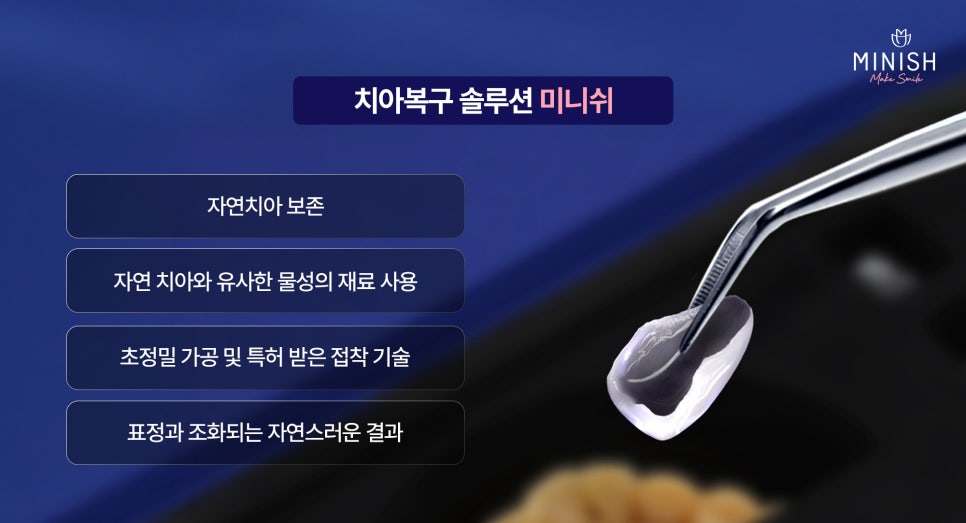
Due to the drawbacks of resin or laminate veneers, many people want to preserve more of their natural teeth or are looking for a method that considers both function and aesthetics. The approach chosen by such people is Minish. Minish aims to restore both the function and aesthetics of teeth while preserving natural teeth as much as possible. Its features are as follows.
✅ Preserving natural teeth
It prioritizes maintaining the original tooth shape without unnecessary tooth reduction.
✅ Use of materials with properties similar to natural teeth
By using materials closest to natural teeth, it can naturally express gloss, surface texture, and translucency.
✅ Ultra-precise processing and patented bonding technology
By applying ultra-precise processing and patented bonding technology, the restoration is closely fitted to the boundary with the tooth, helping prevent bacterial penetration and lifting and supporting long-term stable results.
✅ Natural results that harmonize with facial expressions
Because it is designed with facial muscle movement in mind, it can contribute to a softer mouthline, a lifting effect at the corners of the mouth, and a more harmonious impression as facial expressions change.
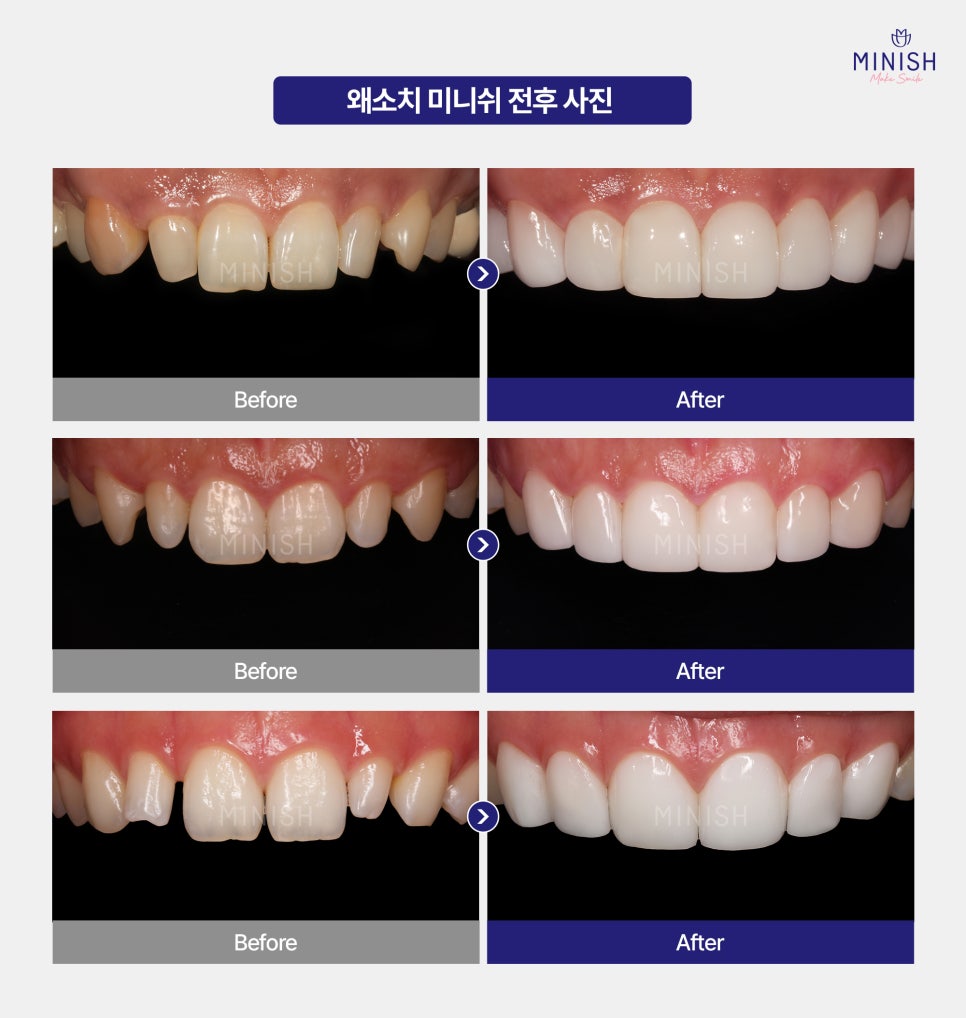
This is the change experienced by a customer who was concerned about microdontia. You can see the before-and-after of Minish, which improved both shape and function while preserving natural teeth.
Microdontia is not merely a cosmetic issue; it can also affect oral health through increased spaces between teeth and changes in alignment. Above all, natural teeth cannot be restored once damaged, so it is important to choose a method that can improve them while preserving the teeth without unnecessary reduction. If you are experiencing discomfort due to microdontia, Minish, which focuses on preserving natural teeth, may be helpful. If you would like a consultation on the method best suited to your dental condition, please visit Minish Dental Hospital to learn more.