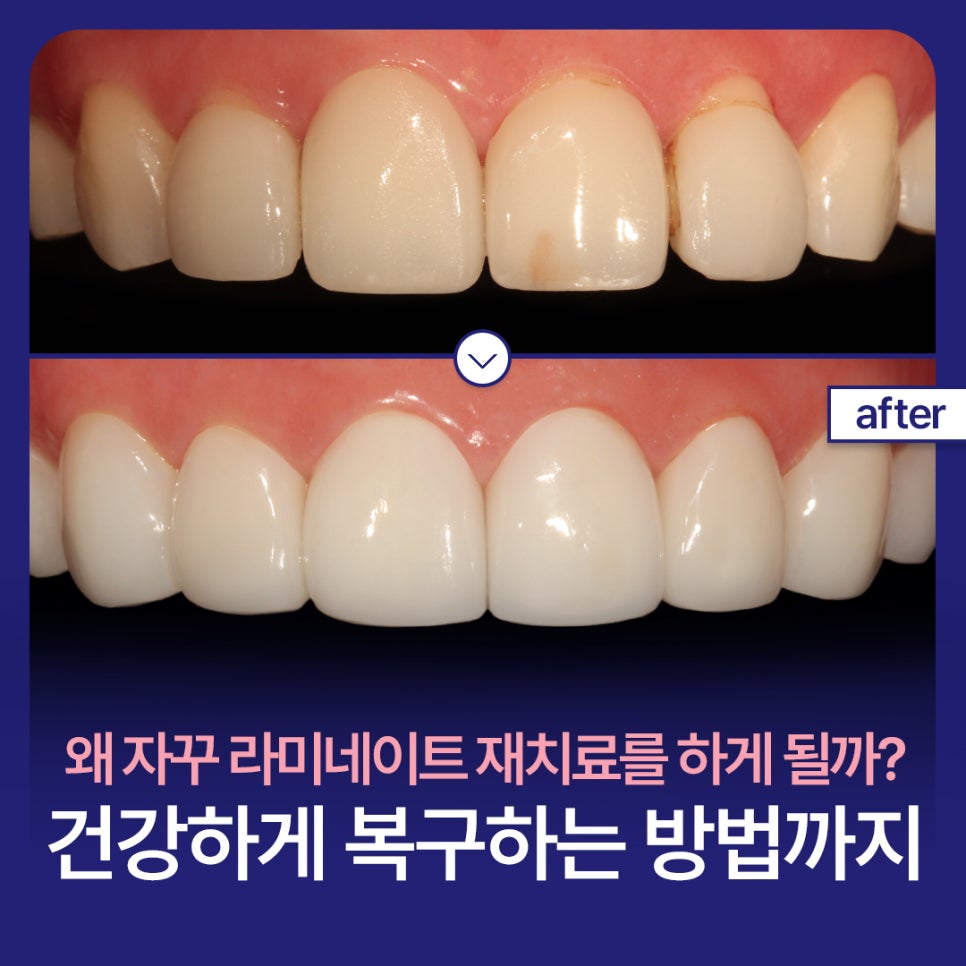
People are often told that veneers can be used for a long time, but in reality many come back to have them reattached after just a few years because they have chipped or come off. Results that were once aesthetically pleasing and satisfying can, over time, lead to problems such as sensitivity, discomfort, discoloration, and debonding. What makes this even more concerning is that similar problems can keep happening even when the patient has been careful with maintenance. Questions like, “Why did it come off again?” and “Did I do something wrong?” may arise, but in fact this kind of repetition is often not the patient’s fault. The reason veneer retreatment keeps repeating is often not simply weak bonding, but a problem rooted in the structure of the initial treatment itself. In other words, there is a strong possibility that the treatment was set up in a way that could repeat from the very beginning.
Why Does Veneer Retreatment Keep Repeating?
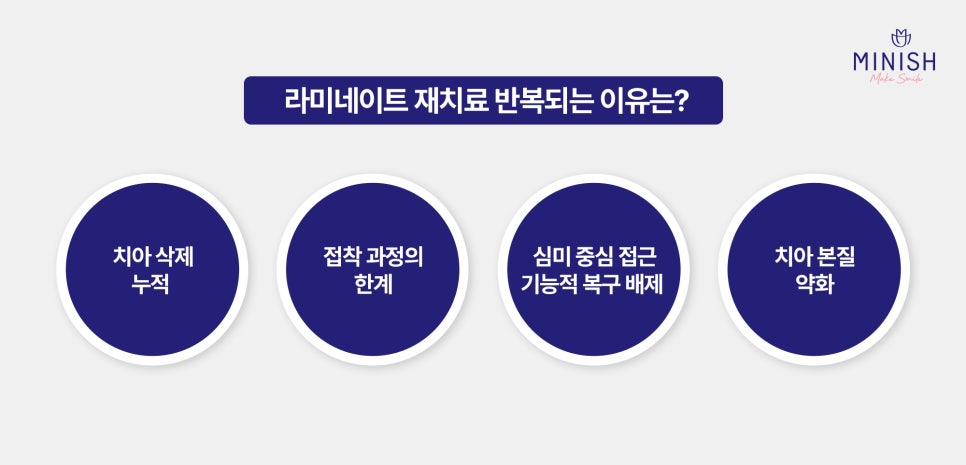
The reason veneer retreatment keeps repeating often comes not from a simple bonding issue, but from inherent limitations in the treatment structure itself.
- Accumulated tooth reduction
Veneers require a certain amount of tooth surface to be removed for bonding, and once that tooth structure is removed, it cannot be restored. Each time retreatment is done, more reduction is needed to remove the existing veneer and place a new one, so the tooth gradually becomes weaker, comes closer to the nerve, and becomes structurally less stable.
- Limitations in the bonding process
Veneers are placed by removing tooth structure and then bonding ceramic to the tooth with adhesive. If the adhesive does not create a complete seal between the tooth and the ceramic, microscopic gaps that are not visible to the eye can form. Over time, these gaps can discolor or allow bacteria to enter, increasing the risk of secondary decay. In addition, if the bonding layer is uneven, forces are not distributed evenly, which can concentrate stress in certain areas and lead to chipping or debonding. Small cracks or gaps created during the bonding process can, in the long run, reduce durability and increase the likelihood of retreatment.
- An aesthetics-first approach that leaves function out
Veneers are often focused on making the teeth look more attractive. However, teeth perform a variety of functions, including bite alignment, force distribution, and pronunciation. When functional balance is lost, veneers can be overloaded, eventually leading to debonding and chipping, and retreatment can repeat.
- Repeated retreatment weakens the tooth itself
When reduction accumulates and functional mismatch is repeated, microscopic cracks can develop inside the tooth or the nerve can become sensitive. Over time, the tooth becomes more prone to fracture, and the treatment may eventually need to expand to something larger, such as root canal treatment or a crown. Because of this progression, it becomes difficult to break the vicious cycle once veneer retreatment has started.
What Is the Most Important Point to Stop Repeated Veneer Retreatment?
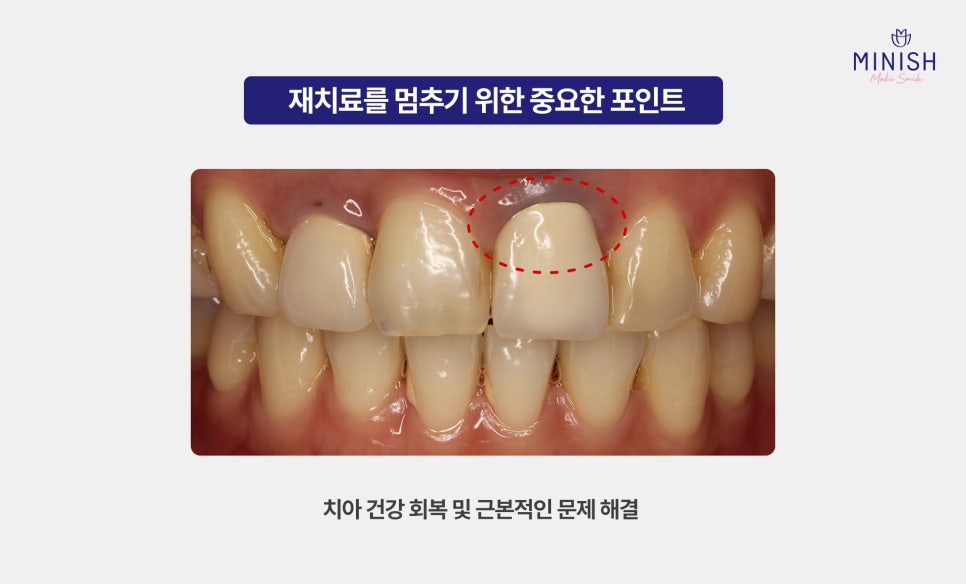
The first priority is to restore tooth health. Rather than focusing first on making the appearance look good again, the underlying problem that caused the repetition must be corrected. If gaps were created by improper bonding, the bonding surface needs to be cleaned up and inflammation must be treated first. If microscopic cracks or decay have formed inside the tooth, removing the decay and restoring the structure should come first. In other words, retreatment is not simply a process of reattaching a prosthetic restoration; it requires an approach that accurately identifies and treats the source of the problem. Only by doing this first can the cycle of the same problem recurring be reduced.
Healthy Way to Restore: Miniish Remedi!
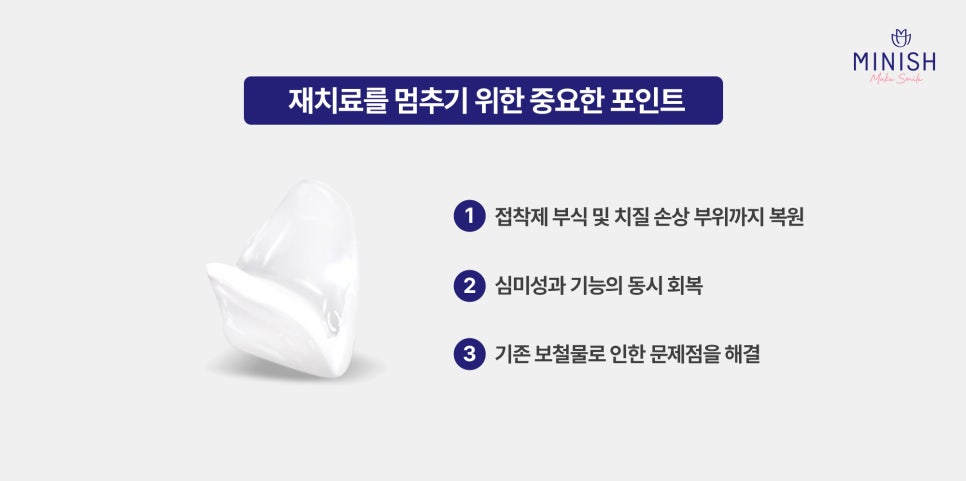
When problems keep recurring because of veneers, a method is needed that minimizes unnecessary tooth reduction and precisely restores only the damaged areas. Miniish Remedi is a retreatment program designed according to those principles.
✔ How does Miniish Remedi work?
- Careful evaluation of the cause first
After removing the existing veneer, the causes of repetition are identified first, including bonding gaps, discoloration, decay, inflammation, and bite imbalance.
- Restore only the damaged areas
Rather than reducing the entire tooth again unnecessarily, only the affected areas are precisely shaped and restored. Healthy natural tooth structure is preserved as much as possible.
- Marginal sealing technology
Precision processing and close-fit design are used to prevent gaps from forming between the tooth and the restoration. A patented bonding method helps prevent common retreatment problems such as bacterial infiltration, lifting, and discoloration.
- Functional recovery and long-term maintenance
By first correcting the bite, force distribution, and structural stability of the teeth, an environment is created in which the restoration can be maintained for a long time.
- Restore function and aesthetics at the same time
A dedicated material with properties closest to natural teeth is custom-made through ultra-precise processing. Shape, length, and translucency can also be improved together.
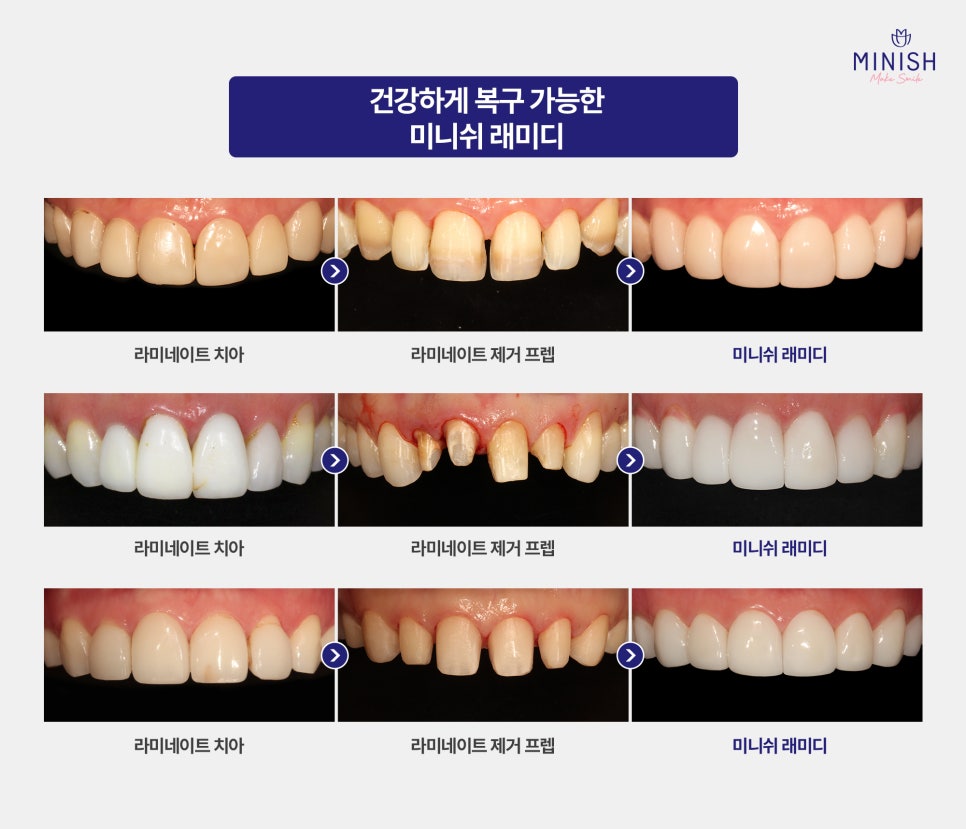
Miniish Remedi is suitable for people like this
-
If a veneer has chipped or come off before
-
If there is discoloration at the margin, bonding gaps, or gum lifting
-
If you do not want to shave the teeth any further
-
If you want to restore both function and aesthetics at the same time
-
If your gums continue to swell and bleed after veneers
Miniish Remedi is not a treatment that simply “reapplies” a restoration; it is a restoration solution that helps damaged teeth recover healthily.
The reasons veneer retreatment repeats can differ from person to person, but in common cases it is often a sign that a structure has been created that the teeth cannot easily tolerate. That is why, when considering retreatment, it is more important to first check exactly what condition the teeth are in rather than simply placing a new prosthetic restoration. Only by clearly identifying the problem area can we see what kind of restoration will keep things stable going forward.
Based on this evaluation, Miniish Remedi restores only the damaged parts precisely without further shaving the teeth, helping recover both function and form. Because it stabilizes the tooth structure without excessive reduction, it can be a new solution in situations where retreatment keeps repeating. If you are struggling with repeated discomfort, it may help to look closely at the restoration method that fits your tooth condition.