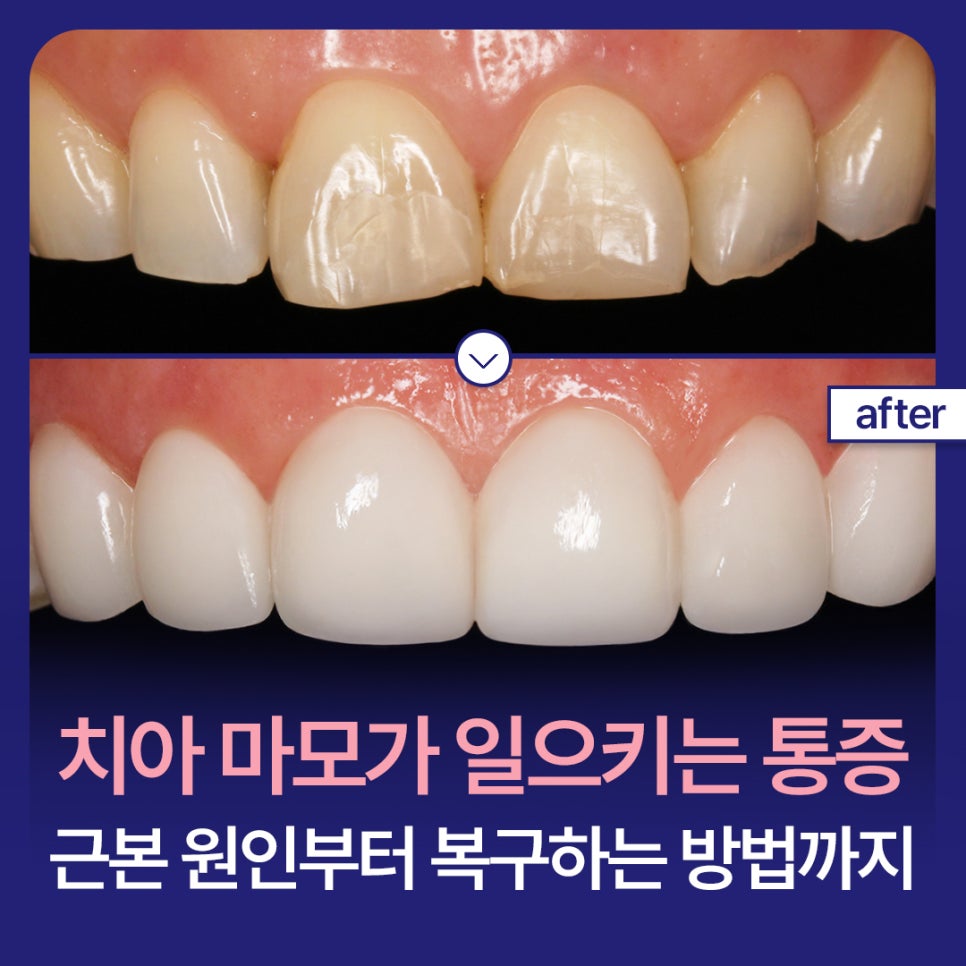
Has there ever been a time when even drinking a cold beverage made your teeth suddenly feel sharp and sensitive, or when hard foods felt more painful than before? Most people tend to brush it off, thinking, “Am I just tired?” or “It’ll pass soon,” but these changes can be typical signs that tooth wear is gradually progressing. Teeth may look hard, but they slowly wear down due to daily habits, food, and lifestyle patterns. The problem is that this process progresses so slowly that many people do not notice the wear until pain appears. Today, we’ll look step by step at the causes of tooth wear, the problems that can arise if it is left untreated, and how damaged teeth can be restored in a healthy way.
Causes of tooth wear
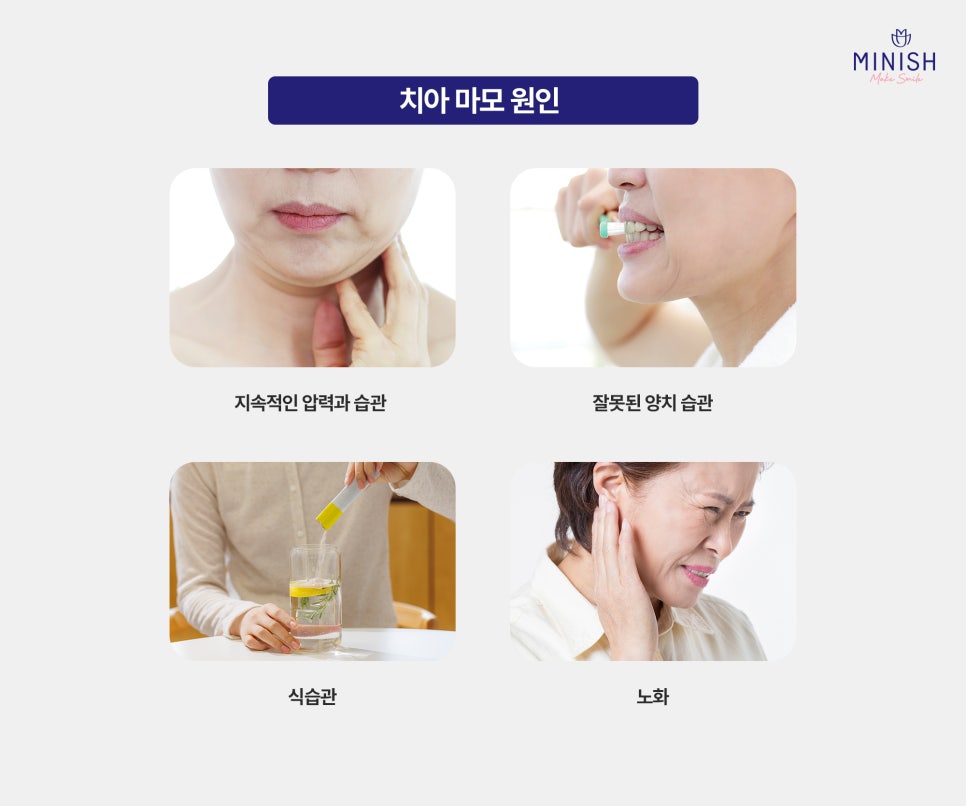
There are several factors that work together to wear down teeth. The main causes are as follows.
- Continuous pressure and habits
Clenching your teeth or grinding them puts repeated pressure on the tooth surface, accelerating wear. This is a habit especially common in people under a lot of stress.
- Brushing with too much force & choosing the wrong toothbrush
If you think, “Brushing harder means cleaner,” and brush with excessive pressure or use a toothbrush with hard bristles, the enamel will gradually become thinner over time.
- Acidic eating habits
Beverages with high acidity, such as carbonated drinks, lemon juice, and fruit juice, soften the tooth surface and make it more vulnerable to wear. In particular, consuming them right after a meal can weaken the buffering action of saliva and cause damage more quickly.
- The natural aging process
As we age, the shine on the tooth surface disappears and it gradually becomes smoother, which speeds up wear. If care is lacking, the teeth can become flatter or develop worn depressions.
What are the symptoms of tooth wear?
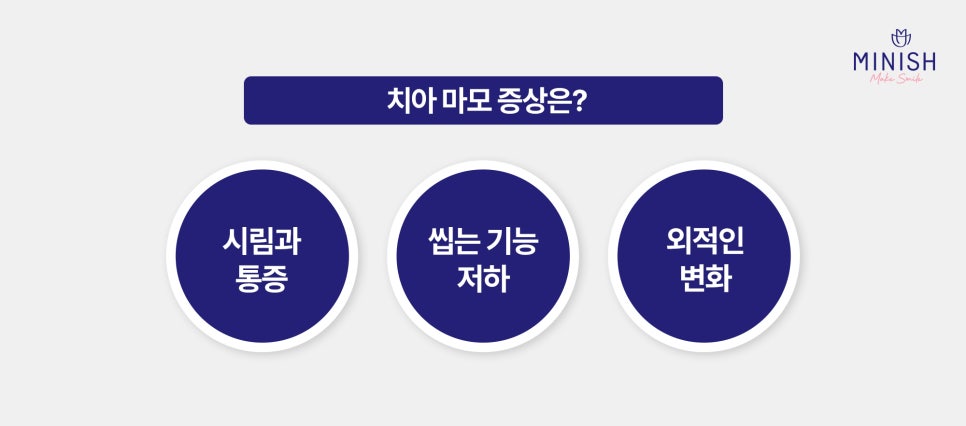
- Sensitivity and pain
-
Teeth react sensitively when exposed to cold or hot foods
-
A sharp sensation occurs when brushing, or sudden pain appears while chewing food
-
When clenching or grinding, discomfort may extend to the jaw area
This is a common early sign that appears when the enamel protecting the tooth surface becomes thinner and the inner dentin begins to be exposed.
- Reduced chewing function
-
Chewing food becomes uncomfortable because force is not properly transmitted
-
The balance of chewing is disrupted by worn teeth, increasing strain on the jaw
-
Certain teeth are used excessively, which also affects surrounding teeth
As wear becomes deeper, it can lead to functional problems and cause discomfort even during everyday meals.
- External changes (changes in appearance)
-
The shine of the teeth disappears and the color looks dull
-
The tooth surface gradually becomes flatter, and signs of wear become more noticeable
-
Some teeth develop depressed areas, or the teeth may appear shorter in shape
This is a stage where changes can be seen with the naked eye, meaning that wear has progressed to a certain degree.
Why tooth wear should not be left untreated
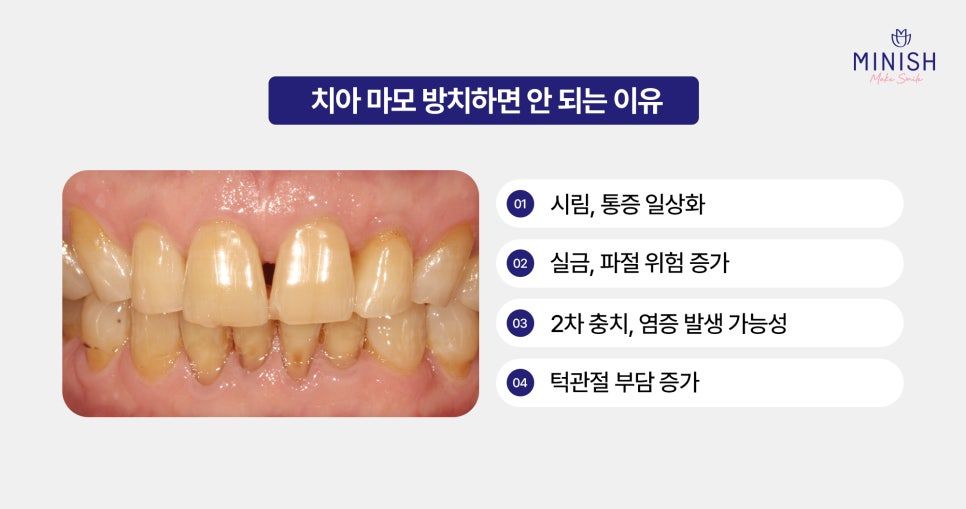
Tooth wear is not a problem that naturally stops over time; it is damage that continues to progress. Since enamel does not regenerate once it has worn away, the deeper the wear becomes, the weaker the teeth grow and the more likely it is to lead to various complications.
- Sensitivity and pain become part of daily life
At first, sensitivity may be felt only in specific situations, but over time it turns into everyday pain. As the exposed dentin area expands, discomfort can persist even with small stimuli such as hot foods, cold water, or brushing.
- Increased risk of cracks and fractures
As teeth become thinner and weaker, even a small impact can cause them to crack or fracture. If the fracture is deep, there are cases where the tooth can no longer be saved, and extraction may need to be considered.
- Possibility of secondary cavities and inflammation
The worn surface can easily develop tiny gaps, creating an environment where bacteria can invade. As a result,
- Worsening chewing function → increased strain on the temporomandibular joint
When tooth height decreases and the shape breaks down, functional problems appear, making it difficult to chew food properly. In this process, the temporomandibular joint compensates, which can lead to problems such as temporomandibular joint pain, headaches, and jaw asymmetry.
Tooth wear is not simply a change that ends with “a little sensitivity.” Because it can gradually undermine the tooth’s function and comfort over time, proper treatment and management in the early stages are important.
A healthy restoration method: the tooth restoration solution Minish
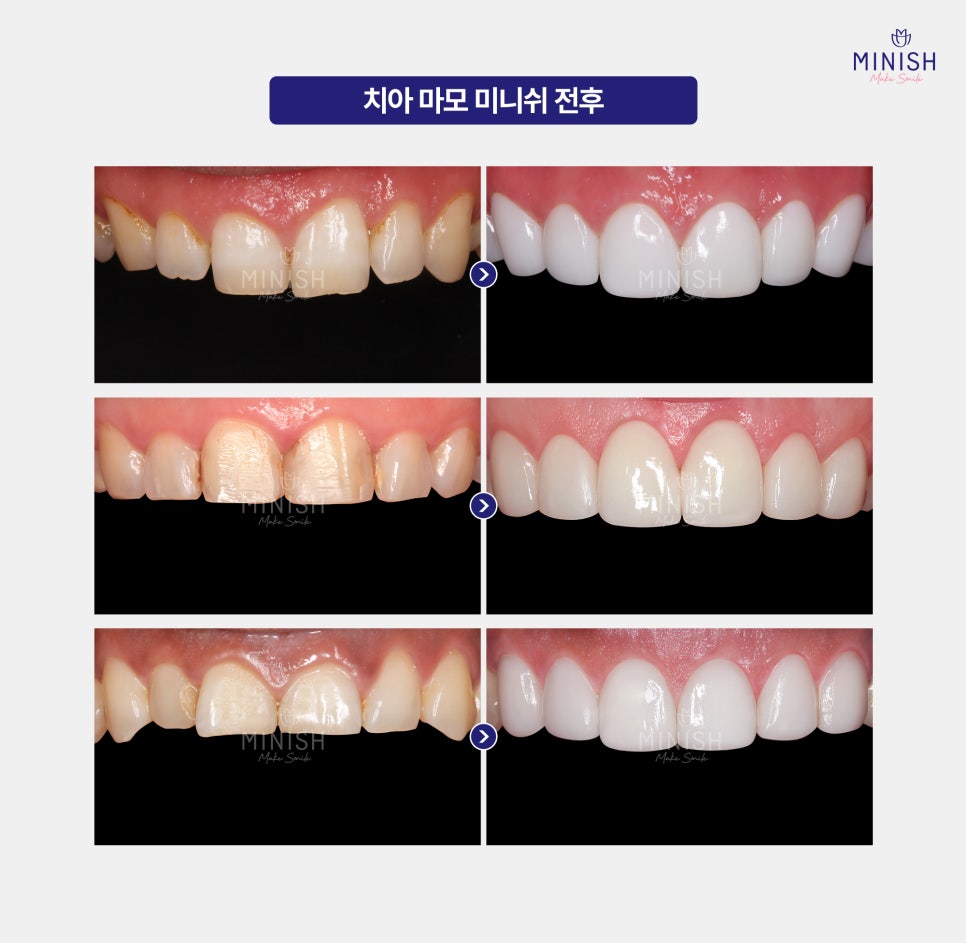
When restoring worn teeth, what matters is not simply filling in the appearance, but recovering them in a way that preserves the tooth’s original structure and function as much as possible. Minish is a tooth restoration solution developed to meet these standards, focusing on precisely treating only the damaged areas and restoring the shape and balance of natural teeth. The key features of Minish are as follows.
✔ Restoration centered on preserving natural teeth
Without unnecessary removal of tooth structure, only the damaged area is precisely treated, allowing the tooth’s original structure to remain intact.
✔ Minish block with strength and elasticity similar to natural teeth
Because Minish is made from a material with hardness and elasticity similar to natural teeth, chewing force is distributed evenly and does not place extra strain on surrounding teeth.
✔ Custom manufacturing through ultra-precise processing
With error-free, precision manufacturing, it fits the tooth completely and minimizes bacterial invasion by leaving no tiny gaps. This is very effective in preventing secondary cavities and lifting.
✔ Improved functional restoration and natural aesthetics at the same time
While restoring chewing function, it also naturally improves the tooth’s shape and shade, satisfying both overall harmony and aesthetics.
[Learn more about Minish’s special features]
Tooth wear is a change that can happen to anyone, but if managed at the right time with the correct method, it can be restored to a healthy state. If you have recently noticed sensitivity, pain, or changes in the tooth surface, please do not ignore it and consider getting it checked. Because teeth do not grow back once they wear down, the choices you make now can greatly affect your future oral health. With just a little more attention, you can keep your teeth healthy for much longer.