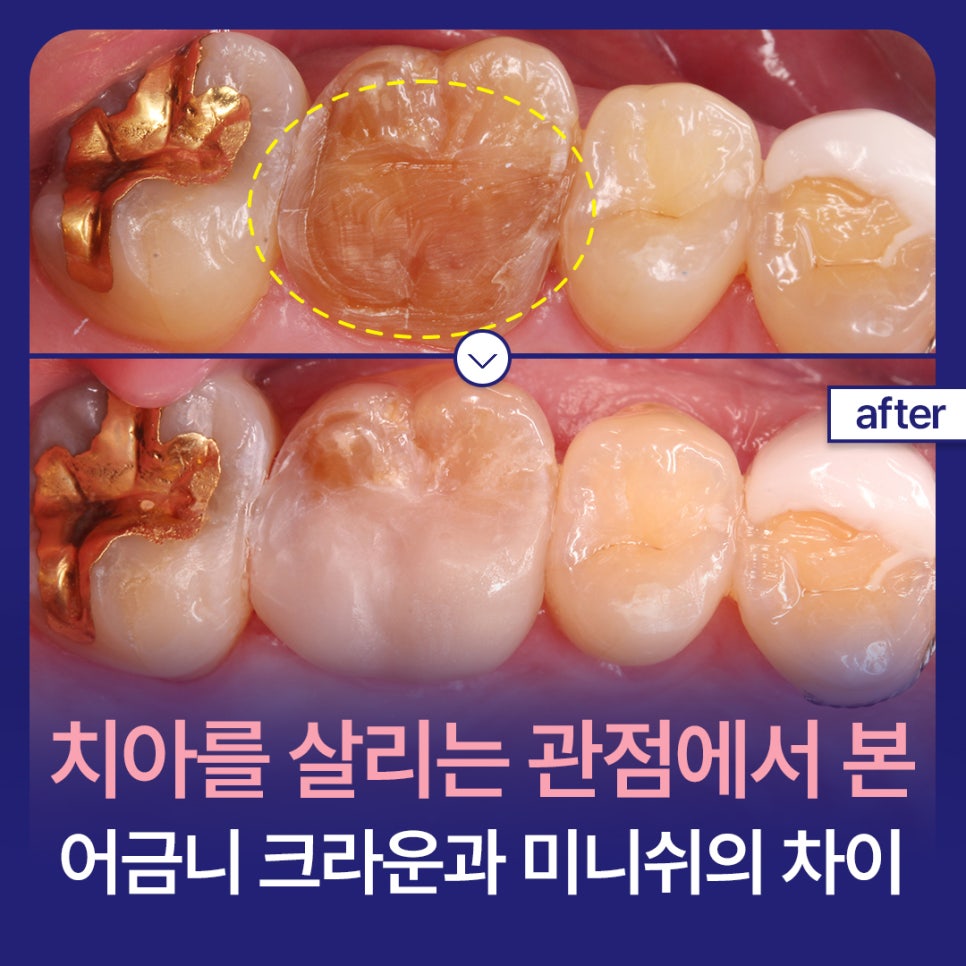
Molar teeth are important teeth that withstand the greatest amount of force, crushing food into smaller pieces hundreds of times a day. So when even a small cavity or a slight crack develops, chewing becomes uncomfortable, and pain often disrupts daily life. And in most cases, the first term that comes up in situations like this is “molar crown.” But before treatment, people naturally start wondering, “Do I really need a crown?” and “I’m a little worried about having too much of my tooth shaved down...” Today, for people with these concerns, we’ll take a step-by-step look at when a molar crown is needed, its pros and cons, and also Minish, which can be considered when you want to preserve as much of your natural tooth as possible.
When a Molar Crown Is Needed
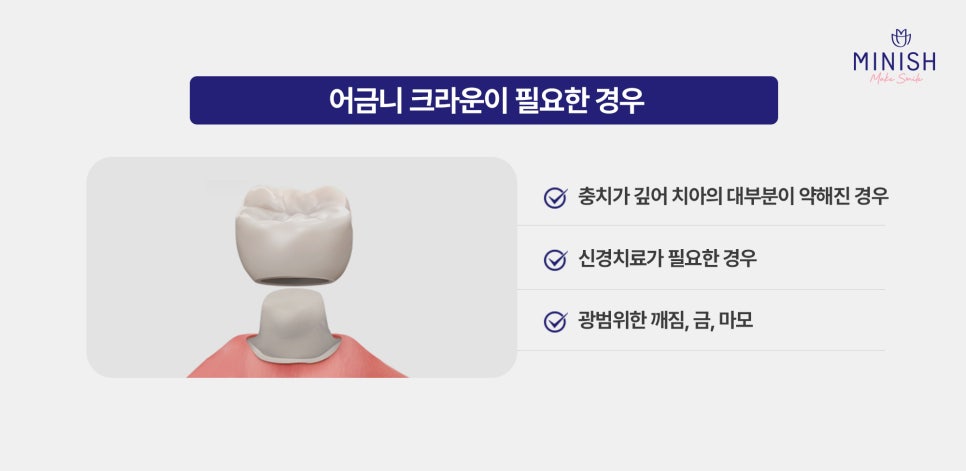
A molar crown is, as the name suggests, a method of “covering” a damaged tooth to maintain its overall shape and function. However, not every type of damage requires a crown; it is chosen when the damage is too severe to recover with existing treatment. Typical situations in which a molar crown is considered include the following.
-
When decay is deep and most of the tooth has become weakened
-
When decay has progressed close to the nerve and root canal treatment is needed
-
When the tooth has been significantly broken by trauma or its structural stability has declined
-
When a crack has spread widely and the fractured area can no longer be maintained with conservative treatment
-
When the molar has been worn down significantly due to attrition
In other words, a crown is a way to prevent further damage when the tooth has become too weak to support itself.
Types of Molar Crowns and Their Pros and Cons
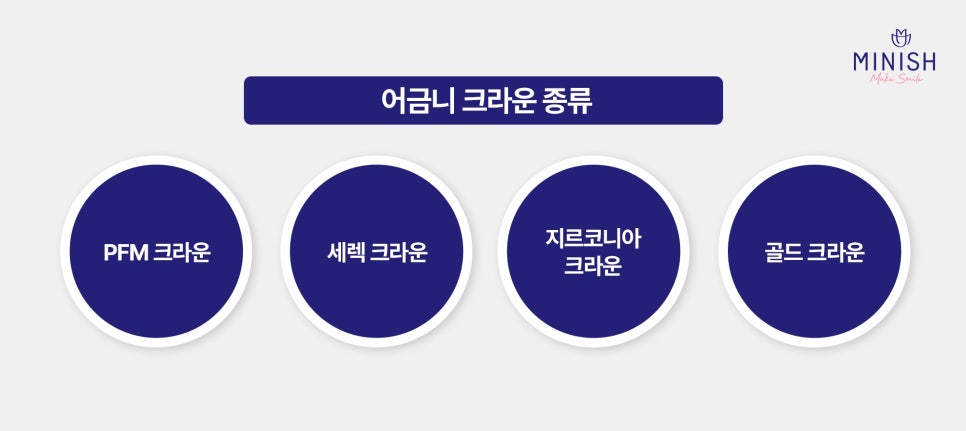
Depending on the material used, crowns differ in strength, natural appearance, and the degree of wear they may cause to the opposing tooth.
🔸 PFM crown: A form with porcelain layered over metal.
Advantages: Economical and sufficiently strong.
Disadvantages: Over time, the metal margin may become visible, and it may wear down the opposing tooth.
🔸 CEREC crown (CAD/CAM): Made digitally and allows for faster treatment.
Advantages: Natural color and precise fabrication.
Disadvantages: It may require a sufficient thickness, which can increase the amount of tooth reduction.
🔸 Zirconia crown: A very hard ceramic material.
Advantages: Strong and less likely to fracture.
Disadvantages: It may wear down the opposing tooth, and the amount of tooth reduction during fabrication tends to be relatively high.
🔸 Gold crown: A method with high functional stability.
Advantages: Requires less tooth reduction and adapts quickly.
Disadvantages: Less aesthetic.
Points to Be Careful About Before Molar Crown Treatment
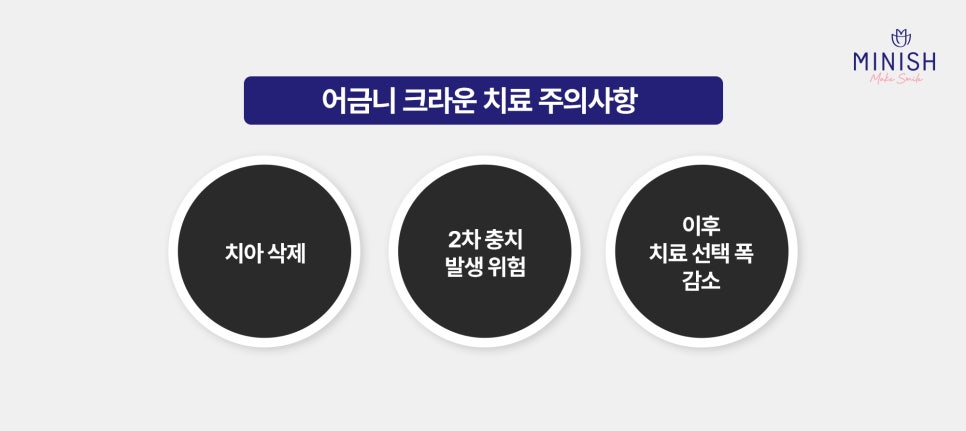
Crown treatment is suitable for preventing further damage, but there are points that must be considered during the treatment process.
① A certain amount of tooth reduction is necessary.
Because a crown is a structure that covers the entire tooth, a minimum thickness of the prosthetic material is essential for the material to withstand force. For this reason, some healthy enamel is also removed. When enamel is reduced, dentin becomes exposed, which can cause sensitivity and discomfort to stimulation.
② Possibility of gaps at the margin
The boundary where the crown meets the tooth can develop microscopic gaps over time. This area is easily infiltrated by food particles and bacteria, which can lead to secondary decay.
③ The range of future treatment options becomes narrower.
Because a large amount of tooth is removed, the lifespan of the tooth itself is also affected. If problems arise later, it may lead to crown remaking or greater tooth loss, so when possible, it is better to first consider conservative treatment.
Features and Benefits of Minish for Restoring Molar Teeth While Preserving Natural Teeth
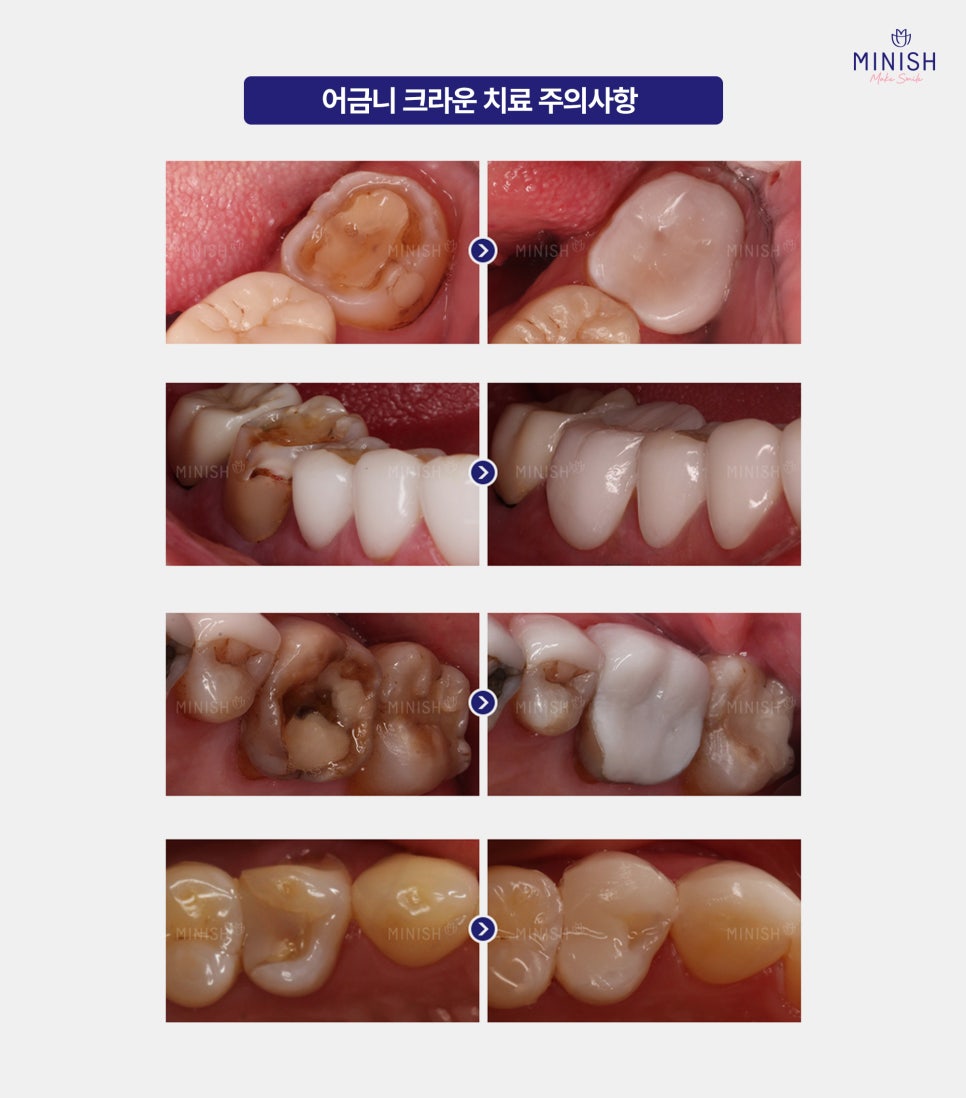
If a crown is a treatment that focuses on strengthening the structure, Minish is a “conservative tooth restoration solution” that restores function while preserving the natural tooth.
- Maximum preservation of the natural tooth without unnecessary reduction
Only the decayed or damaged parts are precisely refined, while healthy tooth structure is preserved. Because the tooth’s original shape and strength can be maintained, there is less sensitivity or discomfort after treatment.
- Use of a material with properties most similar to natural teeth
Minish blocks have strength and elasticity similar to natural teeth, so they naturally distribute chewing force and do not place stress on the opposing tooth.
- Precision processing + patented bonding technology helps prevent secondary decay
Ultra-precise CAD/CAM-based processing reduces error, and bonding is performed so that it adheres closely like a single unit with the tooth, minimizing gaps at the margin.
- A conservative treatment strategy that leaves room for future treatment expansion
Because the natural tooth is preserved as much as possible, even if more extensive treatment becomes necessary later, there is still room to expand to options such as a crown. This is a very important factor from the perspective of tooth longevity.
Treatment for molars is not simply about solving immediate discomfort; it is a choice that must also take future dental health and longevity into account. Crowns can certainly be helpful when needed, but if you are concerned about how much tooth must be removed or want to keep your natural teeth for as long as possible, it may be worth considering a tooth restoration solution centered on preserving natural teeth, such as Minish. We hope you receive an accurate diagnosis of which treatment is appropriate for your current dental condition and choose the method that is least burdensome and can be used for the longest time.