�
�
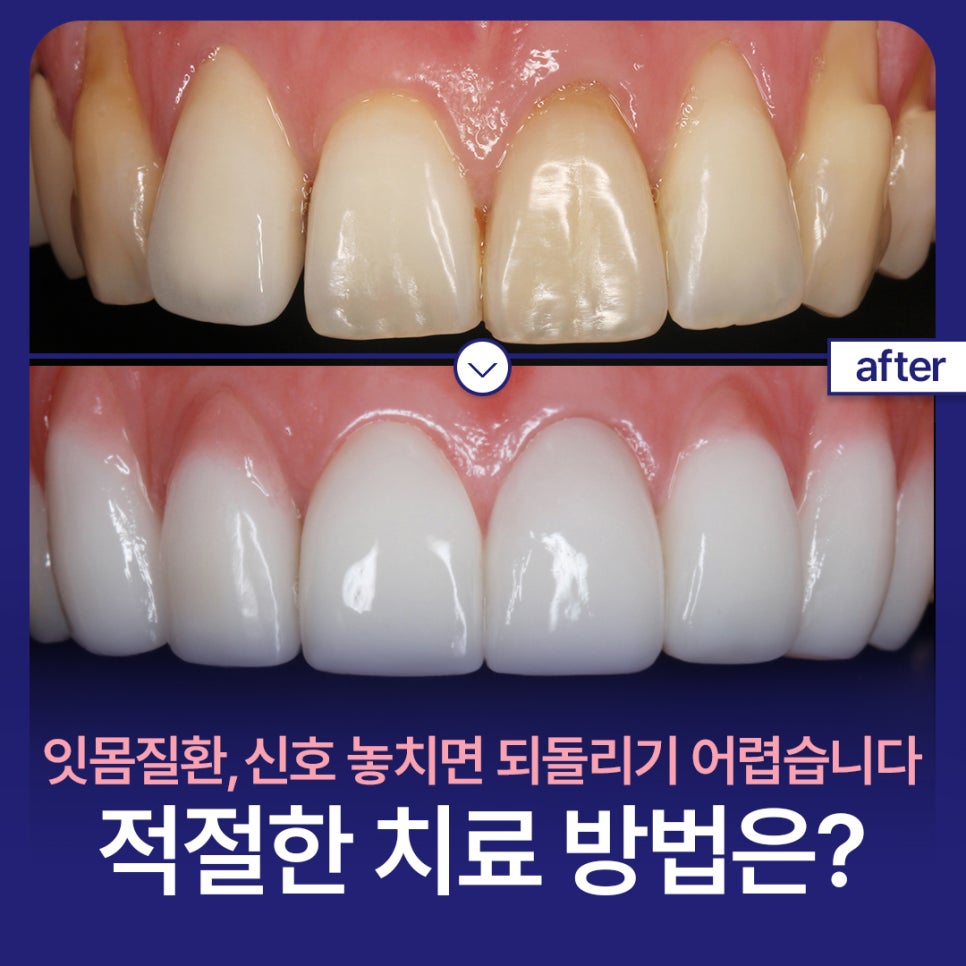
Have you ever noticed blood when brushing your teeth, or felt that your teeth have become more sensitive than before? At some point, you may look in the mirror and notice that your gums seem to have receded, making your teeth look longer, which can also be concerning. Most people tend to dismiss it as “just a temporary thing,” but these changes can be early signs of gum disease. Because gum disease usually progresses gradually rather than suddenly becoming severe, if you do not notice it early, it can lead to a condition that is difficult to reverse.
�
�
�
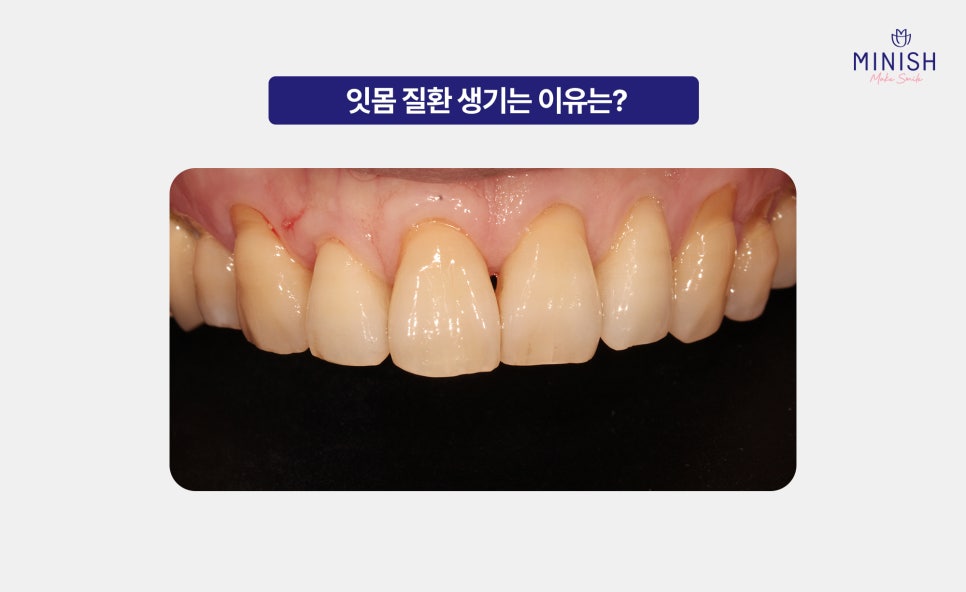
Why does gum disease develop?
�
�
Gum disease is a condition in which inflammation occurs in the gums around the teeth and the tissues that support them, and it is also called periodontal disease. The main causes are dental plaque and tartar. If food debris left after meals is not properly removed, bacteria multiply and form plaque, which over time turns into hard tartar. Tartar is difficult to remove with brushing alone, and it continuously irritates the gums, causing inflammation. When this inflammation repeats, the gums weaken, and as damage gradually accumulates in the gums and jawbone, it progresses into gum disease.
�
�
�
Symptoms by stage of gum disease
�
�
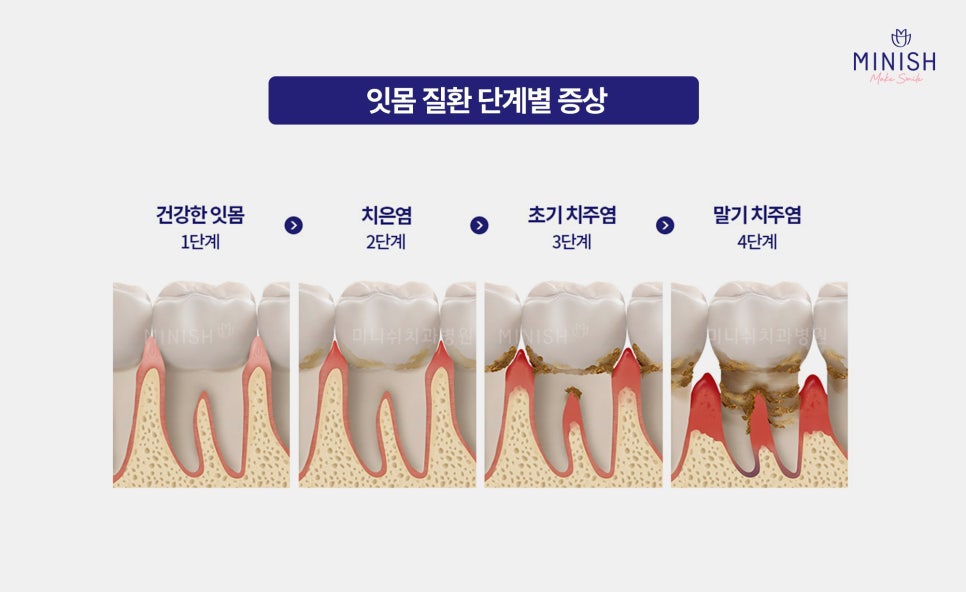
The symptoms of gum disease vary depending on how far it has progressed.
�
At this stage, the gums become swollen and red, and bleeding may occur while brushing. There is little to no obvious pain, but inflammation has already begun. Fortunately, there is no damage to the jawbone at this stage, so improvement is possible with scaling and lifestyle management alone.
�
As inflammation deepens into the gums, the gums gradually begin to recede. The space between the teeth and gums widens, so food gets stuck more easily, and bad breath may also occur. From this stage on, simple scaling alone is not enough, and more specialized gum treatment is needed.
�
As gum recession progresses, the root surfaces of the teeth that were once protected by the gums become exposed to the outside. These areas contain dentin, which is sensitive to刺激, so sensitivity can easily occur even with cold foods or brushing. If it progresses further, it can lead to damage to the jawbone and cause the teeth to become loose. The important point at this stage is that once the gums have receded, they do not naturally rise back up. Therefore, even after treating the inflammation, an additional approach is needed to protect and manage the exposed tooth areas.
�
�
Exposed teeth due to receded gums
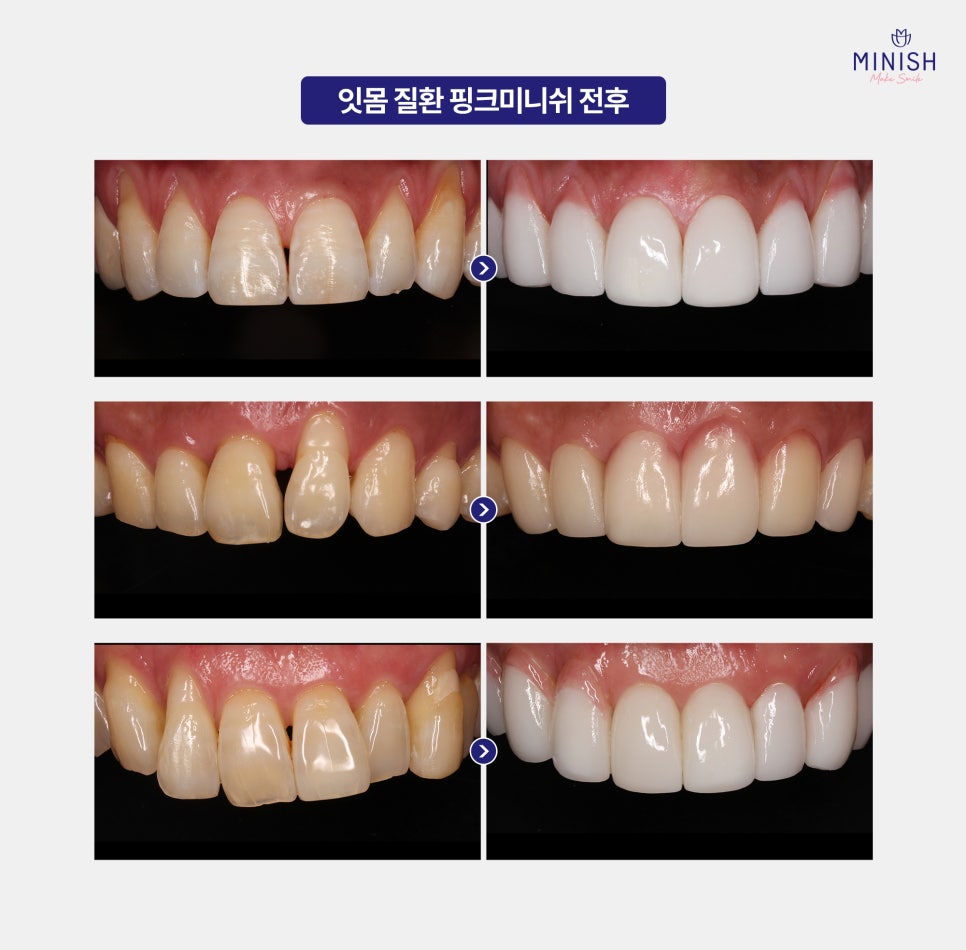
Improving them healthily with Pinkminish
�
�
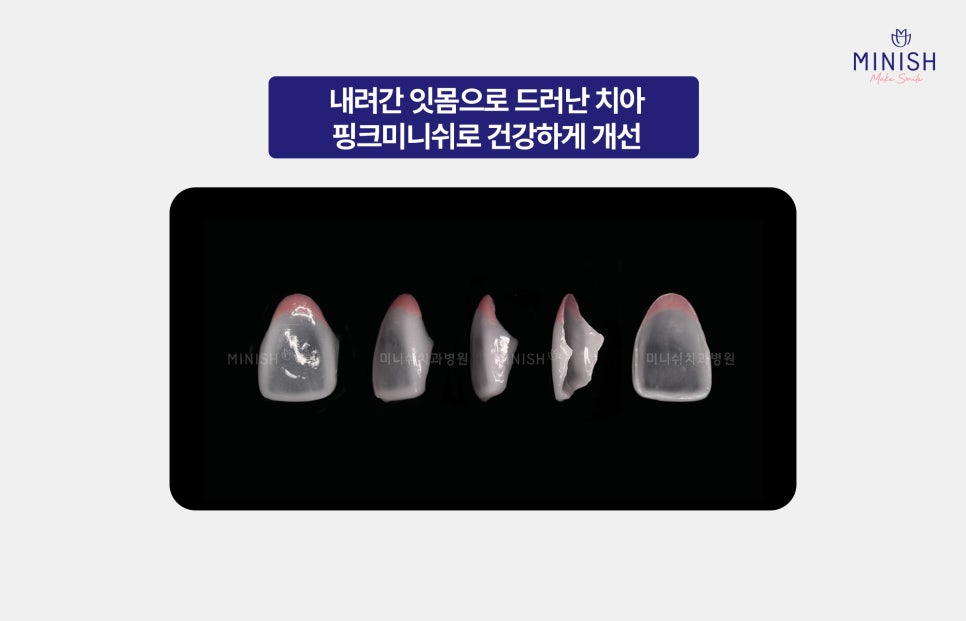
Through treatment for gum disease, the inflammation can be stopped, but there are limits to restoring receded gums to their natural state. That is why the remaining concern after treatment is the exposed tooth roots and the collapsed gum line. Pinkminish is a tooth restoration solution designed with these limitations in mind.
�
- Protecting exposed teeth and reducing sensitivity
As the gums recede, exposed tooth roots can become sensitive to outside stimulation. Pinkminish may help reduce discomfort caused by cold foods or brushing by using a design that precisely covers the exposed area.
�
- Functional restoration that takes chewing force into account
Because the restoration is performed while considering both tooth structure and occlusion, it is intended to help prevent chewing force from concentrating on specific areas and to maintain stability during everyday chewing activities.
�
- Improving the aesthetic balance between the teeth and gum line
When gum recession makes the teeth look longer, matching the color and shape of the teeth harmoniously with the surrounding teeth may help naturally refine the collapsed-looking gum line and the appearance of the teeth.
�
�
�
�
This is an example of teeth exposed due to gum disease being improved in a healthy way with Pinkminish.
�
�
�
�
�
Gum disease is often left untreated because it does not cause much pain, but once it progresses, it is not easy to recover from. In particular, after the gums have receded, the outcome can vary even more depending on the timing and method of treatment. If you notice even a small sign, I hope you will get an accurate diagnosis before it is too late and confirm the treatment direction that is right for you. When it comes to gum and tooth health, it is more important than anything to protect and manage it in advance rather than trying to restore it after it has been lost.
�
�
�
�
�

 �
�