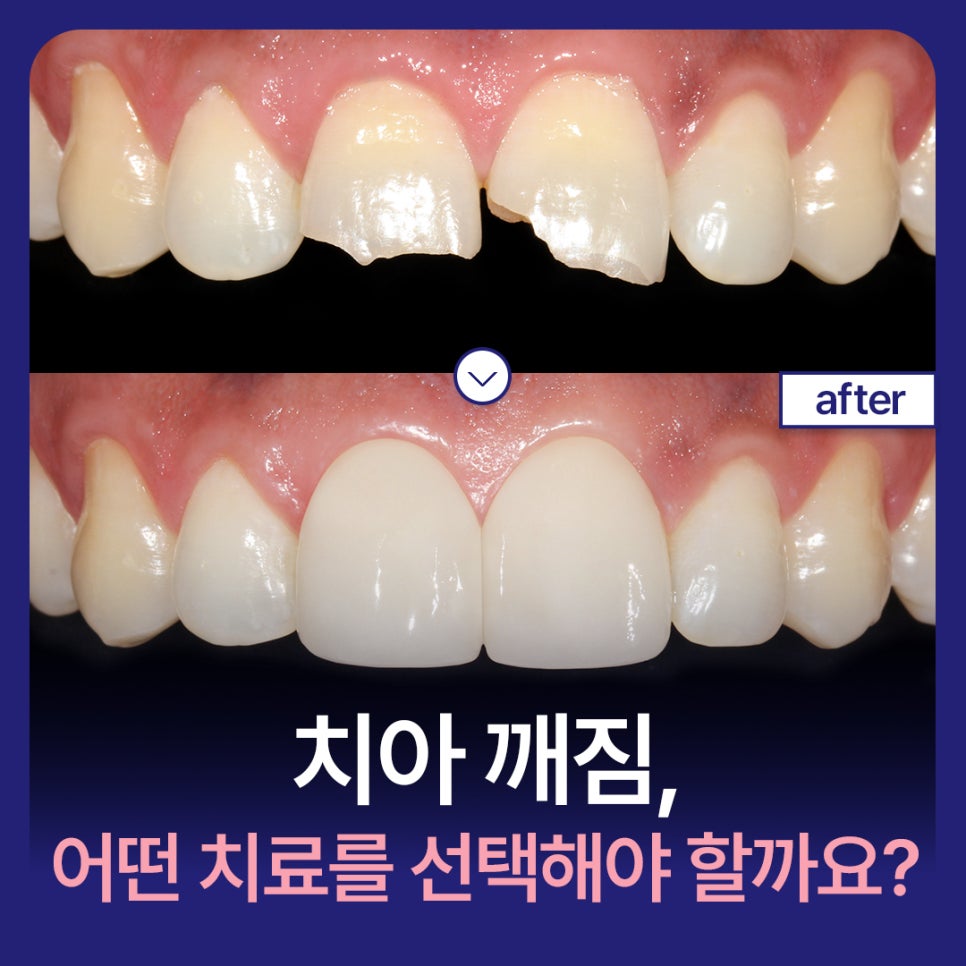
A sudden chipped tooth is more common than you might think. Teeth can chip more often than expected when biting hard foods, or at the moment of a fall or collision. If the damage is clearly visible in the mirror, rather than assuming, “It should be fine,” it is important to check the exact condition. Once a tooth is damaged, it does not recover on its own, so it is important to choose the appropriate treatment depending on the extent of the chip. Today, we will look at the treatment options available when a tooth chips, along with the pros and cons of each.
Resin treatment: when it is needed for a chipped tooth, and its pros and cons
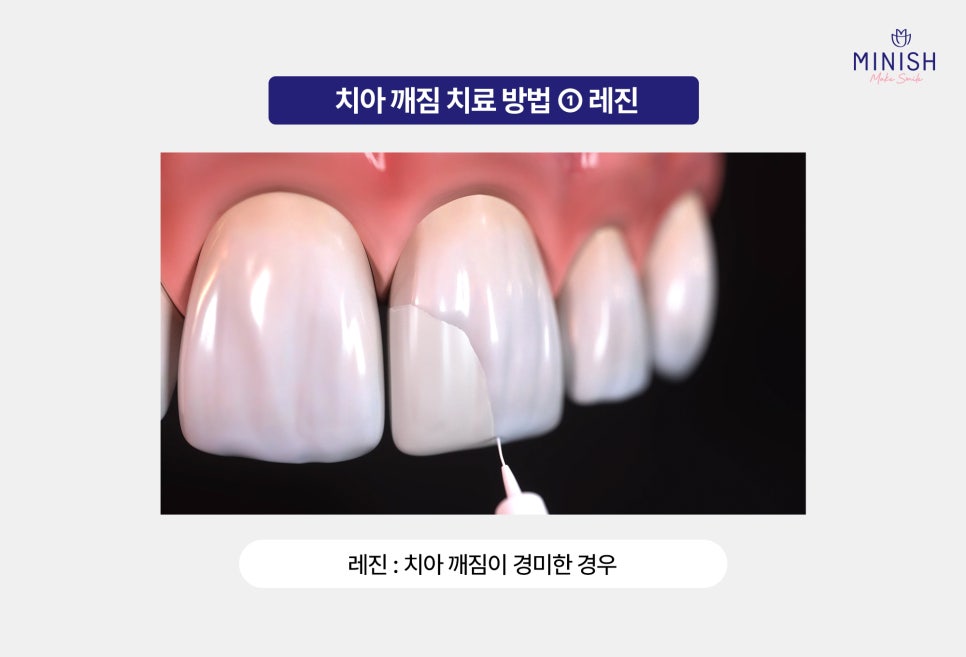
If the tip of a tooth is slightly chipped, or if there is a minor fracture on the surface, resin treatment may be considered. Resin is a method that restores the shape by filling the chipped area with a tooth-colored material.
Pros
-
The procedure time is short, and treatment can be completed on the same day
-
The cost burden is relatively low
-
Since there is almost no tooth reduction, the natural tooth can be preserved
Cons
-
Over time, discoloration may occur due to the material’s characteristics
-
Because durability is not high, there is a possibility of detachment or re-fracture
-
If retreatment is repeated, additional tooth reduction may be necessary
Resin allows for quick repair, but it should be noted that it has limitations as a long-term solution.
Laminates: when they are needed for a chipped tooth, and their pros and cons
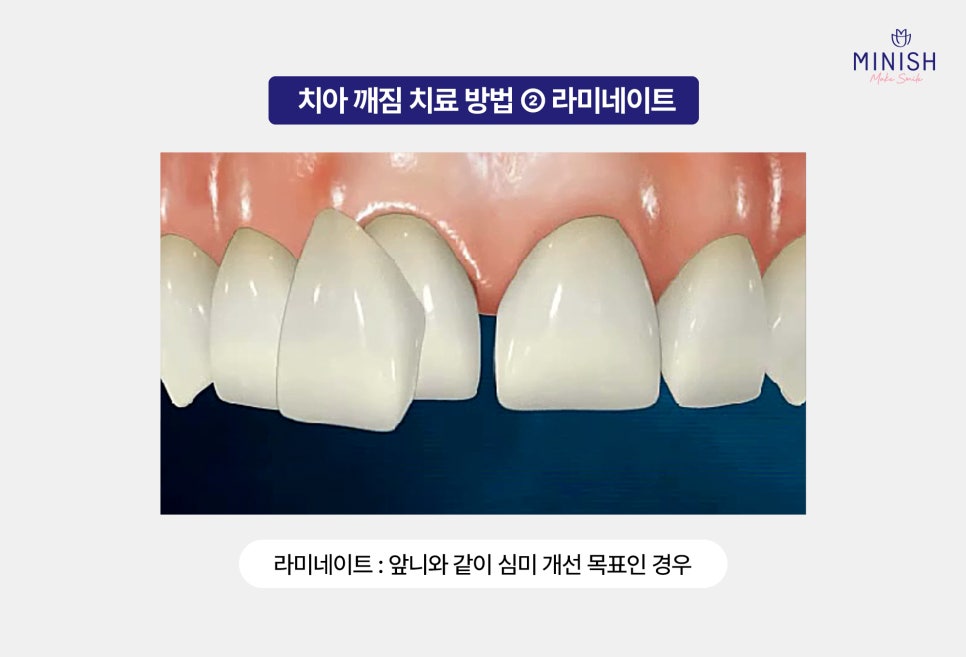
When chipping occurs in an area where aesthetics are important, such as the front teeth, laminate veneers may be chosen. This method involves removing part of the front surface of the tooth and bonding a ceramic restoration to improve the shape and color.
Pros
Cons
-
Tooth reduction is required, making natural tooth preservation difficult
-
If a large amount must be removed, sensitivity or even root canal treatment may follow
-
If fabrication or bonding precision is low, gaps at the margins, lifting, or discoloration may occur
-
Due to the strength of ceramic, there is a possibility of wear on the opposing teeth
-
Once a tooth has been reduced, it cannot be returned to its original state
Laminates are primarily an aesthetic treatment, and they have limitations when it comes to restoring the tooth’s underlying structure.
Crowns: when they are needed for a chipped tooth, and their pros and cons
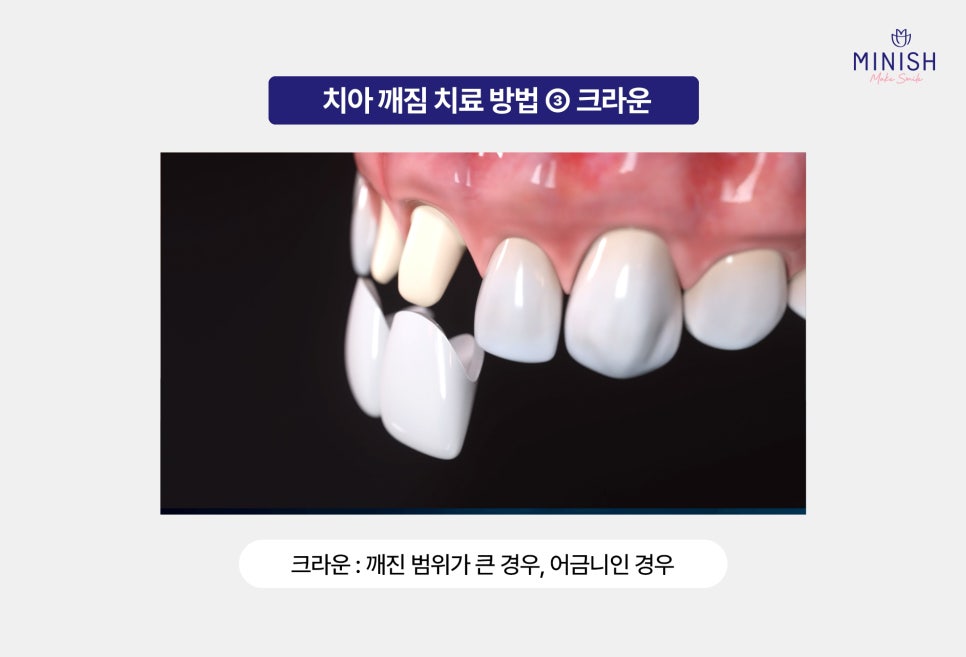 If the chipped area is large, or if the tooth structure itself has become weakened, crown treatment may be considered. This method covers and protects the entire tooth, and is mainly applied to areas that receive strong biting forces, such as molars.
Pros
Cons
-
A large amount of tooth reduction is needed to create space for the crown
-
If a lot of reduction is required, sensitivity may occur and the likelihood of root canal treatment increases
-
Fabrication time is needed, so multiple visits are required
-
If precision is lacking, lifting, discoloration, or poor fit may occur
-
Restorations containing metal may cause gum discoloration over time
Crowns are a stable treatment, but they place a relatively large burden on preserving the natural tooth.
Minish, a tooth restoration solution
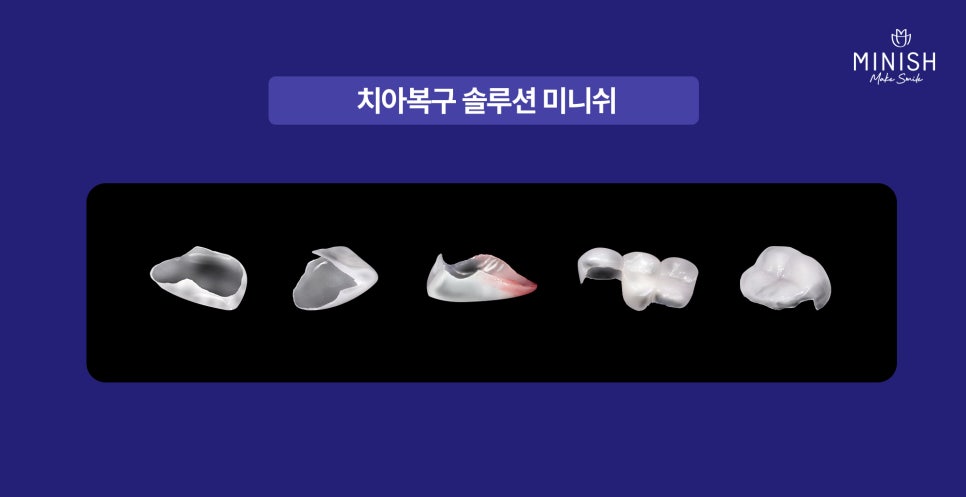
One option that can be considered for chipped teeth ranging from minor damage to more extensive fractures is the tooth restoration solution Minish. Minish is a method that precisely restores only the damaged area while minimizing unnecessary tooth reduction.
-
It can be applied broadly, from minor cracks to teeth with larger fracture areas
-
It minimizes unnecessary tooth reduction, preserving as much of the natural tooth as possible
-
It uses materials with strength and elasticity similar to natural teeth, allowing chewing force to be distributed more stably
-
It bonds precisely to the tooth, resulting in fewer marginal gaps and reducing the risk of bacterial penetration and secondary damage
-
Its color and translucency are similar to those of natural teeth, creating less of a noticeable difference
-
Rather than simply improving appearance, it can restore both occlusion and function
-
Even after treatment, it can preserve the existing tooth structure as much as possible, which is advantageous for long-term tooth care
Minish differs from conventional treatments in that it is a concept of restoration rather than simply covering the tooth.
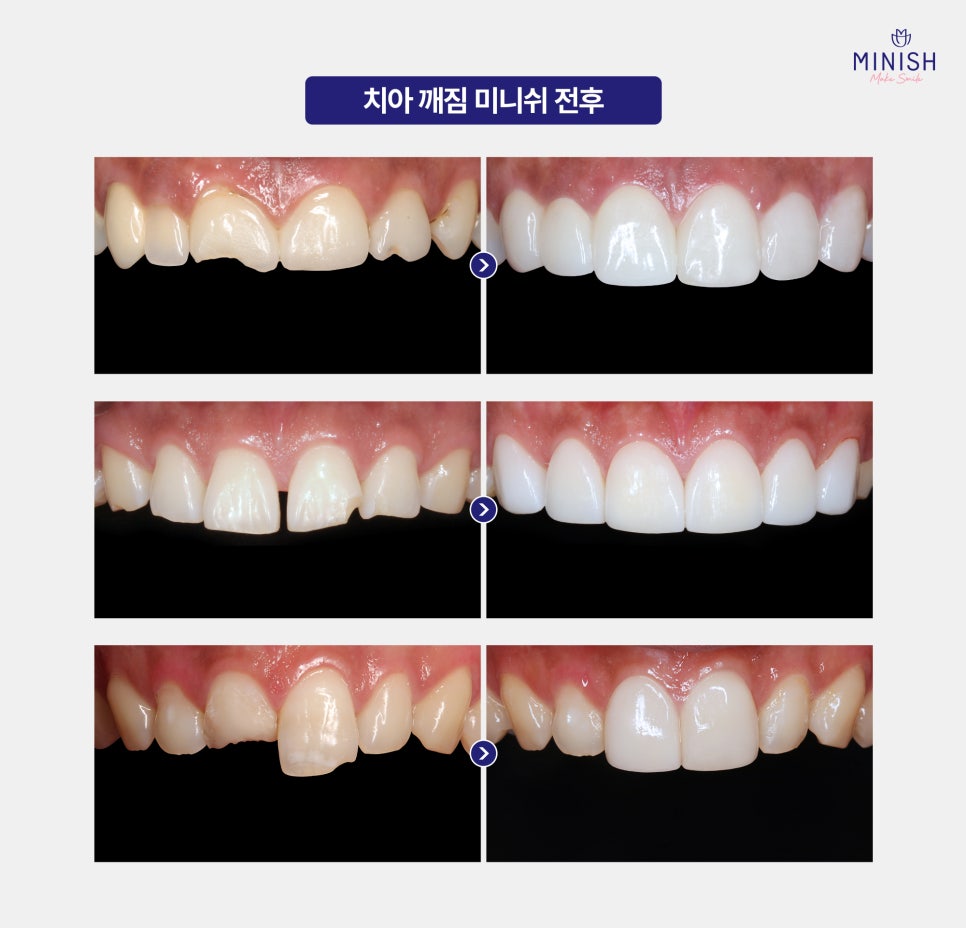
After Minish, the natural tooth is preserved as much as possible while restoring the function and aesthetics that were affected by the chip.
There is no single correct answer for treating a chipped tooth. It is important to choose the treatment that suits you by considering the extent of the damage, the location, function, and aesthetic factors. Above all, please judge based on how much of the natural tooth can be preserved. If you are worried about a chipped tooth, it is necessary to receive an accurate diagnosis of the treatment method that matches your current condition.