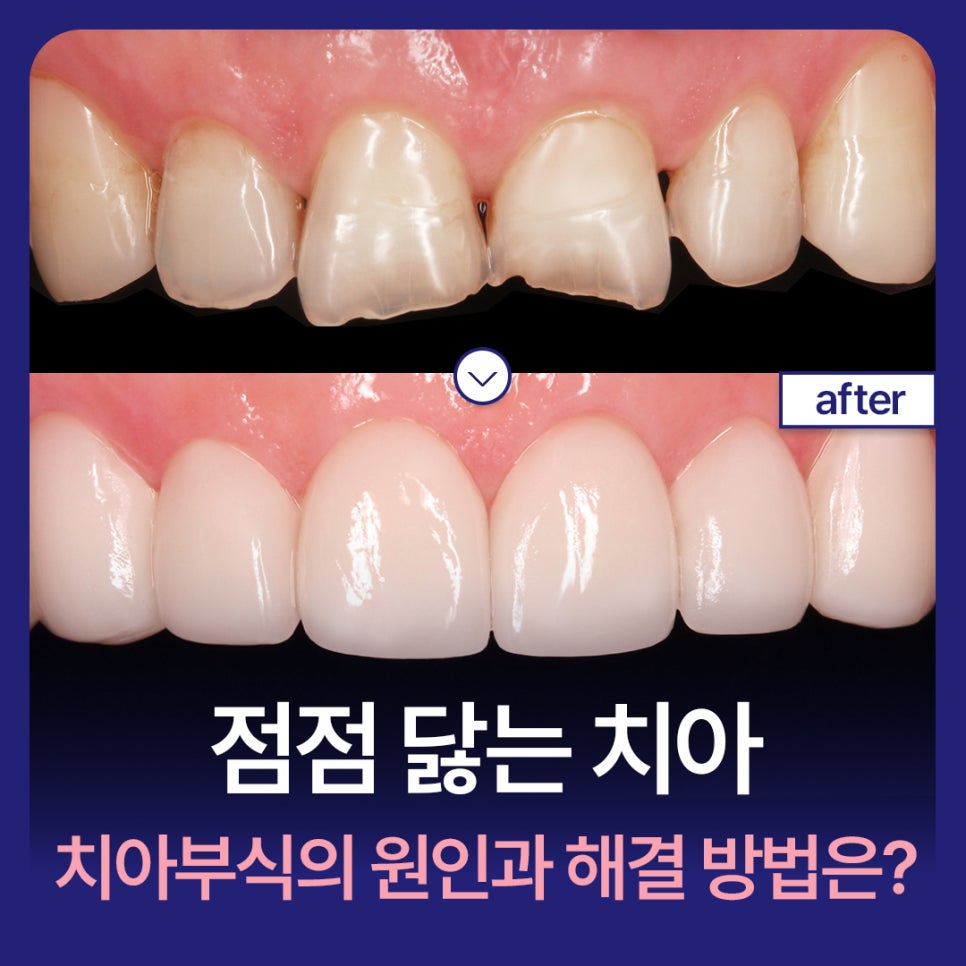
Even if you brush thoroughly, have you ever felt your teeth becoming more sensitive or noticed that the tips look transparent? At first, it can be easy to dismiss these as minor changes, but if these signs keep appearing, it may not be simple wear and tear; tooth erosion could be progressing. Although it may not look like a major problem on the surface, tooth erosion can lead to functional weakening over time, so it is important to understand the cause accurately and manage it properly.
What Is Tooth Erosion?
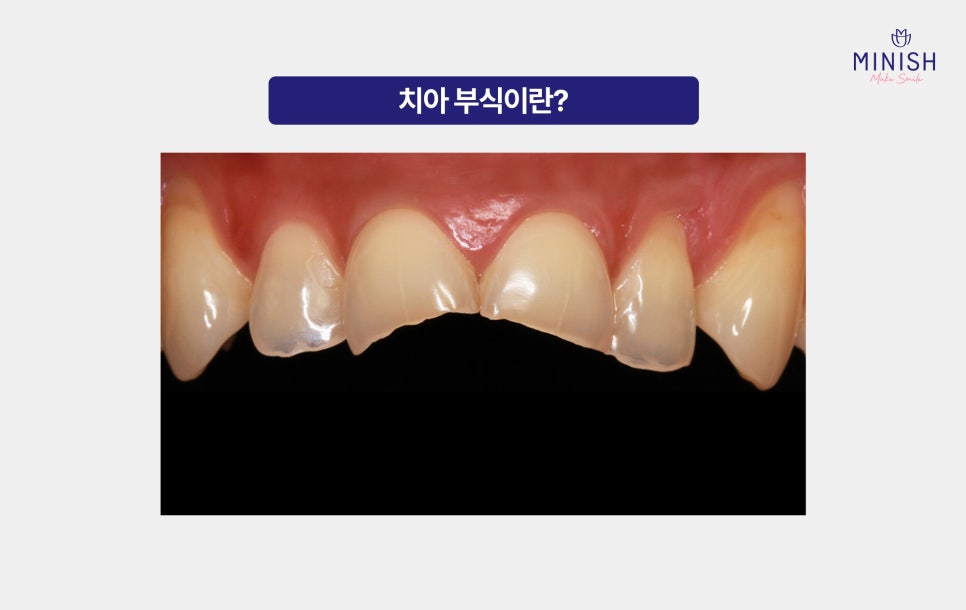
Tooth erosion refers to a condition in which enamel, the hardest protective layer of the tooth structure, is gradually weakened by repeated exposure to acidic environments. Since enamel does not recover on its own once damaged, if it is not managed in the early stage, the inner structure can also be affected. Teeth becoming thinner, changing color, and symptoms such as sensitivity or chipping are also part of this process.
What Causes Tooth Erosion?
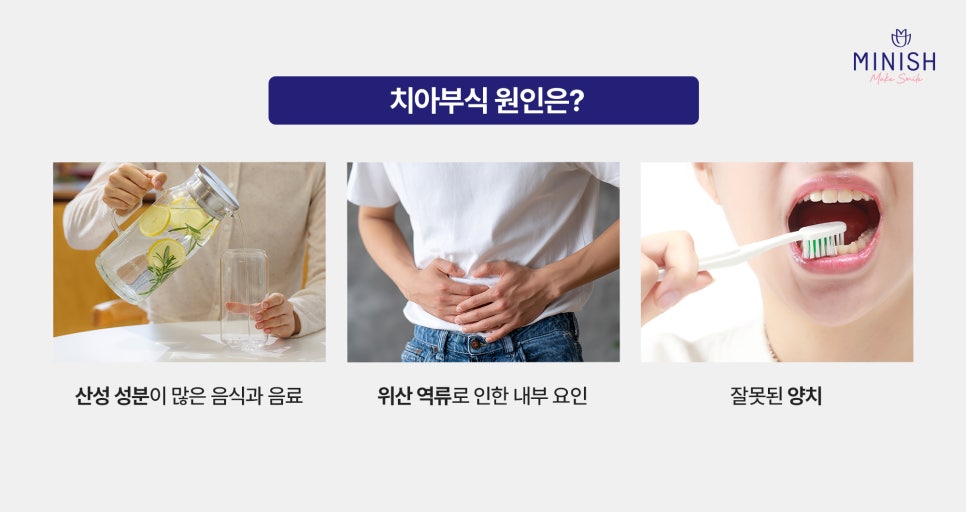
Tooth erosion often occurs not because of one specific reason, but because everyday habits and environmental factors work together.
- Foods and drinks high in acid
Acidic foods and drinks such as carbonated beverages, fruit juice, and strongly sour fruits temporarily soften the tooth surface. When this exposure is repeated, the enamel can gradually weaken.
- Internal factors caused by stomach acid reflux
When stomach acid rises into the mouth due to reflux esophagitis or similar conditions, strong acid can directly contact the teeth and cause erosion. Especially during sleep or when reflux occurs frequently, damage can accumulate without being noticed.
- Incorrect brushing timing and method
The habit of brushing immediately after eating acidic foods can actually make the tooth surface wear down more easily. This is because friction is added while the surface has already been weakened by acid. In such cases, it helps to rinse the mouth with water first, wait a sufficient amount of time, and then brush gently.
Advantages and Disadvantages of Tooth Erosion Treatment Methods
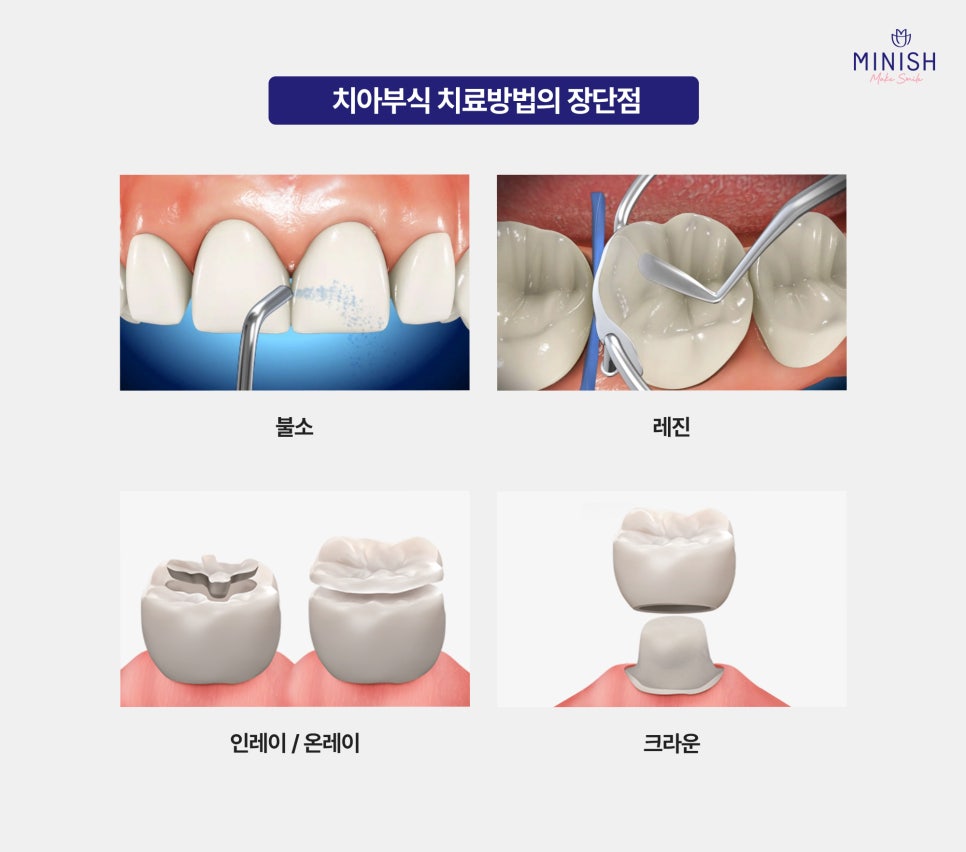
Treatment for tooth erosion varies depending on how far it has progressed, and each method has its own advantages and limitations.
- Fluoride treatment
This is mainly used in the early stage and helps strengthen the tooth surface to slow additional damage. However, it has limitations if structural damage has already occurred.
- Resin
This is a relatively simple method that can fill in eroded areas and improve form and function. However, over time, discoloration or wear may occur, so ongoing care is needed.
- Inlay / Onlay
This can be applied when the affected area is wide and is effective for restoring function. However, some healthy tooth structure must be removed during fabrication, and the treatment process may be divided into several steps.
- Crown
This is chosen when tooth damage is severe and has the advantage of covering and protecting the entire tooth. On the other hand, the amount of tooth removal is large, and depending on the material, it may place stress on the opposing tooth.
A Solution for Restoring Teeth Damaged by Erosion
Minish, a tooth restoration solution
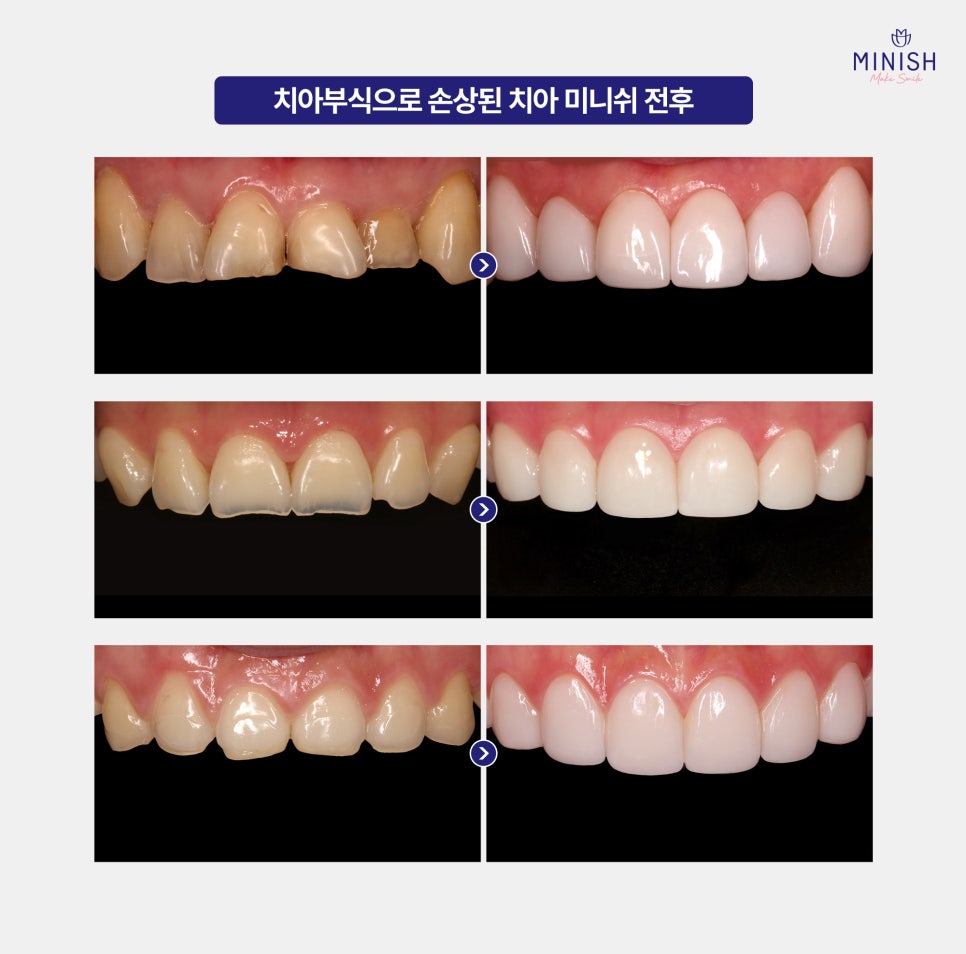
When restoring teeth weakened by tooth erosion, the key standard is not simply covering them, but how much of the natural tooth function can be preserved. Minish, a tooth restoration solution, takes this approach.
- Material properties similar to natural teeth
The material used in Minish is designed to achieve strength and elasticity similar to natural teeth, helping maintain stable everyday chewing function without becoming excessively hard.
- Restoration with reduced unnecessary removal
Based on the condition of the tooth, only the necessary area is minimally shaped, with priority given to preserving as much of the natural tooth structure as possible. This is an approach that takes long-term tooth use into account.
- Precise bonding to prevent additional problems
Through a precise bonding process that minimizes the gap between the tooth and the restoration, the focus is on reducing the risk of bacterial infiltration and secondary damage.
Tooth erosion is less of a problem that appears all at once and more of a gradual change that progresses in everyday life. That is why, the milder the symptoms feel, the more important it is to check the cause and manage it. Preventing it through lifestyle improvements and regular checkups is the best approach, but if damage has already progressed, it is necessary to choose a restoration method that matches the current condition of the tooth. We hope you do not miss the small signals your teeth are sending and manage them in a way that allows them to be used for a long time.