
There may have been times when you were just going about your usual routine without any particular pain, only to be suddenly diagnosed with cavities or gum problems and feel caught off guard. Dental problems can feel like they appear all at once, but in reality, they are often caused by small habits repeated over time in daily life. That is why it is important to take a moment to check which behaviors may be putting stress on your dental health. Today, we will look at the lifestyle habits we repeat without thinking that can harm dental health, along with how to manage them.
Dietary habits that harm dental health
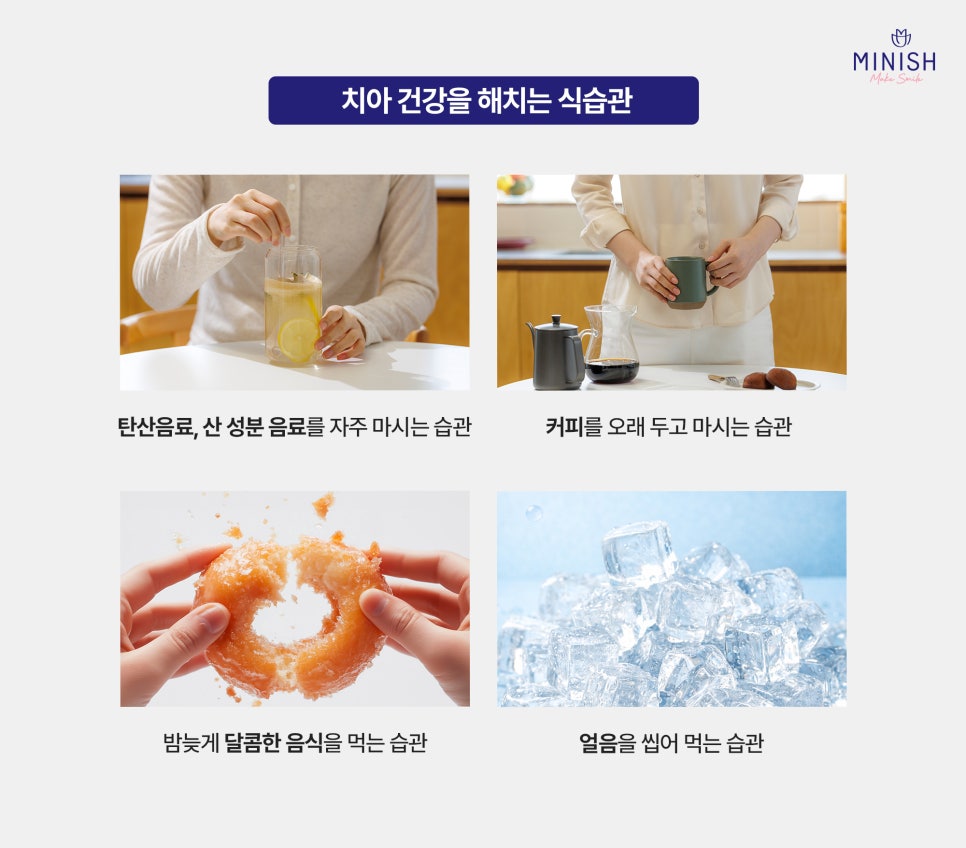
Some dietary habits that affect dental health are closer to daily life than you might think. The following foods and behaviors deserve special attention.
- Frequently drinking carbonated drinks and acidic beverages
The acidic components in carbonated drinks can weaken the surface of teeth, and the sugar increases the risk of cavities. When consuming them, using a straw can help, and it is best to rinse your mouth with water afterward so the acidic components do not remain for long.
- Sipping coffee over a long period of time
Coffee is one of the main causes of tooth staining. The longer you sip it little by little over time, the easier it is for pigments to remain on the tooth surface. It helps to finish it within a relatively short time and then rinse with water.
- Eating sweet foods late at night
If you consume foods high in sugar before going to sleep, bacteria may multiply more actively because sugar remains on the teeth during sleep. This increases the likelihood of cavities, so extra caution is needed.
- Chewing ice
Chewing hard ice with your teeth can cause direct impact on the teeth. If repeated, it may lead to tiny cracks in the teeth or damage to the enamel, which can cause sensitivity.
Incorrect toothbrushing habits that harm dental health
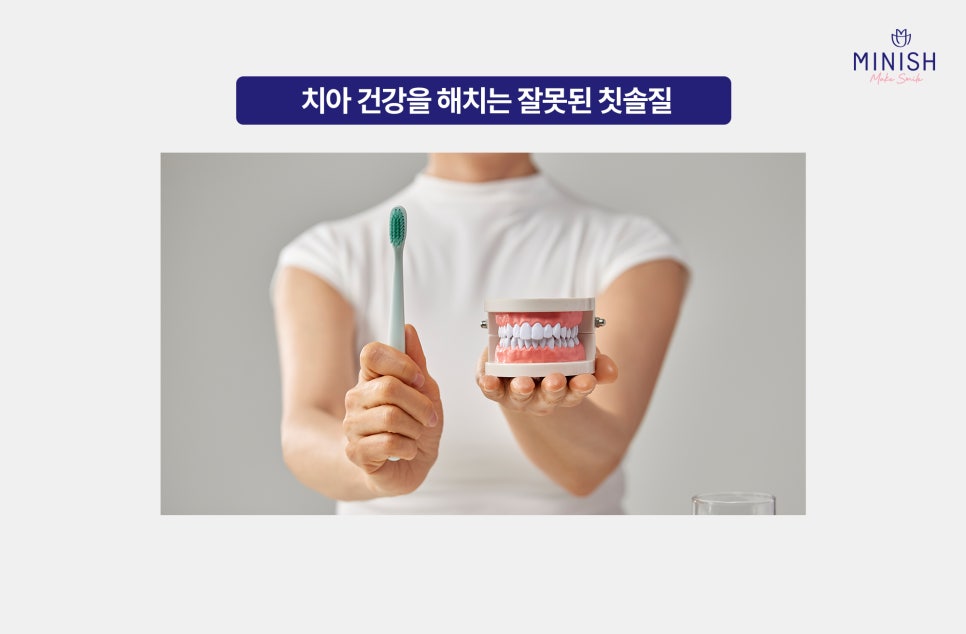
Brushing is the foundation of dental care, but if done incorrectly, it can instead place stress on the teeth and gums.
- Brushing with too much force
Some people scrub hard to clean thoroughly, but strong pressure can wear down the tooth surface and cause gum damage.
- Repeatedly brushing only side to side
Moving the toothbrush only left and right can cause wear on the tooth surface and makes it difficult to clean the spaces between teeth sufficiently.
- Finishing brushing too quickly
If brushing time is too short, food debris and plaque are not removed sufficiently, increasing the likelihood of cavities.
- Continuing to use an old toothbrush
When the bristles are worn down, the cleaning effect decreases, so regular replacement is necessary. In general, it is recommended to replace it every 3 to 4 months.
- Unsanitary toothbrush storage habits
Storing a toothbrush in a humid environment makes it easier for bacteria to grow and may negatively affect oral health.
Habits that harm dental health
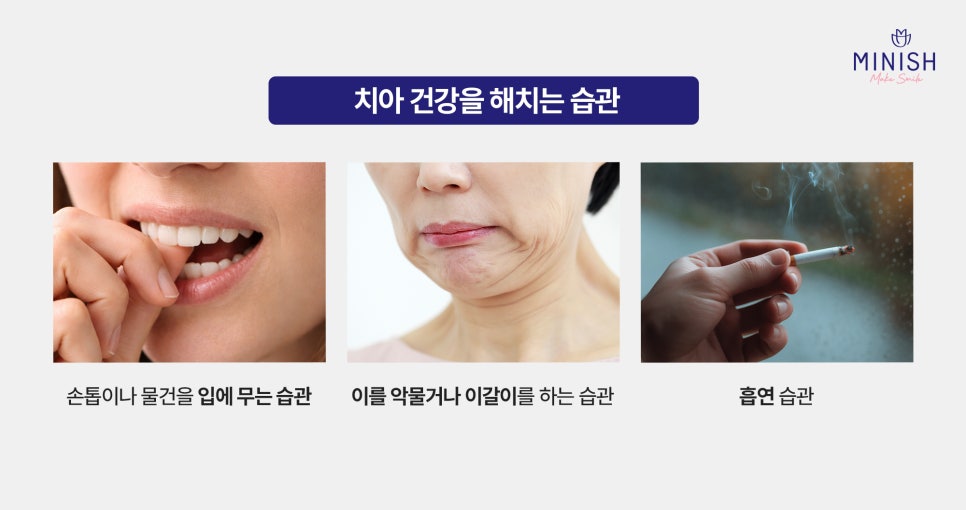
In addition to diet and brushing, unconscious behaviors in daily life can also affect dental health.
- Biting your nails or objects
Bacteria on your hands or objects can enter your mouth, which is not good for oral hygiene.
- Clenching your teeth or grinding your teeth
Continuous pressure is placed on the teeth, which can lead to wear or damage.
- Smoking
Smoking can cause tooth staining and is known as a factor that increases the likelihood of gum disease. In the long term, it can place a burden on overall oral health.
Creating lifestyle habits that protect dental health
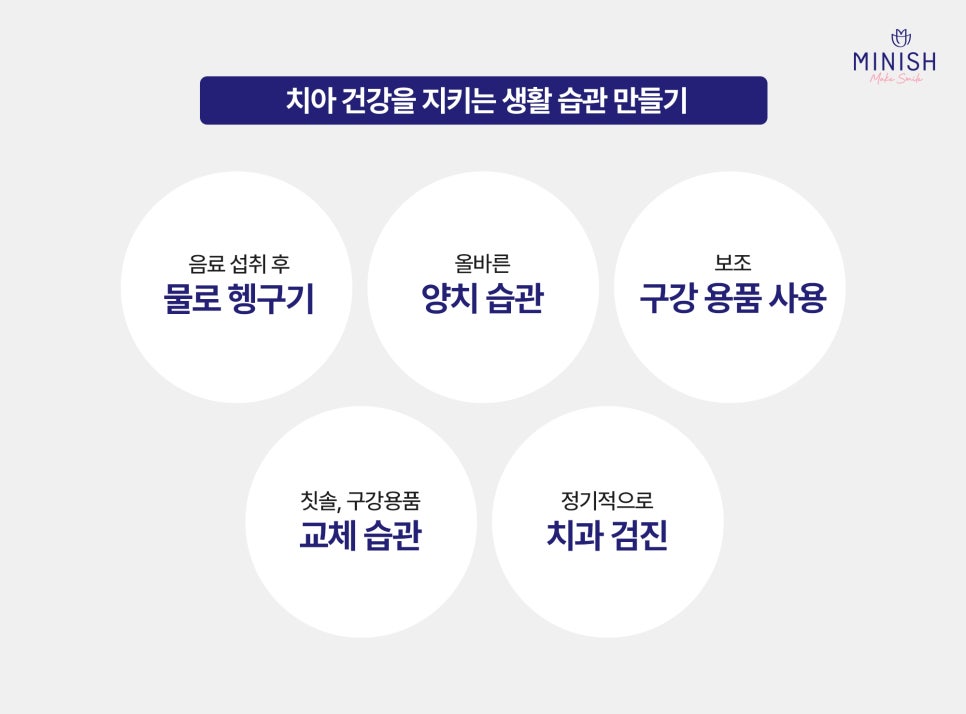
To protect dental health, it is important not only to reduce bad habits but also to consistently practice proper care habits. Start with one manageable step you can apply in daily life.
- A habit of rinsing your mouth after drinking beverages
After drinking carbonated beverages or coffee, rinsing your mouth with water helps prevent acidic components or pigments from remaining on the teeth for too long.
- A thorough brushing habit using the correct method
With brushing, the method matters more than the number of times. It is necessary to clean carefully, paying attention to the boundary between the teeth and gums and the spaces between teeth, and it is better to brush gently rather than with excessive force.
- A habit of using auxiliary oral care products together
For the spaces between teeth that are difficult to reach with a toothbrush alone, dental floss or interdental brushes can be helpful. Mouthwash can be used as an auxiliary oral care measure.
- A habit of regularly replacing toothbrushes and oral care products
A toothbrush used for a long time may lose its cleaning power, so it is better to replace it regularly, and it is important to store oral care products hygienically.
- A habit of visiting the dentist regularly to check your condition
Even if there is no noticeable pain, it is necessary to check the condition of the teeth and gums through regular examinations. Detecting abnormalities early may help reduce the burden.
If any of the lifestyle habits mentioned above apply to you, it is better to start changing them one by one from today. Once teeth are damaged, they are difficult to restore to their original condition, so preventing problems in advance is more important than managing them after they arise. If you check your dental condition through regular dental visits along with small changes in your daily habits, it may help reduce situations that lead to major treatment. Please keep in mind that dental health begins not with a special moment, but with everyday care.