When drinking cold water, you may have experienced a sudden sharp sensation, or noticed that a specific area becomes sensitive while brushing. At first, it is easy to brush it off, but if this sensitivity repeats and becomes more frequent, it may be a sign that something is wrong with your gum health rather than just simple sensitivity. In particular, if the only symptom is ongoing sensitivity without pain, it is worth suspecting periodontal disease.
What is periodontal disease?
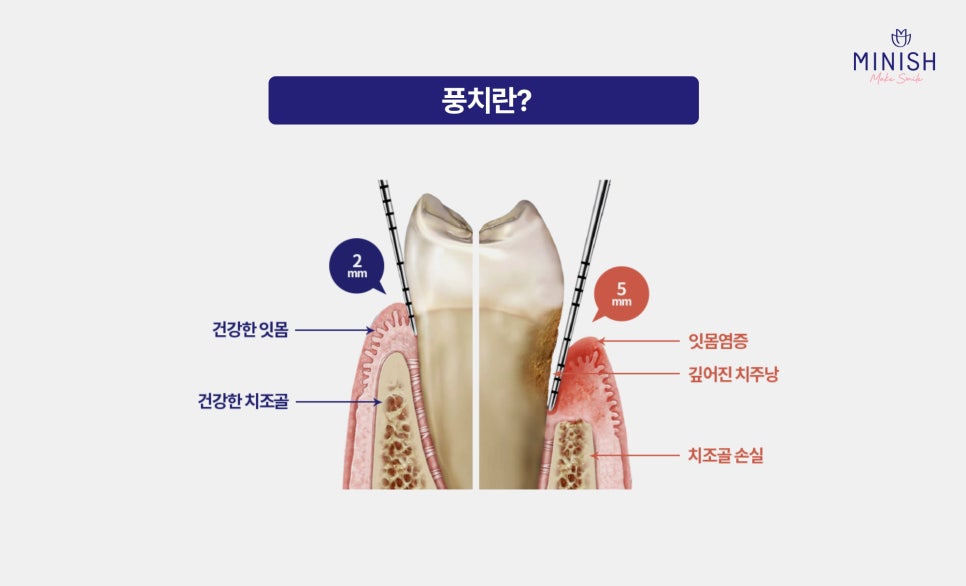
Periodontal disease is a condition in which inflammation occurs not in the tooth itself, but in the gums and jawbone that support the teeth. Teeth normally function properly only when they are firmly anchored by the gums and alveolar bone. However, when inflammation develops, this supporting structure weakens and various symptoms appear. In the early stages, it may begin with bleeding or swelling, but if the gums recede and the tooth roots become exposed, the teeth can become sensitive to outside stimuli, and sensitivity may follow. In other words, sensitivity can be a sign not of a problem on the surface of the tooth, but that the foundation holding the tooth in place is becoming unstable.
Why does periodontal disease develop?
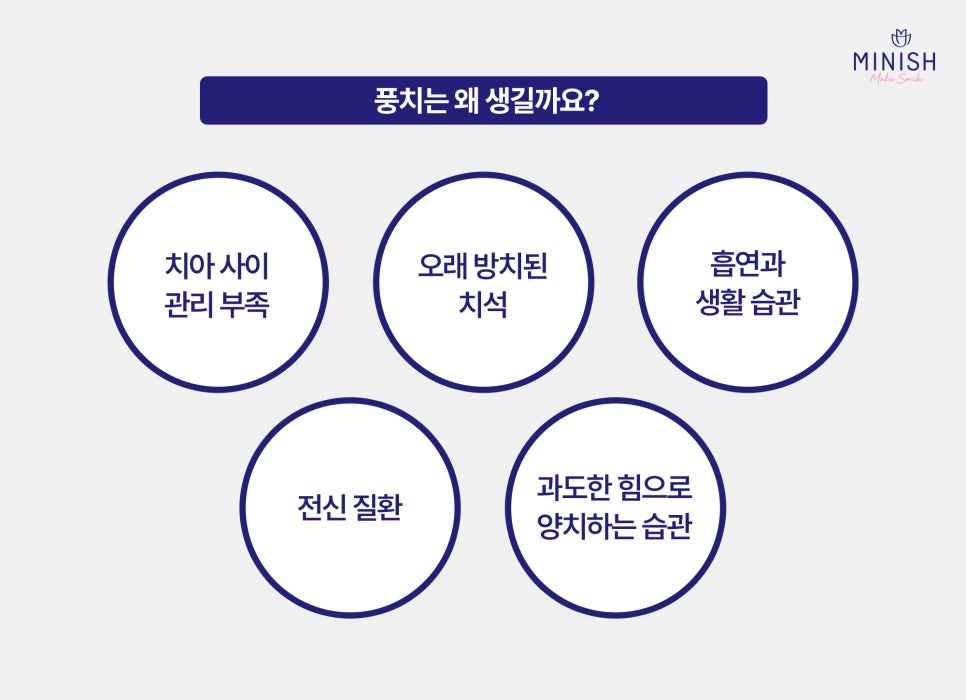
The main cause of periodontal disease is bacteria and tartar left at the border between the teeth and gums. Bacterial plaque that is not removed triggers inflammation, and repeated inflammation damages the gum tissue.
-
Inadequate care between teeth
-
Tartar left untreated for a long time
-
Smoking and lifestyle habits
-
Systemic disease
-
A habit of brushing with excessive force
If inflammation continues, the gums gradually recede, and the exposed tooth roots may react more strongly to cold stimuli, making sensitivity increasingly noticeable.
What are the treatment methods by stage?
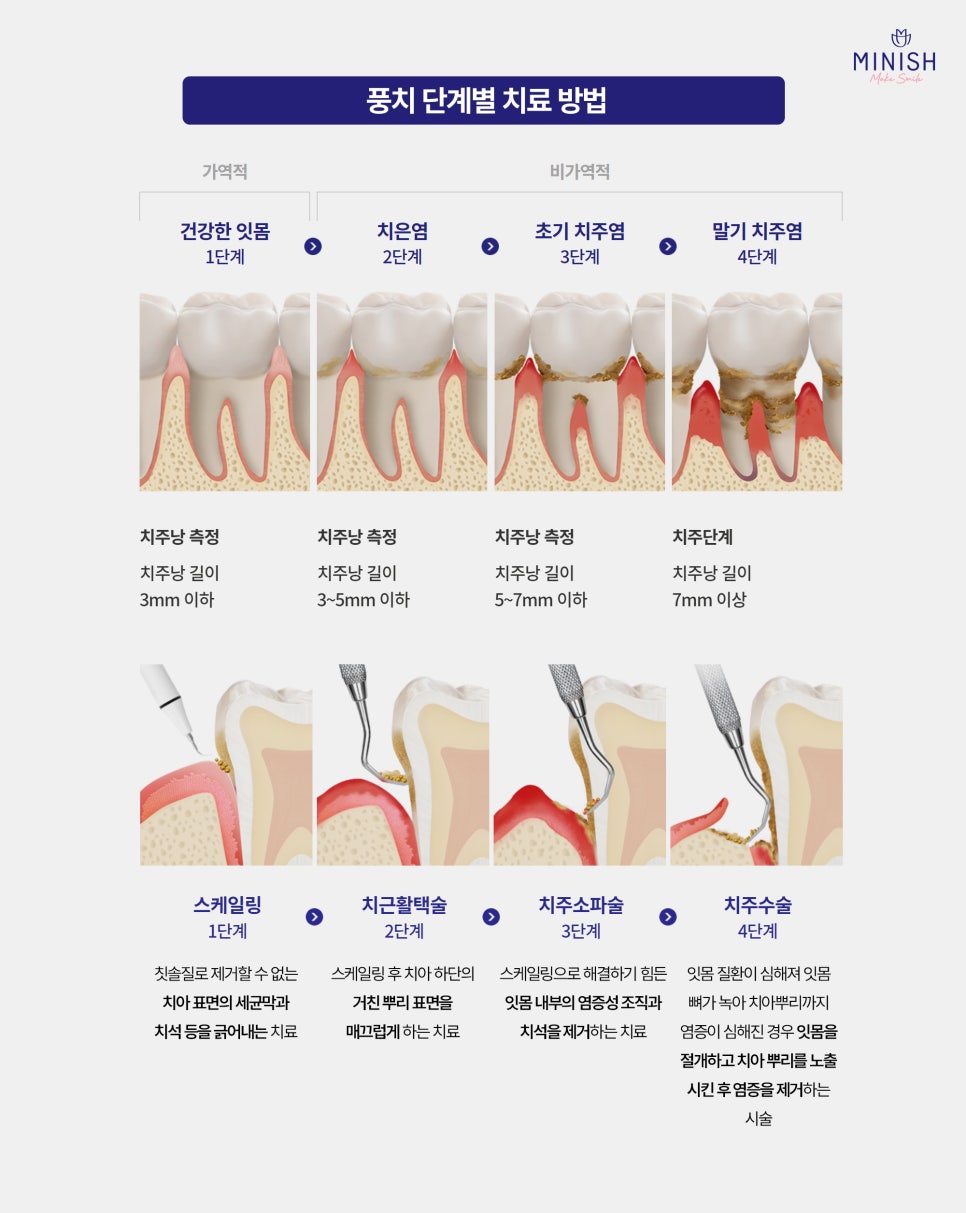
The direction of treatment for periodontal disease changes depending on the stage of progression.
Stage 1 – Gum inflammation stage
Stage 2 – Stage where the space between the tooth and gum becomes deeper
-
A gap forms between the gums and teeth, and bad breath or sensitivity may occur.
-
Tartar and bacteria remaining on the tooth root surface are removed, and rough areas are smoothed to prevent the inflammation from progressing deeper.
Stage 3 – Stage of damage to the jawbone
-
The gums recede noticeably, and the teeth may become slightly loose.
-
More active treatment to remove inflamed tissue inside the gums is considered.
Stage 4 – Stage with significant alveolar bone loss
-
The jawbone has been severely resorbed, making it difficult to support the teeth.
-
The teeth are significantly loose, and preservation may be difficult. At this stage, surgical treatment may be needed, and in some cases, extraction must be considered.
The earlier periodontal disease is managed, the better the prognosis. In particular, if sensitivity appears at the beginning stage, early intervention is important.
Treatment limits for periodontal disease, Pink Minhish that also considers the gums
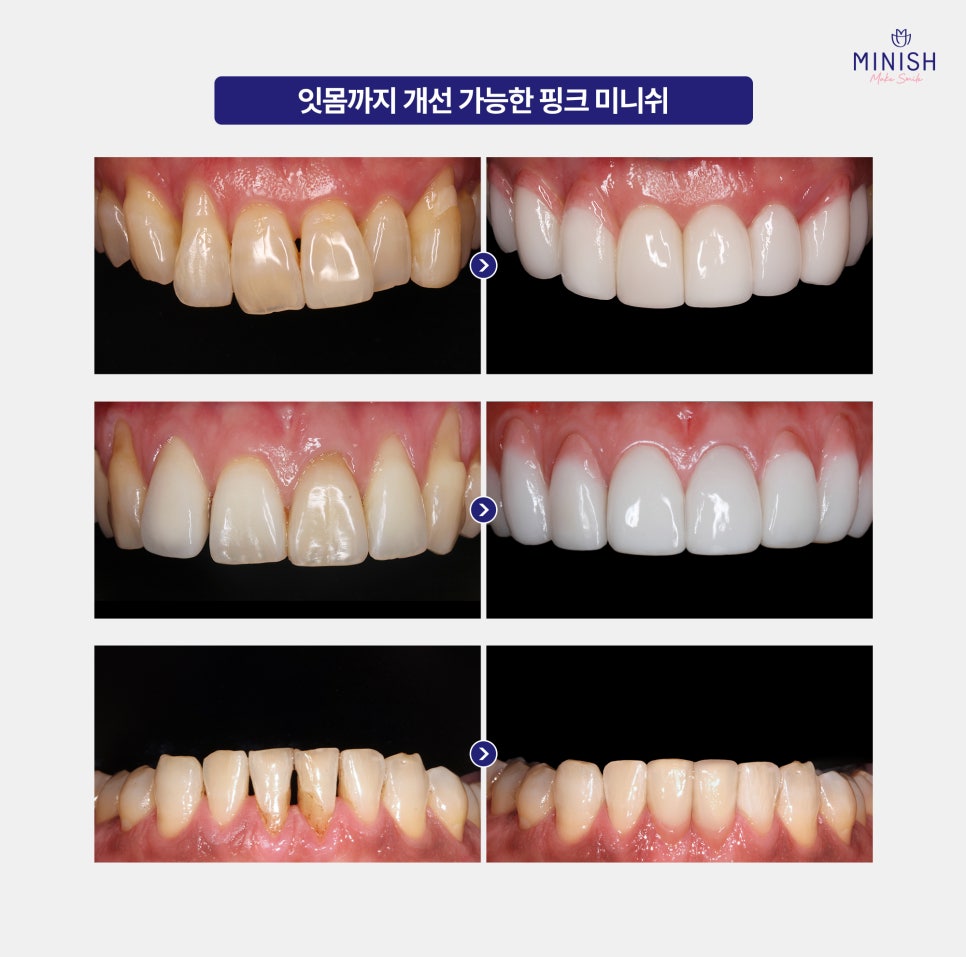
After periodontal treatment, a receded gum line or exposed tooth roots are difficult to restore naturally. In other words, treating inflammation and restoring the gum shape are separate issues. At this point, an approach that considers both function and esthetics is needed, which is why Pink Minish is recommended. Pink Minhish is a tooth restoration solution that protects the exposed root area caused by gum recession while designing balance between the teeth and gums.
✔ Protects exposed tooth roots
→ Helps relieve sensitivity by blocking external stimuli.
✔ Restores balance to the gum line
→ Naturally corrects uneven tooth proportions.
✔ A design centered on preserving natural teeth
→ Minimizes unnecessary removal.
✔ Precision restoration based on biomimetics
→ Reproduces a structure and function similar to natural teeth to enhance stability.
✔ Considers esthetics and function at the same time
→ Aims for structural restoration, not just simple prosthetics.
It is important for long-term stability to consider not only inflammation treatment, but also any remaining structural issues.
Periodontal disease often begins with small signals such as sensitivity rather than pain. If you check and manage it at this stage, you may be able to prevent major treatment. Gum health can be sufficiently maintained with regular checkups and care. Since natural teeth are difficult to replace, prevention is most important. If the sensitivity continues, do not endure it—please make sure to check your current gum condition accurately. At Minish Dental Hospital, we provide guidance on care directions tailored to each person’s oral condition through precise diagnosis. Small changes can determine the lifespan of your teeth.