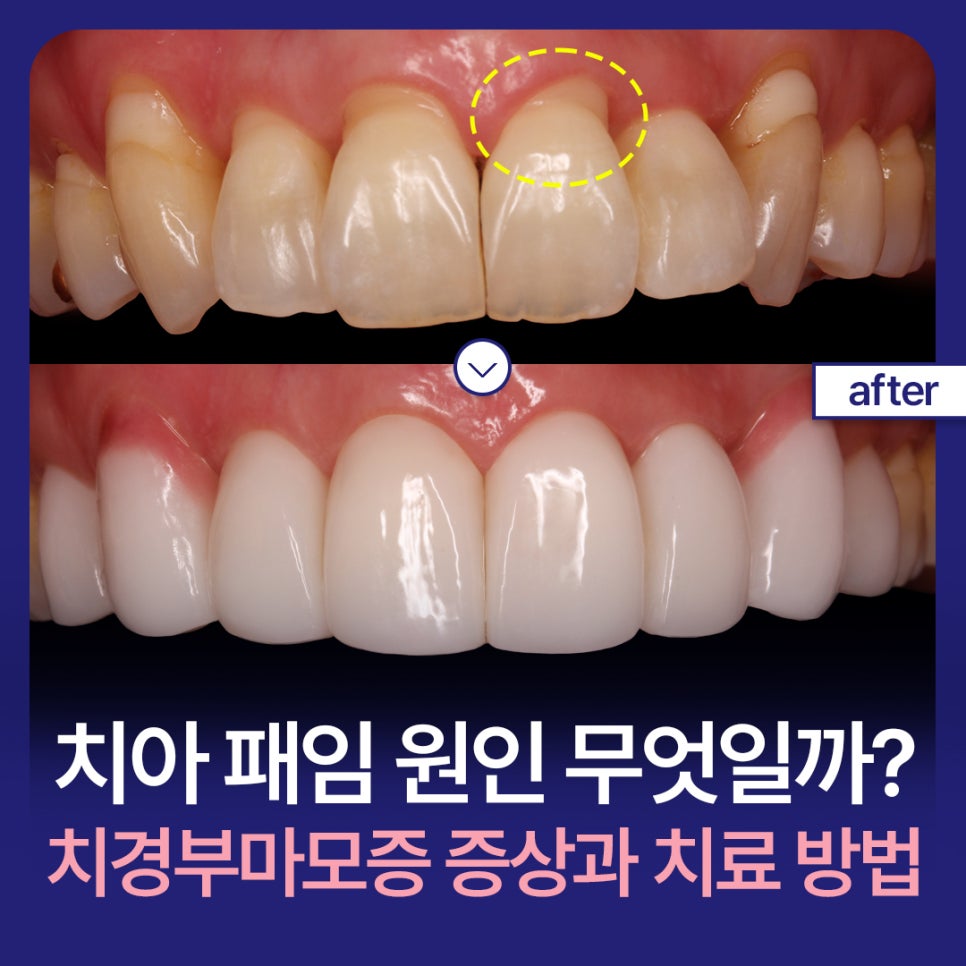
Have you ever felt a sharp twinge in a certain spot while brushing, or experienced tooth sensitivity when drinking cold water? If you look closely in the mirror, the tooth just above the gumline may even appear slightly worn down. This condition, in which the neck portion of the tooth is worn or notched, is commonly called tooth notching, and in dentistry it is referred to as cervical abrasion. It often starts simply as sensitivity, but if left untreated, the abrasion can gradually become deeper. In some cases, it can lead to weakened teeth or severe sensitivity, so it is important to understand the cause accurately and consider appropriate treatment.
What Is Cervical Abrasion (Tooth Notching)?
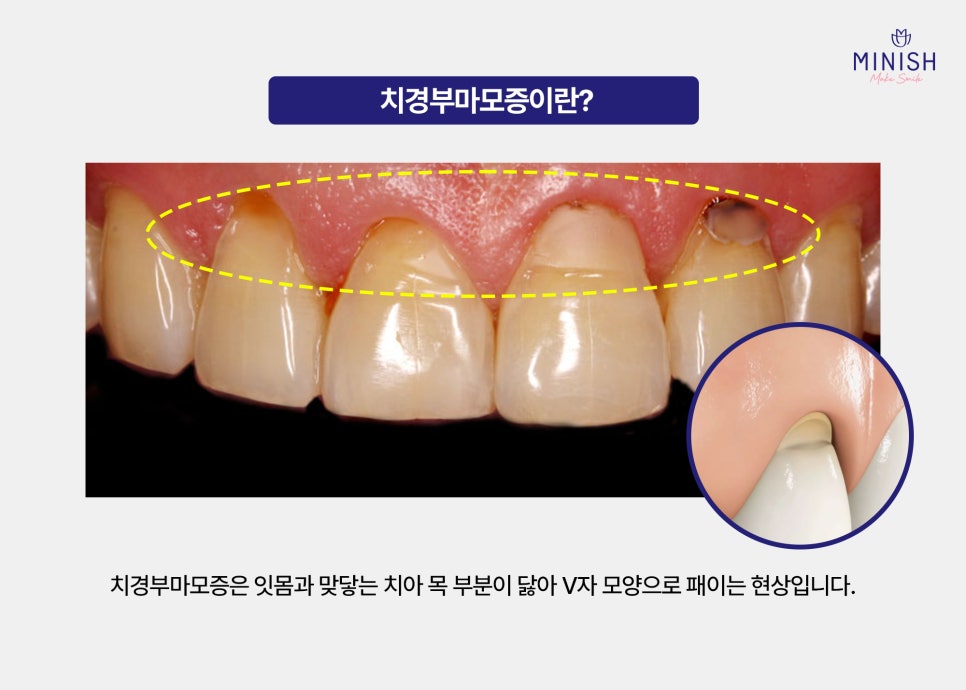
A tooth is broadly divided into the visible upper part and the root portion located inside the gum. The part of the tooth just above the gum where these two sections meet is called the “cervical area” in dentistry. Cervical abrasion refers to the wearing away and notching of this neck portion of the tooth where it meets the gum. It usually has the characteristic appearance of a V-shaped or grooved notch on the side of the tooth. The outer surface of a tooth is covered by a hard enamel layer, but this layer becomes thinner toward the gumline. For that reason, repeated stimulation from brushing or chewing force can wear down the neck area of the tooth more easily than other parts. As this abrasion progresses, the inner tooth layer may become exposed, causing sensitivity to cold foods or brushing.
What Causes Cervical Abrasion (Tooth Notching)?
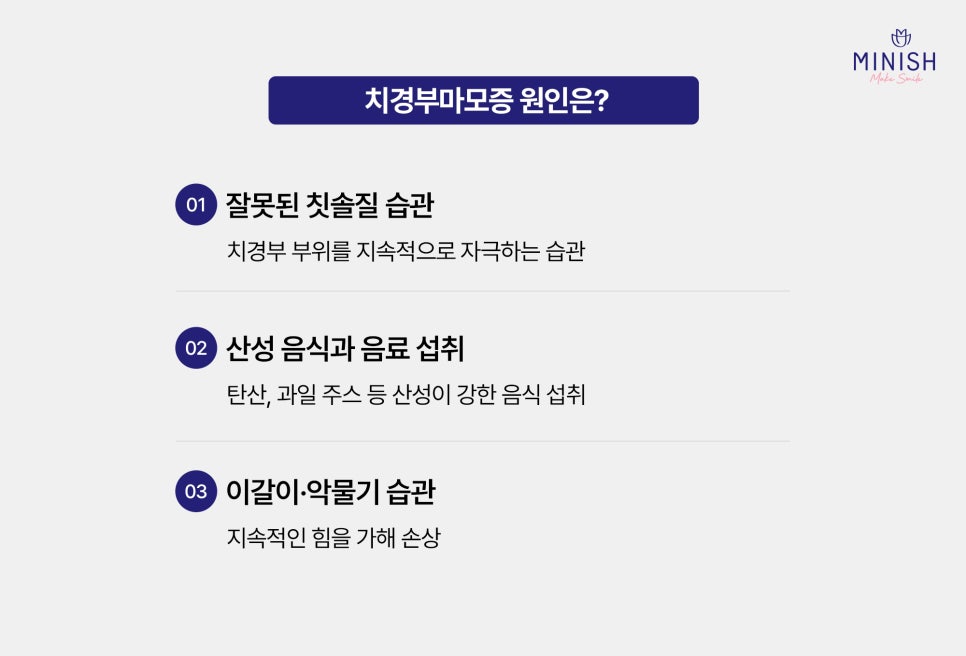
Tooth notching usually occurs as everyday habits and various forms of irritation are repeated over time.
- Improper brushing habits
The habit of brushing vigorously from side to side can continuously irritate the cervical area. In particular, brushing with strong force or using hard bristles may cause abrasion to progress more quickly.
- Consumption of acidic foods and drinks
Acidic foods and beverages such as carbonated drinks and fruit juice can weaken the tooth surface. When physical irritation is repeated in this state, tooth wear may progress more easily.
- Teeth grinding and clenching habits
Habitually clenching the teeth, grinding them, or having abnormal occlusion can place continuous force on the teeth. When this force is repeatedly transmitted to the cervical area, minor damage can accumulate and lead to abrasion.
These factors often do not act alone; multiple causes commonly work together.
What Are the Symptoms of Cervical Abrasion (Tooth Notching)?
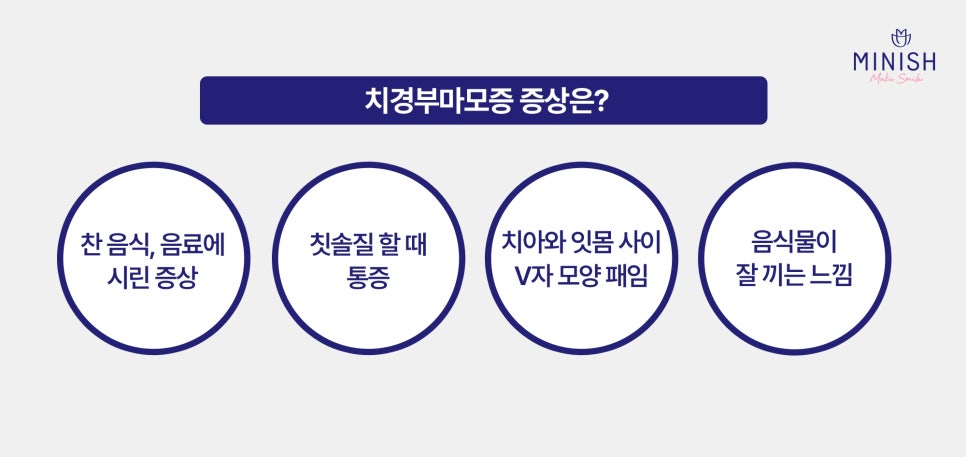
- Sensitivity to cold foods or drinks
As the neck portion of the tooth wears down and the inner dentin becomes exposed, the tooth may become sensitive to external stimulation. For this reason, many people feel a sharp sensitivity when drinking cold foods or beverages.
- Pain felt during brushing
You may feel sensitivity or a stinging sensation in certain areas while brushing. Some people may react sensitively even to the toothbrush simply touching the area.
- V-shaped notching in the neck portion of the tooth
If you look closely at the teeth in a mirror, the tooth just below the gumline may appear V-shaped or may look as if a groove has formed. This is a typical change in shape seen as cervical abrasion progresses.
- Feeling that food gets stuck easily
Food may get trapped easily in the grooves created by the notched tooth, or you may feel a foreign-body sensation. In such cases, oral hygiene management can become more difficult, so additional care may be needed.
The important point is that once a tooth has worn down, it does not naturally recover. Therefore, if tooth notching is visible or sensitivity is felt, it is important to check the condition at an early stage and consider appropriate treatment.
Cervical Abrasion (Tooth Notching)
Treatment Methods and Pros and Cons
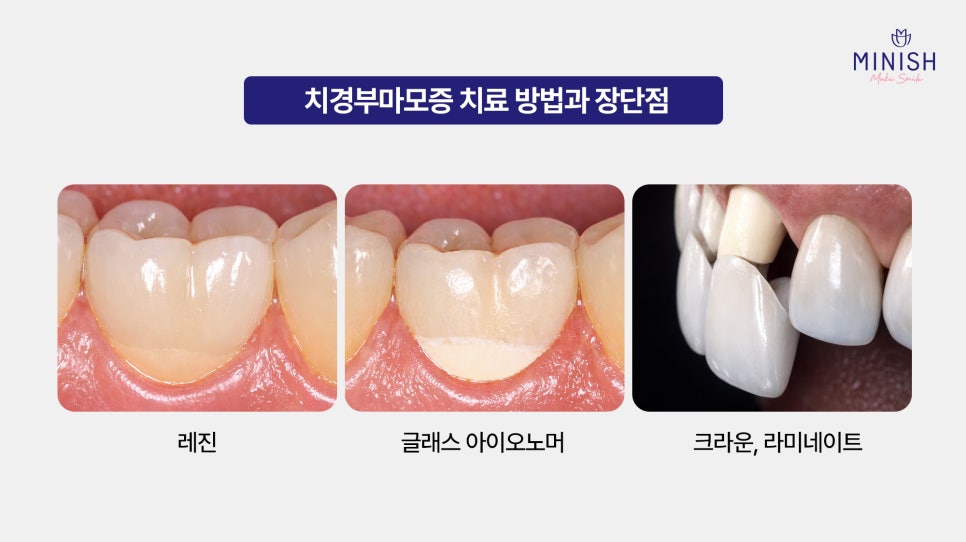
Treatment for tooth notching can vary depending on the degree of wear and the condition of the tooth.
- Resin treatment
This method fills the notched area with resin material to reduce external stimulation. It has the advantage of being relatively simple to apply and having a short procedure time. However, due to the nature of the material, there is a possibility of discoloration or detachment over time, and it may be vulnerable to impact or wear, so long-term management is necessary.
- Glass ionomer (GI)
This is a material used to fill and protect the worn area, and if insurance coverage applies, the financial burden is relatively low. However, its durability is relatively weak, so it may wear down or come off, and its esthetics may not look exactly the same as natural teeth.
- Crown or laminate veneer
If the tooth damage is severe, prosthetic treatment such as a crown or laminate veneer may be considered to reinforce the tooth shape. While esthetic improvement can be expected, the amount of tooth reduction may be relatively large and the treatment process can become more complex.
In addition, because these treatments are mostly focused on reinforcing the damaged tooth, there may be limitations when it comes to improving recessed gums at the same time.
A Recovery Method That Also Considers the Gums, Pink Minish
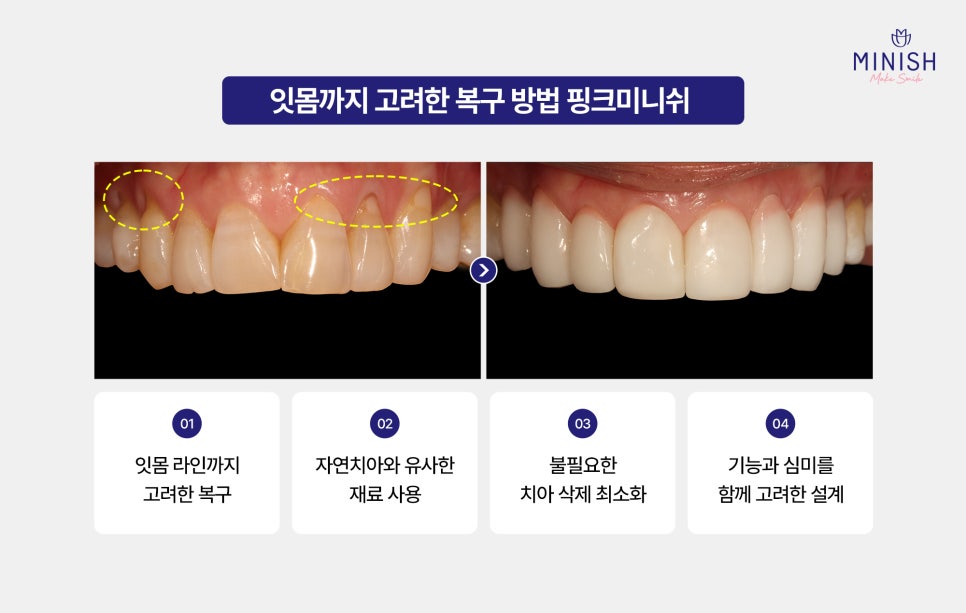
As cervical abrasion progresses, not only does the tooth become notched, but the gums may also recede, making the teeth look longer or the boundary between the tooth and gums appear unbalanced. In such cases, simply filling the notched area may not be enough to improve both function and esthetics. Pink Minish considers not only the teeth but also the boundary area between the teeth and gums, helping restore the damaged parts of the teeth while naturally recovering the overall balance of the teeth.
- Recovery that also considers the gum line
In cases where the gums appear to have receded in addition to tooth notching, it may help naturally supplement the boundary between the tooth and gums and improve the overall tooth line.
- Use of materials similar to natural teeth
By using materials with characteristics similar to natural teeth, the shape and color of the teeth can be restored naturally, and the boundary with the tooth can appear relatively seamless.
- Minimizing unnecessary tooth reduction
Because the recovery process focuses on the damaged area, it can be carried out in a way that preserves as much of the natural tooth as possible.
- Design that considers both function and esthetics
Beyond simply filling the notched area, it can help restore overall dental balance by considering functional stability and the smile line together.
Tooth notching often starts from small daily habits. At first, it may simply feel like mild sensitivity, but over time the wear can continue to progress, so it is important to check the condition early. If your teeth feel sensitive or the teeth near the gumline appear notched, it is better to check the exact condition rather than leave it untreated. This is because the necessary care may vary depending on the degree of wear and the condition of the gums. At Minish Dental Hospital, we carefully check the cause and degree of progression of tooth notching and then guide patients toward an appropriate method that preserves the natural tooth as much as possible. If you are concerned about tooth sensitivity or tooth notching, please visit us to accurately check your current condition.