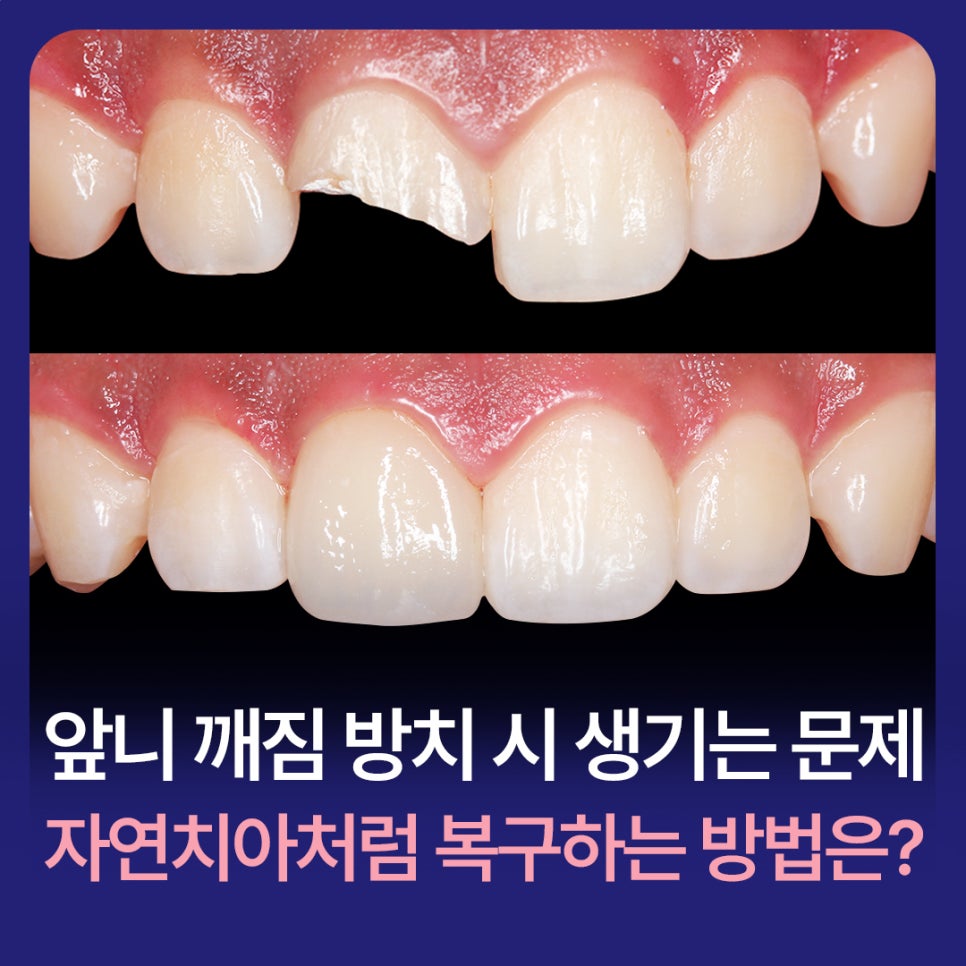
A front tooth can chip more easily than expected in everyday life. It can happen while eating hard foods, after a sudden impact, or when an old tooth has become weakened. Even if it looks like only a small chip, it is easy to dismiss it as something minor. However, front teeth play an important role not only in appearance but also in chewing and speech. So it is not advisable to think of it as just a “slightly chipped tooth” and leave it untreated.
Causes of a Chipped Front Tooth
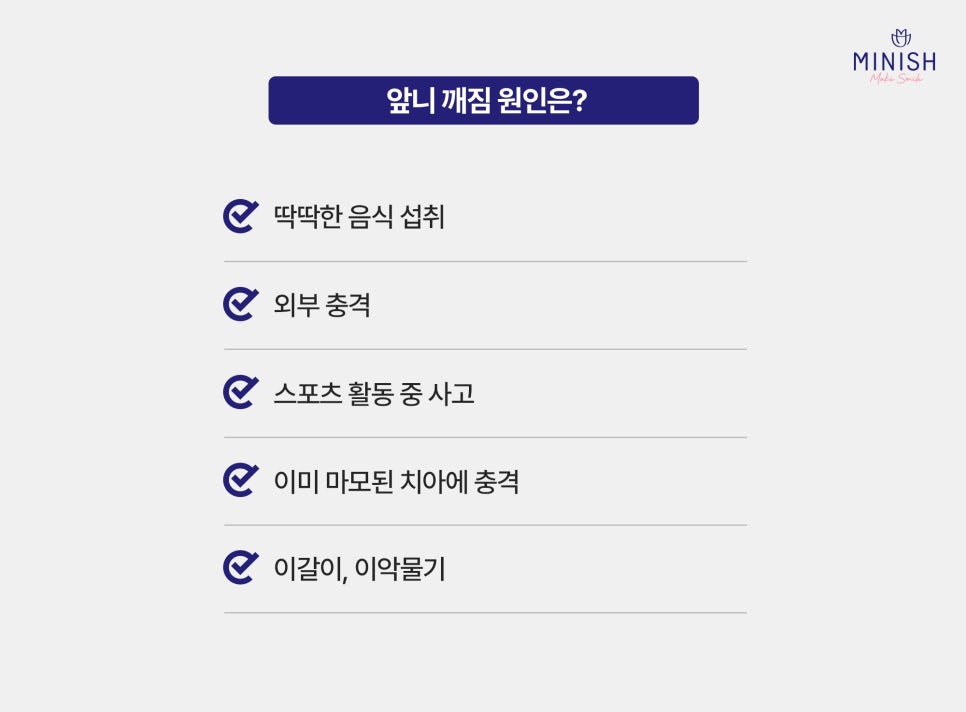
There is no single reason why a front tooth chips. Common causes include eating hard foods, external impact, and accidents during sports activities. If the tooth is already worn down or has accumulated cracks, it can break easily even with a small amount of force. Also, in cases where a person has habits such as teeth grinding or clenching, tiny cracks that were not visible on the surface can gradually progress and eventually lead to a fractured front tooth.
Why You Should Not Leave a Chipped Front Tooth Untreated
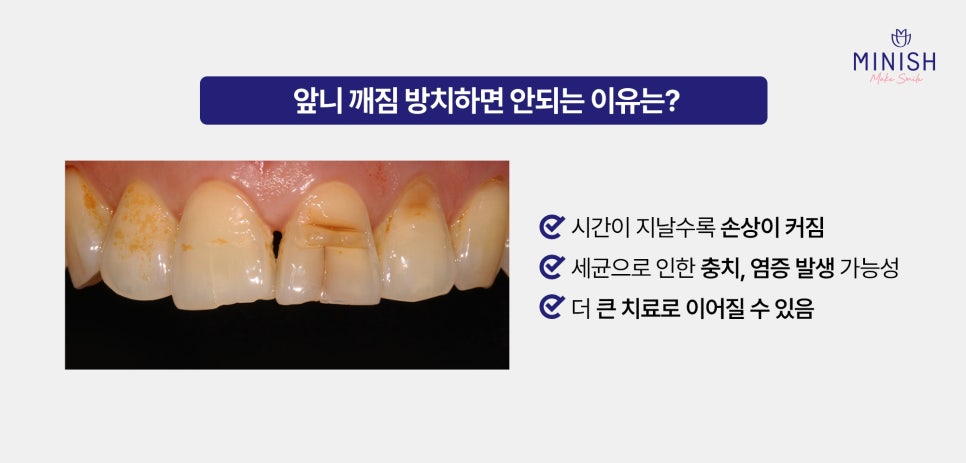
The biggest problem when a front tooth chips is that the damage can worsen over time. Even if it initially looks like a small defect or a tiny crack, repeated chewing force can gradually deepen the crack. In addition, because the chipped area is not smooth, it creates an environment where bacteria can settle easily. This increases the possibility of cavities or inflammation. In particular, if the damage becomes severe, it may require root canal treatment or more extensive treatment rather than a simple repair, so early response is especially important.
Treatment Methods That Vary Depending on the Degree of Chipping
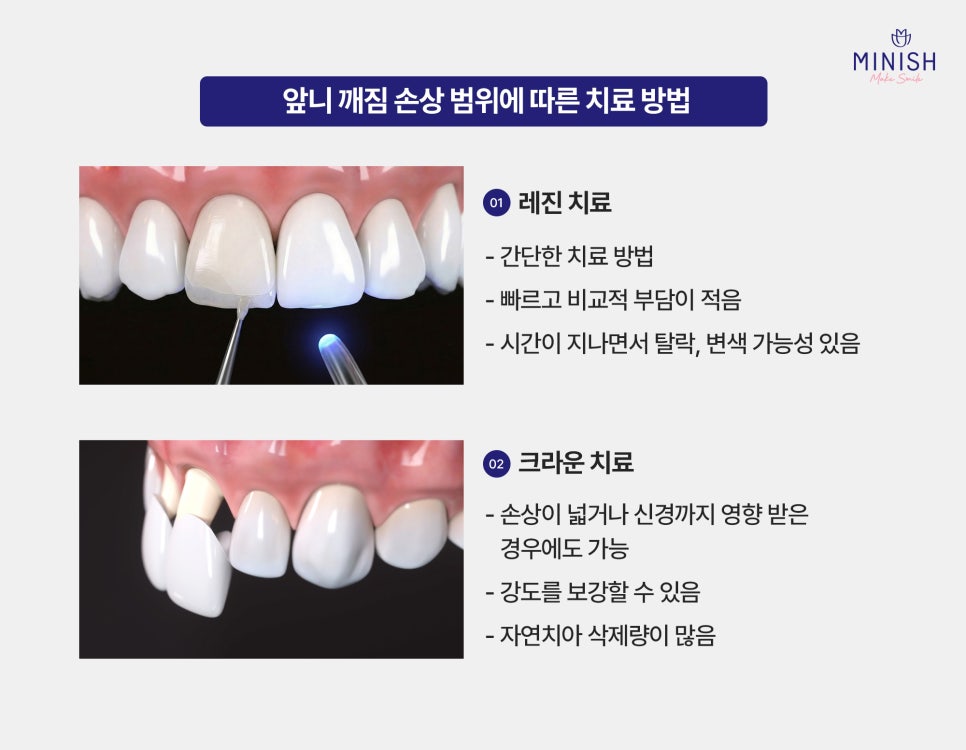
Treatment for a chipped front tooth differs depending on the extent and depth of the damage.
- Mild damage – resin
If the chipped area is not large, it can be filled simply with resin. The advantages are that the treatment is quick and relatively affordable, but it should be noted that it may wear down, discolor, or come off over time.
- Severe damage – crown
If the tooth damage is extensive or has affected the nerve, crown treatment that covers the entire tooth may be necessary. While it has the advantage of strengthening the tooth, a larger amount of tooth structure must be removed to make room for the prosthesis, which can result in greater loss of the natural tooth.
In this way, existing treatments are chosen according to the situation, but there are cases where there is still regret over how much of the natural tooth can be preserved.
From Mild Cases to Extensive Damage
Tooth restoration solution, Minish
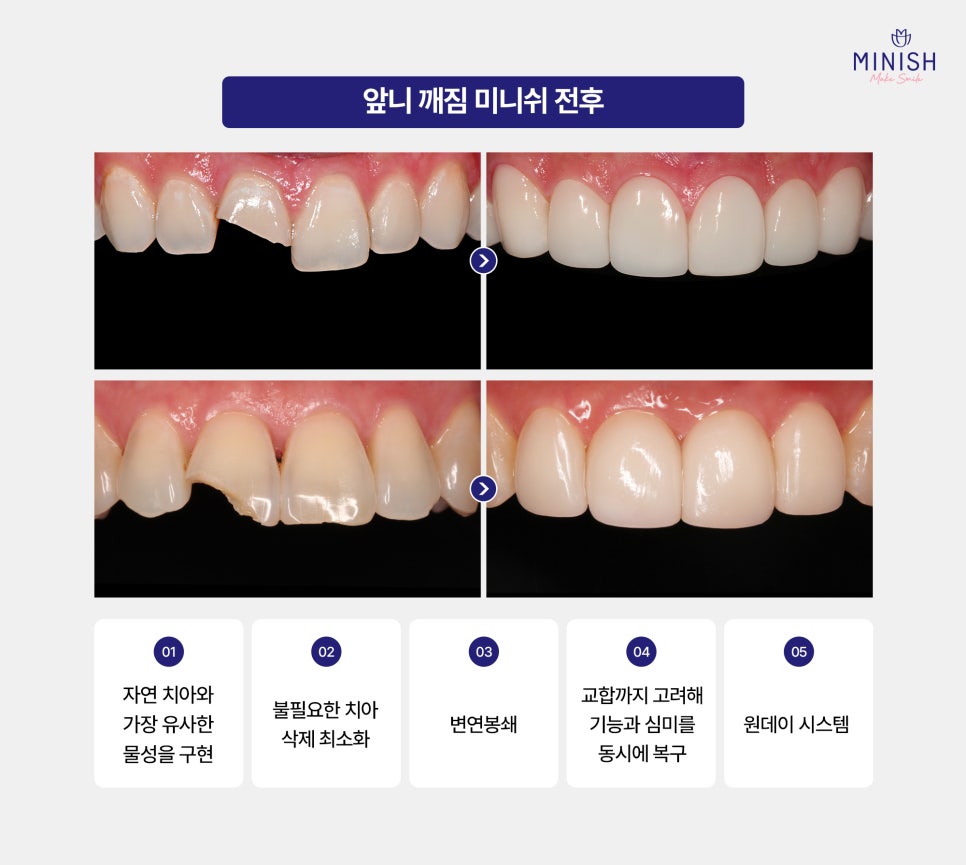
Rather than simply filling or covering a damaged front tooth, it restores it with consideration for the structure of the natural tooth. Minish is a tooth restoration solution based on this concept, taking both function and aesthetics into account.
-
It is designed to have properties most similar to natural teeth, helping to distribute chewing force stably
-
It minimizes unnecessary removal and restores the damaged area with precision
-
Its high level of fit with the tooth reduces gaps and lowers the possibility of secondary problems
-
Occlusion is also considered, so the treatment goes beyond simple appearance improvement and also restores function
-
With a one-day system that can handle scanning, fabrication, and bonding within a single day, the time burden can be reduced
Its feature is that it does not simply make the tooth look better, but helps preserve the natural tooth as much as possible and allows it to be used for a long time.
When a front tooth chips, it is easy to think, “This much should be fine,” and move on. But because teeth do not heal on their own, even small damage needs to be managed. Choosing the right treatment early can help reduce unnecessary additional treatment and keep the natural tooth for longer. It is important to view a chipped front tooth not as a simple appearance issue, but as a matter of function and health, and to carefully choose the treatment method that suits you.